MandM header image 4

The Challenge of Moral Relativism: Arguments for Relativism

June 22nd, 2018 by Matt
Respond

This post is based on a series of talks I have given on moral relativism. In my last post, I looked at what relativism and objectivism are. Here I examine some common reasons people accept or defend relativism I will offer critical commentary on these arguments.

When examining any position in philosophy it is important to understand what motivates people to hold it, why do people find it plausible? Two reasons are commonly cited.

  1. The Argument from Cultural Diversity

One common motivation for relativism, particularly cultural relativism, is the observation that different societies have different moral beliefs.  To use a well-known example: people in 14th century Europe believed witchcraft was seriously immoral and executed witches. People in 21st century New Zealand doesn’t believe this. Some societies endorse polygamy others endorse monogamy.   Facts like these are held to cast doubt on the idea there is a single true morality relativism-1independent of what society thinks.

 Response to the argument from cultural diversity.

Objectivists make several responses to this argument.

 Distinguishing Separate idea’s.

First, they argue that this argument conflates two separate ideas.  (a) the idea that beliefs about what is right and wrong differ from society to society. And  (b) that idea that what really is right, and wrong differs from society.  The fact different societies have different moral beliefs provides evidence for the first of these ideas. It establishes (a).  However, cultural relativism affirms something stronger than this. Relativists believe moral standards are correct or incorrect relative to society.  Cultural Relativists contend an action is wrong for a person because their society condemns that action.  Hence, they affirm (b).

However, that the fact different societies have different moral beliefs doesn’t support (b) It’s possible that when different societies make different judgements about something that one of them is mistaken. When don’t normally assume that when societies disagree on something the correct answer is relative to society.  If different societies have different beliefs about the shape or age of the earth, we would not take this to demonstrate that the earth’s actual age and shape differ in various societies. So why do we do this when the disagreement involves moral judgements?  The mere fact societies make different judgements on a topic tells us nothing about whether those judgements are objectively true or false.

Exaggerated disagreement

Second, objectivists argue that appeals to cultural diversity often exaggerate the amount of cross-cultural disagreement over moral standards. Often when societies have different moral beliefs, this isn’t due to different moral standards but the result of disagreement over certain factual questions.  Consider the abovementioned case of witchcraft. In the 14th-century people believed in the existence of witches. They believed witches met together secretly and sacrificed children and ate these children in a ritual feast. They bound themselves by oath to the devil to use supernatural powers to harm, and kill innocent people. Hence the believed witchcraft involved the deliberate conspiracy to cause serious harm to innocent people.

We don’t hold these beliefs today but if we did our opinion of witchcraft would be very different. Suppose we believed there was a group which conspired to randomly kill and maim innocent people and killed and ate children as part of its rituals.  We probably would legally suppress this group. And many people would support the death penalty for those who did these things, killing children is a horrendous form of murder after all. The difference between us and 14th-century Europeans is due, in a large part, to different factual beliefs not simply a disagreement over moral standards.

  1. Relativism Promotes Tolerance

A second motivation behind relativism is the idea that moral relativism promotes tolerance and humility. When you realise that your own moral standards are correct only for you, you are less likely to fall into arrogance and pass judgements on the beliefs and practises of others. Nor are you likely to demand they change these practices and adopt yours. 

Response:

Objectivists respond that this concern reveals a subtle contradiction. The argument assumes that tolerance and humility are good things, it assumes people should be tolerant and humble and should not be arrogant and rush to judgement.  However, if relativism is correct, this isn’t the case. According to cultural relativism, it is wrong to be intolerant only if your society believes that it is.  Societies which are imperialistic and arrogant and believes its permissible to colonialize other nations don’t do any wrong if it imposes its moral judgements on to others.  Similarly, according to subjectivism humility and tolerance are wrong only if you think it is. If someone has bigoted or arrogant beliefs, then bigotry is morally required of them, and they shouldn’t act in a humble, tolerant way.

Objectivists maintain that one can condemn individuals or societies who have arrogant and bigoted practices only if you hold these things are wrong despite the fact societies or individuals may endorse them. There is something incoherent about offering a moral criticism about the arrogant and intolerant moral judgements of societies or individuals and then concluding you can’t make judgements about societies and individuals

Tags:   · · Comments Off on The Challenge of Moral Relativism: Arguments for Relativism

The challenge of Moral Relativism: Relativism vs Objectivism: understanding the issues:

June 20th, 2018 by Matt
Respond

This post is the first of a series of posts which reproduce a talk on Moral Relativism I gave at both the Auckland and Tauranga  Confident Christianity Conference’s and was given earlier in the year as part at a series of talks on apologetics at Orewa Community Church.

In moral debates about you will hear slogans like “if you don’t like abortion don’t have one” or “if you don’t like pornography don’t watch it.” The basic idea is that if you think a particular action is morally wrong, then you shouldn’t do it, however, it is mistaken or inappropriate to claim that people who don’t share your opinion shouldn’t do it. The slogans in question assume that moral principles correctly apply only to people who believe in those principles.

The pervasiveness of this kind of thinking can be seen in a media report I watched several years ago. A pornographer relativism-1had organised a festival on the main street of Auckland, called “Boobs on Bikes”. It involved people, including topless women, riding down Queenstreet displaying erotica. There was some controversy over this event. During the media coverage journalists interviewed several people present. What was interesting was how many people responded by saying something like this: “It is the 21st century” or “we live in a liberal society”. Notice what happens when people do this. They were asked whether a particular action or policy was right or wrong. They answered by appealing to what they perceived to be currently fashionable or conventionally accepted.  The assumption is that what is right or wrong is determined by what is conventionally accepted or fashionable.

These responses reflect a position called Relativism by moral philosophers.  In a bestselling book. The Closing of the American Mind. The prominent philosopher Alan Bloom opened by saying:

There is one thing a professor can be certain absolutely of: almost every student entering the university believes, or says he believes, that truth is relative. If this belief is put to the test, one can count on the students’ reaction: they will be uncomprehending. That anyone should regard the proposition as not self-evident astonishes them, as though he were calling into question 2 + 2 = 4. These are things you don’t think about. The students’ backgrounds are as various as America can provide. Some are religious, some atheists; some are to the Left, some to the Right; some intend to be scientists, some humanists or professionals or businessmen; some are poor, some rich. They are unified only in their relativism and in their allegiance to equality. And the two are related in a moral intention. The relativity of truth is not a theoretical insight but a moral postulate, the condition of a free society, or so they see it. They have all been equipped with this framework early on, and it is the modern replacement for the inalienable natural rights that used to be the traditional American grounds for a free society. That it is a moral issue for students is revealed by the character of their response when challenged – a combination of disbelief and indignation: “Are you an absolutist?,” the only alternative they know, uttered in the same tone as “Are you a monarchist?” or “Do you believe in witches?” This latter leads into the indignation, for someone who believes in witches might well be a witch-hunter or a Salem judge. The danger they have been taught to fear from absolutism is not error but intolerance. Relativism is necessary to openness; and this is the virtue, the only virtue, which all primary education for more than fifty years has dedicated itself to inculcating. Openness – and the relativism that makes it the only plausible stance in the face of various claims to truth and various ways of life and kinds of human beings – is the great insight of our times. The true believer is the real danger. The study of history and of culture teaches that all the world was mad in the past; men always thought they were right, and that led to wars, persecutions, slavery, xenophobia, racism and chauvinism. The point is not to correct the mistakes and really be right; rather it is not to think you are right at all. (Bloom 1987)

Bloom was beginning a scathing critique of what is often called moral relativism. Note that Bloom mentions students entering university. One reason for this is that relativism is not a common position in contemporary philosophy or ethics, and most philosophers I know of think it is pretty clearly a mistaken position. However, it is extremely common at the popular level.  Because relativism is is an important challenge to Christian ethics it is important to reflect on how Christians respond to this challenge.

  1. Relativism vs Objectivism: understanding the issues:

Christian’s like Muslims and Jews, believe God has issued commands to human beings, and our moral duties are related to these commands.

However, or not God exists or issues commands doesn’t depend on whether we think he does. If God created the world, then this is a fact that occurred well before we were born and my believing or not believing it makes no difference to whether it occurred. If God did not create the world, hoping and wishing he has doesn’t make the past change.  The same is true of God’s commanding, if God has issued commands then this is a fact, people may disagree with what he demands, but this disagreement doesn’t make any difference to whether the commands exist.

To illustrate the point here, return to the slogan I opened this talk with. Suppose someone was contemplating jumping off the sky tower. You responded “if you do that you’ll die” only to get the response. ‘Who are you to impose your belief in the law of gravity onto me?” I doubt anyone would be impressed by this response. Whether or not the laws of gravity exist doesn’t depend on whether you believe it. God’s moral laws don’t differ from the laws or decrees by which he governs the universe. They either exist or they don’t.

This means that Christians are objectivists about morality. Objectivism holds that: certain moral standards are correct independently of whether you, I or our society believe they are or accept that they are. Some moral principles apply to people regardless of whether they choose to accept these principles, and if people do not accept these principles, they are making a mistake.

By contrast, relativists hold that moral hold that all moral judgements are correct or incorrect relative to different cultures or individuals. Howard-Synder (1999) highlights two major kinds of relativism:

  1. Cultural relativism holds an action is wrong for a person because their society condemns that action.
  2. Subjectivism holds that actions are right and wrong relative to individual opinions. An action is wrong for a person because he or she thinks it is wrong

If relativism is true, then moral standards apply only to people who themselves or whose society accepts those standards. This is the assumption you see reflected in the slogans I mentioned at the start of my talk.


References

Bloom, Alan. 1987. The Closing of the American Mind: How higher education has failed democracy and impoverished the souls of today’s students. New York: Simon and Schuster.

Howard-Snyder, Frances. 1999. “Christianity and ethics.” In Reason for the Hope Within, edited by Michael Murray, 376-377. Grand Rapids, MI: Eerdmans.


Tags:   · · · 11 Comments

On alleged Victim’s of Church abuse… “Can you blame them?”…. “Yes I can”

April 18th, 2018 by Matt
Respond

Can you blame them? This was the rhetorical question I heard recently, posed by a speaker at a Conference of religious studies teachers that I attended.  The answer to the question was supposed to be No, and most of the audience seemed to take this to be the correct answer. Nor is this atypical It’s not the first time I have heard the same sort of rhetorical methods employed nor is it the first time I have seen this response.

No doubt readers will wonder what this question was in response to so let me spell out the context. The speaker was articulating various demographics about the growth of religious belief and practise in contemporary Australia. While doing so he told the following story:  A woman and her family had been actively involved in a church for many years, however later in her life, her marriage ended in divorce. When this happened the woman was told she was no longer welcome in the church. Her family left. The speaker then passionately told us how her children all now are emphatic that organised religion does more harm than good. After relaying this story he then fired off the rhetorical question ” And who can blame them?”

Had I been less polite I would have stated: “I can”. I think I can blame them. I have heard similar stories over the years from various speakers and must admit to being less than keen on the enthusiastic apologetic self-flagellation that Christian’s often engage in over such stories. Here is why

First, is a matter of facts and evidence. One thing I have learnt is that when people have had an acrimonious dispute one should always be hesitant to jump to judgement. In any dispute, especially one involving divorce, parties on both sides will have conflicting stories. Both will claim to be unjustly aggrieved, and sorting out what happened isn’t always easy. In this context, I am reminded of a conversation I had with a family law judge once over dinner. The judge talked about both parties in a dispute expressing “their truth”. Piquing my interest, we got into a discussion about whether he believed the truth was relative. On clarification, however, it became apparent the judge wasn’t affirming relativism instead he was expressing a fact he had observed from years on the bench. When emotions run high and loyalties are betrayed or tested people tend to rationalise, deceive themselves, to minimise their own behaviour and maximise that of others. His point was that the different parties often sincerely believe their own stories. They are convinced what they say is true. Despite the fact that it can’t be. It’s the truth as they see it, even if we might see that it is selective with the facts and distorted.  I don’t doubt the judge’s observation that this is common.  In light of this, I think we need to be very careful before we judge that a church or church leadership group has acted appallingly in such a dispute. This isn’t to say Churches never act in inappropriate ways, or make pastoral or theological howlers. It’s just the point that, even though they do, we shouldn’t immediately accept as credible every accusation that they have the as unvarnished truth. Before we rush to judgement, we should try and work out whether the claim is credible.

In this particular case there are many questions one would need to ask, for example, how did the divorce occur? Did one spouse commit adultery, was there violence or desertion, and from which spouse? Moreover, if the woman was a member of the church isn’t it at least likely that her husband is as well?

 In light of these questions, one can immediately see the situation could be more nuanced than it appears. Suppose the woman had committed adultery, deserted her husband, the church was offering pastoral support to her devastated husband. She was turning up every Sunday with the new man and refusing to acknowledge a problem. In this sort of situation, one can easily sympathise with the churches decision. On the other hand, if the man was a womanising wife beater and the pastoral team were taking his side because “wives should submit to their husbands” the picture is different. The point is I’d want to know more about the picture  before I rushed to judgement and said: “who can blame them?”

 It shouldn’t need to be said. But it’s simply not true that every time some angry person tells a story about their disputes with a church are that the church is in the wrong and the disputant is in the right. Sometimes it’s the case, and sometimes it isn’t. We owe church leaders more respect and justice than to simply believe without question every single accusation made against them, and to join in sympathetic outrage with every accusation. If we rush to judgement, it’s actually us who are behaving appallingly. So while I am quite sure that church leaders can and sometimes do act in bad ways, accusations still need to be substantiated.

But let’s suppose the story is accurate. The church leadership did behave badly and kicked someone out unjustly. I still think we must answer the speaker’s rhetorical question in the affirmative.  Here is why: Note what the speaker said, he said that upon being treated this way the family concluded that organised religion does more harm than good. They didn’t want to be associated with an institution that behaves this way. So they will have nothing more to do with “religion”.

But hang on! Can’t a person be legitimately questioned for drawing this kind of conclusion? What has happened is that one church has done one hurtful or offensive thing on one occasion. How can a person justifiably extrapolate from this that religion does more harm than good? Or even that this is normal or typical for churches per se.  To do this, a person would need to look at a representative sample of actions performed by various religious organisations over history. Looking at all the hurtful things religious institutions have done over the centuries and all the beneficial things they have done. There would need to be some weighing of these against one another. And only when this was done could one justifiably conclude that religion causes more harm than good.

To suggest that because an organisation has hurt you and your family, you can, therefore, make a judgement about all religious institutions and their total effect on society and history is, frankly, absurd. It is obviously a bad inference. Moreover, this type of judgment is one we would out rightly condemn as stereotypical or bigoted if it occurred in a different context.

Here is an example: suppose a woman’s husband was in the world trade tower on September 11, 2001. As a result of the attack that morning he is killed, and she is overcome with grief. We would feel justified empathy with her,  situation, it’s awful, and she has clearly been wronged, unjustifiably widowed by someone else’s criminal conduct. Does it follow however that we can now justifiably go along with her families claim that all Muslims are terrorists and complicit in such behaviour? Obviously not, to do this would, in fact, to sanction stereotyping and to put it bluntly bigotry.

Or, to use another example, suppose someone is walking home and is attacked by an African American male. He is beaten and hospitalised and dies from the mugging. The victim’s family are angry in a fit of rage they declare that African American males are a scourge and want nothing to do with any African American men they do more harm than good? What would we say?  “Can you blame them?” I think we can and would; we would call this racial prejudice.  I think we would understand the anger and sympathise with their pain, but we would also recognise that this pain and anger has twisted or warped their perspective so that they are promoting, without evidence, harmful generalisations about others. And we would want to challenge those generalisations.  Of course, this may need to be done in a sensitive and tactful way. But the fact we are sensitive and tactful doesn’t mean we grant what they say is justified. It isn’t. They have allowed their rage and anger to become pathological and bigoted and this isn’t blameless.

One might wonder why I am harping on about an anecdotal story I have heard in a talk. Here is why: the story I heard and the response I witnessed to it is, I think, representative of something common. Throughout many years at Bible college, University, and witnessing general culture I have often seen people react this way to claims about abuse on the part of religious leaders, and it bothers me that people react this way.

My studies have taught me that there are in popular culture false narratives about religious people and religious institutions.  Some of these narratives are so notorious historians have given them names The black legend, the myth of a dark ages, the Whig view of history, the conflict thesis, myths about the Crusades in their own way these different narratives are deep in popular psychology and they tell a narrative about the role of religious institutions in our society and history. These narratives are also false. But, their falsity isn’t often appreciated in popular culture. It’s also worth noting these narratives can be harmful. A few years ago I studied the terror that occurred during the French revolution, and it was eye opening how some of these sorts of narratives were used to murder people. The idea of religion as an institution which inevitably oppresses the downtrodden was a well-known Marxist trophe[1]and it was used to justify the slaughter of thousands.  Obviously, not everyone who believes these things is going to kill, but we need to call a spade a spade. A false narrative based on selective and stereotypical reasoning is still a false narrative, and if such a narrative can and has been harmful, we need to be candid about this, it can be used this way. Sticks and stones break bones and names can hurt you.

So when the speaker asks, “can we blame them” I answer “yes we can” In all walks of life people suffer, have disputes and can be unjustly treated, does this justify them in generalising about whole groups of people? No, it doesn’t. The fact the topic is religion doesn’t change this fact.


[1] Compare for example Karl Marx’s “religion is the opium of the people’ Mao Tse Tung’s “Religion is Poison” and  the title of Christopher Hitchen’s  bestselling “God is not Great How Religion Poison’s Everything” (emphasis mine)

Tags:   · Comments Off on On alleged Victim’s of Church abuse… “Can you blame them?”…. “Yes I can”

“Robust Ethics and the Autonomy Thesis” Now Online

April 3rd, 2018 by Matt
Respond

Recently, Philosophia Christi published Matt’s article “Robust Ethics and the Autonomy Thesis: A reply to Erik Wielenberg”. This article consisted of some critical commentary and responses to Erik Wielenberg’s bookdefaul1 Robust Ethics: The Metaphysics and Epistemology of Godless Normative Realism.

Since then Matt’s article has received a little bit of unexpected attention. One of my arguments was discussed in a dialogue between William Lane Craig and Erik Wielenberg that took place at North Carolina State University earlier this year, and on the back of this, we have received several received requests to read the paper. It is now available here: Flannagan Robust Ethics PC 19 2 (1)

Permission has been granted from the Editor of Philosophia Christi to upload this contribution. Learn more about the Journal by going to www.epsociety.org/philchristi.

Tags:   · · · · · · Comments Off on “Robust Ethics and the Autonomy Thesis” Now Online

“Robust Ethics and the Autonomy Thesis” published in Philosophia Christi

February 3rd, 2018 by Matt
Respond

Matt’s article, “Robust Ethics and the Autonomy Thesis: A reply to Erik Wielenberg” has been published in the wiPhilosophia Christinter issue ( Vol 19 Num. 2 – Winter 2017) of Philosophia Christi.  An overview of the contents of the full issue can be found here.  The editor has given Matt permission to upload the article in a couple of months. For now here is the abstract:

In his monograph, Robust Ethics: The Metaphysics and Epistemology of Godless Normative Realism, Erik Wielenberg offers arguably one of the most sophisticated defenses of the autonomy thesis to date. Wielenberg argues that (I) the divine command theory is problematic because it cannot account for the moral obligations of reasonable unbelievers; (II) Godless normative robust realism (GRNR) can be formulated in a way that avoids the standard objections to the autonomy thesis; and (III) GRNR provides a better account of intrinsic value. In this paper, I will argue Wielenberg’s defenses of the autonomy thesis fails. I will argue that his objection to divine command theories fails, that he fails to address two standard challenges to the autonomy thesis adequately, and, finally, that Wielenberg fails to show that GRNR better accounts for the intuition that certain things are intrinsically good than various forms of theistic alternatives.

Tags:   · · · Comments Off on “Robust Ethics and the Autonomy Thesis” published in Philosophia Christi

Divine Command Theory and Utilitarianism forgotten bedfellows? Paley’s Principles of Moral and Political Philosophy (part two)

January 18th, 2018 by Matt
Respond

In my last post, I explained the position of Theological Utilitarianism as expounded in William Paley’s The Principles of Moral and Political Philosophy. I pointed out The Principles was first published in 1785, four years before Jeremy Bentham published An Introduction to the Principles of Morals and Legislation. In this post, I want to look at the influence Theological Utilitarianism had in the 18th and 19th centuries. Was Paley expounding some novel idiosyncratic position? Or was he simply repeating a fairly mainstream position on the relationship between Gods law and happiness which had been around for decades?

  1. The influence of Theological Utilitarianism in the 18thand 19th centuries

Theological Utilitarianism sounds novel to contemporary ears. But it wasn’t an innovative position in the late eighteenth century. Paley notes in the preface that he is a “compiler” of earlier writers of moral theory. Schneewind, states that the theory he proposed was in fact “an assemblage of ideas developed by others and is presented to be learned by students rather than debated by colleagues. “[1] Some trace theological utilitarianism back to the divine command theory of John Locke[2]  However, the earliest clear exponent of this position appears to be George Berkeley’s sermons in 1712.[3]

It is worth looking at Berkeley in some detail.  According to Berkeley, things are “denominated good or evil” as “they are fitted to augment or impair our own Happiness” Good or Evil. On the other hand, “Moral Goodness” consists in a “Conformity to the Laws of God.” Berkley articulates the relationship between moral and non-moral goodness as follows:

For Laws being Rules directive of our Actions to the end intended by the Legislator, in order to attain the paleyKnowledge of God’s Laws, we ought first to enquire what that end is, which he designs should be carried on by human Actions. God is a Being of Infinite Goodness. it is plain the end he proposes is Good. But God enjoying in himself all possible Perfection, it follows that it is not his own Good, but that of his Creatures. Again, the Moral Actions of Men are entirely terminated within themselves, so as to have no influence on the other orders of Intelligences or reasonable Creatures: The end therefore to be procured by them, can be no other than the good of Men. But as nothing in a natural State can entitle one Man more than another to the favour of God, except only Moral Goodness, which consisting in a Conformity to the Laws of God, doth presuppose the being of such Laws, and Law ever supposing an end, to which it guides our Actions, it follows that Antecedent to the end proposed by God, no distinction can be conceived between Men; that end therefore itself or general design of Providence is not determined or limited by any Respect of Persons: It is not therefore the private Good of this or that Man, Nation or Age, but the general well-being of all Men, of all Nations, of all Ages of the World, which God designs should be procured by the concurring Actions of each individual. Having thus discover’d the great end, to which all Moral Obligations are Subordinate; it remains, that we enquire what Methods are necessary for the obtaining that End.[4]
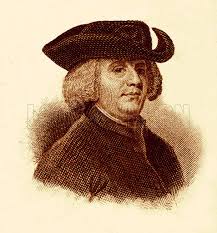
When Berkeley says God is  infinitely good, he like Samuel Clarke seems to mean that God  has “an unalterable disposition to do and to communicate good or happiness.”[5] [6] God’s goal in issuing the commands he does is the happiness, impartially considered of all human beings.

Berkeley proceeds to note two ways that God could promote this happiness. One would be “without the injunction of any certain universal Rules of Morality, to to oblige “every one upon each particular Occasion, to consult the publick Good, and always to do that, which to him shall seem in the present time and circumstances, most to conduce to it.”  The second is  “by enjoining the Observation of some determinate, established Laws, which, if Universally practised, have from the Nature of things an Essential fitness to procure the well-being of Mankind” Berkeley argues that “”there lie several strong Objections.” Berkeley then anticipates the “self-effacing” objection to act utilitarianism arguing that anyone committed to promoting the happiness of others wouldn’t promulgate act utilitarianism as a decision procedure. Public endorsement and acceptance of the rule “do whatever maximises utility” would probably not maximise utility. Consequently, Berkeley concludes that God has followed the second method.

Stephen Darwall suggests that the best way to interpret Berkeley is to distinguish between his meta-ethical theory and normative theory. His meta-ethical theory attempts “to answer metaphysical questions of what goodness and rightness themselves, respectively, are.” On the other hand, his normative theory “concerns what actions or things are good and right.” Meta-ethically Berkeley is a divine command theorist “moral goodness consists” consists in a “Conformity to the Laws of God”. However, Berkeley’s normative theory was rule-utilitarian, God commands “Laws, which, if Universally practised, have from the Nature of things an Essential fitness to procure the well-being of Mankind”.[7]

A position very similar to Berkeley is hinted at in Butler’s writings[8] but is expounded more clearly in the writings of, John Gay [9] John Brown, and Abraham Tucker.   It’s clear that Paley clearly draws upon this earlier tradition.  In the preface to The Principles Paley acknowledges that he is attempting to compile and articulate the positions of John Gay, and Abraham Tucker. Book II chapter 1 of The Principles proposes a line of argument that closely resembles the argument of John Gay “Concerning the Fundamental Principle of Virtue or Morality”.

Similarly, Paley’s emphasis on rules is, as we saw, found in Berkeley’s Passive obedience and performs the same function. Berkeley’s initial advancement of this distinction and advocacy of rule utilitarianism was part of a broader argument to argue against violent resistance to the state during the Jacobite agitation in Ireland. He was concerned that people were advocating the violation of certain negative rules of the law of nature such as: “do not commit adultery”, “do not steal”, “don’t rebel against the government”, whenever they perceived doing so would further the public good. Paley uses the distinction for similar purposes, to respond to the objection that utilitarianism allows people to break with impunity moral rules against theft and murder whenever they perceive it will make people happy.

In fact, the proximate source for Paley’s stress on rules appears to be Abraham Tucker. Tucker. Wrote

  As we cannot upon every occasion see to the end of our proceedings, he [the moralist] will establish certain rules to serve as landmarks for guiding us on the way.  These rules, when he has leisure and opportunity for mature consideration, he will build on one another, erecting the whole fabric upon the basis of the summum bonum before described.  (Original emphasis)[10]

Similarly, Paley’s argument that God wills the happiness of his creatures and so the commands God issues must be coextensive with promoting the happiness is ubiquitous in the tradition that preceded him. This argument is s found in Berkeley, Gay, and Brown Louden also documents the same argument occurs in Adam Smith and Joseph Butler [11]

Finally, Paley’s exposition of this tradition was very influential. The principles became required text at Cambridge university Schneewind points out “utilitarianism first became widely known in England through the work of William Paley.[12] Paley, not Bentham being its most well-known exponent.  Similarly, Smith points out that Paley’s writings were once as well known in American colleges as were the readers and spellers of William McGuffey and Noah Webster in the elementary schools.[13]

In fact, Paley’s influence is still seen clearly in John Austin’s work on Jurisprudence, in the early and late nineteenth century.  Mill himself appeals to the tradition:

We not uncommonly hear the doctrine of utility inveighed against as a godless doctrine. If it be necessary to say anything at all against so mere an assumption, we may say that the question depends upon what idea we have formed of the moral character of the Deity. If it be a true belief that God desires, above all things, the happiness of his creatures, and that this was his purpose in their creation, utility is not only not a godless doctrine, but more profoundly religious than any other. If it be meant that utilitarianism does not recognise the revealed will of God as the supreme law of morals, I answer, that a utilitarian who believes in the perfect goodness and wisdom of God, necessarily believes that whatever God has thought fit to reveal on the subject of morals, must fulfil the requirements of utility in a supreme degree. …Whether this opinion is correct or not, it is superfluous here to discuss; since whatever aid religion, either natural or revealed, can afford to ethical investigation, is as open to the utilitarian moralist as to any other. He can use it as the testimony of God to the usefulness or hurtfulness of any given course of action.[14]

Mill here explicitly rejects the idea that Utilitarianism does not recognize the revealed will as the supreme law of morals, and uses a line of argument very similar to Paley, whose writings Mill was aware of, to argue the contrary.

Consequently, Utilitarianism then wasn’t a new or novel theory of ethics proposed by secular thinkers such as Hume and Bentham in the late 18th century. Nor did it develop in response to or in opposition to a conception of morality based divine commands or divine laws. Divine command theorists, in fact, had been advocating Theological Utilitarianism for decades before Bentham, and the popularity of utilitarianism in Anglo-American thought had a good deal to do with the popularity of theological utilitarianism.


[1]J B Schneewind Moral Philosophy from Montaigne to Kant. (Cambridge: Cambridge University Press. 2002) 446.  Paley was, therefore, summarising an already existing, popular, school of thought.

[2] See for example A. P. Brogan “John Locke and Utilitarianism” Ethics 69: 2 (1959), 79-93.

[3] See Berkeley’s A Discourse on Passive Obedience (1712) and dialogues I-III of the   Alciphron (1732). Berkeley had included a systematic treatise on moral theory in the draft of A Treatise Concerning the Principles of Human Knowledge (1710), but the manuscript was lost, leaving historians to piece together his theories from his occasional writings.

[4] Passive obedience: or, the Christian doctrine of not resisting the supreme power, proved and vindicated … In a discourse deliver’d at the College-chapel. By George Berkeley, M.A. Fellow of Trinity-College, Dublin. Available at https://quod.lib.umich.edu/e/ecco/004899015.0001.000/1:3?rgn=div1;view=fulltext

[5] Clarke, Demonstration, Prop. XII; in Works, vol. II, p. 572.

[6] Robert Louden notes this conception of God’s goodness was common in the 18th century and similar arguments can be seen in Smith and Butler see Robert Louden “Butler’s Divine Utilitarianism,” History of Philosophy Quarterly, 12:3 (1995):265–280

[7] See Stephen Darwall “Berkeley’s Moral and Political Philosophy,” in, The Cambridge Companion to Berkeley, Kenneth Winkler, ed. (Cambridge: Cambridge University Press, 2006)

[8] Robert Louden “Butler’s Divine Utilitarianism,” History of Philosophy Quarterly, 12:3 (1995):265–280

[9] John Gay “Concerning the Fundamental Principle of Virtue or Morality” in Lewis Amherst Selby-Bigge, British Moralists, being Selections from Writers principally of the Eighteenth Century, vol. 2 [1897] available at http://oll.libertyfund.org/titles/bigge-british-moralists-vol-2 accessed 26 Aug 2016

[11] Robert Louden “Butler’s Divine Utilitarianism,” History of Philosophy Quarterly, 12:3 (1995):265–280.

 [12] Schneewind, Moral Philosophy from Montaigne to Kant 446.

[13] Wilson Smith “William Paley’s Theological Utilitarianism in America” The William and Mary Quarterly Third Series, 11:3 (1954) 402–424

[14] John Stuart Mill “What is Utilitarianism” available at https://ebooks.adelaide.edu.au/m/mill/john_stuart/m645u/chapter2.htm

Tags:   · · · · · · · · · · 1 Comment

Divine Command Theory and Utilitarianism forgotten bedfellows? Paley’s Principles of Moral and Political Philosophy (part one)

January 16th, 2018 by Matt
Respond

This post is adapted from a short essay I wrote on William Paley’s Ethics

In a widely used textbook, James Rachels refers to “revolution in ethics” which occurred in the 18-19th centuries.  Referring to upheavals such as the American Revolution, French Revolution, Rachel’s contends that people began to think differently about Ethics. There arose “A new conception of ethics” a conception we today call “utilitarianism”. Rachels states that this was a theory of ethics “proposed by David Hume (1711-1776) but given definitive formulation by Jeremy Bentham (1748-1832) and John Stuart Mill ( 1806-1873)”  Rachel’s continues:paley

Bentham’s argument for a new conception of ethics had a powerful influence. Morality, he [Bentham] urged is not a matter of pleasing God, nor is it about following abstract rules; Rather, morality is nothing more than the attempt to bring about as much happiness as possible into the world[1]

This picture of the history of moral thought seems to be widely held. Stephen Nathanson, for example, writes that utilitarians:

[R]eject moral codes or systems that consist of commands or taboos that are based on customs, traditions, or orders given by leaders or supernatural beings. Instead, utilitarians think that what makes a morality be true or justifiable is its positive contribution to human (and perhaps non-human) beings.[2]

The story draws a contrast between moral theories which based morality on divine commands or divine laws and those based on human happiness. The claim is that Utilitarianism was a new or novel theory of ethics proposed by secular thinkers such as Hume and Bentham in the late 18th century. This new happiness based conception was in contrast to and replaced the divine command conception. Utilitarianism is associated with social and political radicalism and the upheavals that followed the American revolution and French revolutions and so is seen not just as secular, but radical.

I maintain this story is untrue, manifestly untrue when one examines 18th-century moral thought. I can’t spell all the ins and outs here, so will focus on one book that this narrative fails to come to grips with. This is William Paley’s The Principles of Moral and Political Philosophy (henceforth The Principles) which was first published in 1785, four years before Jeremy Bentham published An Introduction to the Principles of Morals and Legislation.

Paley book is significant for three reasons: First, it is a clear presentation of the position known as Theological Utilitarianism: “a doctrine according to which we have a duty to promote the good of humanity because God, our universally benevolent creator, wants us to do so.” [3]   Second, theological utilitarianism was highly influential in the eighteenth century and represented a common way people thought about morality and politics which had dominated English moral thought for several decades. Third, given the rise of classical utilitarianism under Bentham and Mill and its dominance in contemporary moral thought today, utilitarianism is often viewed as a thoroughly secular, liberal and radical moral philosophy at odds with conservative religious and moral viewpoints. Paley’s book provides insight into an alternative conservative religious tradition of utilitarian thought which predates Bentham by several decades.

  1. Paley’s Theological Utilitarianism

 In The Principles Paley summarizes theological utilitarianism succinctly: “Virtue is ‘the doing good to mankind, in obedience to the will of God, and for the sake of everlasting happiness.’[4]If we were to, anachronistically, expound Paley’s position in today’s philosophical categories, his summary offers an answer to three meta-ethical questions.

The first is the question of moral ontology: if moral requirements exist, what are they what is there nature? Paley proposes a divine command theory of meta-ethics whereby “the property of ethical wrongness is (identical) with the property of being contrary to God’ s command. ” [5]

The second, is the question “why be moral”? Sometimes doing my duty conflicts with my self-interest, or with goals I really want to achieve in such cases why should I follow duty and not prudence? Paley’s answer is to distinguish between “what we shall gain or lose in the present world”, and what “what we shall gain or lose in the world to come.” Because God is just and awards good behaviour with eternal life, it is never in our long-term best interests to disobey [6]

The third, question is:“what is the content of morality?” what types of actions do moral requirements supervene upon. Paley’s answer is that:

God wills and wishes the happiness of his creatures. And this conclusion being once established, we are at liberty to go on with the rule built upon it, namely, “that the method of coming at the will of God, concerning any action, by the light of nature, is to inquire into the tendency of that action to promote or diminish the general happiness.  [7]

An interesting feature of Paley’s answer is his appeal to rules. Contemporary moral philosophers distinguish between act and rule utilitarianism. Act utilitarians hold that “we should perform the action that will create the greatest net utility.” [8]  The principle of utility is “applied on a case by case basis. The right action in any situation is the one that yields more utility (i.e. creates more well-being) than other available actions.” [9] By contrast rule utilitarians adopt a “two-part view… a) a specific action is morally justified if it conforms to a justified moral rule, and b) a moral rule is justified if its inclusion into our moral code would create more utility than other possible rules (or no rule at all).” [10]  In contemporary moral philosophy, this distinction “was not sharply drawn until the late 1950s when Richard Brandt and introduced this terminology”. [11].

The move from act to rule utilitarianism appears to have been motivated by problems which emerged in act utilitarianism. Act utilitarianism seemed to imply that a doctor who could save five people from death by killing one healthy person and using that person’s organs for life-saving transplants, should do so. Rule utilitarianism avoids this: while more good would be done by killing the healthy patient in a specific individual case. Having a publically acknowledged and accepted general rule which permits doctors to kill patients whenever they perceive there is the need for organs arguably would have bad consequences.

Interestingly, Paley draws this distinction in 1785 he contrasts the particular and general consequences of performing an action. The particular consequences are the total consequences of performing an action itself. The general consequences, however, are those that would occur “if the same sort of actions were generally permitted.” Paley identifies himself in what today we would call the rule utilitarian position. Interesting he does so, in anticipation of the problems act utilitarianism would face. Paley forsees that act utilitarianism would have the kind of implications that critics would later press and stresses that utility attaches to the rule to avoid the problem.

In my next post in this series, I will look at the important influence theological utilitarianism had in the 18th century.


[1] James Rachels The Elements of Moral Philosophy, (Random House: New York, 1993) 80

[2]  Stephen Nathanson “Act and Rule Utilitarianism” Internet Encyclopedia of Philosophy available at http://www.iep.utm.edu/util-a-r/

[3] Matti Häyry “Passive Obedience and Berkeley’s Moral Philosophy” Berkeley Studies 23 (2012) 3

[4] William Paley, The Principles of Moral and Political Philosophy [1785] Book I chapter 7, available online at http://oll.libertyfund.org/titles/paley-the-principles-of-moral-and-political-philosophy accessed 25/8/2016

[5] This technical definition comes from Robert Adams “Divine Command Meta-Ethics Modified Again” Journal of Religious Ethics 7:1 (1979) 76.  Paley of course does not use this level of precision; I am attempting rather to interpret Paley’s answers in light of more recent technical discussions of the issues.

[6] William Paley, The Principles of Moral and Political Philosophy Bk II Chapter 3

[7] Ibid Book II Chapter 5

[8] Stephen Nathanson “Act and Rule Utilitarianism” Internet Encyclopedia of Philosophy available at http://www.iep.utm.edu/util-a-r/

[9] Ibid

[10] Ibid

[11] Ibid

Tags:   · · · Comments Off on Divine Command Theory and Utilitarianism forgotten bedfellows? Paley’s Principles of Moral and Political Philosophy (part one)