
This is a talk I gave to the New Zealand Association of Philosophy Teachers annual conference at St Cutherberts College in September this year. Several people have asked me to make this talk available.
I have broken my talk up into four parts. Part One introduces what philosophy of religion. In part two I will outline two movements within analytic philosophy during the early to mid-century which I think resulted in religious beliefs not being taken very seriously within philosophy and philosophy of religion taking a fairly minor role. Part three will look at some responses to these movements offered in the late 20th century and how they changed the philosophical landscape. Part four will look at the question of “how to do philosophy of religion” comparing the methods used by two different atheist’s J L Mackie and Graham Oppy, and how this relates the National Certificate of Educational Achievement Standards. This post will contain part two.
The purpose of my talk this morning, however, isn’t to discuss the philosophy of religion in the early modern period. I have been asked to talk about contemporary philosophy of religion. As I said in my introduction, I will focus on the analytic tradition because it is the tradition I was trained in and hence the one I am most familiar with.
Philosophy of Religion in the Earlier 20th century
The reason this is necessary is that in the early 20th-century analytic philosophy of religion was not taken terribly seriously. I will briefly mention a couple of reasons as to why I think this was the case:
1 Evidentialism
The first was that the early 20th century, within analytical Philosophy. A particular methodological stance was adopted towards religious or theological beliefs which has been dubbed by religious epistemologists of today “Evidentialism”. The basic idea can be seen in an article written by William Clifford called the entitled The Ethics of Belief.[1] Clifford writes, “it is wrong always, everywhere, and for anyone to believe anything on insufficient evidence.”[2] The same thesis can be seen in the writings of prominent atheists such as Michael Scriven,[3] Bertrand Russell,[4] A lucid example of the same approach is seen in the writings of Antony Flew:
[T]he debate about the existence of God should properly begin from the presumption of atheism, that the onus of proof must lie upon the theist…What the protagonist of my presumption of atheism wants to show is that the debate about the existence of God ought to be conducted in a particular way, and that the issue should be seen in a certain perspective. His thesis about the onus of proof involves that it is up to the theist: first to introduce and to defend his proposed concept of God; and second, to provide sufficient reason for believing that this concept of his does, in fact, have an application.[5]
A similar position is seen John Mackie’s work the Miracle of Theism:
If it is agreed that the central assertions of theism are literally meaningful, it must also be admitted that they are not directly verified or directly verifiable. It follows that any rational consideration of whether they are true or not will involve arguments . . .[I]t [whether or not God exists] must be examined either by deductive or inductive reasoning or if that yields no decision, by arguments to the best explanation; for in such a context nothing else can have any coherent bearing on the issue.[6]
Central to these writers is an important contention. Theism is philosophically acceptable only if there is good evidence for it. The word evidence can be used in all sorts of nuanced ways in epistemology. However, in this context, the word evidence is being used synonymously with the idea of an argument or proof. Mackie states, “[whether or not God exists] must be examined either by deductive or inductive reasoning or, if that yields no decision, by arguments to the best explanation;” Flew talks of a “burden of proof” their contention is that if theism cannot be proven in the manner laid down, it is irrational.
Evidentialism then meant that atheism or disbelief was the default position in philosophy until a successful argument for Gods existence had been proposed. Until such arguments were forthcoming, discussions within philosophy would assume a secular stance and assume God did not exist until someone offered proof they did. Religious beliefs or assumptions, therefore, were prima facie out of place in serious philosophical discourse and theory construction.
2. Verificationism:
A second reason Philosophy of religion wasn’t taken terribly seriously in the earlier 20th century was the influence of a movement known as verificationism this was a movement in philosophy of language that gained a lot of traction in the late 30’s up to the 1960s. According to verificationists, a sentence is only meaningful if it is either analytic, that is true in virtue of the meaning of terms or if it can be in principle be empirically verified or falsified. Thinkers such as the Viena Circle, A J Ayer, Carnap and others proposed different formulations of this position. But the basic idea was that any statement which could not in principle be verified or falsified empirically was meaningless.
Note the thesis here: it’s not that the sentence it’s not scientific, or that its false or that it’s not rationally justified or warranted, it’s that the sentence is meaningless it doesn’t express any proposition at all.
The influence of verificationism on Philosophy of religion can be seen in the famous “University Discussion” that took place in the text New Essays in Philosophical Theology in 1955. The focus of this discussion was whether religious language actually had any meaning. When a person claims God created the earth, the question was less whether this claim is true or false, warranted or unwarranted, but “was he making a meaningful claim at all?” Was religious language really what John Hare called a “blik” an expression of an attitude as opposed to an assertion about the world? If this position is adopted then much of what occurs in the historic philosophy of religion is either meaningless or radically misguided, it treats expressions of attitude as assertions about the world and tries to analysis, the implications, relationships, between, truth and falsity of such assertions. The problem is they aren’t assertions.
So there were twin engines in the early to mid-twentieth century meant that philosophy of religion played a fairly marginal place in analytic philosophy. It was doubtful religious statements could even be taken seriously as meaningful statements, and if there was a presumption against their truth, they carried a burden of proof to be demonstrated or philosophically proven before anyone would take them seriously.
[1] William Kingdon Clifford “The Ethics of Belief” in Lecture and Essays ed. William Kingdon Clifford (London: Macmillan, 1879) 339-63.
[2] Ibid, 186
[3] Michael Scriven Primary Philosophy (New York: McGraw Hill, 1966) 87.
[4] Bertrand Russell “Why I am not a Christian,” in Why I am not a Christian, ed. Bertrand Russell (London: Routledge Publishing, 2004) 3.
[5] Antony Flew The Presumption of Atheism (London: Pemberton Publishing, 1976). 14-15
[6] John Mackie The Miracle of Theism (Oxford: Oxford University Press, 1983) 4-6
Tags: Antony Flew · Bertrand Russell · Evidentialism · John Mackie · Verificationism · William CliffordComments Off on Contemporary Philosophy of Religion and NCEA Religious Studies: Part two



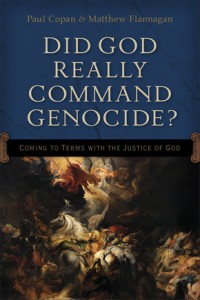 A common objection to belief in the God of the Bible is that a good, kind, and loving deity would never command the wholesale slaughter of nations. In the tradition of his popular Is God a Moral Monster?, Paul Copan teams up with Matthew Flannagan to tackle some of the most confusing and uncomfortable passages of Scripture. Together they help the Christian and nonbeliever alike understand the biblical, theological, philosophical, and ethical implications of Old Testament warfare passages.

Educating the Secular Education Network
October 6th, 2017 by Matt
Respond
The Secular Education Network (SEN) has been in the news of late, complaining about religious education in schools. My view is that whether a religious education programme should exist at a given school is something individual schools should decide for themselves and parents should be free to choose whichever school they want to send their child. However, I won’t argue for that position here. Instead, I wanted to comment on something I noticed about SEN. When SEN began getting media attention, I went to look at SEN’s website to see what the organisation was about. Here is the introductory paragraph:
Notice what SEN say here; First, they distinguish between religious instruction which involves church volunteers “leading people to faith in Jesus” and Religious studies which involve “a comparative overview of the major world religions, taken by qualified teachers in a neutral manner”. Concerning the latter, they say “New Zealand does not currently have this program.” The insinuation is that religious education in New Zealand consists only of the first type of practice.
To be honest, this is an astounding claim because it’s patently false. Those who know me personally will be aware I am a religious studies teacher at one of New Zealand’s largest public Catholic high-schools, our department teaches Philosophy, Theology, and religious studies at both Cambridge and NCEA level. Note what I just said here, New Zealand’s official qualification, The National Certificate of Educational Achievement (NCEA), has a Religious Studies Programme
This can, in fact, be found out by visiting the New Zealand Qualifications Authority website which lists subjects which currently exist in New Zealand schools. You’ll see religious studies listed under R. Moreover, one can examine the standards which NZQA lays down for this subject:
Level 1: (year 11)
Note what these standards require, in level 1 students have to accurately describe significant developments within, doctrines of, how texts function within a religious tradition. In level 2 they have to explain these things. Notice what’s being required here, understanding. Students need to be able to accurately describe and understand religious doctrines, moral reasoning, and history. Finally, in level 3 they have to analyse them. The assessment criteria for NCEA spells this out in more detail often describing involves such things as understanding the origins, the significance, to get merit excellence students often have to do things like evaluate the claims explore their implications and reflect on the significance of these answers. Note also each of these tasks can be done with any religious tradition at all and in several standards, they are required to compare more than one. Level two, for example, requires one to explain the answers of two different religious beliefs and in level 3 they have to compare and analysis secular and religious worldviews.
This is the religious studies standards for NCEA, consequently, New Zealand does have a programme for this. Moreover, I know that NCEA is used in lots of schools, most Catholic integrated schools in New Zealand I know of follow the NCEA programme as part of their religious education programme. I also know of state schools where it is used. I have taught at secular public schools for example where different religions are used in different standards as part of a course in philosophy. Even in Catholic schools, it’s not unusual for students to study Hinduism, or Islam, or Judaism under some of these standards so that students learn the diversity of religious views and how to compare them asses them and so forth. I was at a PD of Catholic schools a few months ago where several teachers mentioned they use Buddhism as an example in some of the standards. I know that there are PD’s on offer for religious education teachers on comparative religions because this is a growth area.
What’s significant is that nothing I say here is news to anyone remotely familiar with education in New Zealand’s secondary sector. Almost every religious education teacher I know of is aware of this, as will almost any child that attends one of the many integrated public schools that do NCEA religious studies and there is a reasonable number that does.
The reason I raise this issue is that it triggers in me a question. Why does the Secular Education Network not know this? You have to wonder about how much research the Secular Education Network has actually done on religious education in New Zealand when blurb on their website contains a pretty obvious falsehood. A falsehood almost anyone involved in religious education in New Zealand is aware of, and which almost any student in the many of NZ’s integrated Catholic schools knows is incorrect. To not know this they would have to have never looked at or examined most of the religious education that takes place every day in NZ schools. Moreover, this falsehood creates an obvious insinuation about religious education in New Zealand which is inaccurate and false. But of course politically expedient and useful to them.
Of course, none of this addresses the concerns SEN has about what it calls religious instruction when it occurs in the primary schools. But granting this, surely SEN have an obligation to not misrepresent the sector when they voice these concerns and to actually have researched and know what they are talking about rather than pandering to stereotypes. As I am sure they will agree we can’t have uninformed bigots who don’t know what they are talking about involved in education now, can we?
Tags: Education · Religious Studies18 Comments