With trips to the US, Christmas, New Years, the summer break, Madeleine’s work, my preaching and juggling the family and the launch of my book, it has been a while since I blogged. Since the last post was about me going to the US I figured I should start by giving a very belated update on the trip before I get down to more run of the mill blog posts.
Last time Madeleine blogged it was Wednesday 19 November 2014, the day after I had flown out of Auckland. I arrived in Los Angeles at 10 am on Tuesday 18 November 2014 (love the international date line!) and I finally arrived in San Diego that afternoon where I had an enjoyable dinner with Moore College President Mark Thompson.
The Evangelical Theological Society (ETS) and Evangelical Philosophical Society (EPS) meetings began the next day. The first session I attended was a very good paper by Richard Davis and Paul Franks critiquing Wes Morriston’s criticisms of divine command meta-ethics (DCM). This paper was technical so I’ll try to summarise: Morriston objects that if moral requirements are identical with God’s commands, and even if it’s impossible for a perfectly good God to command the random sacrifice of 3 years olds, DCM still entails that if this impossibility were actualised and God were to command the random slaughter of 3 year olds, then such slaughter is wrong.
This objection involves what is called a counter-possible, which is a hypothetical statement with an impossible antecedent. In this case the antecedent is that a perfectly good person could command the random sacrifice of children. According to the standard semantics for counter in modal logic all counter-possibles are trivially true. Morriston argues this approach to standard semantics is mistaken; it is plausible that some counter possibles are false and that this counter-possible is one such example.
Davis and Franks, give an interesting and thoughtful reply to Morriston in their forthcoming article “Counterpossibles and the ‘Terrible’ Divine Command Deity“. They argue: (a) Morristons’ own criteria for distinguishing true from false counter-possibles entails that the counter-possible, If God commanded random sacrifice then random sacrifice is morally required, is, in fact, true and not false. Second, (b) they argue that DCM does not entail this counter-possible.
To put their point in a nutshell: they argue that a world where God commands evil is a world where God ceases to be good; and since goodness is an essential property of God this entails that in such a world God would cease to exist. However, given God is the creator and sustainer of all that is distinct from him, a world where God does not exist is a world where nothing exists. Hence, it is false that if God commands evil, evil would be morally required. This was an excellent paper and I enjoyed some stimulating discussion with both of the authors during the Q&A and also at lunch.
Next up was a paper by Frank Beckwith discussing Judith Jarvis Thomson’s famous article “A defence of abortion”. Thomson famously concedes for the sake of argument that a fetus is a human being and then argues, from analogy, that even if that is the case abortion is still permissible. Beckwith argued that, in fact, Thomson does not grant the personhood of the fetus in the way opponents of abortion understand it, but instead assumes a radically individualistic understanding of persons whereby people are not bound by any obligations to others which they do not willingly consent to, a picture which appears to rule out such things as parental duties to children or children’s duties to parents.
This was followed by Micheal Rea’s interesting paper on whether God is gendered and the use of masculine and feminine language and imagery in describing God. His argument was that God is not gendered and the fact that most imagery used in scripture to describe God is masculine does not justify conceptualising God is exclusively masculine terms.
In the break I had some very good fellowship and discussion over pizza with members of the Facebook group, Christian Apologetics Alliance.
In the afternoon I took part in the ethics session of the ETS. The session kicked off with an interesting paper on how capital punishment is practiced in the US. The author, Ken Magnuson, made several disturbing observations about the fact that wealthy people almost always escape capital murder charges whereas the poor do not. This paper was unclear on what the nature of the core problem was: was it that innocent poor people were executed, or that the guilty escaped justice? While the fact that large numbers of innocent are executed might be a reason for opposing the death penalty, the fact that some guilty people get off does not seem to be. If the problem is that some escape capital punishment who deserve it, then ensuring everyone escapes capital punishment will increase the injustice. What was clear was that there needs to be some reforms to ensure less inequitable outcomes.
Next was a paper by Evan Lenow where he argued that the philosophical doctrine of self-ownership, as articulated in its progenitor John Locke, does not support abortion rights. In this I thought he was right; Locke’s writing in the first treatise makes Lenow’s case even stronger.
That afternoon I gave my paper, “Abortion as Self-Defence”. I offered a critique of Elieen Mcdonagh’s contention that even if a fetus is a human being, its presence inside a women who does not wish to be pregnant constitutes an act of unjustified aggression and so a women’s right to self-defence entitles her to kill it. My criticism was based on the fact that, in non rape cases, the fetus’ existence inside the woman is due to voluntary sexual intercourse for which her and her partner are responsible and this action confers parental obligations upon both of them. Given that parents have an obligation to provide the basic necessities of life to their children, the fetus’ appropriation of such necessities cannot be unjust aggression. This paper was well received and there was some excellent discussion about rape cases and therapeutic abortion in the Q&A. (Audio of my talk is available here.)
Thursday was equally intense. I began the morning hearing a paper by David Wood on Paul Draper’s version of the problem of evil. This was followed by a panel discussion on Scott Smith’s recent book, In Search of Moral Knowledge. The panel consisted of Francis Beckwith, David Baggett and James Dew, all offering critique and commentary on the book and Smith offering a response.
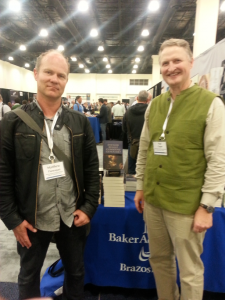 Over lunch I met with Paul Copan and a representative from Baker Academic to discuss the launch of Copan’s and my book, Did God Really Command Genocide?: Coming to Terms with the Justice of God, the promotional events we would each be participating in, and also the prospect of further publications in the future. I was then interviewed on camera for US television about the book. [Read more →]
Tags: Evangelical Philosophical Society · Evangelical Theological Society · Society of Biblical Literature


 When Matt was in San Diego for the Evangelical Theological Society (ETS) and Evangelical Philosophical Society (EPS) meetings in November 2014, Randal Rauser interviewed him for his Podcast, The Tentative Apologist.
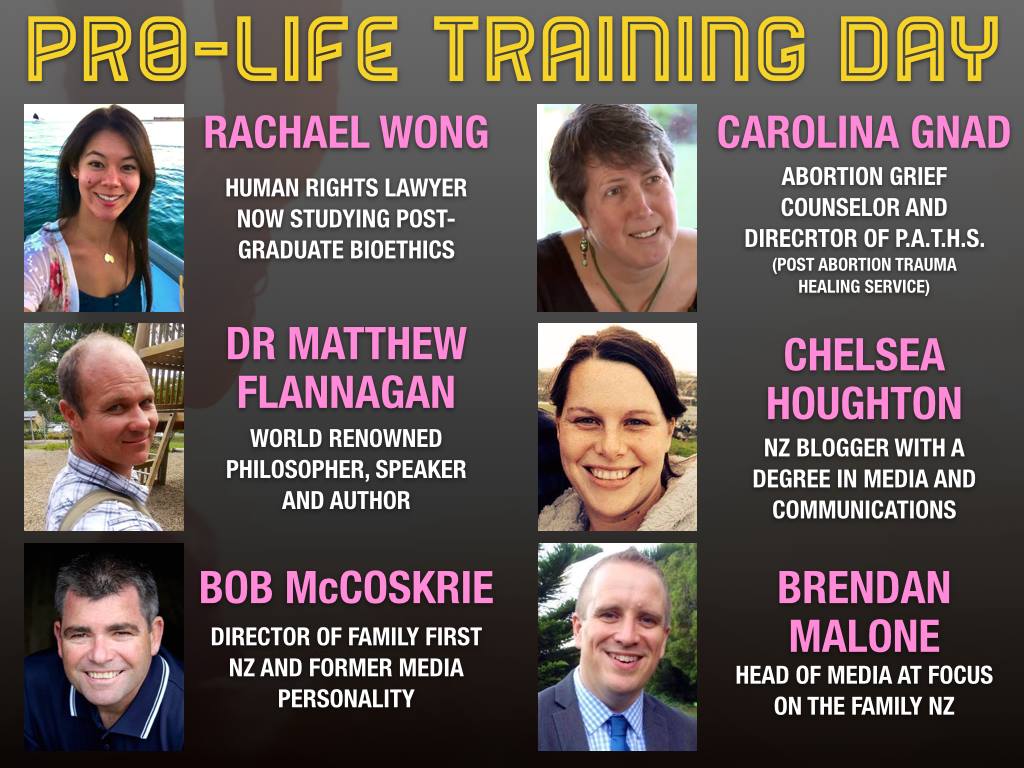
 Matt has safely arrived in San Diego and the Annual General Meetings of the Evangelical Philosophical and Theological Societies commence in a few hours.
 I think his reasoning on both points is mistaken, before getting into why, I note that this article proposes to be about whether belief in God is essential to morality; it is not about the related, though separate, question of whether the existence of morality depends on the existence of God.
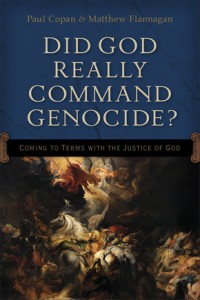 A common objection to belief in the God of the Bible is that a good, kind, and loving deity would never command the wholesale slaughter of nations. In the tradition of his popular Is God a Moral Monster?, Paul Copan teams up with Matthew Flannagan to tackle some of the most confusing and uncomfortable passages of Scripture. Together they help the Christian and nonbeliever alike understand the biblical, theological, philosophical, and ethical implications of Old Testament warfare passages.