Albert Giubilini and I would not agree on a lot. Giubilini has defended not only abortion rights but what he calls “after-birth abortion”( which of course is a reference to infanticide). He also opposes religious conscientious objection in medicine. I disagree with him on both topics and disagree strongly. I find his conclusions repugnant.
However, it is the nature of moral philosophy that people will debate controversial moral opinions, opinions both sides feel strongly about. When the issue is a serious one, such as the ethics of war, abortion, or capital punishment, where you are literally discussing who can and cannot be killed people will find the views of their opponents repugnant and sincerely believe their views are harmful. This does not mean I attempt to harangue and shut down any lectures he does, or lobby for journals to not publish his work. It means I do the best I can to critique his views, as well as defend and sketch an alternative ethic which better accounts for our considered moral judgements.
Studying moral philosophy has also taught me that often people you disagree with on one topic will say insightful and interesting things on another. In fact, they often say insightful things on the topic you disagree with them on. Those you disagree with are almost never always wrong and those in your camp are almost never always right. You can learn a lot reading people whose worldviews are very different to your own.
To this end. I recently found an interesting piece Gulibani wrote on the. Practical Ethics blog at Oxford University.
One thing that stands out from the article is this, which reflects ideas I have myself expressed on occasion.
The problem I am talking about is that on university campuses there is today a tendency towards bigotry. Being offended by certain topics to the point of wanting to shut down discussions can, in certain circumstances, turn political correctness into a kind of bigotry. Following the dictionary, we can define bigotry as “intolerance towards those who hold different opinions from oneself.” In this dictionary sense, bigotry does not describe the content of one’s moral beliefs, but rather the extent to which someone is prepared to expose her ideas to counter-arguments and evidence. Also, a more philosophical definition of “bigotry” – such as the one provided by John Corvino – does not tie bigotry to any particular political or moral view, whether “conservative” or “liberal.” According to Corvino, bigotry is “stubborn and unjustified contempt toward groups of people, typically in the context of a larger system of subordination.
Giubilini points out that bigotry, or “being a bigot” is not determined by the fact a person holds a particular opinion on race, gender, abortion, religion, political policy or economics to you. According to both the normal dictionary meanings of the word[1], and also more detailed philosophical analyses such as that of John Corvino. Bigotry is a function of *how* the opinion is held, and how one responds to those who disagree with that opinion.
Two aspects of what constitutes bigotry are noteworthy. Bigotry involves not just strongly held opinions, but *stubbornly* held opinions. If one holds an opinion strongly but is prepared to listen to counterarguments and revise your opinion in the face of new information and argument rather than just stubbornly affirm it no matter what, then you are not a bigot. You might be mistaken, but you aren’t a bigot.
Similarly, bigotry involves intolerance towards those who hold rival ideas. Intolerance is not “disagreement”. If I said to you, “I tolerate my wife’s cooking” you would assume my wife was a bad cook and her cooking was something I had to endure dispute not liking it. You are not tolerant if you agree with certain views. Tolerance is determined by how one responds to views one disagrees with or finds distasteful, mistaken and so on.
So if you try and ban and shut down, or express hatred towards people who disagree with you, demeaning them banning them, trying to have them removed from the country, intimidating them insulting and shaming them and so forth then you are intolerant. It doesn’t matter what those views are and what views you hold. If you do those things you are not tolerating those who disagree with you.
To his credit, Gulibani realizes this:
“The aforementioned reactions of some pro-life (and, to a smaller extent, of some pro-choice) people to the after-birth abortion paper are a clear example of bigotry. But it would be a mistake to think that in academia bigotry is a prerogative of the pro-life or conservative camp. Actually, as the feminists’ disruption of the OSFL’s event demonstrates, pro-lifers and conservatives in academia are often victims of bigotry on the part of (some) feminists, pro-choice supporters, and liberals more generally. This is because bigotry is a function of the (un)ease with which someone is offended by other people’s opinions or even by scientific hypotheses, and there is no reason to think that feminists, so-called liberals or pro-choice advocates are less susceptible to being easily offended than conservatives. One can hold the most progressive or liberal ethical and political views and still be a bigot in the sense of I have defined. As Teresa Bejan recently wrote in an article in The Atlantic, today, “[w]hile conservative students defend the importance of inviting controversial speakers to campus and giving offense, many self-identified liberals are engaged in increasingly disruptive, even violent, efforts to shut them down.” As a self-identified liberal, I have to say that, sadly, this claim finds confirmation in my experience.”
The irony is that today, many people who confidently pride themselves on “calling out bigotry” are actually bigots.
If you turn up to angry protests demanding that people who express certain views be silenced, shut down. You are doing two things, first, you are showing, that will not consider rival views, listen to them or consider them, instead, you will just angrily shut those views down, refuse to listen and make sure no one else can. You will not examine any counterarguments, in fact you are demanding such arguments not be made. If you do this have not just strong views, but stubborn views, views immune to counter-evidence. Second, you are also exercising intolerance towards those with whom you disagree. So, you are a bigot.
Saying “ I am calling out bigotry” doesn’t make you, not a bigot just as the claim by the characters in Orwell’s 1984 claiming they worked for the Ministry of Truth, didn’t change the fact they were publishing lies. Stating a claim over and over doesn’t make it true. Nor does chanting slogans about how much you hate bigotry make you, not a bigot. Words have meanings and we know what a bigot is. If you hold your opinion stubbornly and use it to act intolerantly against others you meet the core criteria of a bigot.
So, when I am confronted with a young first-year university student, straight out of high school, who tells me some view I hold “makes me a bigot” and concludes am to be shunned or insulted, or silenced, because of this. My reaction is to roll my eyes.
I have spent years studying questions in moral philosophy and in theology, reading and exposing myself to people on all sides of the issue. I have engaged in public debates and panel discussions with people I disagree. I read the works of the best opponents of the views I hold and I have published responses to some of them in the literature. On some occasions, I have discussed and debated issues with them. I have learnt a lot from this, on several occasions my views have shifted, or I have revised what I thought. It is, of course, possible that I am holding my views stubbornly and if you have some reasons or arguments, you want me to consider I am happy to listen.
However, if you are just going to assert without argument, I am a bigot, refuse to listen and then demand I be shunned, hated, fired, muzzled etc. etc. I am afraid that your claim to be calling out bigotry is self-deceived bull shit. It is true I might be a bigot. However, your behaviour makes it abundantly clear that you are.
Your claim to be calling out bigotry is on par with someone standing in a room shouting, in English, “I don’t speak a word of English”. That’s funny, it is something one might see an epic Monty Python skit on. But don’t expect me to take your conclusions remotely seriously. When you grow up and can have a rational discussion rather than throw a tantrum let me know. In the meantime, stop the bullshit you’re a bigot. If you want to call out bigotry, try the mirror.
[1] Some examples:
Webster’s Ninth New Collegiate Dictionary defines a bigot as: someone who is ‘obstinately or intolerantly devoted to his own opinions and prejudices’,
The American Heritage Dictionary of the English Language says a bigot is:‘one who is strongly partial to one’s own group, religion, race, or politics and is intolerant of those who differ’.
Miriam Webster defines a bigot as “a person who is obstinately or intolerantly devoted to his or her own opinions and prejudices especially : one who regards or treats the members of a group (such as a racial or ethnic group) with hatred and intolerance
The Oxford Dictionary of English defines bigotry as: ‘obstinate and unenlightened attachment to a particular creed, opinion system or party’.
Oxford Languages defines a bigot as “a person who is obstinately or unreasonably attached to a belief, opinion, or faction, especially one who is prejudiced against or antagonistic towards a person or people on the basis of their membership of a particular group.
Tags: Bigotry · Free speech


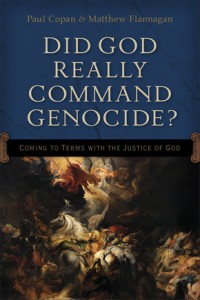 A common objection to belief in the God of the Bible is that a good, kind, and loving deity would never command the wholesale slaughter of nations. In the tradition of his popular Is God a Moral Monster?, Paul Copan teams up with Matthew Flannagan to tackle some of the most confusing and uncomfortable passages of Scripture. Together they help the Christian and nonbeliever alike understand the biblical, theological, philosophical, and ethical implications of Old Testament warfare passages.

When bigots call out “bigots”
April 13th, 2023 by Matt
Respond
Albert Giubilini and I would not agree on a lot. Giubilini has defended not only abortion rights but what he calls “after-birth abortion”( which of course is a reference to infanticide). He also opposes religious conscientious objection in medicine. I disagree with him on both topics and disagree strongly. I find his conclusions repugnant.
 believe their views are harmful. This does not mean I attempt to harangue and shut down any lectures he does, or lobby for journals to not publish his work. It means I do the best I can to critique his views, as well as defend and sketch an alternative ethic which better accounts for our considered moral judgements.
However, it is the nature of moral philosophy that people will debate controversial moral opinions, opinions both sides feel strongly about. When the issue is a serious one, such as the ethics of war, abortion, or capital punishment, where you are literally discussing who can and cannot be killed people will find the views of their opponents repugnant and sincerely
Studying moral philosophy has also taught me that often people you disagree with on one topic will say insightful and interesting things on another. In fact, they often say insightful things on the topic you disagree with them on. Those you disagree with are almost never always wrong and those in your camp are almost never always right. You can learn a lot reading people whose worldviews are very different to your own.
To this end. I recently found an interesting piece Gulibani wrote on the. Practical Ethics blog at Oxford University.
One thing that stands out from the article is this, which reflects ideas I have myself expressed on occasion.
Giubilini points out that bigotry, or “being a bigot” is not determined by the fact a person holds a particular opinion on race, gender, abortion, religion, political policy or economics to you. According to both the normal dictionary meanings of the word[1], and also more detailed philosophical analyses such as that of John Corvino. Bigotry is a function of *how* the opinion is held, and how one responds to those who disagree with that opinion.
Two aspects of what constitutes bigotry are noteworthy. Bigotry involves not just strongly held opinions, but *stubbornly* held opinions. If one holds an opinion strongly but is prepared to listen to counterarguments and revise your opinion in the face of new information and argument rather than just stubbornly affirm it no matter what, then you are not a bigot. You might be mistaken, but you aren’t a bigot.
Similarly, bigotry involves intolerance towards those who hold rival ideas. Intolerance is not “disagreement”. If I said to you, “I tolerate my wife’s cooking” you would assume my wife was a bad cook and her cooking was something I had to endure dispute not liking it. You are not tolerant if you agree with certain views. Tolerance is determined by how one responds to views one disagrees with or finds distasteful, mistaken and so on.
So if you try and ban and shut down, or express hatred towards people who disagree with you, demeaning them banning them, trying to have them removed from the country, intimidating them insulting and shaming them and so forth then you are intolerant. It doesn’t matter what those views are and what views you hold. If you do those things you are not tolerating those who disagree with you.
To his credit, Gulibani realizes this:
The irony is that today, many people who confidently pride themselves on “calling out bigotry” are actually bigots.
If you turn up to angry protests demanding that people who express certain views be silenced, shut down. You are doing two things, first, you are showing, that will not consider rival views, listen to them or consider them, instead, you will just angrily shut those views down, refuse to listen and make sure no one else can. You will not examine any counterarguments, in fact you are demanding such arguments not be made. If you do this have not just strong views, but stubborn views, views immune to counter-evidence. Second, you are also exercising intolerance towards those with whom you disagree. So, you are a bigot.
Saying “ I am calling out bigotry” doesn’t make you, not a bigot just as the claim by the characters in Orwell’s 1984 claiming they worked for the Ministry of Truth, didn’t change the fact they were publishing lies. Stating a claim over and over doesn’t make it true. Nor does chanting slogans about how much you hate bigotry make you, not a bigot. Words have meanings and we know what a bigot is. If you hold your opinion stubbornly and use it to act intolerantly against others you meet the core criteria of a bigot.
So, when I am confronted with a young first-year university student, straight out of high school, who tells me some view I hold “makes me a bigot” and concludes am to be shunned or insulted, or silenced, because of this. My reaction is to roll my eyes.
I have spent years studying questions in moral philosophy and in theology, reading and exposing myself to people on all sides of the issue. I have engaged in public debates and panel discussions with people I disagree. I read the works of the best opponents of the views I hold and I have published responses to some of them in the literature. On some occasions, I have discussed and debated issues with them. I have learnt a lot from this, on several occasions my views have shifted, or I have revised what I thought. It is, of course, possible that I am holding my views stubbornly and if you have some reasons or arguments, you want me to consider I am happy to listen.
However, if you are just going to assert without argument, I am a bigot, refuse to listen and then demand I be shunned, hated, fired, muzzled etc. etc. I am afraid that your claim to be calling out bigotry is self-deceived bull shit. It is true I might be a bigot. However, your behaviour makes it abundantly clear that you are.
Your claim to be calling out bigotry is on par with someone standing in a room shouting, in English, “I don’t speak a word of English”. That’s funny, it is something one might see an epic Monty Python skit on. But don’t expect me to take your conclusions remotely seriously. When you grow up and can have a rational discussion rather than throw a tantrum let me know. In the meantime, stop the bullshit you’re a bigot. If you want to call out bigotry, try the mirror.
[1] Some examples:
Webster’s Ninth New Collegiate Dictionary defines a bigot as: someone who is ‘obstinately or intolerantly devoted to his own opinions and prejudices’,
The American Heritage Dictionary of the English Language says a bigot is:‘one who is strongly partial to one’s own group, religion, race, or politics and is intolerant of those who differ’.
Miriam Webster defines a bigot as “a person who is obstinately or intolerantly devoted to his or her own opinions and prejudices especially : one who regards or treats the members of a group (such as a racial or ethnic group) with hatred and intolerance
The Oxford Dictionary of English defines bigotry as: ‘obstinate and unenlightened attachment to a particular creed, opinion system or party’.
Oxford Languages defines a bigot as “a person who is obstinately or unreasonably attached to a belief, opinion, or faction, especially one who is prejudiced against or antagonistic towards a person or people on the basis of their membership of a particular group.
Tags: Bigotry · Free speechComments Off on When bigots call out “bigots”