MandM header image 4

IS A FETUS A HUMAN BEING? Part one: Viability

June 7th, 2019 by Matt
Respond

This is one of a series of posts based on a class I teach for level 3 NCEA Religious Studies.

In the last few posts we saw that most of the Christian religious tradition sketched the following argument against feticide;

Premise [1] Killing a human being without justification violates the law of God.

Premise [2] A formed conceptus (i.e. a fetus) is a human being.

Premise [3] In the case of feticide (at least in the majority of cases) insufficient or no justification is forthcoming.

In this next series of posts, we will look at [2], the claim that a fetus, is a human being.

Viability

A very common position put forward today is that a foetus doesn’t become a human being until the point of viability. Viability refers to the point in pre-natal development where a foetus can live outside the mother’s womb. The idea is that fetus is not a human being until it is capable of surviving independently of another individual, before this period, it does not have an independent existence from its mother.

Philosopher Susan Sherwin expresses this idea when she states that a fetus “is wholly dependent on her [the mother’s] unique contribution to its maintenance, while a newborn is physically separate, though still in need of a lot of care”[1]. Current medical technology means that viability occurs around 22-24 weeks after conception. At this point in time an infant that is born prematurely survive and be placed in an incubator.

Objections to viability

Obviously, the claim that a fetus is not a human being until viability is controversial. Several important objections have been raised to this position. We will look at the main ones below.

A. The problem of differing technology

The Philosopher Peter Singer contends that just because a fetus cannot survive independently of its mother that does not mean it is not a human being. This is because whether a fetus is viable or not depends more on the medical technology of a particular culture than any feature of the fetus itself. A fetus that is not viable in a more impoverished country like Chad is viable in a city like Los Angeles. If viability is necessary for something to be a human, then a woman pregnant with a viable fetus in Los Angeles who flies from Los Angeles to Chad carries a human being when she leaves, but this human being ceases to exist when she arrives in India and yet becomes human again when she returns.

2. The problem of conjoined twins

The Philosopher Michael Tooley offers a different criticism of people who claim that viability is the point where a human comes into existence. Tooley argues this claim has the strange implications that conjoined (Siamese) twins are not humans either[2]. Consider conjoined twins Bob and Scott. If Bob is a human being, then since Scott cannot live independently of Bob, Scott must not be a human person. However, it is difficult to see what property Bob has that Scott lacks which would justify considering one a human and the other not. It appears then that one would be forced to conclude that they both are, and are not, human. However, both Bob and Scott are humans and killing one or both of them would be homicide despite this entailing that they are both human beings even though one cannot live independently of the other.

 C. Does Dependence end at Birth

Above we quoted the philosopher Susan Sherwin, Sherwin argued that the difference between a fetus and a newborn infant is that a fetus is dependent on the mothers care and cannot live independently of her. Some Philosophers have argued this is false, they claim that when you reflect on the facts carefully, it is clear that dependence doesn’t end at birth. Philosopher David Oderberg is an example:

A born baby is also totally dependent on its mother, only instead of being fed and sheltered by the mother’s automatic internal processes, it is fed and sheltered by the mother’s consciously controlled external, behaviour. How can that make a difference to whether or not a foetus is a human being?[3]

Peter Singer points out that a new-born is entirely dependent on its mother if it happens to be born in an isolated area where there are no other lactating women or the means of bottle-feeding. An elderly woman may be entirely dependent on her children looking after her. A hiker who breaks her leg a week’s walk from a road will die if her companions do not bring help. Yet in these situations. Yet the hiker, the elderly women or the baby are still t human beings.  He concludes it is not plausible to suggest that the dependence of the non-viable fetus upon its mother makes it non-human.


[1] Susan Sherwin, “Abortion a Feminist Perspective,” in Ethical Issues in Modern Medicine, 5th ed., ed.

Bonnie Steinbock & John D. Arras (Mountain View CA: Mayfield Publishing Co, 1999), 364.

[2] Michael Tooley, “Abortion and Infanticide” Philosophy and Public Affairs, Vol. 2, No. 1 (Autumn, 1972), 51

[3] David Oderberg, Applied Ethics: A Non-Consequentialist Approach (Oxford: Blackwell Publishers Co, 2000), 5.


Tags:   · · · · · · 1 Comment

FETICIDE IN CHRISTIAN MORAL THOUGHT (Part Four) : Feticide in the Reformed Protestant Tradition

May 28th, 2019 by Matt
Respond

In our last post we saw how Medieval Christian’s adopted the same position on abortion we saw developed in Alexandrian Judaism and by Patristic theologians. We also saw how this position found its way into European and English law.  Of course during the medieval period, Christian’s in Europe were Catholic.  However, during the sixteenth and seventeenth centuries, the Protestant Reformation happened.

I. Martin Luther
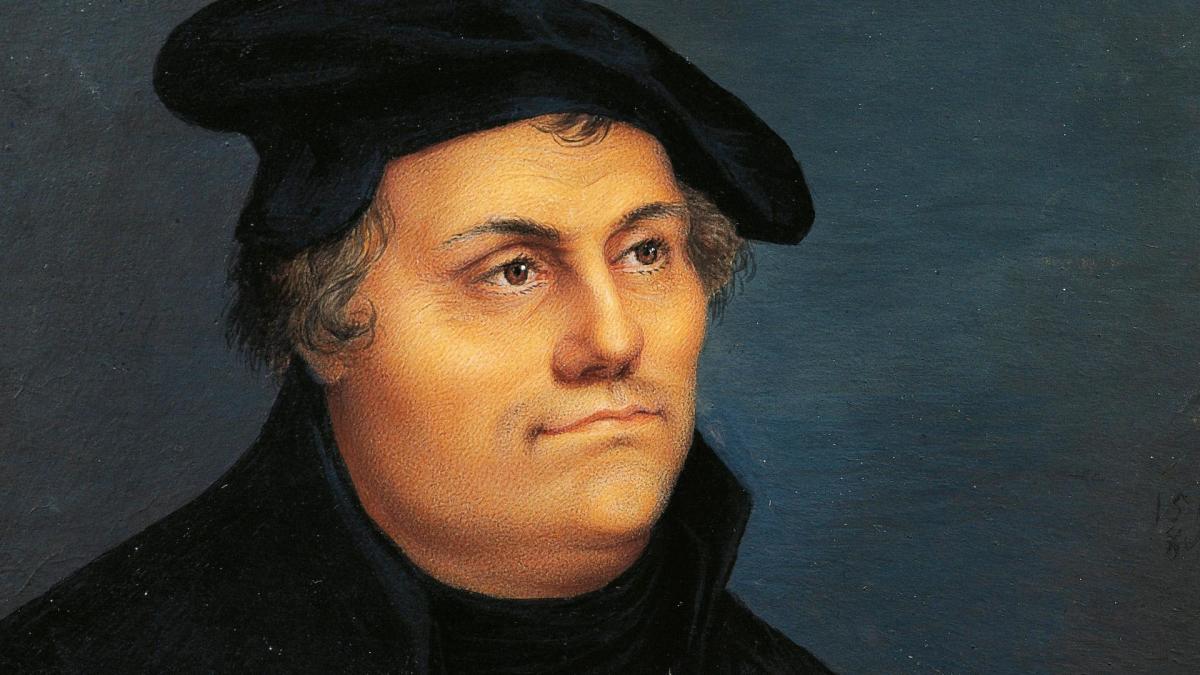
In 1517 Martin Luther nailed 95 theses: propositions of protest, to the Wittenberg chapel door, sparking off a debate which would split Europe into religious factions. Luther began a movement known as Protestantism.  Protestants departed from several teachings that were advocated by the Roman Catholic Church during the Middle Ages.  These teachings predominately dealt with issues of whether a person is saved by faith or works and questions of authority and church government. There were however also some differences in opinion on certain moral issues such as divorce and celibacy.

What is interesting however is that on abortion, the leaders of the Protestant Reformation came to essentially the same answer as their Catholic predecessors.

In his writings, Luther addressed the issue of feticide briefly stating, “those who have no regard for pregnant women and do not spare the tender fruit are murderers and infanticides”[1].93  Luther claims that killing a fetus is both murder and infanticide.

II. Philip Melanchthon (1497 –1560)

A similar stance was taken by Philip Melanchthon. Melanchthon was a close companion of Luther and, next to Luther, was probably the most important leader in the Protestant Reformation and one of the first Protestant theologians. Melanchthon stated that on the forty-fifth day after conception a “fetus with formed distinct members begins to live” and he added, “souls are inserted into children about the forty fifth-day and then not only should it [the conceptus] be called an embryo but even an infant”.[2]   The reference to the forty-fifth day is probably a reference to the biological theories of ancient Greek philosophers which we looked when we studied  Alexandrian Judaism.

III. John Calvin

After Luther and Melanchthon, the next most important figure in the Reformation was John Calvin. Calvin established one of the most important schools of Protestant Theology in Geneva and wrote the most important defence of Protestant theology in the period.  In his Commentary on the Five Books of Moses. Calvin wrote that:

[T]he fetus, though enclosed in the womb of its mother, is already a human being, (homo,) and it is almost a monstrous crime to rob it of the life which it has not yet begun to enjoy. If it seems more horrible to kill a man in his own house than in a field, because a man’s house is his place of most secure refuge, it ought surely to be deemed more atrocious to destroy a fetus in the womb before it has come to light.[3]

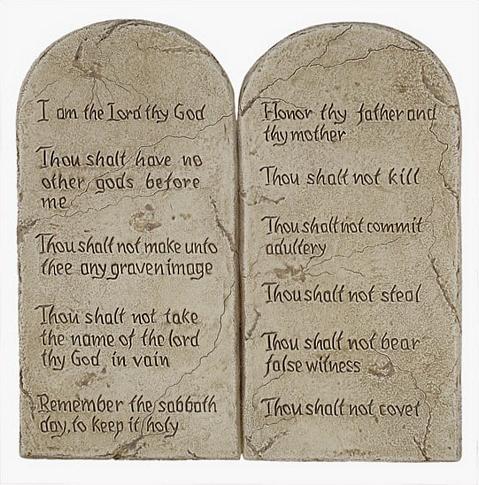
This comment occurs in Calvin’s discussion of Exodus 21:22-25. The is the passage we looked at when we studied Alexandrian Judaism.  Calvin appeals directly to the law regarding a pregnant woman, which was cited by Alexandrian Jews, such as Philo, and Patristic writers like Jerome, Augustine.  Calvin concludes that killing a fetus in the womb is homicide.  Like these other writers, Calvin takes abortion to violate the fifth of the ten commandments. The quote above occurs in a commentary on the ten commandments specifically in the section that explains the meaning of the commandment “you shall not kill.”

IV. Early Calvinists

Calvin’s influence on later Protestants was immense. People who followed Calvin’s ideas were often called “Calvinists” or “reformed”. In England, a group of Calvin’s followers emerged who historians call “the Puritans” they wanted to reform the Church of England along much more Calvinist lines and make its liturgy less  Catholic.

A leader of this group was a man called William Gouge (1575–1653) Gouge was the chairperson of a committee which drew up a document called “The Westminster Confession in 1640. The Westminster Confession was an official statement of Protestant belief and is still the official belief statement of Presbyterian and Reformed Churches today. Gouge wrote that it was a violation of the fifth commandment to abort “that which hath received a soul formed in it by God” and that “if it be unjustly cast away, shall be revenged”.[4]

Calvinists understood the sixth commandment to forbid killing a human being without justification. Calvin had argued that “The sum of this Commandment is, that we should not unjustly do violence to anyone”.[5][Emphasis added]

Calvin acknowledged that sometimes killing or violence are justified and in his commentary proceeded to justify homicide in certain situations based on the law itself. The conclusions that he reached were summarized in the Westminster Catechism under the question, “What is forbidden by the Sixth Commandment?” the answer was, “The sins forbidden in the Sixth Commandment are, all taking away the life of ourselves, or of others, except in case of public justice, lawful war, or necessary defence”[6] Seeing it makes no sense to punish a fetus for a crime or literally go to war with a fetus. These conclusions suggest that in the reformed tradition feticide can be justified, if at all, only under the justification of self-defence.


[1] Ewald M Plass, What Luther Says: An Anthology, (St Louis, MO: Concordia Publishing House, 1959) 509, cited in G. Willams, “Religious Residues and Presuppositions in the American Debate on Abortion,” Theological Studies 31:1

[2] Melanchthon, “Definitio Animae Usitata in Eccesia,” Corpus Reformatorum 13, cited in G. Willams, “Religious Residues and Presuppositions in the American Debate on Abortion,” Theological Studies 31:1 (1970).

[3] John Calvin, Harmony of the Law, Vol. 3 http://www.ccel.org/c/calvin/comment3/comm_vol05/htm/TOC.htm.

[4] W Gouge, Of Domesticall Duties, Eight Treatises 506, cited in G. Willams “Religious Residues and Presuppositions in the American Debate on Abortion,” Theological Studies 31:1 (1970).

[5] Plass, What Luther Says, 509, cited in G. Willams, “Religious Residues and Presuppositions in the American Debate on Abortion” Theological Studies, 31:1 (1970).

[6] Larger Westminster Catechism, question 136

Tags:   · · · · · · Comments Off on FETICIDE IN CHRISTIAN MORAL THOUGHT (Part Four) : Feticide in the Reformed Protestant Tradition
PART THREE: FETICIDE IN CHRISTIAN MORAL THOUGHT (Part three) : The Medieval Period

May 25th, 2019 by Matt
Respond

I teach NCEA Religious Studies, at level three, one standard is to “Analyse the response of a religious tradition to a contemporary ethical issue”. Officially students have to describe the response a religious tradition has made to a moral issue. Our school like a lot of schools looks at Christian responses to abortion. Because I did my PhD thesis on this very subject in the last year I have been going through my dissertation and simplifying, summarising and rewriting it into short sections I can use with my classes. Because there is some interest in this, I have decided to post some of these on MandM. I welcome any feedback or comments.

In our last  post we looked at how Christian theologians who wrote during the Patristic period, the period from 90AD to 475 AD, addressed the question of abortion. Our survey suggested they adopted essentially the same position we saw earlier in Alexandrian Judaism and which is found in the Septuagint. In this next section, we will look at the medieval period. Historians date the medieval period from 500 AD -1500. AD, during this period Christian Theologians adopted pretty much the same stance they did during the Patristic period.

I. Canon Law

The period from 500-1000 AD is known as the early middle ages. During this time the church in Europe developed what is called Canon law. Canon law is a set of laws developed by church authorities to govern the church and its members. One thing that Canon law had to deal with was penance; suppose someone commits a seriously immoral action, how should the church respond, what penalties practices of confession and repentance, should be in place to deal with this such practices are known in Catholicism as penance.

During the early middle ages, manuals about how penance should be applied were developed. Many of these manuals addressed abortion. Here are some examples:

  • Manual Canones Hibernenses (675 A.D.) refers to abortion as a sin but draws a distinction between an unformed embryo and a formed, fetus. While both incur a penalty, The latter is punished more severely.[1]
  • The Bigotian Penitential (8th Century AD) draws a distinction between an embryo in liquid form and a fetus with flesh and spirit. Both abortions are punished, but the latter is punished more severely. [2]
  • The Anglo-Saxon Penitentials (668-690 A.D.) associated with the then the Archbishop of Canterbury Theodore drew a distinction between an abortion before and after 40 days. Penances are imposed for both periods; however, the penance after 40 days is stricter.[3] 
  • The Penitentiale Discupulus Umbrensium, states that if abortion takes place before an embryo has a soul the penance will be a year or three forty-day periods [4]

In 1000 AD Pope Leo began reforming canon law and attempted and get a consistent practice. A Bishop called Ivo de Chartres collected together various manuals which became the standard rules for the church. Ivo dealt with abortion under the heading of “Homicide” he cited various Patristic writers we mentioned in our last lesson such as Jerome and Augustine and argued that a formed embryo or fetus is a human being and hence killing is a form of homicide[5] Ivo’s position became the standard position in Medieval Canon law. Ivo’s position was adopted by Gratian (1160) and Gratian’s work on Concordia became the dominant text of Canon law until the nineteenth century.

  1. II. Medieval Theology

Alongside Canon law, we can also examine what Theologians or Philosophers who taught at Universities wrote.

1.Peter Lombard

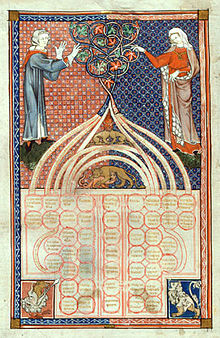
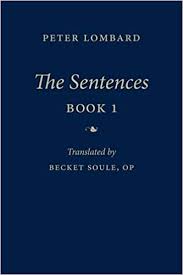
One of the most important Theologians of the middle ages was Peter Lombard. Lombard lived from 1095-1160 A.D. He is important because he wrote The Sentences which was the most widely used textbook in Medieval universities.  When discussing feticide, Lombard repeated the texts cited by Gratian and Patristic writers such as Augustine, Jerome and also quote from the Septuagint.[6]

Because Lombard’s book was such a widely used , other scholars of the period wrote commentaries on it.

  • In his commentaries, Albert the Great (1206-1280) accepted Lombard’s position that killing a formed conceptus was homicide.[7]
  • In his commentary Bonaventure (1221-1274) also accepted Lombard’s position that killing a fetus was homicide.[8]

2.Thomas Aquinas

The most famous Theologian and philosopher of the middle ages was Thomas Aquinas (1225-1275). In his commentary the Sentences he accepted Lombard’s basic position.80 Later, in the Summa Theologiae, Aquinas quotes Exodus 21:22-25:

He that strikes a woman with child does something unlawful: wherefore if there results the death either of the woman or of the animated fetus, he will not be excused from homicide, especially seeing that death is the natural result of such a blow.[9]

3.John of Naples

A final theologian to note is fifteenth-century theologian John of Naples.  John wrote a book called Quodlibeta; in which he addressed the question “is it acceptable to give medical treatment to a pregnant woman if doing so will cause an abortion?”  John’s answer. If the drugs are provided for the purpose of destroying the embryo or fetus, then this is forbidden. On the other hand, if the drugs are provided to save the woman’s life from a fatal illness, then one can provide this treatment to her provided the fetus is not formed at the time.

John was the first Theologian since Tertullian to explicitly address the question of whether abortion was acceptable to save a woman’s life. His position was taken up by later theologians and lead to a debate about under what circumstances abortion was acceptable if it saved a pregnant woman’s life.

III. Medieval Law

We will close our examination of the medieval period by looking at the law.

1. Roman Law
During the medieval period, Europeans followed Roman law. Roman law regarding abortion had developed as follows:

  • Roman dictator Sulla (81 BC) passed the Lex Cornelia a general law against selling and distributing poison.
  • Roman legal scholar Iulius Paulus applied the Lex Cornelia to cover drugs that cause an abortion:

If anyone gives another a love potion or an abortion potion, even without an evil intention, since it is a source of bad example, he will be condemned to work in the mines if he belongs to the lower classes. If he belongs to the upper classes, he will be exiled and part of his property confiscated. But if the man dies, he will be punished with a capital sentence.[10]

This became known as the Qui Abortionis law. The phrase “but if a man dies” probably referred to the death of the mother. However, during the medieval period, European lawyers began interpreting Roman law in accord with both the Septuagint and canon law. As a result, the reference to killing a man in the Qui Abortion was understood to include the killing of a fetus, 40 days after conception.

2.English Common Law

Canon law and medieval European law had an influence on English common law:  English common law is that part of English law which is based on custom.

  • Henry Bracton, (1210 – 1268 AD ) recorded English common law as stating: “If there is anyone who strikes a pregnant woman or gives her a poison which produces an abortion if the foetus be already formed or animated, and especially if it be animated, he commits homicide.” [11]
  • In 1290 an anonymous royal official wrote a book called Fleta according to this book:

One is rightly a homicide who has pressed on a pregnant woman or has given her a poison or struck her to produce an abortion … if the foetus was already formed and ensouled… A woman also commits homicide if, by a potion or the like, she destroy the ensouled child in her womb. 89

Bracton and Fleta tell us that killing a fetus was considered homicide in English common law.

3.The Quickening rule

The courts had difficulty applying these laws in practice. In English law, a person cannot be prosecuted for murder unless it is proven beyond a reasonable doubt that they deliberately killed a human being. I was hard to do this in medieval times. Miscarriage sometimes happens naturally, and it is difficult to determine how long a woman has been pregnant and whether or not the child in her womb had died of natural causes. Two prominent legal cases in the middle ages   resulted in an acquittal because of an inability to prove

These difficulties lead to the development of what is called the “quickening rule”. Quickening refers to the time when a woman first feels the fetus move inside her. English law treated any action which caused the death of a fetus after quickening a serious criminal offence.  But refused to treat it as murder unless the fetus was born alive and died from wounds which were obviously caused while the woman was pregnant. This way of applying the law was followed by the famous English judge Edward Coke (1552 –1634) and is recorded as the law of England by the judge William Blackstone 1723 – 1780) This remained the English law till the mid-19th century.


[1] Canones Hibernenses,1 Canons 6-8.

 [2] Penitentiale Bigotianum, 4.2, 2-4.

[3] Penitentiale, 14, 24 also 27.

[4] Penitentiale, 14, 24 also 27.

[5] Ivo of Chartres, Decretum, 10 55-58.

[6] Peter Lombard, Libri Sententiarium, Lib 4 d.31.

[7] Albert, Commentarium, in L IV d. 31 a18.

[8] Bonaventure, Commentarium in Librum IV Sententiarium, d 31 dub 4. 80 Thomas Aquinas, Commentarium in Librum IV Sententiarium, d 31.

[9] Thomas Aquinas, Summa Theologiae II II Q64 Article 8. 82 Connery, Abortion:, 112.

[10] Justinian, Digest 48. 19. 38. 5.

[11] Henry Bracton, On the Laws and Customs of England, 2: 341.

Tags:   · · · · · · · Comments Off on PART THREE: FETICIDE IN CHRISTIAN MORAL THOUGHT (Part three) : The Medieval Period

FETICIDE IN CHRISTIAN MORAL THOUGHT Part two : Feticide in Patristic Thought

February 16th, 2019 by Matt
Respond

I teach NCEA Religious Studies, at level three, one standard is to “Analyse the response of a religious tradition to a contemporary ethical issue”. Officially students have to describe the response a religious tradition has made to a moral issue. Our school like a lot of schools looks at Christian responses to abortion. Because I did my PhD thesis on this very subject in the last year I have been going through my dissertation and simplifying, summarising and rewriting it into short sections I can use with my classes. Because there is some interest in this, I have decided to post some of these on MandM. I welcome any feedback or comments.

In our last lesson, we examined how Alexandrian Jews responded to feticide at the time that Christian churches first started coming into existence. While Christianity and Judaism differ in many important ways, the evidence suggests that on the question of feticide and abortion early Christian communities adopted the same position that Alexandrian Jews already held.

To show this, we will look first at the Patristic period. The word Patristic is used by scholars of early Christianity to refer to Christian theologians who lived between 90AD to 475 AD. When one examines the writings of the Patristics on the question of abortion, we find over and over the same two ideas:  first, that killing a formed embryo or a fetus violates the fifth commandment; secondly, an appeal to the Septuagint and the formed/unformed distinction.

I. Feticide as a Violation of the Fifth Commandment.

An important document for the study of early Christianity is The Didache. The word Didache mean’s “the teaching”. The Didache contrasts two ways of living, “the way of life” and the “way of death”. The “Didache” was a training manual for converts to Christianity which summarises for a new convert the basic teachings of the Apostles.       It is adapted from on manuals used by Jewish communities and used for instructing pagan converts to Judaism. This fact suggests the Didache is a very early Christian writing.  Early Christianity was Jewish, the first Christian’s being a sect of Judaism, as time went on, however, the church broke from Judaism, and more and more non-Jewish people became Christians.  Further evidence of an early date for the Didache is the primitive leadership structure of the church. The latter hierarchal structure of church leadership you find in the second century AD isn’t present instead – the Didache mentions a leadership structure of itinerant prophets and even mentions apostles. This suggests as are suggestive of a mid-first Century date for the document.[1] This would place the document within the same generation as the apostles. At the latest, the passage is dated Early-Second Century, less than a generation after the death of the apostles.

There is a line in the Didache which says “you shall not murder a child by abortion nor kill that which is born”. This line occurs in a section which explains to the readers what the ten commandments require of Christians, and the prohibition on abortion occurs alongside various other commandments such as the fifth commandments prohibition of murder and the commandment against adultery. The Didache shows us that very early on, within at least a generation of the Apostle’s early Christian communities viewed the killing of a fetus as a form of homicide. It was considered to violate the fifth of the ten commandments.

This community that produced the Didache were not alone in this. The position laid down in the Didache appears to have been widely accepted. Every theologian from the Patristic period who wrote on the question comes to the same conclusion. Here are some examples:

  • Athenagoras (133–190AD) called abortion murder and compared it to infanticide.[2]


  • Tertullian (155 – c. 240) calls it “speedier man-killing”[3]And states the Law of Moses condemns it.


  • Minucius Felix (150 and 270AD) see abortion it as “parricidium”[4]A Roman legal term for homicide.[5]


  • Cyprian (200 –258 AD) calls it murder and views violations of this command as more serious than violating the laws against idol worship.[6]


  • Hippolytus (170 – 235 AD) describes abortion as murder and, like adultery, as against God’s commands.[7]


  • The author of the Apocalypse of Paul (end of 4th century) describes feticide as “destroying the image of God” and as “contrary to God’s commandments”. [8]


  • Augustine (354 430 AD) says that Gods law declares killing a formed fetus as murder[9] and that abortion at any stage is a cruelty akin to infanticide.[10]


  • Jerome (347-420) declares feticide to be murder.[11]


  • Basil (330-379) classifies it as homicide alongside killing one’s spouse and killing a person in a highway robbery.[12]


  • Ambrose (340 – 397) views it as “taking away life before birth”.[13]


  • Chrysostom  (349 407 AD) states that abortion is “murder before birth” that abortionists turn a woman’s womb into a “chamber for murder” and in doing so “fight against His [God’s] laws”.[14]

We mentioned Philo of Alexandria in the last section and mentioned how he appealed to Jewish teaching on abortion to reject the Greek and Roman practise of infanticide.  Like Philo, numerous, Early-Christian writers appealed to this teaching to offer arguments against infanticide.

In the first few centuries after Christ, Christianity was viewed with suspicion and Christians were often falsely accused of all sorts of horrible things. One accusation was that Christians engaged in infant sacrifice. Athenagoras, for example, responded to this accusation by saying Christians couldn’t support killing infants because; “we say that those women who use drugs to bring on abortion commit murder, and will have to give an account to God for the abortion”.[15] If killing a fetus was murder then infanticide must be as well. Christians “are in all things always alike and the same, submitting ourselves to reason, and not ruling over it”.[16]  Tertullian responded to the same accusation by noting that for Christians, infanticide is  “murder” because Christians “may not destroy even the fetus in the womb”.42 Minucius Felix responded by turning the tables arguing that it was, in fact, the pagans who practised infanticide of which because killing a fetus was merely to “commit a parricide before they bring forth”.[17]

II. Formed/Unformed Distinction and the Septuagint

In addition to seeing feticide as a violation of the fifth commandment, numerous, early Christians followed Philo in basing this conclusion upon the Septuagint and the formed/unformed distinction found in Greek Philosophy. Here are some examples:

  • Tertullian (155 – c. 240) stated “The embryo, therefore, becomes a human being in the womb from the moment that its form is completed. The law of Moses, indeed, punishes with due penalties the man who shall cause abortion.”[18]
  • Jerome (347-420) wrote, “The seed gradually takes shape in the uterus, and it [abortion] does not count as killing until the individual elements have acquired their external appearance and their limbs”.[19]


  • Lactantius (250 – 325) argued that a fetus is formed on the 40th day and it is this stage when it is ensouled and a full human being.[20]


  • Gregory of Nyssa (335–395) wrote “ [J]ust as it would not be possible to style the unformed embryo a human being, but only a potential one, assuming that it is completed so as to come forth to human birth, while as long as it is in this unformed state, it is something other than a human being.”[21]


  • Cyril of Alexandria: (376 – 444) cites the Septuagint and argues a fetus becomes human at 40 days when it acquires form.[22]


  • Ambrosiaster (366 and 384) argues that a human soul is infused into a fetus when the conceptus is formed, and hence abortion of a formed fetus is homicide [23].

  By the end of the Patristic period, two church councils adopted policies on dealing with the killing of a fetus. The councils of Elvira and Ancyra, held in 305 A.D. and 314 A.D. respectively. The Council of Elvira declared that a woman had an abortion to cover up an affair could not be re-admitted to full communion for the rest of her life. The reason the council gives for this is that the woman has committed a double sin; she has not just committed adultery she has made this worse this by committing homicide as well.[24] This practice reflected the very harsh discipline that existed in the Early Church where serious sins committed after baptism were not forgiven. This harsh discipline was relaxed by the council of Ancyra only a few years later. Those who attended  Ancyra referred to the earlier practice (reflected in Elvira)  and ruled “more humanely” and required only 10 years penance before one could be received back into the fold.[25]

It seems safe to say that, throughout the patristic period, almost every Christian theologian who addressed the question of feticide did so by articulating two basic premises [1] that God has commanded people to refrain from killing a human being, and [2] that a fetus, or a formed embryo, is a human being.

However, we should be careful about interpreting these statements to mean that the early church condemned abortion absolutely in every single possible situation. There some evidence that Christain’s also permitted abortion in those rare circumstances where a woman’s life was in danger. The only Christian writer to address this situation was Tertullian. Tertullian refers to a situation where a child gets “twisted” in the womb and cannot be delivered alive without killing the mother. He describes the process of killing it with strong negative language as “a criminal deed” “infanticide” “robber in the dark” and “cruelty” however he also describes it as a “necessary crime” and “necessary cruelty” While Tertullian isn’t clear, many scholars think Tertullian here assumes that when continuing the pregnancy will kill the mother abortion is a necessary evil.

We can summarise the early churches position then as follows:

Premise: [1] Killing a human being without justification violates the law of God.


Premise: [2] A formed embryo (i.e. a fetus) is a human being.


Premise: [3] In the case of feticide (at least in the majority of cases) insufficient or no justification is forthcoming.


[1] John Robinson, Redating the New Testament, (Philadelphia, PA: Westminster, 1976), 324-27.

[2] Athenagoras, A Plea for the Christians, 35.

[3] Tertullian, Apology, 9.8.

[4] Minucius Felix, Octavius, 30.

[5] John Noonan, Contraception: A History of its Treatment by the Catholic Theologians, (Cambridge, MA:

The Bellknap Press of Harvard University, 1965), 91. Noonan notes that ‘parricidium’ was the specific Latin term for the unlawful killing of a close relative such as a parent or brother.

[6] Cyprian, Letters, 48.

[7] Hippolytus, Refutation of all Heresies, 9.7.

[8] Apocalypse of Paul 40.

[9] Augustine, Commentary on the Heptateuch, 2. 80.

[10] Augustine, On Marriage and Concupiscence, 1.17.

[11] Jerome, Letters, 22.13 and 121.4.

[12] Basil, Letter CLXXXVIII, 8.

[13] Ambrose, Hexameron, 5.18.58.

[14] Chrysostom, Homily 24 on Romans.

[15] Athenagoras, A Plea for the Christians, 35.

[16] Ibid. 42  Tertullian, Apology, 9.8.

[17] Minucius Felix, Octavius, 30.

[18] Tertullian, Treatise on the Soul, Ch VII.

[19] Jerome, Letters, 121.4.

[20] Lactantius, De Opifico Dei, 12, 17.

[21] Gregory of Nyssa, On the Holy Spirit Against Macedonius

[22] Cyril of Alexandria, De Adoratione in Spirtu et Veritate, 8.

[23] Ambrosiaster, QQ Veteris et Novi Testamenti, 23.

[24] John Connery, Abortion: The Development of the Roman Catholic Position (Chicago: Loyola University Press, 1977), 47-48

[25] Ibid., 48-49.

Tags:   · · · Comments Off on FETICIDE IN CHRISTIAN MORAL THOUGHT Part two : Feticide in Patristic Thought

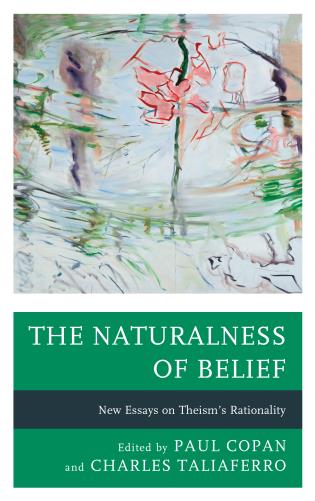
The Naturalness of Belief: New Essays in Theism’s Rationality.

February 10th, 2019 by Matt
Respond

The book The Naturalness of Belief: New Essays on Theism’s Rationality recently arrived from the publishers and is available on Amazon. Matt contributed a chapter to this book entitled “Divine Commands and the Euthyphro Dilemma: Some Naturalistic Misperceptions” The Naturalness of Belief is edited by Paul Copan (Palm Beach Atlantic) and Charles Taliaferro (St Olaf College) and published by Lexington Books.

The table of contents is as follows:

Introduction
Part I: The Unnaturalness of Naturalism?
1. Naturalism and Naturalness: A Naturalist’s Perspective
—Graham Oppy
Part II: Foundational Considerations
2. Is Naturalism Natural?
—Charles Taliaferro
3. The Contraction and Expansion of Naturalism and the Theistic Challenge
—Charles Taliaferro
4. Taking Philosophical Naturalism Seriously
—R. Scott Smith
Part III: Theistic Belief, Science, and Naturalism
5. In What Sense Might Religion Be Natural?
—Justin Barrett and Aku Visala
6. Science, Methodological Naturalism, and Question-Begging
—Robert Larmer
Part IV: Axiology and Naturalism
7. Alienating Humanity: How Evolutionary Ethics Undermines Human Rights
—Angus Menuge
8. Divine Commands, Duties, and Euthyphro: Theism and Naturalist Misunderstandings
—Matthew Flannagan
9. Beauty: A Troubling Reality for the Scientific Naturalist
—R. Douglas Geivett and James Spiegel
Part V: Naturalism and Existential Considerations
10. Existential Arguments for Theistic Belief
—Clifford Williams
11. Psychological Factors Contributing to Atheism: Bad Father Relationships and Just Bad Relationships as in Autistic Spectrum Disorders
—Paul C. Vitz
12. The Cultural Implications of Theism versus Naturalism
—Paul Copan and Jeremiah J. Johnston
Part VI: Naturalism, Freedom, and Immortality
13. Theism, Robust Naturalism, and Robust Libertarian Free Will
—J.P. Moreland
14. Naturalism, Theism, and Afterlife Beliefs
—Jonathan Loose

The blurb from Amazon is as follows.

Despite its name, “naturalism” as a world-view turns out to be rather unnatural in its strict and more consistent form of materialism and determinism. This is why a number of naturalists opt for a broadened version that includes objective moral values, intrinsic human dignity, consciousness, beauty, personal agency, and the like. But in doing so, broad naturalism begins to look more like theism. As many strict naturalists recognize, broad naturalism must borrow from the metaphysical resources of a theistic world-view, in which such features are very natural, commonsensical, and quite “at home” in a theistic framework.

The Naturalness of Belief begins with a naturalistic philosopher’s own perspective of naturalism and naturalness. The remaining chapters take a multifaceted approach in showing theism’s naturalness and greater explanatory power. They examine not only rational reasons for theism’s ability to account for consciousness, intentionality, beauty, human dignity, free will, rationality, and knowledge; they also look at commonsensical, existential, psychological, and cultural reasons—in addition to the insights of the cognitive science of religion.

Get your copy now, read it, and let us know what you think both here and on Amazon.

Tags:   · · · · · Comments Off on The Naturalness of Belief: New Essays in Theism’s Rationality.

FETICIDE IN CHRISTIAN MORAL THOUGHT PART ONE: Alexandrian Judaism

February 8th, 2019 by Matt
Respond

Some readers of MandM will know that for the last three years I have taught Theology and Philosophy at a Catholic high-school. I teach five to six classes a day, year 9 to year 13 subjects such introduction to scripture, church history, NCEA religious studies, Cambridge world religions and Divinity. My goal has always been to teach at Tertiary level, but the flooded market has meant I have, so far, found employment easier to come by in the secondary sector, hence my current employment.

One topic I teach is NCEA Religious Studies, in year 13, one standard is to Analyse the response of a religious tradition to a contemporary ethical issue. Officially students have to describe the response a religious tradition has made to a moral issue. Our school like a lot of schools looks at Christian responses to abortion. Because I did my PhD thesis on this very subject in the last year I have been going through my dissertation and simplifying, summarising and rewriting it into short sections I can use with my classes. Because there is some interest in this, I have decided to post some of these on MandM. I welcome any feedback or comments.

When we are analysing the response of a religious tradition to a moral or ethical question one of the first questions we need to ask is “what does the religious tradition in question actually teach”? We need to look at what the teachers and theologians the religion have said and what their arguments were.  This will enable us to avoid misrepresenting someone’s opinions and help us accurately identify the premises and conclusions that we want to evaluate.

Answering this question will be the focus of Part Three of this standard We are going to look at several representative strands of Christian thought or reflection on the question of abortion. When we do, we can find a common a common three-premise argument against feticide that is common to these different strands. The rest of the standard will analyse and critically evaluate each of these premises.

In part one we looked at how to analyse arguments.  Here we will put what we learnt to work.  Historically Christianity has approached the question of killing a fetus by formulating a simple three-premise argument:

Premise [1]: God has commanded people not to kill human beings without adequate justification.

Premise [2]: a foetus, is a human being;

Premise [3]: in almost all cases where a fetus is killed the reasons offered are not strong enough to justify killing a human being.

 Of course, it isn’t enough to just say this. For any sensible analysis, we must provide evidence that we are accurately presenting what Christians have taught. To do this, we will trace the existence of this argument in several representative Christian traditions. We will look at the position adopted by the Church fathers, the church in the middle ages and the Protestant Reformers. Before doing that, however, we will look at the origins or source of Christian moral teaching on this question in Alexandrian Judaism.

Feticide in Alexandrian Judaism

The origins or beginning of Christian responses to abortion begins in a movement known to historians today as Alexandrian Judaism.   During the first century, most of the Roman world was dominated by Greek language and culture. Greek Philosophy also dominated the intellectual world of schools and Universities. This culture is called Hellenism. Alexandrian Jews were Jews who lived outside the land of Israel in this Greek Culture These Jews spoke Greek-speaking and combined a commitment to Judaism with the ideas of Greek Philosophy.

A very important document for Alexandrian Jews was the Septuagint. You learnt about the Septuagint in year 9.  The Old Testament was originally written in Hebrew, however several hundred years before the time of Christ. The old testament was translated into Greek. This Greek translation is called the Septuagint. The purpose of the Septuagint was to provide a book which could explain to Alexandrian Jews what the commandments and teachings of Judaism were and how to apply and follow these teachings in their community. For this reason, the Septuagint didn’t always provide a word for word rendition of the Hebrew text but offered commentary on what it meant and how it was to be followed and applied.

What is important for the topic we are studying is how the Septuagint translated a particular passage in the book of Exodus. In Exodus 21: there is a body of Jewish law which deals with where a pregnant woman is struck in such a manner that a miscarriage occurs. The Hebrew translations which we have today translate the passages this way:

[I]f men struggle and strike a pregnant woman and she miscarries, and there is no harm, he shall pay a fine according as the woman’s husband lays upon him, according to an assessment. And if there is harm you will prescribe life for life, eye for an eye, tooth for tooth, hand for hand, foot for foot, burn for burn, wound for wound, bruise for bruise.[1]

The Septuagint, however, interprets the passage this way:

If two men fight and strike a pregnant woman, and her unformed embryo departs, he shall be fined; according as the woman’s husband lays upon (him) he shall give according to what is thought fit. But if it be formed, he shall give a life for a life.[2]

The Septuagint draws a distinction between a formed and unformed embryo. This corresponds to our modern distinction between an embryo and a fetus we looked at in part two. A person who kills a fetus must pay “life for a life”. The phrase life for life wasn’t taken literally by Jewish thinkers, it was understood to mean something like “pay the value of life for the value of a life”. But the critical issue is that the Septuagint views the life of a fetus as having the value of human life.

By contrast, the Hebrew text states that if someone kills an embryo or a fetus they must pay a fine based upon an assessment and is silent on exactly how this assessment is carried out. Some scholars, however, have argued that what we know about the legal practices in the cultures surrounding Israel suggests the assessment must have been based on the age of the fetus.

Why do these translations differ? The Hebrew texts we have today were compiled much later than the Septuagint, and so it might be tempting to suggest the Septuagint has the earlier understanding. However, it is pretty clear that the Septuagint is influenced by Greek Philosophy. The distinction it draws between a formed and unformed embryo was a common distinction in Greek philosophy.  Some examples:

  • Galen (129 AD- 200) wrote that the Hippocratic philosophers of his day held “That what is in the womb is already a living being when it is formed in all its members”.
  • Laertius said that the Pythagorean view was “this first creation [the conceptus] is formed in forty days, and then, in accordance with the law of harmony, the baby is perfected and born after seven, or nine, or maximum ten months.[3]
  • Empedocles argued that the formation of an embryo started on the 39th day and was completed on the 49th.[4]
  • Asclepiades referred to the formed/unformed distinction and suggested that for males formation occurred between the 26th and 50th days and females were formed around 60 days.13
  • The author of a Philosophical book titled On Seven Months Child, states a male conceptus is formed at 40 days while a female is formed after this.15
  • Aristotle argued that the embryo became fully human when it achieved form, which occurred 40 days after conception for a boy or 90 for a girl.16

Consequently, there was an established distinction in the writings of many ancient Greek philosophers between an unformed and formed embryo. It is unlikely that the similarities between the Septuagint’s and Greek Philosophy are a coincidence. The best explanation appears to be that Alexandrian Jews utilised Greek Philosophy in an effort to apply the Jewish law to the question of killing a fetus. The law told them that if a person killed a fetus they had to be punished based on an assessment of the maturity of the fetus. Several schools of Philosophy schools taught that an embryo was human by the time when it acquired human form around 40 days after conception. They probably put these two ideas together concluded that if a person killed a formed embryo, this was homicide and violated Gods laws against homicide. Specifically, the fifth commandment “you shall not kill.”

Philo of Alexandria

The Septuagint translation of Exodus 21:22-24 receives one of its clearest expositions by Philo of Alexandria. Philo was a Jewish Philosopher, Theologian and leading intellectual in Alexandrian Judaism. He lived from 20BC-50AD and so lived at the same time as both Jesus and Paul. For this reason, he is a good source of information on what Jewish theologians taught at the time of Christ.  In his commentary on the Ten commandments Philo writes:

But if anyone has a contest with a woman who is pregnant, and strike her a blow on her belly, and she miscarry, if the child which was conceived within her is still unfashioned and unformed, he shall be punished by a fine, both for the assault which he committed and also because he has prevented nature, who was fashioning and preparing that most excellent of all creatures, a human being, from bringing him into existence. But if the child which was conceived had assumed a distinct shape … in all its parts, having received all its proper connective and distinctive qualities, he shall die; … for such a creature as that is a man, whom he has slain while still in the workshop of nature, who had not thought it as yet a proper time to produce him to the light, but had kept him like a statue lying in a sculptor’s workshop, requiring nothing more than to be released and sent out into the world.[5]

In this passage, Philo is explaining to his audience what the fifth of the ten commandments requires of them. (The fifth commandment is the commandment: do not kill). He appeals to the Septuagint and argues that the law considered the killing of a formed embryo to be a homicide and so feticide is a violation of the fifth commandment. With this conclusion established, Philo uses it to argue against infanticide. Infanticide is the practice of killing new-born infants after birth and was a widespread practice in the Roman and Greek world. Philo argued that If killing a fetus before birth was homicide, then killing children after birth must be as well. Therefore, the law ten commandments condemned both abortion and infanticide.

Conclusions

The Septuagint and Philo contain a specific argument against feticide. This argument can be initially summed up in two premises. Firstly,  a fetus is a human being and secondly, that the law of God prohibits killing a human being. This argument entails that feticide is unlawful and contrary to the law of God.

I say “initially,” because a careful examination shows that the second of these claims need to be qualified.  We know Jewish rabbis permitted abortion in rare cases where continuing the pregnancy would kill the mother, arguing these abortions were a case of self-defence. Hence, the sixth commandment is best construed as being that the law of God forbids killing a human being without justification, where justification is interpreted as an excuse or permission granted somewhere else by God’s law. In the absence of any other command or permission to the contrary, one should refrain from homicide. With this clarification in place, we can summarise the argument used by Alexandrian Jew’s as follows:

Premise [1]: Killing a human being without justification violates the law of God.

Premise [2]: A formed embryo (i.e. a fetus) is a human being.

Since Alexandrian Jews, and, as we will see, Christian theologians after them, believed feticide to be unlawful in most, if not all, circumstances, they also held to the following enthymeme:

 Premise [3]: in the case of feticide (at least in the majority of cases) insufficient or no justification is forthcoming. 

From these three premises, it follows that killing a fetus (at least in the majority of cases) is unlawful, i.e. contrary to the law of God.


[1] Exodus 21:22-25 MT.

[2] Exodus 21:22-25 LXX. This translation of the  Septuagint comes from Stanley Isser, “Two Traditions: The Law of Exodus 21:22-23 Revisited,” The Catholic Biblical Quarterly 52:1 (1990): 30.

[3] Kapparis, Abortion in the Ancient World, 39.

[4] Ibid., 45.

[5] Judaeus Philo, “The Special Laws III,” in The Contemporary of Josephus, Translated from the Greek, trans. by Charles Duke Yonge (1993) (108)(109).

<http://www.earlychristianwritings.com/yonge/book29.html>


Tags:   · · 1 Comment

Brad Hooker and Philip Quinn

January 10th, 2019 by Matt
Respond

Most versions of Divine command meta-ethics  (DCM) contend that the property of being morally required is informatively identical with the property of being commanded by God.[1] A common objection to divine command meta-ethics is the horrendous deeds objection.  We can formalise this objection as follows:

[P1] If DCM is true, then if God commands unjust actions unjust actions are morally required

[P2] It is possible for God to command unjust actions

[P3] It is not possible for unjust actions to be morally required.

These three premises, entail a contradiction. [P1] conjoined with [P2] entails that it is possible for unjust actions to be morally required. However, this conclusion explicitly contradicts [P3]. Moreover, [P1] is clearly true. If I contend that  A and B are really the same property, then if any action that has A will also have B. So it follows that if an unjust action has the property of being commanded by God. It will also have the property of being morally required.

Philip Quinn responds to the abhorrent commands objection, by rejecting [P2].[2] Quinn notes that on standard conceptions of God has certain character traits essentially. God is omniscient, omnipotent, but he is also loving and just. It is impossible however for a loving and just person to knowingly and deliberately command something incompatible with love and justice. If someone did this, they couldn’t coherently be called just or loving. The upshot is that [P2] is false. Affirming that a loving and just being commands injustice is to affirm something logically impossible.

Hooker’s Critique

Brad Hooker offers a response to Quinn.[3]  Hooker notes that DCM has the implication that “Before God made any commands, there were no moral requirements.”  However, Quinn suggests that God has the property of being just essentially, this means that requirements of justice must exist antecedent to any commands God issues.  But that means there are requirements of justice antecedent to requirements of morality.

Hooker then offers the following argument:

[P1]    If DCM is correct all moral requirements depend on Gods commands.

[P2]:  If all moral requirements derive from God’s commands, then the require­ments cannot exist until the commands exist.

[P3]: Even before God made any commands, there were requirements of justice constraining His commands.

[C1]     Before God made any commands, there were no moral requirements (from premises 1 and 2)

[C2] Requirements of justice were not moral requirements. (from P3 an C1)

However, Hooker argues that [C2] is false.  He concludes:

Since the logic of the above argument is valid, then if the argument’s conclusion is false, at least one of the argument’s premisses must be false. Premiss 2 cannot plausibly be denied. To reject Premiss 1 is to abandon the Divine Command Theory. So is Premiss 3 the one to reject? According to Quinn, even before God makes His first command, His inherent justice would keep Him from making unjust commands. To reject Premiss 3 is to abandon Quinn’s defence of the Divine Command Theory … [4]


Response to Hooker

I agree with Hooker that, if the conclusion of the argument is false, then at least one of its premises must be false. I also agree that a divine command theorist cannot abandon P1 or P2 and abandoning P3 commits him to abandoning Quinn’s defence of DCM.  The critical question is whether [C2] is false. Why is [C2] implausible? Hooker’s argument against [C2] is brief. He writes:

However, requirements of justice are moral requirements. If they are moral requirements, then presumably they also were moral requirements (and will continue to be). Conclusion 2, therefore, seems false… the Divine Command Theory commits us to the implausible view that requirements of justice are not moral requirements.

Noticing a subtle shift in this argument is important. In Hooker’s argument, C2 is the claim that “moral requirements of justice were not moral requirements. (emphasis mine). The “were” refers to the time before God issued any commands. P1 P2 and P3 do not entail that moral requirements are not moral requirements posterior to such commands. The divine command theorist could affirm, and I suspect probably will affirm, that antecedent to any commands by God, there were requirements of justice. But no one was under any moral requirement to act justly. Posterior to Gods commands, however, there is such a requirement. Hence while the requirements of justice are moral requirements now, they were not prior to God issuing any commands.

A distinction made by John Mackie is illustrative here. Mackie famously argued for moral nihilism. According to Mackie, our moral discourse presupposes that objective moral requirements exist. He then argued that no such requirements do exist and so our moral discourse is systematically mistaken. Claims such as “Bill is morally required to act justly are false.

Mackie’s thesis is jarring, to soften the blow he but that in denying moral requirements exist he points out he is “not denying that there can be objective evaluations relative to standards,” taking, as an example, the standard of justice:

In one important sense of the word, it is a paradigm case of injustice if a court declares someone to be guilty of an offence of which it knows him to be innocent. More generally, a finding is unjust if it is at variance with what the relevant law and the facts together require, and particularly if it is known by the court to be so. More generally still, any award of marks, prizes, or the like is unjust if it is at variance with the agreed standards for the contest in question: if one diver’s performance, in fact, measures up better to the accepted standards for diving than another’s, it will be unjust if the latter is awarded higher marks or the prize …”[5]

What follows from nihilism is instead that:

The statement that a certain decision is thus just or unjust will not be objectively prescriptive: in so far as it can be simply true it leaves open the question whether there is any objective requirement to do what is just and to refrain from what is unjust, and equally leaves open the practical decision to act in either way.[6]

On this Mackie is surely correct, a person who embraces nihilism and thinks nothing is really right or wrong can still understand the concept of what is loving and just. Such a person could know that this idea of justice entailed certain standards and paradigmatic examples and he or she could in many cases tell whether certain behaviour was loving or was in accord with the standards of justice. She or he also could choose to live in accord with these standards if he or she wanted to and she or he could choose not to live in accord with them. He or she could simply reject that there was any objective moral obligation to behave in accord with such standards.   The question of whether an action is just and loving and whether it is obligatory are, in principle, separate questions.

This distinction is subtle but important, and it has application here. DCM entails that, prior to God’s commands, no action is morally wrong. This, however, does not mean that actions cannot be loving and just prior to God’s commands. Prior to God’s act of commanding, certain actions will be loving and just without it being the case that they are obligatory. Because God is loving and just he commands people to behave in loving and just ways so that actions which are just antecedent to his commands become morally required or obligatory posterior to such commands.

It seems then that Hooker then is mistaken when he states “Divine Command Theory commits us to the implausible view that requirements of justice are not moral requirements.” Hooker here has moved from C1 which claims moral requirements were not moral requirements antecedent to God’s commands to the claim they are not moral requirements posterior to God’s commands.

The only reason Hooker gives for this leap is to assert “If they [requirements of justice] are moral requirements, then presumably they also were moral requirements (and will continue to be).”  But apart from Hooker’s presumption, there is no reason to think that, and certainly no reason for a divine command theorist to believe this. As far as I can tell its coherent to claim that actions could be unjust but not obligatory prior to God’s commands.


[1] I say most here, William Lane Craig, Robert Adams, C Stephen Evans, William Alston, and Peter Forrest all contend the property of being commanded by God and the property of being morally required are informatively identical. By contrast, Philip Quinn holds that Gods commands directly and immediately cause the existence of moral requirements. This difference though important will not affect the subsequent discussion of Philip Quinn.

[2] Philip Quinn, “Divine Command Theory” In The Blackwell Guide to Ethical Theory, ed. H. LaFollette, (Cambridge, Mass.: Blackwell Publishers, 2000) 70-71

[3] Brad Hooker “Cudworth and Quinn” Analysis 61: 4 (2001); 333-335

[4] Brad Hooker “Cudworth and Quinn” Analysis 61: 4 (2001); 335

[5] John Mackie “The Subjectivity of Values” in Ethics: Essential Readings in Moral Theory ed George Sher (Routledge, 2012) 184.

[6] Ibid.

Tags:   · · · 6 Comments