<p style="text-align: justify;">I have been considering the hypothesis that the star referred to in Matthew’s Gospel <a href="http://www.mandm.org.nz/2025/12/star-of-wonder-matthews-nativity-narrative-and-its-critics-part-one.html">was a comet recorded by Han-dynasty astronomers in 5 BC.</a> In a <a href="http://www.mandm.org.nz/2026/01/star-of-wonder-matthews-nativity-narrative-and-its-critics-part-two.html">previous post,</a> I examined an objection to this view that rested on two claims:</p>
<ul style="text-align: justify;">
<li>First, that in the late first century BC comets were universally interpreted as negative omens.</li>
<li>Second, that such a reading is inconsistent with the way the star functions in Matthew’s birth narrative.</li>
</ul>
<p style="text-align: justify;">In that earlier discussion I challenged the first claim. I argued that ancient interpretations of comets were more nuanced than is often assumed. Comets were widely understood as portents of social and political upheaval, particularly the replacement of kings or dynasties. While this was indeed a negative omen for the ruler or dynasty about to be displaced, it could simultaneously be—and often was—understood as an endorsement of the incoming ruler.</p>
<p style="text-align: justify;">In what follows, I turn to the second claim: is this pattern of interpretation inconsistent with Matthew’s birth narrative? I suggest that it is not.</p>
<ol style="text-align: justify;">
<li><strong>The Star is a sign of Dynastic Change in Matthew</strong></li>
</ol>
<p style="text-align: justify;"><a href="http://www.mandm.org.nz/wp-content/uploads/2025/12/CometNeowise.jpg"><img class="alignleft size-medium wp-image-12808" src="http://www.mandm.org.nz/wp-content/uploads/2025/12/CometNeowise-144×300.jpg" alt="" width="144" height="300" /></a>In Matthew’s Gospel, the star is explicitly associated with a change of kings and dynasties. The second chapter opens as follows:</p>
<blockquote>
<p>Now after Jesus was born in Bethlehem of Judea in the days of Herod the king, behold, magi from the east arrived in Jerusalem, saying, “Where is he who has been born King of the Jews? For we saw his star in the east and have come to pay him homage.”</p>
</blockquote>
<p style="text-align: justify;">At the time of the star’s appearance, the Hasmonaean dynasty—ruling since the Maccabean period—had already been displaced by Herod the Great. Herod’s designated heir in early 5 BC was Herod Antipater, then about forty years old, though this was changed later that year to Herod Antipas, who was only fourteen. Against this backdrop, the Magi’s claim that a star signified the birth of a new “King of the Jews” clearly implies dynastic upheaval: not merely the replacement of Herod himself, but the displacement of his entire line of succession.</p>
<p style="text-align: justify;">This is entirely consistent with the comet of 5 BC functioning as the star in Matthew’s narrative. A generation earlier, during the reign of <a href="https://www.culturefrontier.com/mithridates-vi-of-pontus/">Mithradates VI</a> (120–63 BC), a comet was interpreted as heralding the birth of a king who would overturn Roman domination. Roughly sixty five years later, during <a href="https://en.wikipedia.org/wiki/Nero">Nero’s</a> reign, Tacitus reports that a comet was widely taken as “an apparition boding change to monarchies,” prompting speculation about Nero’s successor and leading him to eliminate suspected rivals violently. Earlier still, <a href="https://en.wikipedia.org/wiki/Caesar%27s_Comet">Julius Caesar’s <em>sidus</em></a>—whatever its precise astronomical nature—was read both as marking the end of one regime and as legitimating Augustus as its heir. There is nothing unusual, then, about astrologers interpreting a comet as signalling the end of one dynasty and the rise of another.</p>
<p style="text-align: justify;"><em>Why Judea?</em></p>
<p style="text-align: justify;">It might be objected that the Magi infer not merely the birth of a king, but the birth of a king connected specifically with Israel. Yet this inference is compatible with ancient astrological practice. The comet recorded by Chinese astronomers in 5 BC was said to appear in Qiān Niú, corresponding broadly to the Capricorn–Aquila region of the sky. Ancient astrology included a doctrine of astrological geography, according to which zodiacal regions were associated with particular lands, so that celestial phenomena occurring in a given constellation were taken to signify events affecting the corresponding territory.<br /><br />The most familiar version of this doctrine appears in <a href="https://en.wikipedia.org/wiki/Ptolemy">Claudius</a> Ptolemy’s <em>Tetrabiblos</em> (second century CE), which associates Judea with Aries. However, this reflects a later, highly systematised phase of Hellenistic astrology. As Stephan Heilen<a href="#_edn1" name="_ednref1">[i]</a> and others have shown, earlier traditions—preserved in authors such as <a href="https://en.wikipedia.org/wiki/Teucer_of_Babylon">Teukros of Babylon</a> (first century CE), Vettius Valens (second century CE, drawing on earlier sources), and Paul of Alexandria (fourth century CE, preserving older material)—tend to associate Capricorn not with Judea narrowly, but with Syria more broadly.</p>
<p style="text-align: justify;">This is historically significant because, in the late first century BC, Judea was commonly understood as part of the wider Syrian region, a usage reflected in contemporary geographical writers and later Roman provincial administration. Moreover, Syria proper no longer possessed a native royal dynasty in 5 BC. Other regions within the Syrian sphere were ruled by tetrarchs; however, none was experiencing dynastic instability of comparable scale or symbolic importance to that of Judea. On this basis, there is nothing surprising about astrologers interpreting a comet appearing in the Capricorn–Aquila region as signifying royal or dynastic upheaval in Syrian lands, with Judea as the most plausible concrete referent. <a href="#_edn2" name="_ednref2">[ii]</a></p>
<p style="text-align: justify;"><em>Messiah, Divinity, and the Role of Jewish Interpretation</em></p>
<p style="text-align: justify;">Another objection is that the Magi interpret the star as signifying the birth of the Messiah or a divine figure. Yet Matthew’s text does not support this claim. The Magi announce only that a king has been born and that they know the general region from which he comes. They do not identify the child as the Messiah, nor do they know where in Judea he is to be found. This is why they ask, “Where is he who has been born King of the Jews?”</p>
<p style="text-align: justify;">It is Herod, together with the chief priests and scribes, who introduces the explicitly messianic interpretation. Upon hearing the Magi’s report, Herod gathers the religious authorities and inquires “where the Messiah was to be born.” The identification of the child as the Messiah thus emerges when the Magi’s message is mediated through Jewish expectations and scriptural interpretation.</p>
<p style="text-align: justify;">This pattern accords well with what we know of comet interpretation in the ancient world. When Halley’s comet appeared over Jerusalem approximately seventy- years later, both Josephus and the Zealots interpreted it as signalling the fulfilment of messianic prophecy—though they sharply disagreed about who the Messiah was. As I will argue in a later post, the period around 5 BC also coincides with heightened messianic expectation and intense paranoia on Herod’s part concerning prophetic threats to his rule.</p>
<p style="text-align: justify;"><strong>“</strong><em>Worship” and Royal Homage</em></p>
<p style="text-align: justify;">It is might be claimed that the Magi’s desire to “worship” the child implies divinity. However, the Greek verb <em>προσκυνέω</em> (<em>proskyneō</em>) denotes bodily homage and is commonly used of honour shown to human kings and superiors. In the Septuagint, David <em>proskyneō</em> Saul (1 Sam 24:8), Nathan <em>proskyneō</em> King David (1 Kgs 1:23), and the woman of Tekoa <em>proskyneō</em> David (2 Sam 14:4). In none of these cases is divinity implied. Matthew himself uses the term for a slave paying homage to a king in a parable (Matt 18:26), and Revelation 3:9 explicitly uses it in a non-divine sense.</p>
<p style="text-align: justify;">The Magi, then, say only that a new king has been born in Judea and that they wish to render him royal homage.</p>
<ol style="text-align: justify;" start="2">
<li><strong> The Star as a Threat to the Status Quo</strong></li>
</ol>
<p style="text-align: justify;">In Matthew’s narrative, the star is unmistakably perceived as a threat by the reigning king. Matthew writes: “When King Herod heard this, he was disturbed, and all Jerusalem with him.” The verb <em>ταράσσω</em> denotes agitation, alarm, or terror. Herod responds by ordering the killing of all male children in Bethlehem aged two years and under, based on the timeframe he had learned from the Magi.</p>
<p style="text-align: justify;">It is therefore puzzling to object that comets were interpreted negatively, since in Matthew’s narrative the star is explicitly treated as a negative omen. Herod’s reaction mirrors that of Nero, who, according to Tacitus, was “perturbed” (<em>terreo</em>) by a comet interpreted as signalling dynastic change and responded by eliminating the suspected rival Rubellius Plautus.</p>
<p style="text-align: justify;">In both cases, a tyrant hears of a “star” appearing in the sky, interprets it as a sign that a new king will replace him, and responds with violence. It seems ad hoc to regard such a scenario as implausible in the case of Herod while readily accepting it in the case of Nero.</p>
<p style="text-align: justify;"><strong>A Dual Meaning: Threat and Endorsement</strong></p>
<p style="text-align: justify;">Finally, comets could simultaneously be understood as condemning the existing ruler and endorsing the incoming one. While Herod interprets the star as a threat, the Magi take it as a sign that they should render homage to the new king. Matthew, writing for a Christian audience, invokes the star to support the claim that Jesus is the Messiah.</p>
<p style="text-align: justify;">As I explained in my last post, this dual interpretation is well attested. The comet of 60 CE was taken to signify both Nero’s impending downfall and Plautus’s divine selection as his successor, prompting public support for Plautus. Mithradates VI interpreted comets at his birth and coronation as evidence that he was destined to overthrow Roman power. Augustus appealed to Caesar’s <em>sidus</em> to legitimise his own rule as the divinely favoured outcome of dynastic upheaval. Chaeremon of Alexandria similarly understood comets as signifying both the “removal of dynasties” and the “commencement of new ones.”</p>
<p style="text-align: justify;">As for comets and messianic expectation, both Josephus and the Zealots interpreted Halley’s comet in 66 CE as signalling the arrival of the Messiah, even while disagreeing about who fulfilled that role. Moreover, the oracle of Balaam—“a star shall come out of Jacob, and a sceptre shall rise out of Israel” (Num 24:17)—was widely employed in Second Temple literature to predict the coming of a ruler.</p>
<p style="text-align: justify;">Taken together, these considerations suggest that interpreting Matthew’s star as a comet of 5 BC is not only plausible but fits comfortably within well-attested ancient patterns of astronomical interpretation.</p>
<hr />
<p style="text-align: justify;"><a href="#_ednref1" name="_edn1">[i]</a> Heilen S., Barthel P. and van Kooten G. (eds.), ‘The Star of Bethlehem and Greco-Roman Astrology, Especially Astrological Geography’, <em>The Star of </em><em>Bethlehem and the Magi</em>, Brill, Leiden, The Netherlands, 2015, pp. 345–346 https://doi.org/10.1163/9789004308473_015</p>
<p style="text-align: justify;"><a href="#_ednref2" name="_edn2">[ii]</a> See Mark Matney, ‘The star that stopped: The Star of Bethlehem & the comet of 5 BCE’ <em>Journal of the British Astronomical Association</em>, Volume 135, Issue 6, 401 (2025); DOI: https://doi.org/10.64150/193njt</p>
<p style="text-align: justify;"> </p>
<!– /wp:tadv/classic-paragraph –>
<p></p>
<!– /wp:paragraph –>
<!– wp:separator –>
<hr class="wp-block-separator"/>
<!– /wp:separator –>
<!– wp:tadv/classic-paragraph –>
<p style="text-align: justify;">In a <a href="http://www.mandm.org.nz/2025/12/star-of-wonder-matthews-nativity-narrative-and-its-critics-part-one.html">previous post</a>, I addressed the claim that no star could exist that moves or behaves in the way described in Matthew’s Gospel. I argued that Matthew’s Gospel uses language found in Greco-Roman writings to describe comets, and that a comet could act in the way Matthew described. I also argued that we have good evidence for the existence of a comet in 5 BC, the time Jesus was born.</p>
<p style="text-align: justify;">However, the idea that the star in Matthew’s Gospel was a comet faces an <a href="https://bethlehemstar.com/setting-the-stage/what-was-the-star/">important challenge:</a></p>
<blockquote>
<p>At this time in history (and all the way into the Middle Ages), comets were regarded as omens of doom and destruction—the very opposite of good tidings. This was in part because of comet behavior. They were perceived in ancient times as breaking into the sky, ignoring the highly ordered and repetitive clockwork movement of the heavens. The Almighty could have chosen to use an ominous sign for the birth of Christ. Presumably, He can do whatever He likes. But if the purpose of the Star was to communicate something joyful to humankind, a comet seems an unlikely choice.</p>
</blockquote>
<p style="text-align: justify;">There are two claims encapsulated in this objection:</p>
<ul style="text-align: justify;">
<li>First, that at this time in history (the 1st century BC) comets were universally interpreted as negative omens.</li>
<li>Second, that this is contrary to how the star is presented in Matthew’s Gospel.</li>
</ul>
<p style="text-align: justify;"> This post will address the first of these claims. The second will be addressed in a later post.</p>
<p style="text-align: justify;"><strong>Were Comets Universally Interpreted as Negative Omens?</strong></p>
<p style="text-align: justify;">First, the claim that comets were universally interpreted as negative omens is misleading. In the first century BC, comets were almost universally seen as threats to the established political order. According to the 1st-century astrological poem <em>Astronomica</em>, they were harbingers of significant political upheaval affecting entire nations, and particularly kings—such things as the collapse of social order, civil wars, rebellion, death of kings, the arising of rivals to the throne, and the overthrow or replacement of kings.<a href="#_edn1" name="_ednref1">[1]</a></p>
<p style="text-align: justify;">The fact that comets signify political upheavals that threaten the current political order means they are a bad omen for the current political order and particularly for incumbent rulers. However, it does not mean they signify something that is bad for everyone. On some occasions, the downfall of one ruler could be construed as beneficial to another. When this happened, the beneficiary could interpret comets as a positive omen.</p>
<p style="text-align: justify;">Several examples will illustrate this:</p>
<p style="text-align: justify;"><strong>Example 1: Mithridates</strong><strong> VI</strong><br /><a href="http://www.mandm.org.nz/wp-content/uploads/2026/01/Mithridates_VI_Louvre.jpg"><img class="alignleft size-medium wp-image-12820" src="http://www.mandm.org.nz/wp-content/uploads/2026/01/Mithridates_VI_Louvre-225×300.jpg" alt="" width="225" height="300" /></a>First, consider <a href="https://www.cointalk.com/threads/mithridates-vi-of-pontus-comet-coin.315874/">these coins</a> minted by Mithridates VI (134–63 BCE). Mithridates fought a series of wars against the Romans. In his day, Persian and Zoroastrian traditions were being interpreted to predict a king who would overthrow Rome (this is interesting because the Magi were Zoroastrian priests). Mithridates promoted himself as the fulfillment of these prophecies. You’ll notice the coins have stars on them. As part of this promotion, Mithridates minted comets on these coins.</p>
<p style="text-align: justify;">The context is provided by the Roman historian Justin:</p>
<blockquote>
<p>The future greatness of this prince even signs from heaven had foretold; for in the year in which he was born, as well as in that in which he began to reign, a comet blazed forth with such splendour, for seventy successive days on each occasion, that the whole sky seemed to be on fire. It covered a fourth part of the firmament with its train, and obscured the light of the sun with its effulgence; and in rising and setting it took up the space of four hours.<a href="#_edn2" name="_ednref2">[2]</a></p>
</blockquote>
<p style="text-align: justify;">Justin writes around AD 160–230. However, he is paraphrasing from Pompeius Trogus’ work <em>The Philippic Histories</em>, written in the first century BC. Justin refers to two comets, one at Mithridates’ birth and another at his ascension. The existence of such comets used to be dismissed as legendary. However, subsequent studies of Chinese astrological records have confirmed that two such comets did appear at the time of his birth and ascension.<a href="#_edn3" name="_ednref3">[3]</a> So, Mithridates and Trogus are referencing a real celestial event.</p>
<p style="text-align: justify;">What is important for us is how this event was interpreted. Justin cites a first-century author stating that a comet which appears for 70 days was a sign from heaven foretelling the rise of a great prince. For Rome, this was an ominous sign. Justin said Mithridates had an exceptional destiny. This destiny resulted in the attempted overthrow of Roman power in the eastern Mediterranean. Mithridates successfully overthrew and conquered several neighboring kingdoms and Roman-controlled territories, expanding his realm into a major empire around the Black Sea and Asia Minor. He also massacred tens of thousands of Roman citizens. This was bad news for the established Roman status quo. Mithridates was an obvious threat to the political order.</p>
<p style="text-align: justify;">Mithridates obviously viewed his mission differently. He did not view the comets as a negative omen. The idea that he was a serious threat to Roman power in the eastern Mediterranean was something he embraced. In effect, he is saying: “The cosmic sign that terrified the world was about me—I am the terror to your Roman oppressors.” This was a bad omen for the Romans but a positive one for their enemies. By minting coins bearing these comets, Mithridates shows he expected his subjects to interpret them in the same way he did.</p>
<p style="text-align: justify;">The takeaway is this: In the first century BC, a comet could be interpreted by people in the East as signifying the birth of a new ruler who would rise to overthrow and replace the existing rulers. This would be a negative omen for the existing social order and the incumbent rulers. However, it could also simultaneously be embraced as a positive sign by partisans of the new king.</p>
<p style="text-align: justify;"><strong>Example 2: Augustus Caesar</strong><br /><a href="http://www.mandm.org.nz/wp-content/uploads/2026/01/Ceaser.jpg"><img class="alignleft size-full wp-image-12825" src="http://www.mandm.org.nz/wp-content/uploads/2026/01/Ceaser.jpg" alt="" width="177" height="284" /></a>Consider <a href="https://www.biblicalarchaeology.org/wp-content/uploads/augustus-comet.jpg">next these coins</a> from Augustus Caesar (63 BC–AD 14), who was the Roman Emperor at the time of Jesus’ birth. Augustus promoted himself as “son of God,” “saviour of the world,” “lord,” and described his reign as “the good news”<a href="#_edn4" name="_ednref4">[4]</a> that Augustus had ushered in peace and stability. These coins are part of that promotion. Notice the coins have comets on them. Why? Pliny explains:</p>
<blockquote>
<p>The deified Augustus had deemed this comet very propitious to himself; as it had appeared at the beginning of his rule, at some games which, not long after the decease of his father Caesar, as a member of the college founded by him he was celebrating in honour of Venus Genetrix. In fact he made public the joy that it gave him in these words: “On the very days of my Games a comet was visible for seven days in the northern part of the sky. It was rising about an hour before sunset, and was a bright star, visible from all lands. The common people believed that this star signified the soul of Caesar received among the spirits of the immortal gods, and on this account the emblem of a star was added to the bust of Caesar that we shortly afterwards dedicated in the forum.” This was his public utterance, but privately he rejoiced because he interpreted the comet as having been born for his own sake and as containing his own birth within it; and, to confess the truth, it did have a health-giving influence over the world.<a href="#_edn5" name="_ednref5">[5]</a></p>
</blockquote>
<p style="text-align: justify;">Pliny refers to a bright comet that appeared around 44 BC, commonly referred to as the <em>Sidus Iulium</em> (“Julian Star”) or <em>Caesaris astrum</em> (“Caesar’s star”) in ancient literature. The existence of this comet has been confirmed from Chinese records.<a href="#_edn6" name="_ednref6">[6]</a> It appeared shortly after Julius Caesar’s assassination and was interpreted by the common people as evidence that Julius Caesar had been made a god. Augustus was Julius Caesar’s adopted son. So the inference can be made that he (Augustus) was declared the son of God. Pliny says that, in contrast to the common interpretation, Augustus himself took the comet as signifying him and as “containing his birth,” and Pliny accepts that the omen had foretold the positive influence his life and reign would have over the world.</p>
<p style="text-align: justify;">Here <em>Caesaris astrum</em> is viewed as a positive omen, signifying the benefits of Augustus’ reign. However, in the previous paragraph, Pliny has described comets as “a terrifying star and not easily expiated,” because “they overturn kingdoms, stir up wars, and change the condition of peoples.” As examples, he mentions comets that appeared during the civil war of 87 BC where Octavius was overthrown and replaced by Marius; the struggle between Caesar and Pompey, where Caesar gained control of Rome making himself emperor; and the poisoning of Claudius where Nero took control of the empire. These are all cases of significant political upheaval resulting in a change in regime.</p>
<p style="text-align: justify;">Is Pliny contradicting himself here? I don’t think so. Both these things can be true at the same time. Caesar’s death did herald political upheaval. It resulted in the War of Mutina, the Second Triumvirate, and the civil war between Antony and Octavian. These resulted in the end of the Roman Republic and the rise of the Roman Empire. Augustus rose victorious from these struggles and was the beneficiary of these upheavals.</p>
<p style="text-align: justify;">So, in Pliny we see both that comets were terrible signs predicting political upheaval involving an overthrow of the current kingdom and, at the same time, that they could be reinterpreted or reframed as positive signs of endorsement for the ruler who benefits from the change and also as signs of whatever benefits his reign brings about.</p>
<p style="text-align: justify;"><strong>Example 3: Tacitus and Nero — The Comet of AD</strong><strong> 60</strong><br />Tacitus records a comet during the reign of Nero Caesar around AD 60:</p>
<blockquote>
<p>Meanwhile, a comet blazed into view—in the opinion of the crowd, an apparition boding change to monarchies. Hence, as though Nero were already dethroned, men began to inquire on whom the next choice should fall; and the name in all mouths was that of Rubellius Plautus, who, on the mother’s side, drew his nobility from the Julian house. … A belief spread that he was the candidate marked out by the will of deity; and he found numerous supporters in the class of men who nurse the eager and generally delusive ambition to be the earliest parasites of a new and precarious power. Nero, therefore, perturbed by the reports, drew up a letter to Plautus, advising him “to consult the peace of the capital and extricate himself from the scandal-mongers: he had family estates in Asia, where he could enjoy his youth in safety and quiet.” To Asia, accordingly, he retired with his wife Antistia and a few of his intimate friends.<a href="#_edn7" name="_ednref7">[7]</a></p>
</blockquote>
<p style="text-align: justify;">Nero proceeds to have Plautus murdered while in exile.</p>
<p style="text-align: justify;">The same pattern is seen here. Tacitus tells us that a comet was widely understood as an “apparition boding change to monarchies.” This is clearly a negative omen for the current king, Nero. It signals to the people that he has been dethroned by the gods and will be replaced by a rival king. Nero is “perturbed” and attempts to eliminate rivals. However, the same omen is simultaneously interpreted by the same people as a divine endorsement of the new king and so gives their support to Plautus. The reason Nero exiles and murders Rubellius Plautus is because the people believe he is the candidate “marked out by the deity” and he wins “numerous supporters” as a result.</p>
<p style="text-align: justify;">So, in the first century AD, comets could and were interpreted as a sign that a king would be replaced by a new rival. This could be and was interpreted as a negative sign by the current king—so much so that he might murder potential rivals. At the same time, it could also, and did, signal divine endorsement of the rival, and hence motivate people to support him.</p>
<p style="text-align: justify;"><strong>Example 4: Josephus and the Zealots</strong><br />A fourth example is Josephus. In a previous post, I mentioned Josephus’ reference to Halley’s Comet as “a star resembling a sword, which stood over the city.” The full context is:</p>
<blockquote>
<p>Thus were the miserable people persuaded by these deceivers, and such as belied God himself; while they did not attend nor give credit to the signs that were so evident, and did so plainly foretell their future desolation, but, like men infatuated, without either eyes to see or minds to consider, did not regard the denunciations that God made to them. Thus there was a star resembling a sword, which stood over the city, and a comet, that continued a whole year.<a href="#_edn8" name="_ednref8">[8]</a></p>
</blockquote>
<p style="text-align: justify;">He goes on to explain this:</p>
<blockquote>
<p>But now, what did the most elevate them in undertaking this war, was an ambiguous oracle that was also found in their sacred writings, how “about that time, one from their country should become governor of the habitable earth.” The Jews took this prediction to belong to themselves in particular, and many of the wise men were thereby deceived in their determination. Now this oracle certainly denoted the government of Vespasian, who was appointed emperor in Judea. However, it is not possible for men to avoid fate, although they see it beforehand.<a href="#_edn9" name="_ednref9">[9]</a></p>
</blockquote>
<p style="text-align: justify;">Again, we see the same pattern. Both Josephus and the Zealots interpret the star (or comet) as a sign that a new king would rise up who would become governor of the earth. G. J. Goldberg explains that both Josephus and the Zealots’ interpretation is shaped by Jewish apocalyptic tradition.<a href="#_edn10" name="_ednref10">[10]</a>⁸ The oracle of Balaam—“a star shall come out of Jacob, and a sceptre shall rise out of Israel” (Num. 24:17)—was widely used in Second Temple literature to predict the coming of a ruler. In this context, a star could naturally be understood as the sign preceding a messianic ruler.</p>
<p style="text-align: justify;">The difference between them is over who the relevant king is. The Zealots take the comet as an omen from God that Roman rule in Judea will be overthrown. This would be a negative omen for Rome. Consequently, they see it as a divine endorsement of their decision to rebel, and a positive omen for them. By contrast, Josephus sees the comet as an omen that the regime in Jerusalem will be overthrown—a negative sign sent from God against the Zealots. However, Josephus simultaneously understands the comet to be a sign of endorsement for Vespasian; it predicted his ascension to the throne.</p>
<p style="text-align: justify;">So, in first-century Judaism, a comet could be and was interpreted as a sign that a new king would arise and replace the current regime. This could be and was interpreted in light of messianic expectations. Such a comet was a negative sign for the current rulers who would be overthrown or replaced, but it would also be a sign of endorsement for the new regime.</p>
<p style="text-align: justify;"><strong>Example 5: Chaeremon of Alexandria</strong><br />My final example is Chaeremon of Alexandria, who was one of the leading Stoic philosophers of the first century AD—and significantly, a tutor to the young Nero prior to AD 47. One of Chaeremon’s works was a treatise <em>On Comets</em>. No surviving manuscripts of this work exist; however, fragments of it occur in the writings of Origen. Origen writes:</p>
<blockquote>
<p>It has been observed that, on the occurrence of great events, and of mighty changes in terrestrial things, such stars are wont to appear, indicating either the removal of dynasties or the breaking out of wars, or the happening of such circumstances as may cause commotions upon the earth. But we have read in the Treatise on Comets by Chæremon the Stoic, that on some occasions also, when good was to happen, comets made their appearance; and he gives an account of such instances. If, then, at the commencement of new dynasties, or on the occasion of other important events, there arises a comet so called, or any similar celestial body, why should it be matter of wonder that at the birth of Him who was to introduce a new doctrine to the human race…<a href="#_edn11" name="_ednref11">[11]</a></p>
</blockquote>
<p style="text-align: justify;">Again, we have the same pattern: Origen tells us that, in his day, comets were understood to indicate significant upheavals in terrestrial affairs, such as “the removing of dynasties.” This causes “commotion” and hence indicates negative things are to occur. However, he tells us that Chaeremon had documented and taught that comets could also indicate that “good was about to happen,” such as at the “commencement of new dynasties.” This is the pattern we have seen above. In each case, a comet has been seen; in each case, it is taken as a negative omen for the dynasty being removed, but also as an endorsement of the replacement.</p>
<hr />
<p style="text-align: justify;"><a href="#_ednref1" name="_edn1">[1]</a> Manilius, <em>Astronomica</em> 1.809–814; 2.150–159, trans. G. P. Goold (Cambridge, MA: Harvard University Press, 1977), 67–69, 123–25.</p>
<p style="text-align: justify;"><a href="#_ednref2" name="_edn2">[2]</a> Justin, <em>Epitome of the Philippic History of Pompeius Trogus</em> 37.2.1–3, trans. J. C. Yardley (Atlanta: Scholars Press, 1994), 197.</p>
<p style="text-align: justify;"><a href="#_ednref3" name="_edn3">[3]</a> Ho Peng Yoke, “Ancient and Mediaeval Observations of Comets and Novae in Chinese Sources,” <em>Vistas in Astronomy</em> 5 (1962): 127–225.</p>
<p style="text-align: justify;"><a href="#_ednref4" name="_edn4">[4]</a> Here I am not putting a Christian “spin” on Augustus’s claims. It is common place in New Testament studies to observe that the Messianic language used by early Christians to describe Christ is the same language used to describe the roman emperor and the imperial cult.</p>
<p style="text-align: justify;"><a href="#_ednref5" name="_edn5">[5]</a> Pliny, <em>Natural History</em> 2.93–94, trans. H. Rackham (Cambridge, MA: Harvard University Press, 1938), 207–09.</p>
<p style="text-align: justify;"><a href="#_ednref6" name="_edn6">[6]</a> Ho Peng Yoke, “Ancient and Mediaeval Observations,” 144–45.</p>
<p style="text-align: justify;"><a href="#_ednref7" name="_edn7">[7]</a> Tacitus, <em>Annals</em> 14.22, trans. J. Jackson (Cambridge, MA: Harvard University Press, 1937), 283–85.</p>
<p style="text-align: justify;"><a href="#_ednref8" name="_edn8">[8]</a> Josephus, <em>Jewish War</em> 6.288–300, trans. H. St. J. Thackeray (Cambridge, MA: Harvard University Press, 1928), 459–63.</p>
<p style="text-align: justify;"><a href="#_ednref9" name="_edn9">[9]</a> Josephus, <em>Jewish War</em> 6.288–300, trans. H. St. J. Thackeray (Cambridge, MA: Harvard University Press, 1928), 459–63.</p>
<p style="text-align: justify;"><a href="#_ednref10" name="_edn10">[10]</a> G. J. Goldberg, “The Star of Bethlehem and Josephus,” <em>Journal for the Study of the Pseudepigrapha</em> 13 (1995): 59–77</p>
<p style="text-align: justify;"><a href="#_ednref11" name="_edn11">[11]</a> Origen, <em>Contra Celsum</em> 1.58, trans. Henry Chadwick (Cambridge: Cambridge University Press, 1953), 39.</p>
<p style="text-align: justify;"> </p>
<p style="text-align: justify;"> </p>
<p style="text-align: justify;"> </p>
<p style="text-align: justify;"> </p>
<p style="text-align: justify;"> </p>
<!– /wp:tadv/classic-paragraph –>
In our last lesson, we examined how Alexandrian Jews responded to feticide at the time that Christian churches first started coming into existence. While Christianity and Judaism differ in many important ways, the evidence suggests that on the question of feticide and abortion early Christian communities adopted the same position that Alexandrian Jews already held.
To show this, we will look first at the Patristic period. The word Patristic is used by scholars of early Christianity to refer to Christian theologians who lived between 90AD to 475 AD. When one examines the writings of the Patristics on the question of abortion, we find over and over the same two ideas: first, that killing a formed embryo or a fetus violates the fifth commandment; secondly, an appeal to the Septuagint and the formed/unformed distinction.
I. Feticide as a Violation of the Fifth Commandment.
An important document for the study of early Christianity is The Didache. The word Didache mean’s “the teaching”. 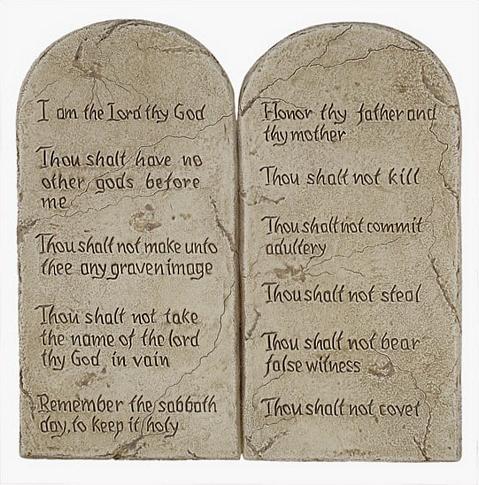 The Didache contrasts two ways of living, “the way of life” and the “way of death”. The “Didache” was a training manual for converts to Christianity which summarises for a new convert the basic teachings of the Apostles. It is adapted from on manuals used by Jewish communities and used for instructing pagan converts to Judaism. This fact suggests the Didache is a very early Christian writing. Early Christianity was Jewish, the first Christian’s being a sect of Judaism, as time went on, however, the church broke from Judaism, and more and more non-Jewish people became Christians. Further evidence of an early date for the Didache is the primitive leadership structure of the church. The latter hierarchal structure of church leadership you find in the second century AD isn’t present instead – the Didache mentions a leadership structure of itinerant prophets and even mentions apostles. This suggests as are suggestive of a mid-first Century date for the document.[1] This would place the document within the same generation as the apostles. At the latest, the passage is dated Early-Second Century, less than a generation after the death of the apostles.
There is a line in the Didache which says “you shall not murder a child by abortion nor kill that which is born”. This line occurs in a section which explains to the readers what the ten commandments require of Christians, and the prohibition on abortion occurs alongside various other commandments such as the fifth commandments prohibition of murder and the commandment against adultery. The Didache shows us that very early on, within at least a generation of the Apostle’s early Christian communities viewed the killing of a fetus as a form of homicide. It was considered to violate the fifth of the ten commandments.
This community that produced the Didache were not alone in this. The position laid down in the Didache appears to have been widely accepted. Every theologian from the Patristic period who wrote on the question comes to the same conclusion. Here are some examples:
- Athenagoras (133–190AD) called abortion murder and compared it to infanticide.[2]
- Tertullian (155 – c. 240) calls it “speedier man-killing”[3]And states the Law of Moses condemns it.
- Minucius Felix (150 and 270AD) see abortion it as “parricidium”[4]A Roman legal term for homicide.[5]
 Cyprian (200 –258 AD) calls it murder and views violations of this command as more serious than violating the laws against idol worship.[6]
- Hippolytus (170 – 235 AD) describes abortion as murder and, like adultery, as against God’s commands.[7]
- The author of the Apocalypse of Paul (end of 4th century) describes feticide as “destroying the image of God” and as “contrary to God’s commandments”. [8]
- Augustine (354 430 AD) says that Gods law declares killing a formed fetus as murder[9] and that abortion at any stage is a cruelty akin to infanticide.[10]
- Jerome (347-420) declares feticide to be murder.[11]
- Basil (330-379) classifies it as homicide alongside killing one’s spouse and killing a person in a highway robbery.[12]
- Ambrose (340 – 397) views it as “taking away life before birth”.[13]
- Chrysostom (349 407 AD) states that abortion is “murder before birth” that abortionists turn a woman’s womb into a “chamber for murder” and in doing so “fight against His [God’s] laws”.[14]
We mentioned Philo of Alexandria in the last section and mentioned how he appealed to Jewish teaching on abortion to reject the Greek and Roman practise of infanticide. Like Philo, numerous, Early-Christian writers appealed to this teaching to offer arguments against infanticide.
In the first few centuries after Christ, Christianity was viewed with suspicion and Christians were often falsely accused of all sorts of horrible things. One accusation was that Christians engaged in infant sacrifice. Athenagoras, for example, responded to this accusation by saying Christians couldn’t support killing infants because; “we say that those women who use drugs to bring on abortion commit murder, and will have to give an account to God for the abortion”.[15] If killing a fetus was murder then infanticide must be as well. Christians “are in all things always alike and the same, submitting ourselves to reason, and not ruling over it”.[16] Tertullian responded to the same accusation by noting that for Christians, infanticide is “murder” because Christians “may not destroy even the fetus in the womb”.42 Minucius Felix responded by turning the tables arguing that it was, in fact, the pagans who practised infanticide of which because killing a fetus was merely to “commit a parricide before they bring forth”.[17]
II. Formed/Unformed Distinction and the Septuagint
In addition to seeing feticide as a violation of the fifth commandment, numerous, early Christians followed Philo in basing this conclusion upon the Septuagint and the formed/unformed distinction found in Greek Philosophy. Here are some examples:
 Tertullian (155 – c. 240) stated “The embryo, therefore, becomes a human being in the womb from the moment that its form is completed. The law of Moses, indeed, punishes with due penalties the man who shall cause abortion.”[18]
- Jerome (347-420) wrote, “The seed gradually takes shape in the uterus, and it [abortion] does not count as killing until the individual elements have acquired their external appearance and their limbs”.[19]
- Lactantius (250 – 325) argued that a fetus is formed on the 40th day and it is this stage when it is ensouled and a full human being.[20]
- Gregory of Nyssa (335–395) wrote “ [J]ust as it would not be possible to style the unformed embryo a human being, but only a potential one, assuming that it is completed so as to come forth to human birth, while as long as it is in this unformed state, it is something other than a human being.”[21]
- Cyril of Alexandria: (376 – 444) cites the Septuagint and argues a fetus becomes human at 40 days when it acquires form.[22]
- Ambrosiaster (366 and 384) argues that a human soul is infused into a fetus when the conceptus is formed, and hence abortion of a formed fetus is homicide [23].
By the end of the Patristic period, two church councils adopted policies on dealing with the killing of a fetus. The councils of Elvira and Ancyra, held in 305 A.D. and 314 A.D. respectively. The Council of Elvira declared that a woman had an abortion to cover up an affair could not be re-admitted to full communion for the rest of her life. The reason the council gives for this is that the woman has committed a double sin; she has not just committed adultery she has made this worse this by committing homicide as well.[24] This practice reflected the very harsh discipline that existed in the Early Church where serious sins committed after baptism were not forgiven. This harsh discipline was relaxed by the council of Ancyra only a few years later. Those who attended Ancyra referred to the earlier practice (reflected in Elvira) and ruled “more humanely” and required only 10 years penance before one could be received back into the fold.[25]
It seems safe to say that, throughout the patristic period, almost every Christian theologian who addressed the question of feticide did so by articulating two basic premises [1] that God has commanded people to refrain from killing a human being, and [2] that a fetus, or a formed embryo, is a human being.
However, we should be careful about interpreting these statements to mean that the early church condemned abortion absolutely in every single possible situation. There some evidence that Christain’s also permitted abortion in those rare circumstances where a woman’s life was in danger. The only Christian writer to address this situation was Tertullian. Tertullian refers to a situation where a child gets “twisted” in the womb and cannot be delivered alive without killing the mother. He describes the process of killing it with strong negative language as “a criminal deed” “infanticide” “robber in the dark” and “cruelty” however he also describes it as a “necessary crime” and “necessary cruelty” While Tertullian isn’t clear, many scholars think Tertullian here assumes that when continuing the pregnancy will kill the mother abortion is a necessary evil.
We can summarise the early churches position then as follows:
Premise: [1] Killing a human being without justification violates the law of God.
Premise: [2] A formed embryo (i.e. a fetus) is a human being.
Premise: [3] In the case of feticide (at least in the majority of cases) insufficient or no justification is forthcoming.
[1] John Robinson, Redating the New Testament, (Philadelphia, PA: Westminster, 1976), 324-27.
[2] Athenagoras, A Plea for the Christians, 35.
[3] Tertullian, Apology, 9.8.
[4] Minucius Felix, Octavius, 30.
[5] John Noonan, Contraception: A History of its Treatment by the Catholic Theologians, (Cambridge, MA:
The Bellknap Press of Harvard University, 1965), 91. Noonan notes that ‘parricidium’ was the specific Latin term for the unlawful killing of a close relative such as a parent or brother.
[6] Cyprian, Letters, 48.
[7] Hippolytus, Refutation of all Heresies, 9.7.
[8] Apocalypse of Paul 40.
[9] Augustine, Commentary on the Heptateuch, 2. 80.
[10] Augustine, On Marriage and Concupiscence, 1.17.
[11] Jerome, Letters, 22.13 and 121.4.
[12] Basil, Letter CLXXXVIII, 8.
[13] Ambrose, Hexameron, 5.18.58.
[14] Chrysostom, Homily 24 on Romans.
[15] Athenagoras, A Plea for the Christians, 35.
[16] Ibid. 42 Tertullian, Apology, 9.8.
[17] Minucius Felix, Octavius, 30.
[18] Tertullian, Treatise on the Soul, Ch VII.
[19] Jerome, Letters, 121.4.
[20] Lactantius, De Opifico Dei, 12, 17.
[21] Gregory of Nyssa, On the Holy Spirit Against Macedonius
[22] Cyril of Alexandria, De Adoratione in Spirtu et Veritate, 8.
[23] Ambrosiaster, QQ Veteris et Novi Testamenti, 23.
[24] John Connery, Abortion: The Development of the Roman Catholic Position (Chicago: Loyola University Press, 1977), 47-48
[25] Ibid., 48-49.
]]>No doubt readers will wonder what this question was in response to so let me spell out the context. The speaker was articulating various demographics about the growth of religious belief and practise in contemporary Australia. While doing so he told the following story: A woman and her family had been actively involved in a church for many years, however later in her life, her marriage ended in divorce. When this happened the woman was told she was no longer welcome in the church. Her family left. The speaker then passionately told us how her children all now are emphatic that organised religion does more harm than good. After relaying this story he then fired off the rhetorical question ” And who can blame them?”
Had I been less polite I would have stated: “I can”. I think I can blame them. I have heard similar stories over the years from various speakers and must admit to being less than keen on the enthusiastic apologetic self-flagellation that Christian’s often engage in over such stories. Here is why
First, is a matter of facts and evidence. One thing I have learnt is that when people have had an acrimonious dispute one should always be hesitant to jump to judgement. In any dispute, especially one involving divorce, parties on both sides will have conflicting stories. Both will claim to be unjustly aggrieved, and sorting out what happened isn’t always easy. In this context, I am reminded of a conversation I had with a family law judge once over dinner. The judge talked about both parties in a dispute expressing “their truth”. Piquing my interest, we got into a discussion about whether he believed the truth was relative. On clarification, however, it became apparent the judge wasn’t affirming relativism instead he was expressing a fact he had observed from years on the bench. When emotions run high and loyalties are betrayed or tested people tend to rationalise, deceive themselves, to minimise their own behaviour and maximise that of others. His point was that the different parties often sincerely believe their own stories. They are convinced what they say is true. Despite the fact that it can’t be. It’s the truth as they see it, even if we might see that it is selective with the facts and distorted. I don’t doubt the judge’s observation that this is common. In light of this, I think we need to be very careful before we judge that a church or church leadership group has acted appallingly in such a dispute. This isn’t to say Churches never act in inappropriate ways, or make pastoral or theological howlers. It’s just the point that, even though they do, we shouldn’t immediately accept as credible every accusation that they have the as unvarnished truth. Before we rush to judgement, we should try and work out whether the claim is credible.
In this particular case there are many questions one would need to ask, for example, how did the divorce occur? Did one spouse commit adultery, was there violence or desertion, and from which spouse? Moreover, if the woman was a member of the church isn’t it at least likely that her husband is as well?
In light of these questions, one can immediately see the situation could be more nuanced than it appears. Suppose the woman had committed adultery, deserted her husband, the church was offering pastoral support to her devastated husband. She was turning up every Sunday with the new man and refusing to acknowledge a problem. In this sort of situation, one can easily sympathise with the churches decision. On the other hand, if the man was a womanising wife beater and the pastoral team were taking his side because “wives should submit to their husbands” the picture is different. The point is I’d want to know more about the picture before I rushed to judgement and said: “who can blame them?”
It shouldn’t need to be said. But it’s simply not true that every time some angry person tells a story about their disputes with a church are that the church is in the wrong and the disputant is in the right. Sometimes it’s the case, and sometimes it isn’t. We owe church leaders more respect and justice than to simply believe without question every single accusation made against them, and to join in sympathetic outrage with every accusation. If we rush to judgement, it’s actually us who are behaving appallingly. So while I am quite sure that church leaders can and sometimes do act in bad ways, accusations still need to be substantiated.
But let’s suppose the story is accurate. The church leadership did behave badly and kicked someone out unjustly. I still think we must answer the speaker’s rhetorical question in the affirmative. Here is why: Note what the speaker said, he said that upon being treated this way the family concluded that organised religion does more harm than good. They didn’t want to be associated with an institution that behaves this way. So they will have nothing more to do with “religion”.
But hang on! Can’t a person be legitimately questioned for drawing this kind of conclusion? What has happened is that one church has done one hurtful or offensive thing on one occasion. How can a person justifiably extrapolate from this that religion does more harm than good? Or even that this is normal or typical for churches per se. To do this, a person would need to look at a representative sample of actions performed by various religious organisations over history. Looking at all the hurtful things religious institutions have done over the centuries and all the beneficial things they have done. There would need to be some weighing of these against one another. And only when this was done could one justifiably conclude that religion causes more harm than good.
To suggest that because an organisation has hurt you and your family, you can, therefore, make a judgement about all religious institutions and their total effect on society and history is, frankly, absurd. It is obviously a bad inference. Moreover, this type of judgment is one we would out rightly condemn as stereotypical or bigoted if it occurred in a different context.
Here is an example: suppose a woman’s husband was in the world trade tower on September 11, 2001. As a result of the attack that morning he is killed, and she is overcome with grief. We would feel justified empathy with her, situation, it’s awful, and she has clearly been wronged, unjustifiably widowed by someone else’s criminal conduct. Does it follow however that we can now justifiably go along with her families claim that all Muslims are terrorists and complicit in such behaviour? Obviously not, to do this would, in fact, to sanction stereotyping and to put it bluntly bigotry.
Or, to use another example, suppose someone is walking home and is attacked by an African American male. He is beaten and hospitalised and dies from the mugging. The victim’s family are angry in a fit of rage they declare that African American males are a scourge and want nothing to do with any African American men they do more harm than good? What would we say? “Can you blame them?” I think we can and would; we would call this racial prejudice. I think we would understand the anger and sympathise with their pain, but we would also recognise that this pain and anger has twisted or warped their perspective so that they are promoting, without evidence, harmful generalisations about others. And we would want to challenge those generalisations. Of course, this may need to be done in a sensitive and tactful way. But the fact we are sensitive and tactful doesn’t mean we grant what they say is justified. It isn’t. They have allowed their rage and anger to become pathological and bigoted and this isn’t blameless.
One might wonder why I am harping on about an anecdotal story I have heard in a talk. Here is why: the story I heard and the response I witnessed to it is, I think, representative of something common. Throughout many years at Bible college, University, and witnessing general culture I have often seen people react this way to claims about abuse on the part of religious leaders, and it bothers me that people react this way.
My studies have taught me that there are in popular culture false narratives about religious people and religious institutions. Some of these narratives are so notorious historians have given them names The black legend, the myth of a dark ages, the Whig view of history, the conflict thesis, myths about the Crusades in their own way these different narratives are deep in popular psychology and they tell a narrative about the role of religious institutions in our society and history. These narratives are also false. But, their falsity isn’t often appreciated in popular culture. It’s also worth noting these narratives can be harmful. A few years ago I studied the terror that occurred during the French revolution, and it was eye opening how some of these sorts of narratives were used to murder people. The idea of religion as an institution which inevitably oppresses the downtrodden was a well-known Marxist trophe[1]and it was used to justify the slaughter of thousands. Obviously, not everyone who believes these things is going to kill, but we need to call a spade a spade. A false narrative based on selective and stereotypical reasoning is still a false narrative, and if such a narrative can and has been harmful, we need to be candid about this, it can be used this way. Sticks and stones break bones and names can hurt you.
So when the speaker asks, “can we blame them” I answer “yes we can” In all walks of life people suffer, have disputes and can be unjustly treated, does this justify them in generalising about whole groups of people? No, it doesn’t. The fact the topic is religion doesn’t change this fact.
[1] Compare for example Karl Marx’s “religion is the opium of the people’ Mao Tse Tung’s “Religion is Poison” and the title of Christopher Hitchen’s bestselling “God is not Great How Religion Poison’s Everything” (emphasis mine)
]]>- The influence of Theological Utilitarianism in the 18thand 19th centuries
Theological Utilitarianism sounds novel to contemporary ears. But it wasn’t an innovative position in the late eighteenth century. Paley notes in the preface that he is a “compiler” of earlier writers of moral theory. Schneewind, states that the theory he proposed was in fact “an assemblage of ideas developed by others and is presented to be learned by students rather than debated by colleagues. “[1] Some trace theological utilitarianism back to the divine command theory of John Locke[2] However, the earliest clear exponent of this position appears to be George Berkeley’s sermons in 1712.[3]
It is worth looking at Berkeley in some detail. According to Berkeley, things are “denominated good or evil” as “they are fitted to augment or impair our own Happiness” Good or Evil. On the other hand, “Moral Goodness” consists in a “Conformity to the Laws of God.” Berkley articulates the relationship between moral and non-moral goodness as follows:
For Laws being Rules directive of our Actions to the end intended by the Legislator, in order to attain the
Knowledge of God’s Laws, we ought first to enquire what that end is, which he designs should be carried on by human Actions. God is a Being of Infinite Goodness. it is plain the end he proposes is Good. But God enjoying in himself all possible Perfection, it follows that it is not his own Good, but that of his Creatures. Again, the Moral Actions of Men are entirely terminated within themselves, so as to have no influence on the other orders of Intelligences or reasonable Creatures: The end therefore to be procured by them, can be no other than the good of Men. But as nothing in a natural State can entitle one Man more than another to the favour of God, except only Moral Goodness, which consisting in a Conformity to the Laws of God, doth presuppose the being of such Laws, and Law ever supposing an end, to which it guides our Actions, it follows that Antecedent to the end proposed by God, no distinction can be conceived between Men; that end therefore itself or general design of Providence is not determined or limited by any Respect of Persons: It is not therefore the private Good of this or that Man, Nation or Age, but the general well-being of all Men, of all Nations, of all Ages of the World, which God designs should be procured by the concurring Actions of each individual. Having thus discover’d the great end, to which all Moral Obligations are Subordinate; it remains, that we enquire what Methods are necessary for the obtaining that End.[4]
When Berkeley says God is infinitely good, he like Samuel Clarke seems to mean that God has “an unalterable disposition to do and to communicate good or happiness.”[5] [6] God’s goal in issuing the commands he does is the happiness, impartially considered of all human beings.
Berkeley proceeds to note two ways that God could promote this happiness. One would be “without the injunction of any certain universal Rules of Morality, to to oblige “every one upon each particular Occasion, to consult the publick Good, and always to do that, which to him shall seem in the present time and circumstances, most to conduce to it.” The second is “by enjoining the Observation of some determinate, established Laws, which, if Universally practised, have from the Nature of things an Essential fitness to procure the well-being of Mankind” Berkeley argues that “”there lie several strong Objections.” Berkeley then anticipates the “self-effacing” objection to act utilitarianism arguing that anyone committed to promoting the happiness of others wouldn’t promulgate act utilitarianism as a decision procedure. Public endorsement and acceptance of the rule “do whatever maximises utility” would probably not maximise utility. Consequently, Berkeley concludes that God has followed the second method.
Stephen Darwall suggests that the best way to interpret Berkeley is to distinguish between his meta-ethical theory and normative theory. His meta-ethical theory attempts “to answer metaphysical questions of what goodness and rightness themselves, respectively, are.” On the other hand, his normative theory “concerns what actions or things are good and right.” Meta-ethically Berkeley is a divine command theorist “moral goodness consists” consists in a “Conformity to the Laws of God”. However, Berkeley’s normative theory was rule-utilitarian, God commands “Laws, which, if Universally practised, have from the Nature of things an Essential fitness to procure the well-being of Mankind”.[7]
A position very similar to Berkeley is hinted at in Butler’s writings[8] but is expounded more clearly in the writings of, John Gay [9] John Brown, and Abraham Tucker. It’s clear that Paley clearly draws upon this earlier tradition. In the preface to The Principles Paley acknowledges that he is attempting to compile and articulate the positions of John Gay, and Abraham Tucker. Book II chapter 1 of The Principles proposes a line of argument that closely resembles the argument of John Gay “Concerning the Fundamental Principle of Virtue or Morality”.
Similarly, Paley’s emphasis on rules is, as we saw, found in Berkeley’s Passive obedience and performs the same function. Berkeley’s initial advancement of this distinction and advocacy of rule utilitarianism was part of a broader argument to argue against violent resistance to the state during the Jacobite agitation in Ireland. He was concerned that people were advocating the violation of certain negative rules of the law of nature such as: “do not commit adultery”, “do not steal”, “don’t rebel against the government”, whenever they perceived doing so would further the public good. Paley uses the distinction for similar purposes, to respond to the objection that utilitarianism allows people to break with impunity moral rules against theft and murder whenever they perceive it will make people happy.
In fact, the proximate source for Paley’s stress on rules appears to be Abraham Tucker. Tucker. Wrote
As we cannot upon every occasion see to the end of our proceedings, he [the moralist] will establish certain rules to serve as landmarks for guiding us on the way. These rules, when he has leisure and opportunity for mature consideration, he will build on one another, erecting the whole fabric upon the basis of the summum bonum before described. (Original emphasis)[10]
Similarly, Paley’s argument that God wills the happiness of his creatures and so the commands God issues must be coextensive with promoting the happiness is ubiquitous in the tradition that preceded him. This argument is s found in Berkeley, Gay, and Brown Louden also documents the same argument occurs in Adam Smith and Joseph Butler [11]
Finally, Paley’s exposition of this tradition was very influential. The principles became required text at Cambridge university Schneewind points out “utilitarianism first became widely known in England through the work of William Paley.[12] Paley, not Bentham being its most well-known exponent. Similarly, Smith points out that Paley’s writings were once as well known in American colleges as were the readers and spellers of William McGuffey and Noah Webster in the elementary schools.[13]
In fact, Paley’s influence is still seen clearly in John Austin’s work on Jurisprudence, in the early and late nineteenth century. Mill himself appeals to the tradition:
We not uncommonly hear the doctrine of utility inveighed against as a godless doctrine. If it be necessary to say anything at all against so mere an assumption, we may say that the question depends upon what idea we have formed of the moral character of the Deity. If it be a true belief that God desires, above all things, the happiness of his creatures, and that this was his purpose in their creation, utility is not only not a godless doctrine, but more profoundly religious than any other. If it be meant that utilitarianism does not recognise the revealed will of God as the supreme law of morals, I answer, that a utilitarian who believes in the perfect goodness and wisdom of God, necessarily believes that whatever God has thought fit to reveal on the subject of morals, must fulfil the requirements of utility in a supreme degree. …Whether this opinion is correct or not, it is superfluous here to discuss; since whatever aid religion, either natural or revealed, can afford to ethical investigation, is as open to the utilitarian moralist as to any other. He can use it as the testimony of God to the usefulness or hurtfulness of any given course of action.[14]
Mill here explicitly rejects the idea that Utilitarianism does not recognize the revealed will as the supreme law of morals, and uses a line of argument very similar to Paley, whose writings Mill was aware of, to argue the contrary.
Consequently, Utilitarianism then wasn’t a new or novel theory of ethics proposed by secular thinkers such as Hume and Bentham in the late 18th century. Nor did it develop in response to or in opposition to a conception of morality based divine commands or divine laws. Divine command theorists, in fact, had been advocating Theological Utilitarianism for decades before Bentham, and the popularity of utilitarianism in Anglo-American thought had a good deal to do with the popularity of theological utilitarianism.
[1]J B Schneewind Moral Philosophy from Montaigne to Kant. (Cambridge: Cambridge University Press. 2002) 446. Paley was, therefore, summarising an already existing, popular, school of thought.
[2] See for example A. P. Brogan “John Locke and Utilitarianism” Ethics 69: 2 (1959), 79-93.
[3] See Berkeley’s A Discourse on Passive Obedience (1712) and dialogues I-III of the Alciphron (1732). Berkeley had included a systematic treatise on moral theory in the draft of A Treatise Concerning the Principles of Human Knowledge (1710), but the manuscript was lost, leaving historians to piece together his theories from his occasional writings.
[4] Passive obedience: or, the Christian doctrine of not resisting the supreme power, proved and vindicated … In a discourse deliver’d at the College-chapel. By George Berkeley, M.A. Fellow of Trinity-College, Dublin. Available at https://quod.lib.umich.edu/e/ecco/004899015.0001.000/1:3?rgn=div1;view=fulltext
[5] Clarke, Demonstration, Prop. XII; in Works, vol. II, p. 572.
[6] Robert Louden notes this conception of God’s goodness was common in the 18th century and similar arguments can be seen in Smith and Butler see Robert Louden “Butler’s Divine Utilitarianism,” History of Philosophy Quarterly, 12:3 (1995):265–280
[7] See Stephen Darwall “Berkeley’s Moral and Political Philosophy,” in, The Cambridge Companion to Berkeley, Kenneth Winkler, ed. (Cambridge: Cambridge University Press, 2006)
[8] Robert Louden “Butler’s Divine Utilitarianism,” History of Philosophy Quarterly, 12:3 (1995):265–280
[9] John Gay “Concerning the Fundamental Principle of Virtue or Morality” in Lewis Amherst Selby-Bigge, British Moralists, being Selections from Writers principally of the Eighteenth Century, vol. 2 [1897] available at http://oll.libertyfund.org/titles/bigge-british-moralists-vol-2 accessed 26 Aug 2016
[11] Robert Louden “Butler’s Divine Utilitarianism,” History of Philosophy Quarterly, 12:3 (1995):265–280.
[12] Schneewind, Moral Philosophy from Montaigne to Kant 446.
[13] Wilson Smith “William Paley’s Theological Utilitarianism in America” The William and Mary Quarterly Third Series, 11:3 (1954) 402–424
[14] John Stuart Mill “What is Utilitarianism” available at https://ebooks.adelaide.edu.au/m/mill/john_stuart/m645u/chapter2.htm
]]>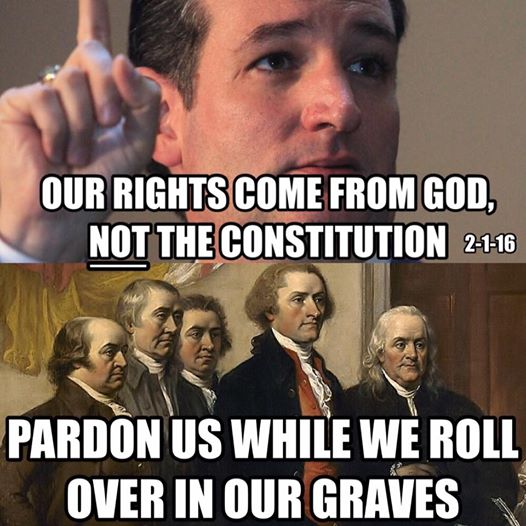
This from the Unites States Founding Fathers:
When in the Course of human events, it becomes necessary for one people to dissolve the political bands which have connected them with another, and to assume among the powers of the earth, the separate and equal station to which the Laws of Nature and of Nature’s God entitle them, a decent respect to the opinions of mankind requires that they should declare the causes which impel them to the separation.
We hold these truths to be self-evident, that all men are created equal, that they are endowed by their Creator with certain unalienable Rights, that among these are Life, Liberty and the pursuit of Happiness.–That to secure these rights, Governments are instituted among Men, deriving their just powers from the consent of the governed, –That whenever any Form of Government becomes destructive of these ends, it is the Right of the People to alter or to abolish it, and to institute new Government, laying its foundation on such principles and organizing its powers in such form, as to them shall seem most likely to effect their Safety and Happiness. Prudence, indeed, will dictate that Governments long established should not be changed for light and transient causes; and accordingly all experience hath shewn, that mankind are more disposed to suffer, while evils are sufferable, than to right themselves by abolishing the forms to which they are accustomed. But when a long train of abuses and usurpations, pursuing invariably the same Object evinces a design to reduce them under absolute Despotism, it is their right, it is their duty, to throw off such Government, and to provide new Guards for their future security…
We, therefore, the Representatives of the united States of America, in General Congress, Assembled, appealing to the Supreme Judge of the world for the rectitude of our intentions, do, in the Name, and by Authority of the good People of these Colonies, solemnly publish and declare, That these United Colonies are, and of Right ought to be Free and Independent States; that they are Absolved from all Allegiance to the British Crown, and that all political connection between them and the State of Great Britain, is and ought to be totally dissolved; and that as Free and Independent States, they have full Power to levy War, conclude Peace, contract Alliances, establish Commerce, and to do all other Acts and Things which Independent States may of right do. And for the support of this Declaration, with a firm reliance on the protection of divine Providence, we mutually pledge to each other our Lives, our Fortunes and our sacred Honor. (emphasis mine)
Oceania is at war with Eastasia. Oceania has always been at war with Eastasia.
]]> The 9/11 terrorist attacks reinvigorated a fear that has lain dormant in the western psyche since at least the 17th century. This fear is encapsulated in an objection to belief in God known as the argument from historical atrocities. Many critics of religion refer to the religious wars that tore Europe apart during the 17th century, citing events such as the Inquisition and Crusades — although lately the Taliban have been the image of choice.
Recently, whilst debating the viability of religious morality at the University of Notre Dame, best-selling author Sam Harris repeatedly cited the Taliban as a representative example of theological ethics. One need not read far into the literature of contemporary free thinkers to uncover this line of argument. Consider Jim Peron of the Institute for Liberal Values:
“To admit religion into the “public arena” is “dangerous.” And long term the results will be just as bloody and violent as they were in the past. … To put religion into that sector is to ignore centuries of history and return to the conflict-ridden, bloody world of the Dark Ages.”
Peron went on to refer to common motifs of the Inquisition: “crazy Puritans”, Servetus’ execution in Calvin’s Geneva and so on. Similar themes abound in the writings of Dawkins, Harris and Hitchens. The citation of historical cases is not in itself an argument so it is hard to discern the exact objection here. It appears to consist of two claims. Firstly, that some people who believe in God have committed atrocities against other people. Secondly, that if people who hold a belief commit atrocities then that belief is either false or should be avoided by liberal-minded people.
Historians Ronald Numbers and David Lindberg point to recent research having discredited the portrayal of the early Middle Ages as “the Dark Ages” brought about by Christianity. Similarly, research into Inquisition archives reveal that while such tribunals did exist, many popular beliefs are based on embellishment, exaggeration and propaganda rather than a sober assessment of facts. The picture of the Inquisition that emerges from these studies is significantly more benign than has popularly been thought. Similarly, historian Leland Ryken’s studies on the Puritans have questioned many of the popular stereotypes Peron referred to.
Take Peron’s allusion to the execution of Servetus. In his study on the life of Calvin, Oxford Theologian Alister McGrath argues that Calvin’s role in Servetus’ execution has been greatly exaggerated and contends that such heresy prosecutions were not typical in Geneva contrary to the image popularly peddled by rationalists. McGrath has also relentlessly exposed several cases of outright distortion and myth perpetuated about the so-called “dictator” of Geneva. This is not to say that atrocities did not occur, nor that such atrocities should be justified, but it is important to be accurate and fair. The evidence suggests that much of what people believe today about religious history is based on discredited 19th century rationalist propaganda stereotypes and consequent cultural prejudice.
Perhaps more interesting is the second claim. While this claim is seldom made explicit, something like it is necessary if the existence of atrocities entails that belief in God is false or that religious belief and practice should be avoided.
Philosopher Glenn Peoples provides several counter examples to this claim. The belief that the atom could be split is one that has been used to kill thousands of people yet that belief is true and it is an important scientific discovery. The belief that theft is wrong has, in the past, led to the lynching of thieves. Does this show that theft is not really wrong and we should not oppose it?
Other examples illustrate the absurdity of this claim. The “reign of terror” during the French Revolution was justified by appeals to liberty, equality, fraternity and the rights of humankind; one victim of the guillotine famously remarked, “Oh, Liberty, what crimes are committed in your name”. Millions have been slaughtered by appeals to the greater good of society or the liberation of the oppressed classes and it is well known that people have defended wars on the basis of justice and social peace. Should we therefore avoid liberty, equality, opposing oppression, seeking justice and social peace?
A third problem with the “argument from atrocities” is that an analogous argument can be used against atheism and secular philosophies. Millions have lost their lives in wars fought in the name of secular ideologies such as Communism — wars far more brutal and total than those that occurred during the Middle Ages. Millions have been killed in socialist states in show-trials every bit as hysterical and rigged as any witch trials were. And, as some medievalists have noted, with irony, the Committee for Public Safety in Enlightenment France was, in numerous respects, much worse than the Inquisition. If the fact that Christians engaged in historical atrocities entails belief in God is false or that religious belief is to be avoided then parity of reasoning entails atheism is false and that secular belief systems should be avoided.
At this point the sceptic will start to make qualifications. One rejoinder is that whilst atheists like Pol Pot, Mao and Stalin committed atrocities, these were not done in the name of atheism or due to their atheist beliefs. Religious atrocities, however, were committed because of religious beliefs.
However, such rejoinders fail. As Peoples explained, Stalin and Pol Pot persecuted religious groups precisely because they were atheists and saw religion as socially pernicious — the very thing people who press the historical atrocities argument are trying to contend. Richard Wurmbrand, a victim of communist persecution in Romania, stated that “communist torturers often said there is no God, no hereafter, no life after death, we can do what we wish.” The fact that atheism was not the motivation for these actions seems to be news to those who actually witnessed them.
So, many atrocities were committed on the basis of atheism. The purported rejoinder also fails due to the fact that many atrocities cited by religious critics were not committed for religious reasons but for secular ones. Christopher Eberle and Terence Cuneo noted in the Stanford Encyclopaedia of Philosophy that the religious wars of the 17th Century were caused not by the appeal to religious reasons, per se, but rather by the violation of religious freedom. They noted further that even in the 17th Century religious persecution was typically justified on secular grounds,
“When such rights have been violated, the justifications offered, even by religious believers, appeal to alleged requirements for social order, such as the need for uniformity of belief on basic normative issues. One theological apologist for religious repression, for example, writes this: ‘The king punishes heretics as enemies, as extremely wicked rebels, who endanger the peace of the kingdom, which cannot be maintained without the unity of the faith. That is why they are burnt in Spain.”
Medievalist Régine Pernoud argued that heretics were burnt or tortured during the 12th Century due to the revival of Roman Law, which allowed torture to gain a confession and burning as punishment for treason. The torture and burning of heretics had as much to do with ancient Roman legal customs as it did with biblical exegesis. In fact, the Inquisition used torture more sparingly, passed death sentences more rarely and had more humane prisons than most secular courts of the same time. This suggests inquisitors actually moderated already accepted harsh Roman practices. Now, this does not justify such practices but it does question the thesis that religious reasons were the driving motivation for them or the thesis that they would not have occurred if a more secular context had prevailed. In a similar vein the Crusades were originally called to protect pilgrims from attack, to recover annexed territory and to protect the eastern Roman Empire from invasion — all secular reasons that could have been utilised to justify war quite independently of any religious rationale. Was World War II not fought to recover annexed territory, protect innocent people and protect Europe from invasion? How many millions were killed for that?
When these qualifications fail it is contended that not all atheists support these practices. This is true. It is also true that not all religious people support the practices cited by these sceptics. In fact, historically, some of the most important criticisms of religious persecution and defences of religious tolerance, such as those proposed by John Locke and Pierre Bayle, appealed to explicitly theological grounds.
Yale Philosophy Professor, Nicholas Wolterstorff, notes that “many of the social movements in the modern world that have moved societies in the direction of liberal democracy have been deeply and explicitly religious in their orientation.” Wolterstorff cites examples such as the abolitionist, civil rights and other resistance movements as examples.
So the appeal to historical atrocities, on examination, seems often based on a fairly selective analysis of the evidence. The Bin Ladens and Hitlers of this world are clearly dangerous but so too are the Stalins, Pol Pots and secular groups like the Tamil Tigers who pioneered the practice of suicide bombing before Al-Qaeda came on the scene. People fight and kill for a number of reasons; sometimes these are religious, more often they are secular – sometimes both. When people care deeply about something, sometimes they will kill to protect it. Religion is not an exception.
Bin Laden is dead; however, as commentators incessantly tell us, the legacy of religious terror he represents will continue. What also will continue are the prejudices of some secular groups who use his example to stereotype and smear all religions as dangerous and fanatical. It is far easier to kill a terrorist than it is to kill irrational prejudice but at least one can expose it for the shallow line of thought that it is.
I write a monthly column for Investigate Magazine entitled “Contra Mundum.” This blog post was published in the June 2011 issue and is reproduced here with permission. Contra Mundum is Latin for ‘against the world;’ the phrase is usually attributed to Athanasius who was exiled for defending Christian orthodoxy.
Letters to the editor should be sent to:
ed*******@************************TE.com
RELATED POSTS:
Contra Mundum: Stoning Adulterers
Contra Mundum: Why Does God Allow Suffering?
Contra Mundum: “Till Death do us Part” Christ’s Teachings on Abuse, Divorce and Remarriage
Contra Mundum: Is God a 21st Century Western Liberal?
Contra Mundum: In Defence of Santa
Contra Mundum: The Number of the Beast
Contra Mundum: Pluralism and Being Right
Contra Mundum: Abraham and Isaac and the Killing of Innocents
Contra Mundum: Selling Atheism
Contra Mundum: Did God Command Genocide in the Old Testament?
Contra Mundum: Fairies, Leprechauns, Golden Tea Cups & Spaghetti Monsters
Contra Mundum: Secularism and Public Life
Contra Mundum: Richard Dawkins and Open Mindedness
Contra Mundum: Slavery and the Old Testament
Contra Mundum: Secular Smoke Screens and Plato’s Euthyphro
Contra Mundum: What’s Wrong with Imposing your Beliefs onto Others?
Contra Mundum: God, Proof and Faith
Contra Mundum: “Bigoted Fundamentalist” as Orwellian Double-Speak
Contra Mundum: The Flat-Earth Myth
Contra Mundum: Confessions of an Anti-Choice Fanatic
Contra Mundum: The Judgmental Jesus
]]>
This morning at church I had the privilege of hearing a very interesting talk from my Pastor, Rev. Dr Stuart Lange about the lead up to the Treaty signing. Stuart is a church historian and something of an expert on the history of Christianity in New Zealand. When he is not being a pastor at Massey Presbyterian Church he lectures in Church History at Laidlaw College where he used to be Vice Principal.
 Stuart looked at the role of missionaries in NZ society. He pointed out some interesting facts, such as: the relationship between early missionary Samuel Marsden and William Wilberforce, the famous evangelical reformer who spearheaded the abolition of the slave trade in England; and that prior to the Treaty being signed, large numbers of Maori converted to Christianity; he touched on the role of Missionaries in brokering peace between warring tribes, and how these conversions lead to Maori tribes liberating their slaves who then carried the gospel back to their homes. He also noted that, in many respects, prior to 1840 Christianity was more prevalent amongst Maori than the colonial settlers, many of whom were fairly unscrupulous and had little time for serious evangelical commitment.
He noted also the theological and pastoral motivations of the missionaries in pushing for the Treaty; they were concerned to see that, with colonialists arriving in great numbers, the indigenous people they worked with were protected. He also noted the role of several missionaries in speaking out against early violations of the Treaty.
Stuart is apparently giving a 90 minute lecture on these issues at Congress 2011: 2020 Vision – The Gospel in the Decade Ahead, a Christian leadership conference in Wellington later this month – check it out if you’re in Wellington. This was a very brief snippet of that talk but it was thoroughly interesting and it was delivered with Stuart’s characteristic humour.
I have posted on some of the moral issues around the Treaty before and I plan in the future to write some more on this topic but now I also plan to look into some of the theological history as I found this talk fascinating.
Anyway happy Waitangi Day fellow kiwis! Let us today all pause, consider and celebrate our country’s heritage and future together – take up Pat Brittenden’s idea and have a Waitangi Day barbeque! Kia kaha.
RELATED POSTS:
Maori and Pakeha are Not Partners to the Treaty of Waitangi
Sovereignty and The Treaty of Waitangi
View “Marae: The Great Waitangi Debate” Here
The Foreshore and Seabed Repeal: The Inconvenience of Due Process

At the time Tim told us he was aiming to get this material online so that everyone could access it. Along with his advisory board of William Lane Craig, Gary Habermas, Craig Hazen, Robert Stewart, it seems he has made some progress as the Library of Historical Apologetics is now live and open for browsing and is really worth checking out.
Paraphrasing and splicing bits together from the Collection page:
The collection contains both one of the world’s largest catalogs of works in historical apologetics, the branch of apologetics dealing with the authenticity and credibility of the scriptures and particularly of the New Testament. The authors come from various denominational and educational backgrounds and would not agree with each other on all points of theology. Some are profound works of research and scholarship; others are brief works addressed to a non-specialist audience. But each makes a distinctive contribution to the literature of historical apologetics.
In addition to the library, the site features:
- Annotated Bibliography: Short descriptions of selected works.
- Spotlight Articles: Published monthly, these two page articles describe an author, book or apologetic theme [Very cool!]
- Quotation of the Week: Significant and pithy excerpts that make a poignant point and illustrate the subject matter of a particular author.
All works available at the library are in English and are part of the public domain.
HT Tim McGrew
]]>