The first two sentences of the document exhibit a confusion which is inherent throughout (and commonly found in discussions of church and state):
“The NZARH strongly believes that government should be secular; that is dealing with the issues of this world rather than following a religious agenda. Our law should not give one set of beliefs privilege over another and the state should treat religious organisations the same as any other organisation.”
An equivocation on the meaning of the word “secular” in the very first sentence is immediately apparent.
Stephen Smith notes that the word secular has two distinct meanings. Etymologically, “secular” refers to things pertaining to this world and life as opposed to the next. In this sense of the word “secular” is not opposed to religion; many religious beliefs and values pertain to life in this world, beliefs about: marriage, sex, human life, killing, justice for the poor, what one’s duties are in this life, what God’s purposes are in this life and so on are all secular beliefs in this sense. The second and more common meaning of “secular” is to say it excludes, is in opposition to beliefs and values that are religious in nature; this is usually the first definition one will find in a dictionary.
The NZARH use both meanings in the first sentence of their “Tolerant Secular State” document. They start by defining secular in the first of these senses, in terms of “dealing with the issues of this world.” The switch to the second definition occurs immediately in the claim that a secular state must not follow a “religious agenda.” From what the NZARH subsequently argues it is clear that this second sense is what it really has in mind as much of what it says simply does not follow from the first sense.
It is important to note here what the NZARH mean by “privilege” in “our law should not give one set of beliefs privilege over another.” The NZARH specifically mean that the viewpoint of religion must not be a source of law or public policy and by implication, cannot be a motivation or a justification for a source of law or public policy. If this is not what they mean by privilege then their argument makes no sense; the claim that the government must not follow “a religious agenda” and must “be secular” is supported by the contention that religious beliefs should not be privileged. If basing a law on a religious agenda is not privileging it then the argument does not follow.
That clarified, the NZARH’s argument is essentially:
1) The government should be secular, not religious;
This means the state should make a clear distinction between secular views and non-secular views and it should treat them differently. It should base its policies on the former type of view and not the latter. As such, on the understanding of “privilege” outlined above, the State should privilege secular beliefs over religious ones.
The basis for this is that,
2) Our laws should not privilege any one view over another, the state should treat religion the same as any other view.
So let us get this straight. Secularism is a type of viewpoint that 1) the NZARH seeks to privilege over religion but then 2) states that viewpoints must not be privileged.
Of course, if one assumes from the outset that secularism is not a specific view and is somehow some kind of neutral position that everyone can subscribe to then the statements read together might make sense but that is an erroneous assumption.
Secularism is a Viewpoint under New Zealand Law
The New Zealand Bill of Rights Act (1990), which the NZARH’s “Tolerant Secular State” document holds out as “key legislation that upholds the principles of the fair and tolerant society” identifies and treats secularism as a view or a set of beliefs. The Bill of Rights has three relevant sections:
13 Freedom of thought, conscience, and religion
Everyone has the right to freedom of thought, conscience, religion, and belief, including the right to adopt and to hold opinions without interference.
14 Freedom of expression
Everyone has the right to freedom of expression, including the freedom to seek, receive, and impart information and opinions of any kind in any form.
15 Manifestation of religion and belief
Every person has the right to manifest that person’s religion or belief in worship, observance, practice, or teaching, either individually or in community with others, and either in public or in private.
The gist of these three sections is that in New Zealand anyone can form and identify with whatever belief, viewpoint or idea they please, find out more about it, discuss and share it with others and act in accord with it, in public as well as private, as long as they do so with regard to the other rights present in the Bill of Rights. What a lot of people miss however is how the Bill of Rights treats viewpoints.
Section 13 is typically thought of as the Freedom of Religion section. But read it closely you’ll see that “thought”, “conscience”, “religion” and “belief” are listed – all described as “opinions” not religious views. Had the drafters wished to make s13 solely a religion section then they would have kept the language that of religious terminology only.
Sections 14’s “information and opinions of any kind and in any form” and s15’s “religion and belief” tell us that under New Zealand law non-religious beliefs are intended to be treated and dealt with by the state in precisely the same way as religious beliefs.
This is backed up in the various commentaries and government documents that have been published on these sections of the Bill of Rights – here are a couple from New Zealand Human Rights Commission Documents. (I note that the NZARH’s Tolerant Secular State document also praises the Human Rights Act 1993 which was the source of law which created the Human Rights Commission). The first is speaking of the New Zealand Bill of Rights Act 1990;
“What religions or beliefs are covered?
Religion or belief includes mainstream religions, minority or atheistic beliefs and the right not to have a belief.”
This one is a reference to the International Bill of Rights of which New Zealand has bound itself by and which is widely acknowledged to form part of the source of the wording and meaning of our Bill of Rights:
“What is the right to freedom of religion and belief?
The right to freedom of religion and belief includes the right to hold a belief, the right to change one’s religion or belief, the right to express one’s religion or belief, and the right not to hold a belief. The right to believe is not limited to religion. It also includes atheistic beliefs, as well as matters of conscience such as pacifism and conscientious objection to military service.”
Evidence that these sections of the Bill of Rights Act were intended to include non-religious beliefs such as atheism, agnosticism, humanism, secularism, etc and place them on par can be found in this document put out by the Ministry of Justice, “The Guidelines on the New Zealand Bill of Rights Act 1990: A Guide to the Rights and Freedoms in the Bill of Rights Act for the Public Sector:”
Further discussion on the meaning of section 13
The protection in section 13 is far-reaching. The section is likely to include “freedom of thought on all matters, personal conviction and the commitment to religion or belief“. The freedom extends to thoughts and beliefs of any kind including theistic, non-theistic and atheistic beliefs.…
How should I interpret the term ‘religion or belief’?
The United Nations Human Rights Committee states the terms “religion” and “belief” should be interpreted broadly to include theistic, non-theistic and atheistic beliefs. The protection in section 15 extends beyond obligatory doctrine and applies to all religions and beliefs, even those without the established doctrines and customs of traditional religions.
Now given the NZARH’s principle 2) that no one view should be privileged over another, all views should be treated equally, this is all perfectly compatible but this reading of the Bill of Rights Act (and the International Bill of Rights) conflicts radically with the NZARH principle 1). It also radically conflicts with the vision for New Zealand that the NZARH have clearly held out as aspirational in the six examples they identify in their document as areas of public life which need improving on. Their proposed solutions for the examples they have set out clearly demonstrate a call for one view (theirs) to be significantly privileged over another.
The most telling is their section on education which I will now briefly fisk:
“The New Zealand public education system was set up to be secular and still is in most cases.”
The education system must inculcate one type of viewpoint alone: secular views and not non-secular views.
“There are however too many cases where those running a school try to force their own beliefs on their students through religious observance.”
But it is ok for secular beliefs to be forced on students through the inculcation of unchallenged secular viewpoints in the classroom.
“The Education Act (1964) has incorporated a loophole to allow primary schools to “close” sections of the school for religious instruction where outside volunteers indoctrinate the children whose parents haven’t opted them out.”
and
“The NZARH strongly believes that public education should be free, secular and available equally to all children.”
The teaching of secular viewpoints are to be taught at all times, to all children – teachers can teach no other viewpoint. Religion can only figure if the school is willing to close and volunteers are available and parents choose to not opt students out. This is an extremely asymmetrical treatment of two types of viewpoints, secular viewpoints and religious viewpoints but even this asymmetry is not good enough for the NZARH, they want to tip the weight even further towards the bias of secularism, they strongly believe that all state funded education should be secular. Any citizen who wishes for an alternative to their view must pay more than citizens who do not.
As Paul Rishworth, Professor and outgoing Dean of Law at the University of Auckland, an expert in New Zealand’s Rights and Freedoms law, stated to the Human Rights Commission’s Diversity Forum on Religion in Schools:
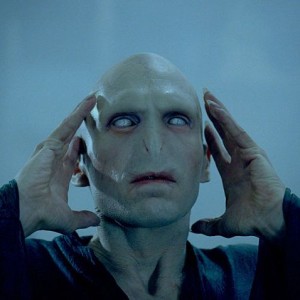
Though I am perhaps the only person in the world who has not read Harry Potter, the point is well made in an extract from the seventh and last volume (p. 210):
]]>“What’s Voldemort planning for Hogwarts?” she [Hermione] asked Lupin. “Attendance is now compulsory for every young witch and wizard,” he replied. “That was announced yesterday. It’s a change, because it was never obligatory before. Of course, nearly every witch and wizard in Britain has been educated at Hogwarts, but their parents had the right to teach them at home or send them abroad if they preferred. This way, Voldemort will have the whole Wizarding population under his eye from a young age.”
Obviously, the normal conditions of the existence of a contract are not fulfilled if the promisee misunderstands what the promiser intends. … a promiser is morally bound to perform whatever he believed his promisee to have understood him to promise. He cannot reasonably do less; for he should have corrected any misunderstanding he was aware of. And not even his promisee can fairly claim that he has knowingly bound himself to do more.[1]
Donagan here notes that when two parties enter into a contract they are bound by the terms of the contract because they agreed to them. Given this, they are only bound to do what they agreed to do, or what it is reasonable to assume that they agreed to do, given the circumstances. They cannot be required to do more than this as they did not agree to do more and could not reasonably have been expected to forsee needing to do more.
I think these points are fairly obvious; however, they have implications that are often less obvious. Today is Waitangi Day in New Zealand. One common argument proposed in the debate around the Treaty of Waitangi is that in the Maori translation, under Article 2, the Crown promised,
… to protect the chiefs, the subtribes and all the people of New Zealand in the unqualified exercise of their chieftainship over their lands, villages and all their treasures.[2]
Now there is some debate about whether the phrase translated “chieftainship” (tino rangatiratanga) entails the idea of sovereignty or self-determination in this context or whether it simply conveys an idea of property rights.
Suppose, for the sake of argument, that the former is correct. The fact that the Maori translation promises Maori sovereignty does not mean that the Crown promised this. In order for the Crown to be bound in this manner, the Crown would have to have believed (or been in a position where it was reasonable for them to have believed) that they were promising various Iwi (tribes) “sovereignty” in this sense. This clearly was not the case. The crown thought that they were merely promising what the English translation affirms they were:
Her Majesty the Queen of England confirms and guarantees to the Chiefs and Tribes of New Zealand and to the respective families and individuals thereof the full exclusive and undisturbed possession of their Lands and Estates Forests Fisheries and other properties which they may collectively or individually possess so long as it is their wish and desire to retain the same in their possession;[3]
It is clear that, under the English version, the Crown intended to guarantee Maori property rights in their land and it promised to protect these rights. Any promise of sovereignty was due to a translation error or not speaking Maori fluently. The representatives of the Crown could not have reasonably believed they were doing anything else. They relied in good faith on a translator to put their terms accurately into Maori and had no reason for thinking he had done anything other than this; hence, the Crown did not agree to provide Maori sovereignty and so did not promise it under the Treaty. It may be that some leaders mistakenly thought they did, but they were mistaken. Whatever the Maori version says, the Crown is not bound by it.
I can think of two objections to this line of argument. The first, as Madeleine tells me, is the contention that the majority of Iwi signed the Maori version and under international treaty jurisprudence, where there is a conflict in translation the version that the majority of the parties signed is the valid one.
This argument, however, misses the point. It is not that I am claiming that the English version is valid and the Maori one is not. I am quite willing to grant that the Maori version is valid, the point is that the Crown is morally bound only to do what they reasonably believed they were agreeing to do when they accepted the terms of the Treaty and the terms they believed they were agreeing to were those contained in the English version of the Treaty.
Moreover, this argument appeals to international law. International law recognises that the Crown is the legal sovereign of New Zealand as it has been a stable de-facto government, recognised as such, by the majority of its citizens.
A second objection is to note reciprocity; just as the Crown was not bound by what it reasonably believed it was agreeing to, so too the various Iwi are only bound by what they reasonably believed they were agreeing to. If one grants for the sake of argument that “tino rangatiratanga” means sovereignty, then Iwi were not bound to relinquish this sovereignty over to the Crown. They believed, quite reasonably given the translation they had, that they were not promising to relinquish sovereignty to the Crown but rather to maintain it.
If this were the case the problem still arises that today in New Zealand, in 2010, the Crown is Sovereign. We do not have independent tribal nations that hold sovereign political power over their lands. All land in New Zealand is under the sovereignty of parliament and is subject to English common law and NZ statutes. Hence, the question is not whether Iwi are required to relinquish sovereignty to the Crown under the Treaty as, for better or worse, justly or unjustly, they have done so. The question today becomes, whether, after 170 years of the Crown being sovereign, Iwi should attempt to gain this sovereignty back? On this issue the Treaty is silent. It says nothing about what various parties are entitled to if another party misunderstood the agreement.
The question then of Maori sovereignty is not a question of the Treaty at all. It is simply a question of morality in general. The real question is this, if one lives under a de-facto government that has been sovereign in practise for 170 years and if this government is relatively just then should one continue to defer to its sovereignty?
I think the answer to this question is yes. I believe that when a stable de-facto government exists and has existed for over a century and when there is an absence of gross abuses of human rights then its sovereignty should be recognised as legitimate by the citizens of that nation. I will not further advance this argument here but I will simply note that whatever the answer to this question it seems reasonable to say that the Crown never promised sovereignty to Maori and claims that it did are based on the mistaken idea that a person can be bound by the terms of a contract which he or she both did not agree to and could not reasonably have been expected to have agreed to – to expect anything else is nonsense.
[1] Alan Donagan The Theory of Morality (Chicago: University of Chicago Press, 1977) 91.
[2] “Treaty of Waitangi” Kawharu Translation Article 2.
[3] “Treaty of Waitangi” English Version Article 2.
RELATED POSTS:
Maori and Pakeha are Not Partners to the Treaty of Waitangi
My paper is Mining and Natural Resource Law (there is not much choice at Summer School). As an opinion topic we were allowed to take our budding legal specialty and apply it to any of the topics on the course outline. I like to take a philosophical rights and freedoms approach to most of what I research and write within the field of law so I have submitted and had approved a topic with a bit of a jurisprudential twist. I intend to analyse the justifications given for the state appropriation of minerals in the sub-soil of privately owned property.
Most articles I have found on state appropriation so far seem to tacitly assume that if the state has legislated that it owns the minerals in the sub-soil of privately owned land then the state’s action is justified or the author simply does not question this, even if he or she acknowledges that a few private property owners had an issue with this at the time, which is not helpful as I intend to question the justification.
New Zealand philosophical writings from the perspective of classical liberal/pro-property rights/limited state angles are fairly difficult to find. Further international writings on this subject are not commonly cited in New Zealand so they too are hard to find. If any of our readers can point me to any good sources that might help me in the project or even if you can just leave your thoughts in the comments section (if I use your ideas in the work I promise to attribute them back to you) that would be most helpful.
The following is the gist of the direction I hope to take.
Since at least the 16th century, the maxim cujus est solum, ejus est usque ad coelum et ad inferos (Latin for for whoever owns the soil, it is theirs up to heaven and down to hell) meant that at common law, minerals in the sub-soil of land belonged to land owner. Such minerals were assumed to be conveyed along with the land on its change of ownership unless wording in the conveyance instrument specified otherwise. Until fairly recently, the last century or so, the only minerals not subject to this rule were gold and silver. The Case of Mines found “that by the law all mines of gold and silver within the realm, whether they be in the lands of the Queen, or of subjects, belong to the Queen by prerogative”. According to Dr Robyn Anderson,[1]
The Court of Exchequer found in Case of Mines, that base metals – tin, lead, iron, copper, and non-precious minerals – belonged to the owner of the soil, but that the right to gold, silver, and their ores and admixtures, lay with the Crown. That right was not an incident of ownership of the soil, but rather, an attribute of the monarchy. The Elizabethan assertion of the prerogative reflected the pragmatic needs of the developing English state to control the coinage, and finance an army … [1]
The argument that back in the 16th century the Monarch needed to be able to protect the realm by using coinage to raise an army (there was no standing army) and weapons to arm it, seems, prima facie, a reasonable justification for the state appropriation of gold and silver. However, in the last century or so many of the base metals and minerals deemed non-precious in the Case of Mines are now included in statutory reservations to the crown. This has reached the point in 2010 where, with few exceptions, the state currently owns almost all minerals in territorial New Zealand and has exclusive right to alienate (or grant a licence to alienate) most of those minerals from even those lands held in private ownership. Further, in many circumstances, land owners cannot even refuse consent for prospective, exploration and mining to occur on their land.
The New Zealand government owns all naturally occurring petroleum (including both oil and gas), radioactive minerals, and gold and silver in New Zealand. Any individual or company wanting to prospect, explore or mine these substances must obtain a permit under the Crown Minerals Act 1991 and pay the specified fees and royalties [to the state]. The same rules apply to coal and all other metallic and non-metallic minerals and aggregates on Crown-owned land.
Mining of minerals and aggregates other than petroleum, radioactive minerals and gold and silver on privately owned land requires the consent of the landowner together with resource consents from local authorities granted under provisions of the Resource Management Act. [Emphasis added] [2]
The current state of mineral rights in New Zealand seems to me, prima facie, to be a violation of ad coelum et ad inferos (the right of land ownership “down to hell” or in sub-soil), so the question I want to ask in my opinion is: what is the basis for the state’s appropriation of sub-soil minerals from the lands of private property owners and is it justified? The New Zealand army is not armed with gold and silver these days, further, I cannot see any legitimate argument for why the state needs to own petroleum and “Nuclear Free New Zealand” does not have a nuclear weapons program (and are, just a guess here, highly unlikely to in the future) so what is with the state ownership of radioactive resources?
Obviously 3,000 words will not give me a lot of space to develop this topic so I will try to keep the topic to more of a general overview but I need resources and fast both directly on this topic and on property rights generally so if you have any thoughts…
[1] Robyn Anderson Goldmining: Policy, Legislation, and Administration (Rangahaua Whanui Report, Waitangi Tribunal, Dec 1996) RANGAHAUA Whanui NATIONAL Theme N: GOLDMINING: Policy, Legislation, and Administration (Robyn Anderson ed., 1996) 1.
[2] Simon Nathan “Mining and underground resources – Mining regulation and education” Te Ara – the Encyclopedia of New Zealand, updated 2-Mar-09.
B The Dangers of Religion
One explanation as to why this asymmetry is applied to religious reasons is offered by Quinn; “Some people fear that religious argument is apt to be dangerously divisive.”[82] Audi concurs, “[religious reasons] are special in relation to liberal democracy even by contrast with [secular reasons] … that are not accessible to any normal adult.” [83] He gives five “salient points” to support his case, all based on the idea that religious reasons are dangerous to society. [84]
First Audi claims that religious reasons are often “directly or indirectly taken to represent an infallible authority”.[85] The second point is that religious people often “believe that anyone who does not identify with [the ultimate divine source] is forsaken, damned, or in some other way fundamentally deficient.”[86] Third, “religious reasons often dictate practices that are distinctively religious in content (such as prayer) or intent (such as preserving the fetus on the ground that it is a gift from God)”.[87] Fourth, with many religious leaders, especially leaders of cults, there is a risk that they are “cloaking their prejudices with absolute authority.”[88] Finally, Audi contends that religious people tend to be “highly and stubbornly passionate about the importance of everyone’s acting in accordance with religious reasons”.[89]
Again these features are not unique to religion. As McGrew argues, all these features can be equally present in secular people and movements;[90]
It is sadly amusing to read this list and to consider how well its negative aspects apply to secular people and movements. Communism, for example, is as fanatical as any conventional religion and demands group-think on an unrivaled scale. Contemporary feminism aspires to control worldview, language, and behavior. The New Atheists are exceedingly passionate about making people behave in accordance with their own beliefs (making sure children are taught Darwinism as unquestioned fact, for example), and Richard Dawkins and P.Z. Myers have an inflated sense of self-importance that would make many a Christian megachurch pastor look modest by comparison. Dawkins is infamous for having repeatedly and insistently called a religious upbringing “child abuse,” and while Dawkins has shied away from the obvious legal implications of this accusation, not everyone who thinks as he does is so cautious. Other secularists, self-styled “comprehensive liberals,” have expressly advocated the use of the power of the state to monitor and limit parents’ ability to transmit their religion to their children (see Hitchcock, 2004). As for the vicious condemnation of children who do not fully conform to their parents’ secular ideology, a good example of this phenomenon is the strange story of Rebecca Walker, daughter of feminist icon Alice Walker. And, on the other hand, there are plenty of religious people who do not display such negative characteristics. It simply does not appear to be true that we reduce fanaticism, self-important leadership, attempts at thought control, and the like in society by reducing the role of religion in public life.
McGrew suggests there are secular analogues of even Audi’s third reason, that religious reasons often dictate practices that are distinctively religious in content or intent;[91]
It would certainly be undesirable if people were being coerced to pray to any God, even the true God. But then, secular ideology can and sometimes does demand that we do homage to itself—in the form of changing our language to make it politically correct, for example, or treating two men or two women as “married” in all of our business activities. The problem with forcing people to pray to the true God is that the true God is not truly worshiped in that fashion. The problem with forcing people to pray to false gods and to pledge allegiance to false ideologies is that they are false. You will not avoid the problem of the coercion of conscience by limiting the role of religion in public life. You will only shift that problem so that the unreasonable coercion comes from some quarters rather than others.
Audi’s first point invites a parallel rejoinder. He defines infallible propositions as those that are “impossible that they be both endorsed or accepted by God and false”.[92] On this definition of infallibility every proposition is infallible. God, as Audi understands him, is omniscient. God only believes true propositions. It follows then that any proposition God accepts cannot be false; this is true whether it is a religious proposition or a secular one.
Audi’s main concern is that a person who believes an action is commanded by God believes that an omniscient, infallible being has endorsed that action. Appeals to purported divine commands are therefore problematic. However, some secular ethical theories face precisely the same problem. One of the most influential secular theories, endorsed by ethicists as diverse as David Hume, Adam Smith, Henry Sidgwick, Richard Hare, Roderick Firth, John Stuart Mill, Tom Regan, Richard Brandt, Immanuel Kant and others, is the ideal observer theory. On this theory an action is wrong, if and only if, it would be proscribed by an ideal observer, by a person who is perfectly impartial and perfectly informed on all the relevant facts. A hypothetical ideal observer is no less infallible than religious believers take God to be. It is hard to see how invoking religious reasons is not acceptable but invoking the secular reasons is.[93]
C Argument from Religious Wars
A more forcible danger of religion argument invokes the spectre of religious wars. Audi states “if religious considerations are not appropriately balanced with secular ones in matters of coercion, there is a special problem: a clash of Gods vying for social control. Such uncompromising absolutes easily lead to destruction and death”[94] Wolterstorff articulates the concern;[95]
One reason which liberals have offered ever since the emergence of liberalism in the seventeenth century is that it’s just too dangerous to let religious people debate political issues outside of their own confessional circles, and to act politically, on the basis of their religious views. The only way to forestall religious wars is to get people to stop invoking God and to stop invoking canonical scriptures when arguing and determining politics.
The adequacy of this argument can be contested on several grounds. First, Quinn, Greenwald and Wolterstorff note that while it was true of 17th century England, “social peace did depend on getting citizens to stop invoking God, canonical scriptures, and religious authorities when discussing politics in public”,[96] it is not plausible that such a danger exists in 21st century Western countries like New Zealand, Australia and the United States. Quinn notes, “current political debate in the United States exhibits failure to comply with Audi’s principles on a massive scale and yet shows no tendency to reignite the Wars of Religion of the early modern era.”[97]
Wolterstorff makes two other related points. He notes that “the slaughter, torture, and generalised brutality of our century has mainly been conducted in the name of one or another secular cause–nationalism of many sorts, communism, fascism, patriotisms of various kinds, economic hegemony.”[98] Second, he notes that “many of the social movements in the modern world that have moved societies in the direction of liberal democracy have been deeply and explicitly religious in their orientation”[99] He cites the abolitionist movement, the civil rights movement and movements resisting communism, facism and apartheid as examples. The invocation of religious reasons risks war and civil strife when certain types of religious reasons are invoked in particular socio-political contexts. This is equally true of secular reasons; certain types of secular reasons can be dangerously incendiary in particular socio-political contexts. There seems no basis for an asymmetry between secular and religious reasons on these grounds.
Eberle and Cuneo add that 17th century “confessional conflict … [was] typically rooted in egregious violations of the right to religious freedom, when, for example, people are jailed, tortured, or otherwise abused because of their religious commitments.”[100] Given that few, if any, who appeal to religious reasons advocate such violations or could plausibly bring them about, such appeals are unlikely to have tumultuous effects.
In terms of protecting freedom of religion from these kinds of abuses it is not obvious that secular reasons fare any better, “secularists have a long history of hostility to the right to religious freedom and, presumably, that hostility isn’t at all grounded in religious considerations”.[101] Moreover when[102]
religious believers have employed coercive power to violate the right to religious freedom, they themselves rarely have done so in a way that violates the DRR … when such rights have been violated, the justifications offered, even by religious believers, appeal to alleged requirements for social order, such as the need for uniformity of belief on basic normative issues. One theological apologist for religious repression, for example, writes this: ‘The king punishes heretics as enemies, as extremely wicked rebels, who endanger the peace of the kingdom, which cannot be maintained without the unity of the faith. That is why they are burnt in Spain’.
Similarly, Aquinas, in a Rawlsian vein, famously justified the suppression of heretics by appealing to the accepted political culture of his day which required that counterfeiters be executed.
Consequently, the religious wars of the 17th century were caused, not by the appeal to religious reasons per se but rather by the violation of religious freedom; this violation has often been defended on secular grounds. It is unlikely that the DRR provides a bulwark against such abuses.
III Conclusion
On examining the DRR it appears that there is no good reason for singling out religious reasons for a particular restraint and limiting discourse to secular reasons. The grounds offered for doing so, the golden rule, the epistemic accessibility of religious premises, the dangers of religion and the potential for religious wars all apply with equal force to secular beliefs. Hence, the restriction appears arbitrary. Moreover, as applied, the DRR is often incoherent and if applied consistently would render most substantive coercive laws unjustified. The current practice of equating secularism with neutrality is flawed.
As Carter eloquently puts it,[103]
What is needed is not a requirement that the religiously devout choose a form of dialogue that liberalism accepts, but that liberalism develop a politics that accepts whatever form of dialogue a member of the public offers. Epistemic diversity, like diversity of other kinds, should be cherished, not ignored, and certainly not abolished. What is needed, then, is a willingness to listen, not because the speaker has the right voice but because the speaker has the right to speak. Moreover, the willingness to listen must hold out the possibility that the speaker is saying something worth listening to; to do less is to trivialize the forces that shape the moral convictions of tens of millions of Americans.
This series was written as a supervised research paper in pursuit of my LLB.
[82] Phillip Quinn “Political Liberalisms and Their Exclusions of the Religious” (1995) 69:2 Proceedings and Addresses of the American Philosophical Association 35, 143.
[83] Robert Audi “Liberal Democracy and the Place of Religion in Politics” in Nicholas Wolterstorff & Robert Audi (eds) Religion in the Public Square: The Place of Religious Convictions in Political Debate (Rowman and Littlefield Publishers Inc, Lanham Md, 1997) 1-66, 31.
[84] Ibid 31-32.
[85] Ibid 31.
[86] Ibid.
[87] Ibid.
[88] Ibid 31-32.
[89] Ibid 32.
[90] Lydia McGrew “The Irrational Faith of the Naked Public Square” (2008) 1 The Christendom Review (at 2 October 2009).
[91] Ibid.
[92] Audi, above n83, 63.
[93] I am grateful to Matthew Flannagan for the development of this point.
[94] Robert Audi Religious Commitment and Secular Reason (Cambridge University Press, New York, 2000) 103.
[95] Nicholas Wolterstorff “Why we should Reject what Liberalism tells us About Speaking and Acting in Public for Religious Reasons” in Paul Weithman (ed) Religion and Contemporary Liberalism (University of Notre Dame Press, Notre Dame IN, 1997) 167.
[96] Nicholas Wolterstorff “The Role of Religion in Decision and Discussion of Political Issues” in Nicholas Wolterstorff & Robert Audi (eds) Religion in the Public Square: The Place of Religious Convictions in Political Debate (Rowman and Littlefield Publishers Inc, Lanham Md, 1997) 67-120, 79.
[97] Quinn, above n82, 39.
[98] Wolterstorff, above n96, 80.
[99] Christopher J. Eberle and Terence Cuneo “Religion and Political Theory” (2008) Stanford Encyclopedia of Philosophy (at 9 August 2009).
[100] Ibid.
[101] Ibid.
[102] Ibid.
[103] Stephen Carter The Culture of Disbelief: How American Law and Politics Trivialise Religious Devotion (Basic Books, New York, 1993) 230.
RELATED POSTS:
Religious Restraint and Public Policy: Part I
Religious Restraint and Public Policy: Part II
Religious Restraint and Public Policy: Part III
Religious Restraint and Public Policy: Part IV
Religious Restraint and Public Policy: Part V
(ii) Are religious reasons ever subject to open justification?
Gaus might rejoin that commitments to freedom of religion can be defended in terms of open justification. Consider some of the cases that divide society that I listed earlier; at least one side in such debates is mistaken, has made an error in rejecting the purported open justification presented to them. This is entirely possible. It could also be true of Qutb; perhaps he mistakenly rejected a premise that, given other things he believes, he should have embraced.
While this rejoinder would avoid the thinness objection, the problem is that it would no longer be clear or obvious, in the absence of substantive argument, that any viewpoint could be openly justified. Neither side in the above debates is likely to concede its position as the one in error. Cuneo and Eberle note the problem;[66]
Were we to ask Qutb whether he would have reasons to support laws that protect a robust right to religious freedom if he were adequately informed and reasonable, surely he would say: no. Moreover, he would claim that his compatriots would reject the liberal protection of such a right if they were adequately informed about the divine authorship of the Quran and the proper rules of its interpretation. While Qutb’s say-so doesn’t settle the issue of who would believe what in improved conditions, liberal critics maintain that his response indicates just how complicated the issue under consideration is. Among other things, to establish that Qutb is wrong it seems that one would have to deny the truth of various theological claims on which Qutb relies when he determines that he would reject the right to religious freedom were he adequately informed and reasonable. That would require advocates of the standard view to take a stand on contested religious issues. However, liberal critics point out that defenders of the standard view have been wary of explicitly denying the truth of religious claims, especially those found within the major theistic religions.
Gaus’ case for open justification can only succeed if one makes certain assumptions as to the merits of substantive contentions about morality, philosophy of religion, the truth or falsity of various religious doctrines and questions of meta-ethics. However, such contentions are controversial.
An additional problem is that open justification commits one to the DRR only if one assumes that religious reasons can never be openly justified. Recall that Audi’s definition of a religious reason is one that possesses “normative force, that is, its status as a prima facie justificatory element, does not (evidentially) depend on the existence of God.” This suggests that proponents of the DRR must assume that belief in God cannot ever be openly justified. I would dispute this.
Philosophers and theologians have offered arguments for God’s existence entailing that the beliefs most rational people already accept commit them to theism. Richard Swinburne has written several works arguing that Christianity is more probable than not on the public evidence than any alternative.[67] Robert Adams has argued that the best account of moral obligation is such that they are the commands of a loving God.[68] Alvin Plantinga sketched 26 arguments for God’s existence, which are currently being defended in the literature.[69] Blackwell recently published an encyclopaedia containing 11 current arguments used to defend the existence of God.[70] Edward Feser agrees,[71]
Versions of these arguments were defended by the likes of Plato, Aristotle, Augustine, Aquinas, Duns Scotus, Descartes, Leibniz, Locke, and Newton, and their defense had absolutely nothing to do with ignorance of modern science — indeed, some of these thinkers were among the founders of modern science — because the arguments do not ultimately stand or fall with any scientific results in the first place. … Among the contemporary defenders of the arguments are writers like Alvin Plantinga, Richard Swinburne, John J. Haldane, James F. Ross, Richard Taylor, William Lane Craig, David S. Oderberg, David Braine, Barry Miller, Robert Koons, Charles Taliaferro and many others — analytic philosophers highly respected within the field and applying the most rigorous methods of analysis and argumentation. … anyone familiar with the classical and contemporary literature on philosophical theology [cannot] deny that the arguments for the theistic worldview mentioned above are every bit as defensible today as any other philosophical argument.
Just as there are numerous secular arguments, each defended by intelligent and capable scholars, held to be sound by their proponents even if rejected by their opponents, so too are there arguments for the existence of God that meet these criteria. In light of this it seems arbitrary to simply assume that religious arguments cannot meet the standard of public justification. Critics can argue the merits of these arguments and claim that only secular arguments can succeed but this will not give proponents of religious reasons a real reason for accepting such claims. Religious believers hold quite different assessments on the cogency of these arguments. Therefore, the demand of open justification does not appear to be a sufficient reason for the restriction of religious reasons but not others.
(iii) Are secular reasons for coercive laws subject to open justification?
Gaus contends that religious reasons cannot be openly justified and that secular beliefs can. Many thinkers have argued that secular perspectives cannot justify the core commitments of a liberal democracy. Nihilist thinkers have argued that secular naturalistic views of the world entail that all moral claims are false.[72] Stephen Layman[73] and George Mavrodes[74] have argued that a secular view renders belief in morality irrational. Using a Kantian line, John Hare has argued that atheism makes the moral life rationally unstable.[75] Mark De Linville argues that atheism, when combined with evolutionary theory, provides good reason for thinking our moral beliefs are unreliable.[76] Alvin Plantinga has articulated the case for the conclusion that evolution, when combined with atheism, provides a reason for being sceptical about everything we believe (public policy would be no exception).[77] Michael Perry and Wolterstorff claim that human beings possessing inherent rights (a fundamental commitment of liberal democracy) cannot be adequately defended on secular grounds and is only defensible if one assumes religious doctrines.[78]
As with many secular arguments, religious justifications for coercive policies have been advocated by intelligent and capable scholars, held to be sound by their proponents even if they are rejected by their opponents. It would be arbitrary to simply assume that secular arguments meet the criteria of open justification and that religious ones do not. Cuneo and Eberle note the problem;[79]
Liberal critics maintain that we are simply not in good epistemic position to judge the reasons an agent would have to support laws that protect basic liberal commitments were he better informed and more reasonable. More exactly, liberal critics maintain that we are not in a good epistemic position to determine whether a secular agent who is reasonable and better informed would endorse or reject the type of theistic commitments that philosophers such as Wolterstorff claim justify the ascription of natural human rights. The problem is that we don’t really have any idea how radically a person would change his views were he to occupy these conditions. The main, and still unresolved, question for this version of the standard view, then, is whether there is some coherent and non-arbitrary construal of the relevant counterfactual conditions that is strong enough to prohibit exclusive reliance on religious reasons but weak enough to allow for the justification of basic liberal commitments.
Given the divide between intelligent and capable people over various arguments for and against particular coercive policies it is not prima facie evident that any of these arguments can meet the standard of open justification. Moreover, if an argument could, there appears to be no reason to assume that it could not be a religious one. Now Gaus could examine all currently unsettled policy disputes in society and defend the ones he agrees with and attack the others but the inevitable result will be that many who do not share Gaus’ position will likely be unconvinced. If this is the outcome, there seems no reason why those who do not agree should accept the DRR.
Feser suggests that this arbitrary singling-out of religious reasons for restraint with little or no basis seems to be based more on ignorance and bigotry than reason,[80]
The problem, in the view of many liberals, is that religious considerations are matters of faith, where “faith” connotes in their minds a kind of groundless commitment, a will to believe that for which there is no objective evidence. Opinions on matters of public policy, they would say, can only appropriately be arrived at via methods of argument assessable by all members of the political community, not by reference to the idiosyncratic and subjective feelings of a minority.
If religious arguments were in general really like this, then I would agree with the liberal that they ought to be kept out of the public square. But in fact this liberal depiction of religion is a ludicrous caricature, and manifests just the sort of ignorance and bigotry of which liberals frequently accuse others.
Jeremy Waldron makes a similar point,[81]
Secular theorists often assume that they know what a religious argument is like: they present it as a crude prescription from God, backed up with threat of hellfire, derived from general or particular revelation, and they contrast it with the elegant complexity of a philosophical argument by Rawls (say) or Dworkin. With this image in mind, they think it obvious that religious argument should be excluded from public life, … But those who have bothered to make themselves familiar with existing religious-based arguments in modern political theory know that this is mostly a travesty;
A common theme in the arguments from respect, despite both possessing the features considered relevant, is the asymmetry between religious reasons and secular reasons. On the golden rule argument, Audi privileges secular reasons over religious reasons even though secular reasons were potentially subject to the same charges of being false and burdensome. Similarly with the argument from epistemic inaccessibility, reasonable people are able to reject both secular and religious reasons in a pluralistic society yet Audi and Rawls use this fact to exclude the latter and not the former. Likewise, with open justification, prima facie, there is no reason to accept that religious beliefs cannot be openly justified whilst secular beliefs can. Nor is there a prima facie reason for assuming that liberal commitments can be openly justified on secular grounds. In both cases intelligent and capable scholars have advanced arguments from premises which they believe others are committed to holding. Further in both cases the cogency of these arguments can be reasonably disputed.
In my next post, Religious Restraint and Public Policy: Part VI, I will look at the dangers of religion as a justification for its asymmetrical treatment within the DRR and conclude my argument.
[66] Christopher J. Eberle and Terence Cuneo “Religion and Political Theory” (2008) Stanford Encyclopedia of Philosophy (at 9 August 2009).
[67] Richard Swinburne The Coherence of Theism (Clarendon Press, Oxford, 1977); The Existence of God (Clarendon Press, Oxford, 1979); Faith and Reason (Clarendon Press, Oxford, 2005); Responsibility and Atonement (Clarendon Press, Oxford, 1989); Revelation (Clarendon Press, Oxford, 2007); The Christian God (Clarendon Press, Oxford, 1994); Providence and The Problem of Evil (Clarendon Press, Oxford, 1998).
[68] Robert Adams Finite and Infinite Goods (Oxford University Press, New York, 1999); “Divine Command Meta-Ethics Modified Again” (1979) 7:1 Journal of Religious Ethics 66; “Moral Arguments for Theistic Belief” in Robert Adams (ed) The Virtue of Faith and Other Essays in Philosophical Theology (Oxford University Press, New York, 1987) 144; “Divine Commands and the Social Nature of Obligation” (1987) 4 Faith and Philosophy 262.
[69] Alvin Plantinga “Appendix: Two Dozen (or so) Theistic Arguments” in Deane-Peter Baker (ed) Alvin Plantinga
[70] JP Moreland and William Lane Craig Blackwell Companion to Natural Theology (Blackwell Publishing, Malden MA, 2009).
[71] Edward Feser “How to Mix Religion and Politics” (20056) TCSDaily (at 6 October 2009).
[72] Prominent examples are: JL Mackie Ethics: Inventing Right and Wrong (Penguin, Harmondsworth, 1977); Michael Ruse “Evolutionary Theory and Christian Ethics” in Michael Ruse (eds) The Darwinian Paradigm (Routledge, London, 1989) 251-273.
[73] C Stephen Layman “God and the Moral Order” (2002) 19:3 Faith and Philosophy 304; “God and the Moral Order: Replies and Objections” (2006) 32:2 Faith and Philosophy 209.
[74] George Mavrodes “Religion and the Queerness of Morality” in Robert Audi and William Wrainwright (eds) Rationality, Religious Belief and Moral Commitment (Cornell University Press, Ithaca, 1986) 213-226.
[75] John Hare The Moral Gap (Clarendon Press, Oxford, 1996); “Naturalism and Morality” in JP Moreland and William Lane Craig (eds) Naturalism: A Critical Appraisal (Routledge, London, 2000) 189-211; “Kant and the Rational Instability of Atheism” in Andrew Dole and Andrew Chignell (eds) The Ethics of Belief (Cambridge University Press, Cambridge, 2005).
[76] Mark D Linville “The Moral Argument” in JP Moreland and William Lane Craig (eds) Blackwell Companion to Natural Theology (Blackwell Publishing, Malden MA, 2009) 391 449.
[77] Alvin Plantinga Warrant and Proper Function (Oxford University, New York, 1993) 216-239; “The Evolutionary Argument against Naturalism” and “Replies to Beilby and his Cohorts” in James K Beilby (ed) Naturalism Defeated? Essays on Plantinga’s Evolutionary Argument Against Naturalism (Cornell University Press, New York, 2002) 1-15 & 204-277; “Naturalism vs Evolution: A Religion Science Conflict” in Paul Draper (ed) God or Blind Nature? Philosophers Debate the Evidence (at 3 September 2009).
[78] Nicholas Wolterstorff Justice Rights and Wrongs (Princeton University Press, Princeton NJ, 2008); Michael Perry Toward a Theory of Human Rights: Religion, Law, Courts (Cambridge University Press, Cambridge, 2006).
[79] Eberle and Cuneo, above n 65.
[80] Feser, above n 71.
[81] Jeremy Waldron God, Locke, and Equality: Christian Foundations of John Locke’s Political Thought (Cambridge University Press, Cambridge, 2002) 20. Gaus appears to agree; in his book review of Eberle’s work on the subject he writes, “At the outset, however, let me stress that Eberle has written a very good book indeed. It is manifest that he has thought much harder and deeper about justificatory liberalism than justificatory liberals have thought about religious justification and belief. His analysis of religious epistemology and mysticism (ch. 8) clearly demonstrates the extent to which many liberals have attacked caricatures of religious justification. After Eberle’s book, secular liberals must be much more careful in their claims about religious beliefs and their justifications.” Gerald Gaus “Religious Convictions in Liberal Politics” (2003) Notre Dame Philosophical Reviews (at 13 September 2009) (book review). (Cambridge University Press, New York, 2007) 203-229.
RELATED POSTS:
Religious Restraint and Public Policy: Part I
Religious Restraint and Public Policy: Part II
Religious Restraint and Public Policy: Part III
Religious Restraint and Public Policy: Part IV
Religious Restraint and Public Policy: Part VI
(d) Gaus’ attempt to salvage the argument from epistemic inaccessibility
I have argued that the argument from respect is subject to two objections, incoherence and thinness. One should not appeal to religious reasons to justify coercive legislation because people can reasonably reject religious reasons; as religious reasons are not shared by all reasonable people there is a duty to not appeal to them. However, if this is true then both the DRR in its “public reason” form, as exemplified by Rawls, and in its more secularist form, as exemplified by Audi, should also be rejected. Reasonable people do not agree on secular moral theory nor do they agree on the principles of public reason.
In addition to being incoherent the DRR excludes far too much. It leaves us with content that is insufficiently thin to justify substantive legislative questions. I cited Gaus above who agreed that “little, if anything, is the object of consensus among reasonable people.”
In response to the thinness objection Gaus introduced the idea of “open justification.”[55]
Open justification … takes a person’s current system of beliefs and asks, first, whether given this system that person is committed to accepting some new piece of information, and, second, whether that person is then committed to revising his or her system of beliefs in the light of that new information.
According to Gaus, what respect requires is not that laws be justified to all reasonable people in such a way that those reasonable people can be expected to accept the justification, but rather “a coercive law is justified to an agent only if, were he reasonable and adequately informed, then he would have a sufficient reason from his own perspective to support it.”[56] [Emphasis added]
Peoples explains,[57]
[One] might hold to all kinds of prejudices and false beliefs that would lead him to reject a policy, and yet we might still be justified in advocating that this policy be imposed on him because if he were a bit more reasonable and open to new information, he would have a reason to endorse it. Stated differently, a person can be openly justified in accepting a policy, and yet consciously reject that policy because he doesn’t realise that if he only knew a bit more, understood the situation a little better, or was more open minded, he would have reasons to accept the policy.
Gaus prefers open justification over two other forms he identifies as “closed justification” and “strong externalism.” Gaus describes closed justification as being justified internally from the viewpoints that person currently holds.[58] He defines strong externalism as being justified from a viewpoint where one was adequately informed and had no mistaken beliefs. Gaus suggests that respecting others means that one is able to openly justify the policies one supports to other reasonable people in society. He does not require that persuasion is achieved or that a person’s current comprehensive viewpoint endorses the policy in question. Rather he holds that one must be able show the person that his or her current viewpoint provides grounds or reasons for believing things they currently do not. Further, that if they did accept these other things then they would have reasons for embracing the coercive policy being advocated.
Gaus’ opinion does appear to improve on that of Rawls. He is not alone in suggesting this. Audi has offered a solution to the thinness problem along the lines Gaus suggests.[59]
Two people who disagree on the justice of allowing a Nazi group to present its case may share intuitions about freed speech in general and be divided by, for instance, paranoia about Nazis, which one party has and the other does not. When this happens, there is often a possible route from the shared intuitions about the justice of protecting freedom of expression to agreement on the case in hand. It appears, moreover, that among rational civilized people, establishing agreement on what factual information is relevant and on what the relevant facts are tends to bring intuitions closer together.
Often when two people disagree there will be a set of moral intuitions[60] on which they do agree. The disagreement stems from other facts brought about by certain biases. If people can be shown that they are mistaken on these facts, it is possible that the biases can be corrected and agreement might occur. Audi suggests that something like open justification will decrease the amount of disagreement between rational people on at least some issues of justice.
As Audi’s example is simply that of a dispute between two people I am not sure that it escapes the thinness objection. It is one thing for a person to openly justify his or her position to one other but, according to Gaus, it is wrong to advocate a coercive law unless one can provide open justification to all reasonable people. Further, in the context of a defence of the DRR, and in the face of a charge of unjust asymmetry, Gaus must also contend both that religious reasons can never achieve open justification in this manner and that secular reasons can.
(i) Open justification and the thinness objection
According to Gaus, the provision of open justification for a policy, to another person who rejects that policy, should proceed in two stages. First, one should assess whether the other person’s viewpoint commits that person to “accepting some new piece of information”. If it does, then one should assess whether the person is then “committed to revising his or her system of beliefs in the light of that new information.” Consequently, a person is only permitted to advocate a position if he or she can show that the position follows from premises that all reasonable people in society currently accept and according to a type of inference that all reasonable people recognise as valid.
An immediate problem arises, namely that few, if any, laws are justified by arguments that meet this standard (probably because few arguments on any substantive topic meet this standard). Marilyn McCord Adams notes, “the defence of any well-formulated philosophical position will eventually involve premises which are fundamentally controversial and so unable to command the assent of all reasonable persons.”[61] Consider the list of controversial issues I gave earlier: welfare, abortion, state funding of social projects, euthanasia, pornography, genetic modification of foods, climate change, capital punishment, Maori seats and so on. Do any of the proponents on either side of these debates offer arguments that ultimately appeal to premises that all rational people accept, without ever appealing to some premise, that is either drawn from or depends for its plausibility on, a comprehensive perspective that only some reasonable people accept? Could anyone advance such a justification? I doubt it.
This doubt stems from the fact that in such ethical debates often the very foundations of the subject are a matter of dispute. Nihilists deny moral claims are defensible at all. Non-nihilists disagree fundamentally over whether moral language is descriptive, prescriptive, both or merely an expression of emotion. There is disagreement over how moral knowledge is gained, what the fundamental criteria for right actions are and so on. Given this, almost any moral premise will be subject to dispute by some reasonable people.[62]
Eberle and Cuneo raise a related point by citing the example of Islamic intellectual, Sayyid Qutb.[63]
While in prison, Qutb wrote an intelligent, informed, and morally serious commentary on the Koran in which he laid the ills of modern society at the feet of Christianity and liberal democracy. The only way to extricate ourselves from the problems spawned by liberal democracy, Qutb argued, is to implement shariah or Islamic legal code, which implies that the state should not protect a robust right to religious freedom. In short, Qutb articulates what is, from his point of view, a compelling theological rationale against any law that authorizes the state to protect a robust right to religious freedom.
People like Qutb are not alone in society. Whatever we might think of the conclusions they draw, Islamic intellectuals appear to be educated, rational and morally serious people. Qutb rejects “a robust right to religious freedom” and liberal democracy itself. A coercive law that protects a robust right to freedom of religion and any of the other substantive commitments of a liberal democracy is only defensible if secularists can provide a valid argument for these commitments, from premises that Qutb accepts, to the conclusion that such commitments are correct. It is doubtful that secularists have done this or even that they would be able to.[64] Cuneo and Eberle note the conclusion.[65]
If respect for persons requires that each coercive law be justified to those reasonable persons subject to that law, and if a person such as Qutb were a citizen of a liberal democracy, then the argument from respect implies that laws that protect the right to religious freedom are morally illegitimate, as they lack moral justification—at least for agents such as Qutb.
In my next post, Religious Restraint and Public Policy: Part V, I will examine and critique Gaus’s idea of open justification in more detail.
[55] Gerald Gaus Justificatory Liberalism: An Essay on Epistemology and Political Theory (Oxford University Press, New York, 1996) 32.
[56] Christopher J. Eberle and Terence Cuneo “Religion and Political Theory” (2008) Stanford Encyclopedia of Philosophy (at 9 August 2009).
[57] Glenn Peoples “Religion in the Public Square: Is it Justified?” (speech delivered at Thinking Matters, Laidlaw College, 12 May 2009, 14; text obtained via Email from Glenn Peoples to Madeleine Flannagan, 12 October 2009.
[58] Gaus, above n 54, 36.
[59] Robert Audi “Liberal Democracy and the Place of Religion in Politics” in Nicholas Wolterstorff & Robert Audi (eds) Religion in the Public Square: The Place of Religious Convictions in Political Debate (Rowman and Littlefield Publishers Inc, Lanham Md, 1997) 1-66, 132-133.
[60] Audi is a moral intuitionist. He believes people can discern basic moral truths through moral intuition; hence, for Audi, agreement on intuitions means agreement on basic moral principles.
[61] Marilyn McCord Adams Horrendous Evils and the Goodness of God (Cornell University Press, Ithaca NY, 1999) 180.
[62] I am grateful to Matthew Flannagan for the development of this point.
[63] Eberle and Cuneo, above n 55.
[64] For a critical discussion on the standard arguments for religious freedom and the controversial premises on which they rest see, Philip Quinn “Religion and Politics” in William E Mann (ed) The Blackwell Guide to the Philosophy of Religion (Blackwell Publishing, Blackwell Reference Online 2004) (at 7 October 2009).
[65] Eberle and Cuneo, above n 55.
RELATED POSTS:
Religious Restraint and Public Policy: Part I
Religious Restraint and Public Policy: Part II
Religious Restraint and Public Policy: Part III
Religious Restraint and Public Policy: Part V
Religious Restraint and Public Policy: Part VI
(b) Thinness
A closely related problem is that if it is applied consistently the argument from respect excludes too much. If justification is limited to principles that no reasonable person can reasonably be expected to reject then little will be able to be justified. Glenn Peoples notes the problem;[31]
Given this view of justification, you can only endorse a policy if it is such that it can be endorsed in light of the actual beliefs and goals held by the KKK, the Catholic Church and the humanist rationalist society.
Wolterstorff observes that “in our actual societies, anyone who embraced this position would simply refrain from advocating any position whatsoever on any issue of importance to society.”[32] Quinn agrees, “as Wolterstorff notes, he knows of no law or policy that has come up for discussion in the United Sates in recent years that has had the support of a consensus of all the rational adult citizens.”[33]
Gerald Gaus, who is otherwise sympathetic to the DRR, also agrees; he notes that, given Rawls’s requirement for consensus, public reason “loses its character as a liberal doctrine, for little, if anything, is the object of consensus among reasonable people.”[34] Kent Greenawalt argues that public reason is incapable of grounding policy on most contentious political issues.[35] Peter de Marneffe concurs.[36]
Wolterstorff contends that public reason must be supplemented by ideas drawn from comprehensive doctrines or it will not be able to function as an adequate base for justifying many substantive policies. To make his point, Wolterstorff cites the welfare debate. Advocates for the varying perspectives appeal to ‘freedom’ and ‘equality’ but mean different things by these terms; they prioritise the relevant rights differently, they disagree as to how such rights should be weighed against social utility. It is unlikely that public reason, common sense and uncontroversial science can justify welfare legislation to a standard that all can reasonably accept. [37]
Wolterstorff makes similar points over the fundamental premise in the abortion debate; equal protection has radically different meanings depending on how one interprets public reason’s answer to the question, ‘is the fetus a person or not?’[38] Eberle,[39] Quinn[40] and Jean Hampton[41] agree that public reason cannot settle the question as to whether a fetus is a person yet Rawls argues that public reason can settle the abortion debate (case in point: reasonable people disagree over the answers public reason can give). [42]
Rawls’ version of the argument from respect is not the only one that faces these problems; similar issues arise with other conceptions of the DRR. Any attempt to ground the DRR in the notion that coercive legislation cannot be justified unless the reasons advanced can be grounded in the reasonably-held principles and beliefs shared by all people will face the same problem. This is evident when one examines other versions of the DRR which do not employ Rawls’ idea of public reason.
Rawls employs public reason to place a restraint on all comprehensive viewpoints, whether religious or secular. Robert Audi’s position is less restrictive. Audi applies the restraint primarily to religious reasons. He proposes a principle of “secular rationale”, a principle of “secular motivation” and something he calls “theo-ethical equilibrium.”[43]
His secular rationale principle claims that “one should not advocate or support any law or public policy that restricts human conduct unless one has, and is willing to offer, adequate secular reason for this advocacy or support.”[44] His principle of secular motivation goes further; “one should not advocate or promote any legal or public policy restrictions on human conduct unless one not only has and is willing to offer, but is also motivated by, adequate secular reason, where this reason (or set of reasons) is motivationally sufficient for the conduct in question.”[45] Theo-ethical equilibrium is “a rational integration between religious deliverances and insights and, on the other hand, secular ethical considerations … a mature, conscientious theist who cannot reach it [theo-ethical equilibrium] should be reluctant or unwilling to support coercive laws or public policies on a religious basis that cannot be placed in that equilibrium.”[46]
Audi argues that “an adequate reason for a law or policy is a proposition whose truth is sufficient to justify it.”[47] He places the restraint on religious reasons;[48]
A secular reason is, roughly, one whose normative force, that is, its status as a prima facie justificatory element, does not (evidentially) depend on the existence of God (for example, through appeals to divine command) or on theological considerations (such as interpretations of a sacred text), or on the pronouncements of a person or institution qua religious authority.
Given that comprehensive secular perspectives are not excluded by this version of the DRR, it appears that Audi’s conception can escape the problem of thinness that Rawls’ public reason faces. Comprehensive secular viewpoints should provide people with a thicker perspective, broad enough to justify many substantive policies.
However, an examination of the reasons Audi advances in favour of his version of the DRR will reveal this contention to be mistaken. By broadening public reason to adequate secular reason Audi’s position is thicker than Rawls’ but its asymmetrical treatment of religious and secular views puts it back in the path of the charges of incoherence and thinness. I will elaborate.
Like Rawls, Audi offers a version of the argument from respect. He states “as advocates for laws and public policies, then, and especially for those that are coercive, virtuous citizens will seek grounds of a kind that any rational adult citizen can endorse as sufficient for the purpose”[49] [Emphasis added] In another article, he argues that[50]
adherence to the principle of secular rationale helps to ensure that, in determining the scope of freedom in a society, the decisive principles and considerations can be shared by people of differing religious views, or even no religious convictions at all.
Audi assumes that secular views are accepted by all whereas not everyone accepts the truth of religious premises. This is a big assumption. In fact some secular views are not accepted by all; religious people can and do reasonably reject secular views. This renders Audi’s position incoherent as adherence to Audi’s position, by Audi’s position, requires us to reject it. Quinn explains, [51]
If the fact that religious reasons cannot be shared by all in a religiously pluralistic society suffices to warrant any exclusion of religious reasons for advocating or supporting restrictive laws or policies, then much else ought in fairness also to be excluded on the same grounds. For example, justification of a restrictive law or policy by an appeal to its maximization of utility should be excluded because many citizens reasonably reject utilitarianism. Indeed, it would seem that the appeal to any comprehensive ethical theory, including all known secular ethical theories, should be disallowed on the grounds that every such theory can be reasonably rejected by some citizens of a pluralistic democracy. And if justification of restrictive laws or policies can be conducted only in terms of moral considerations no citizen of a pluralistic democracy can reasonably reject, then in a pluralistic democracy such as ours very few restrictive laws or policies can be morally justified, a conclusion that would, I suspect, be welcomed only by anarchists.
In addition, Audi’s position imposes a burden on religion that is not imposed on secularism despite secularism possessing the same features used to exclude religion. In the absence of some other factor, specific to religion and not applicable to secularism, the asymmetry is arbitrary. To escape this problem Audi would have to reject not only religious reasons but all reasons that are not “shared by people of differing religious views, or even no religious convictions at all.” However, if he takes this line, his position is rendered too thin and fares no better than Rawls.’
(c) Audi’s defence
In a defence of his position against this line of critique, Robert Audi questions if the DRR is as thin as critics maintain, [52]
I would think that if we stick to principles of justice, which form only a small part of a comprehensive view, and if we do not take agreement to imply unanimity as opposed to consensus, there is a better chance of agreement than on the whole of such a larger view. Perhaps the chance is still not good, … But is there not a strong consensus, at least among citizens of democratic societies, that justice requires not only equal protection of the laws but also laws that protect liberty, including political and religious liberty and freedom of speech, up to a certain level? There are of course disagreements on matters of detail…
While it is true that most people hold to some conception of justice and equality, and affirm the right to exercise certain liberties, the details of their understanding of these norms are not as minor as Audi suggests. As I alluded to earlier, people can mean quite different things by these terms and can prioritise and weigh their importance quite differently. Closer examination of these “matters of detail” reveals substantive lack of consensus.
Equal protection requires agreement over the question as to whom it applies. In Nazi Germany everyone was owed equal protection by the state; however, certain classes of people were deemed sub-human. Likewise with justifications offered for the new-world slavery as practised in the British Empire and antebellum United States, slaves did not qualify; similarly, with the abortion debate over the status of the fetus. Then there is the extent and nature of the protection to consider. Should the state regulate how many times a week one engages in exercise and eats fruit and vegetables on the grounds of protecting the health of its people or should it simply protect people from aggressors? Is Audi suggesting that simply agreeing that such protection should apply equally to all is sufficient to make his case and what form that should take is mere detail? Unless supplemented by definitions as to its recipients, nature and scope the term “equal protection before the law” is a vague statement lacking substantive content.
The liberties Audi lists are also fraught with difficulty in interpretation as reasonable people do not agree on them. Are they negative or does the state have a duty to provide or subsidise them? The substantive content and meaning of the terms ‘freedom’ and ‘liberty’ is disputed depending on whether one is talking to a libertarian or a socialist. Then there are the problems specific to each liberty.
Consider freedom of religion. Steven Smith has argued that, strictly speaking, it is inaccurate to claim there is such a thing as a right to freedom religion. Instead there exists a spectrum of views about religious tolerance. Diverse writers, such as Aquinas, Cromwell, Locke and Mill each agreed that some religious dissent should be tolerated by the state but disagreed both on the limits and on which religions should be tolerated in society. Smith concluded that as no state tolerates all religious sects and very few tolerate none, the idea of a concept of freedom of religion supported by some and opposed by others is illusory. Which account of religious tolerance is correct depends on comprehensive views; adjudication between different understandings of religious tolerance is not possible without appealing to some comprehensive view. Settling these matters from something like public reason or adequate secular reason seems extremely difficult.[53]
Does freedom of speech entail prior restraint or does it stop at the initiation of force? What about content and the manner of expression? How should we define speech? Does it include a right to engage in hate, racist, blasphemous, defamatory or sexist speech? Is it acceptable to wear Nazi emblems or deny the holocaust?
Reasonable people disagree over more than just the details; they disagree over the terms, the nature, the extent and hold to a different range of finite cases. People use and understand the relevant terms in very different ways. Audi misconstrues the situation when he argues there is unanimity in society on fundamental principles of justice. The thinness objection stands.[54]
In my next post, Religious Restraint and Public Policy: Part IV, I will look at Gerald Gaus’ attempt to salvage the argument from epistemic inaccessibility and will offer some critical analysis of this.
[31] Glenn Peoples Religion in the Public Square: Liberal Political Philosophy and the Place of Religious Convictions
[32] Nicholas Wolterstorff “The Role of Religion in Decision and Discussion of Political Issues” in Nicholas Wolterstorff & Robert Audi (eds) Religion in the Public Square: The Place of Religious Convictions in Political Debate (Rowman and Littlefield Publishers Inc, Lanham Md, 1997) 67-120, 154.
[33] Philip Quinn “Religion in the Public Square: The Place of Religious Convictions in Political Debate” (2000) 60:2 Philosophy and Phenomenological Research 486, 487 (book review), 488.
[34] Gerald Gaus Justificatory Liberalism: An Essay on Epistemology and Political Theory (Oxford University Press, New York, 1996) 293.
[35] Kent Greenawalt Private Consciences and Public Reasons (Oxford University Press, New York, 1995) 141-150.
[36] Peter de Marneffe “Rawls’s Idea of Public Reason” (1994) 75 Pacific Philosophical Quarterly232.
[37] Wolterstorff, above n 32, 103-104.
[38] Ibid 104.
[39] Christopher Eberle Religious Convictions in Liberal Politics (Cambridge University Press, Cambridge, 2002) 217-222.
[40] Phillip Quinn “Political Liberalisms and Their Exclusions of the Religious” (1995) 69:2 Proceedings and Addresses of the American Philosophical Association 35, 37-46.
[41] Jean Hampton “The Common Faith of Liberalism” (1994) 75 Pacific Philosophical Quarterly 208.
[42] John Rawls Political Liberalism (Columbia University Press, New York, 1993) 243-244.
[43] Robert Audi “Liberal Democracy and the Place of Religion in Politics” in Nicholas Wolterstorff & Robert Audi (eds) Religion in the Public Square: The Place of Religious Convictions in Political Debate (Rowman and Littlefield Publishers Inc, Lanham Md, 1997) 1-66, 25-37.
[44] Robert Audi “The Separation of Church and State and the Obligations of Citizenship” (1989) 18 Philosophy and Public Affairs 259, 279.
[45] Ibid 284.
[46] Audi, above n 43, 21.
[47] Audi, above n 44, 284.
[48] Ibid 278.
[49] Audi, above n 43, 17.
[50] Audi, above n 44, 290.
[51] Quinn, above n 40, 39-40.
[52] Audi, above n 43, 131-132.
[53] Steven Smith Foreordained Failure: The Quest for a Constitutional Principle of Religious Freedom (Oxford University Press, New York, 1995). (PhD Thesis, University of Otago, 2007) 118.
[54] Paul Rishworth suggests these examples do not show there is no secular consensus but rather that there is a secular consensus at a high level of abstraction. Supervisor’s feedback from Paul Rishworth to Madeleine Flannagan dated 30 October 2009. This may be the case, however, the thinness objection does not maintain that there is no secular consensus; it maintains that there is no secular consensus thick enough to provide an answer to many substantive public policy questions. For Rishworth’s objection to stand, this higher level of abstraction would have to furnish principles thick enough to answer such questions and the examples above show that it cannot.
RELATED POSTS:
Religious Restraint and Public Policy: Part I
Religious Restraint and Public Policy: Part II
Religious Restraint and Public Policy: Part IV
Religious Restraint and Public Policy: Part V
Religious Restraint and Public Policy: Part VI
II Arguments for the Doctrine of Religious Restraint
Of the reasons advanced in favour of the DRR most fall into one of two categories, an appeal to respect or arguments around the dangers of religion.
A Arguments from Respect
Two variants of the argument from respect are common in the literature; one appeals to the golden rule, that we should do to others what we would have them do to us, the other is that religious reasons are epistemically inaccessible.
1 The golden rule
Audi advances a version of the golden rule;[12]
Let us apply the do-unto-others rule to that case: one would not like having a different religious group, with which one deeply disagrees, press for its religiously preferred policies solely for religious reasons of its own, even if a good secular reason could be offered. … We are especially likely to disapprove of the dominance of religious motivation if the policy or law in question is backed by severe punishments.
Audi expands a hypothetical example offered by Kent Greenawalt[13] where people advocated voting for candidates on religious grounds because they would protect animals. [14]
Suppose, however, that much money must be spent in enforcement and that many jobs will be lost through the changes in the food sector of the economy, so that human conduct is significantly restricted, even if meat consumption remains legal. Then one might ask the religious voters in question whether they would accept comparable restrictions of their conduct, as well as similar job losses or mandatory shifts, on the basis of coercive legislation protecting the dandelion as a sacred species.
Audi’s example imagines a “religious group, with which one deeply disagrees,” and gives the example of a belief in “the dandelion as a sacred species.” However, it is not just that one is being subjected to coercion on religious grounds, it is that the grounds are ones that we consider to be false. Lydia McGrew explains,[15]
A major reason, perhaps the only reason, why many of us would not want other people to impose their religious standards on us is that we think their religions false, not that there is something special about religion. …. So the Golden Rule argument turns out to have very little to tell us about religion, specifically. [Emphasis added]
Imagine the situation where a false secular belief is being imposed; an environmentalist political party seeks to impose a policy that the aesthetic value of dandelions requires all adults within society to make the same substantial sacrifices Audi refers to. The policy could be reasonably objected to in spite of its grounds being secular. The same is true in reverse. Consider a policy most people strongly agree with being proposed on religious grounds; a Christian party advocates the abolition of female circumcision on the basis that the practice conflicts with its religious belief of the body being sacred. The policy could attract widespread support despite its grounds being religious.
These examples suggest that the merits of the policy itself are what is important and not that the grounds used for its justification are religious or secular.[16] Audi disagrees;[17]
Citizens in [a democracy] are naturally and permissibly resentful about coercion by religious factors…in a way in which they are not permissibly resentful concerning coercion by, for instance, considerations of public health. Even the moral errors of others are, for many, easier to abide as supports of coercion than religious convictions having the same result.
McGrew responds by contrasting two cases; first she argues that, “A slave owner would not be permissibly resentful of the emancipation of his slaves on the grounds that their emancipation had come about as a result of religious arguments.”[18] Conversely she argues, a parent would “be permissibly resentful of the forcible administration to his perfectly healthy child of mind-altering drugs even if such a policy was argued for from secular premises.”[19] So it appears that[20]
How permissible (if one means, as Audi must mean, something like “understandable” or “reasonable”) one’s resentment of some law is depends on how reasonable the law is. It does not depend upon the origin of the considerations that brought about the law but rather upon whether the law is good or bad, merely annoying or outrageous, and so forth.
That we should do to others what we would have them do to us does not just apply to the religious. While it is true that most people would strongly object to having to abide by religiously-grounded policies they reject as false, it is also true that they would strongly object to having to abide by secularly-grounded policies they reject as false. Consider a Muslim woman who believes it is her religious duty to wear a burqa. The passage of a law requiring her to remove her burqa for her driver’s license photo would likely be offensive to her. A parallel golden rule argument would require us to oppose coercive laws drawn from secular grounds.
2 Epistemic inaccessibility
Simplified, the most prominent type of argument offered in support of the DRR is that in a pluralistic society, coercive legislation cannot be justified unless the reasons advanced can be grounded in the reasonably-held principles and beliefs shared by all people. People disagree over which religious views, if any, are correct; therefore, any coercive laws justified on religious grounds cannot be legitimate because not all reasonable people accept religious premises. As such, religious reasons are epistemically inaccessible. Eberle sums this up, “the norm of respect imposes on each citizen an obligation to discipline herself in such a way that she resolutely refrains from supporting any coercive law for which she cannot provide the requisite public justification.”[21]
The paradigmatic and most influential version of this argument is that of John Rawls. Rawls argues that society [22]
is always marked by a diversity of opposing and irreconcilable religious, philosophical, and moral doctrines. Some of these are perfectly reasonable, and this diversity among reasonable doctrines political liberalism sees as the inevitable long-run result of the powers of human reason at work within the background of enduring free institutions.
Rawls uses the fact of diversity of comprehensive viewpoints, present in a pluralistic society, to argue for his version of restraint. Any justification drawn from such distinct grounds will always be reasonably rejected by someone.[23] Given this, some form of restraint is necessary.
Unlike most advocates of the standard view, Rawls’ version of the DRR does not only exclude religion but also other comprehensive secular doctrines that reasonable people disagree over. He notes,[24]
Our exercise of political power is proper and hence justifiable only when it is exercised in accordance with a constitution the essentials of which all citizens may reasonably be expected to endorse in light of principles and ideals acceptable to them as reasonable and rational.
Note that the reason that Rawls excludes comprehensive views is that “[not] all citizens may reasonably be expected to endorse [such views] in light of principles and ideals acceptable to them as reasonable and rational.” Rawls argues that when comprehensive views are removed from consideration there remains sufficient common ground from which coercive laws can be justified to all reasonable people. Rawls refers to this “public reason,” which he explains as follows;[25]
We start by looking to the public culture itself as the shared fund of implicitly recognized basic ideas and principles. We hope to formulate these ideas and principles clearly enough to be combined into a political conception of justice congenial to our most firmly held convictions. We express this by saying that a political conception of justice, to be acceptable, must accord with our considered convictions, at all levels of generality, or in what I have called elsewhere, ‘reflective equilibrium.’
Public reason should comprise[26]
presently accepted general beliefs and forms of reasoning found in common sense, and the methods and conclusions of science when these are not controversial … we are not to appeal to comprehensive religious and philosophical doctrines–to what we as individuals or members of associations see as the whole truth–nor to elaborate economic theories of general equilibrium, say, if these are in dispute.
Whilst the boundaries being drawn this way enables Rawls’ position to escape the charge of asymmetry, his critics and even many of those who also advocate some form of restraint on justificatory reasons claim that his position excludes too much.
(a) Incoherence
Nicholas Wolterstorff identifies several problems; [27]
No matter what principles of justice a particular political theorist may propose, the reasonable thing for her to expect, given any plausible understanding whatsoever of ‘reasonable and rational,’ is not that all reasonable and rational citizens would accept those principles, but rather that not all of them would do so. It would be utterly unreasonable for her to expect all of them to accept them. It would be unreasonable of her even to expect all her reasonable and rational fellow theorists to accept them; the contested fate of Rawls’ own proposed principles of justice is illustrative. What is reasonable for her to expect is that her proposals will stir up controversy and dissent not only at the point of transition from the academy to general society, but within the academy.
In short, there is no more hope that reasonable and rational citizens will come to agreement, in the way Rawls recommends, on principles of justice, than that they will come to agreement, in the foreseeable future, on some comprehensive philosophical or religious doctrine. It is odd of Rawls to have thought otherwise; [Emphasis original]
The divisions in society over welfare, abortion, state funding of social projects, euthanasia, pornography, genetic modification of foods, climate change, capital punishment, Maori seats and so on seem very broad; in most cases no argument or reasons advanced for these issues are likely to be accepted by all reasonable people. That reasonable people will disagree over what constitutes public reason does, prima facie, seem plausible. If this is the case then Rawls’ position is incoherent.
Rawls argues that we have a moral obligation to reject any view that “[not] all citizens may reasonably be expected to endorse in light of principles and ideals acceptable to them as reasonable and rational.” Public reason will “alone give a reasonable public answer to all, or to nearly all, questions involving the constitutional essentials and basic questions of justice.”[28] However, as Wolterstorff pointed out, even the deliverances of public reason are such “that not all reasonable people will agree.” Wolterstorff’s reference to the lack of consensus on Rawls’ own “principles of justice” supports this claim. In A Theory of Justice Rawls attempted to expound on his idea of public reason to develop principles of justice that a society could be ordered by.[29] The reception to A Theory of Justice was not a consensus in favour; present in the literature are a number of rejections, offered by reasonable people, on anything from the conclusions drawn, through to the methods used, to the principles themselves.
If we have a moral obligation to reject any view that “[not] all citizens may reasonably be expected to endorse in light of principles and ideals acceptable to them as reasonable and rational” and principles drawn from public reason are themselves things that not all citizens may reasonably be expected to endorse then, by Rawls, we have a moral obligation to reject any principles drawn from public reason.
Matthew Flannagan agrees,[30]
Rawls rejects appeals to comprehensive doctrines because people can reasonably reject them and argues that there is a duty to not decide questions of basic justice this way. If this is true then we should reject appeals to public reason as well; in fact, we have a duty to not follow public reason.
In my next post, Religious Restraint and Public Policy: Part III, I will look at the objection that the argument from respect is too thin, that applied consistently the argument from respect excludes too much. I will conclude by looking at Audi’s response to this.
[12] Robert Audi “Liberal Democracy and the Place of Religion in Politics” in Nicholas Wolterstorff & Robert Audi (eds) Religion in the Public Square: The Place of Religious Convictions in Political Debate (Rowman and Littlefield Publishers Inc, Lanham Md, 1997) 1-66, 30.
[13] Kent Greenawalt Private Consciences and Public Reasons (Oxford University Press, New York, 1995) 67.
[14] Audi, above n 12, 28.
[15] Lydia McGrew “The Irrational Faith of the Naked Public Square” (2008) 1 The Christendom Review (at 2 October 2009).
[16] Wolterstorff makes the same point, above n 3, 106.
[17] Audi, above n 12, 32.
[18] McGrew, above n 15.
[19] Ibid.
[20] Ibid.
[21] Christopher Eberle Religious Convictions in Liberal Politics (Cambridge University Press, Cambridge, 2002) 12.
[22] Ibid 3-4.
[23] The policy itself might be accepted as it may be able to be justified on grounds the person does accept, though these grounds are not immune from being reasonably rejected by other people. I am grateful to Glenn Peoples for the development of this point.
[24] John Rawls Political Liberalism (Columbia University Press, New York, 1993) 217. Note: Rawls limits his support of a form of the DRR in the policy areas of “constitutional essentials and questions of basic justice.” Rawls’ critics argue that his position commits him to holding to his version of the DRR for all coercive legislation; see for example, Wolterstorff, above n 3, 106; Glenn Peoples Religion in the Public Square: Liberal Political Philosophy and the Place of Religious Convictions (PhD Thesis, University of Otago, 2007) 88; Matthew Flannagan Is Historic Christian Opposition to Feticide Defensible in the 21st Century? (PhD Thesis, University of Otago, 2006) 200.
[25] Ibid 8.
[26] Ibid 224-225.
[27] Nicholas Wolterstorff “The Role of Religion in Decision and Discussion of Political Issues” in Nicholas Wolterstorff & Robert Audi (eds) Religion in the Public Square: The Place of Religious Convictions in Political Debate (Rowman and Littlefield Publishers Inc, Lanham Md, 1997) 67-120, 99.
[28] Rawls, above n 24, 225.
[29] John Rawls A Theory of Justice (Harvard University Press, Cambridge MA, 1971).
[30] Matthew Flannagan Is Historic Christian Opposition to Feticide Defensible in the 21st Century? (PhD Thesis, University of Otago, 2006) 195.
RELATED POSTS:
Religious Restraint and Public Policy: Part I
Religious Restraint and Public Policy: Part III
Religious Restraint and Public Policy: Part IV
Religious Restraint and Public Policy: Part V
Religious Restraint and Public Policy: Part VI
As far back as the birth of liberal democracy commentators have proposed various forms of epistemological restraint on the nature and extent of the justifications offered for coercive laws. Justification is important because central to the concept of liberal democracy is the notion that all people are free and equal. Broadly speaking, the state must accord equal protection to all who come within its territory. Public policy must allow people equal freedom to live their lives as they see fit. Every adult must have an equal voice in the governance of society through the democratic process. Charles Larmore sums this up,[1]
The familiar constitutional rights of free-expression, property, and political participation, though no doubt serving to promote the goal of democratic self-rule, also have an independent rationale. They draw upon that most fundamental of individual rights, which is the right [of every person] to equal respect.
A diversity of beliefs, views and religions flourishes as people avail themselves of these liberties and come to different understandings about life, the world they live in, the meanings and purposes thereof. The fact of this plurality invites an important corollary to the concept of liberal democracy, typically formulated as the idea that the state must remain neutral with respect to the different religions and comprehensive viewpoints present within society.
This is not to say that the state must hold that all views are equally true, just or good. Likewise, it is not a requirement that the state must adopt the incoherent stance of affirming (as a truth) that there is no such thing as truth. Nor that it should not concern itself with injustice or deleterious conduct. What is meant by this requirement is that, as a body that exists to serve the people, it is not the state’s role to rule on what is or is not the correct philosophy, worldview or religion; each person must be free to determine this. The state being neutral in this way shows equal respect for the freedom of all people.
When state neutrality is conjoined with the concepts of all people being free, equal and worthy of respect, it follows that coercive legislation needs justification. If people are worthy of respect then there exists a prima facie presumption against state coercion. A commitment to state neutrality entails that justification must be drawn from neutral grounds. I will refer to this view of liberal democracy as “the standard view.”
Common to almost all versions of the standard view is some form of restraint on religious reasons being offered as a form of justification. Richard Rorty, alluding to Jefferson’s famous reference to a wall of separation, describes this as [2]
the happy, Jeffersonian compromise that the Enlightenment reached with the religious. This compromise consists in privatizing religion — keeping it out of … “the public square,” making it seem bad taste to bring religion into discussions of public policy.
The doctrine is more than just a restraint on religious reasons; Nicholas Wolterstorff expounds further;[3]
Definitive of the position is a negation at this point: citizens (and officials) are not to base their decisions and/or debates concerning political issues on their religious convictions. When it comes to such activities, they are to allow their religious convictions to idle. They are to base their political decisions and their political debate in the public space on the principles yielded by some source independent of any and all of the religious perspectives to be found in society. … The source must be such that it is fair to insist that everybody base his or her political decisions, as well as public political debates, on the principles yielded by that source.
Paul Rishworth writes, “some have contended that the nature of religious belief is such that, while it may be integral to individual autonomy and development, it has no proper role in public policy debates and that these ought to be conducted exclusively in secular terms that are equally accessible to all.”[4]
Christopher Eberle and Terence Cuneo refer to this position as the doctrine of religious restraint (DRR) that they define canonically as[5]
The DRR: a citizen of a liberal democracy may support the implementation of a coercive law L just in case he reasonably believes himself to have a plausible secular justification for L, which he is prepared to offer in political discussion. [Emphasis original]
Eberle and Cuneo explain the implications of the DRR, “if a citizen is trying to determine whether or not she should support some coercive law, and if she believes that there is no plausible secular rationale for that law, then she may not support it.”[6]
I The Doctrine of Religious Restraint
As Wolterstorff identifies in the quotes above, the restraint is negative; justifications for coercive laws must not be religious. The extent and nature of the independent source that acceptable justifications may be drawn from varies depending on which advocate one reads; all agree that a coercive law must be able to be justified by a plausible secular justification if it is to be neutral.
Defenders of the DRR claim that it need not be codified. It is a moral requirement upon people regardless of their role within society; some form of censure rather than legal stricture is what is suggested. Rorty reflects this when he refers to it being “bad taste” to bring religion into the public square. Stephen Carter puts it clearly;[7]
One good way to end a conversation – or start an argument – is to tell a group of well educated professionals that you hold a political position (preferably a controversial one such as being against abortion or pornography) because it is required by your understanding of God’s will. In the unlikely event that anyone hangs around to talk with you about it, chances are that you will be challenged on the ground that you are intent on imposing your religious beliefs on other people. And in contemporary political and legal culture, nothing is worse.
There is an asymmetry present in most versions of the DRR; state coercion can be justified by some secular justifications but it can never be justified by religious justifications. In reviewing a definitive defence of the DRR advanced by Robert Audi, Philip Quinn observes;[8]
These principles impose burdens on religious people that Audi nowhere suggests imposing on nonreligious people. … Audi does not propose that nonreligious people must be sufficiently motivated by adequate religious reason for their advocacy or support of restrictive laws or politicise. The lack of symmetry is striking.
Eberle and Cuneo, in their discussion of the DRR, note the same asymmetry;[9]
There is an important asymmetry between religious and secular reasons in the following respect: some secular reasons can themselves justify state coercion but no religious reason can. This asymmetry between the justificatory potential of religious and secular reasons, it is further claimed, should shape the political practice of religious believers. According to advocates of the standard view, citizens should not support coercive laws for which they believe there is no plausible secular rationale, although they may support coercive laws for which they believe there is only a secular rationale.
Not surprisingly, the DRR is controversial despite its current orthodoxy. Religious believers are required to omit beliefs they understand to be true or hold as important when they grapple with public policy. Stephen Carter captures the sentiment well when he labels this “the separation of church and self.”[10] Yet defenders of the DRR maintain that some form of religious restraint is not only in accord with the notion of liberal democracy but essential to it, as Rorty puts it, “we shall not be able to keep a democratic political community going unless the religious believers remain willing to trade privatization for a guarantee of religious liberty.”[11]
For the DRR to be as pervasively held in the literature, in society generally and within religious-freedom jurisprudence there must exist good reasons as to how the DRR does uphold the concepts of equal protection, freedom, voice and neutrality in spite of the charges critics level against it.
In my next posts in this series, Religious Restraint and Public Policy: Part II, I will look at some of the arguments for the doctrine of religious restraint. These are mostly variants of appeals to respect (such as the golden rule, epistemic inaccessibility) or arguments around the dangers of religion.
[1] Charles Larmore quoted in Michael J Perry Under God? Religious Faith and Liberal Democracy (Cambridge University Press, New York, 2003) 36.
[2] Richard Rorty “Religion as a Conversation-Stopper” (1994) 3:1 Common Knowledge 1, 2.
[3] Nicholas Wolterstorff “The Role of Religion in Decision and Discussion of Political Issues” in Nicholas Wolterstorff & Robert Audi (eds) Religion in the Public Square: The Place of Religious Convictions in Political Debate (Rowman and Littlefield Publishers Inc, Lanham Md, 1997) 67-120, 73.
[4] Paul Rishworth “Freedom of Thought, Conscience, and Religion” in Paul Rishworth, Grant Hushcroft, Scott Optican and Richard Mahoney (eds) The New Zealand Bill of Rights (Oxford University Press, Melbourne, 2003) 277-307, 279.
[5] Christopher J. Eberle and Terence Cuneo “Religion and Political Theory” (2008) Stanford Encyclopedia of Philosophy (at 9 August 2009).
[6] Ibid.
[7] Stephen Carter The Culture of Disbelief: How American Law and Politics Trivialise Religious Devotion (Basic Books, New York, 1993) 23-24.
[8] Philip Quinn “Religion in the Public Square: The Place of Religious Convictions in Political Debate” (2000) 60:2 Philosophy and Phenomenological Research 486, 487 (book review).
[9] Eberle and Cuneo, above n 5.
[10] Carter, above n 7, 1.
[11] Rorty, above n 2, 3.
This series was written as a supervised research paper in pursuit of my LLB. I am very grateful to a number of people who personally encouraged me, gave feedback, recommended resources or were good enough to supply me with their own – particularly my supervisor, Paul Rishworth; philosophers: Glenn Peoples, Lydia McGrew, Alexander Pruss, Francis J Beckwith, Nicholas Wolterstorff and my husband, Matthew Flannagan.
RELATED POSTS:
Religious Restraint and Public Policy: Part II
Religious Restraint and Public Policy: Part III
Religious Restraint and Public Policy: Part IV
Religious Restraint and Public Policy: Part V
Religious Restraint and Public Policy: Part VI
In 2004 the New Zealand Labour Government passed the Foreshore and Seabed Act. At the time both Matt and I were absolutely opposed to its passage but we felt like lone voices in the wilderness in our own community and that saddened us. Christians will happily protest laws that affront issues like marriage, sex, drugs, alcohol and parenting but on issues like freedom and civil liberty our voice is all often too quiet.
Part of this is that we are not as educated a culture as we once were, we don’t know our history or properly understand our theology, we don’t value our freedom or understand how it works or why it is important to defend it even when we don’t feel like it is us under attack but we need to.
A lot of people don’t even understand Foreshore and Seabed issue; they think it was about who owns the beaches and that the law was necessary to protect our beaches, our kiwi way of life. In Any Requests? Anonymous asked, “Why should the government potentially allow access to the beach denied to all New Zealanders?” The Ministerial Review Panel found that this concern was not limited to our anonymous commenter:
Three key issues emerge from our review of submissions to the Select Committee which considered the Bill in 2004: public ownership, access and navigation, and protection of Māori customary interests in the foreshore and seabed. In our view, these issues remain at the very heart of ongoing concerns about the legislation. [Emphasis added]
In all the submissions the amount that focused of the real problem were so negligible the panel didn’t list them. The majority missed the fact that this Act was passed to prevent a group of New Zealand citizens from taking a case to court, instead they wrote submissions about how that would affect them. The Act was and remains, a blatant breach of due process.
Nevertheless, the passage of this Act had widespread support. Although the National party (then in opposition) voted against it, they ran a campaign promising to keep the beaches for all New Zealanders. Within the media and amongst society, debate about the Act was focused on the merits of the court case; totally missing the point that legislative denial of due process is wrong regardless of the merits of the case being brought.
At this point a brief history is necessary due to the widespread misunderstanding about the case itself. In June 2003 the Court of Appeal handed down its decision in Attorney-General v Ngāti Apa [2003] 3 NZLR 643. Public interest in this case was triggered by the reaction of the government to its decision and the way the media reported its significance.
Eight Maori tribes claimed that the foreshore (the land between the high and low-water marks) and the seabed (the land below the low-water mark) of the Marlborough Sounds in the South Island of New Zealand, was “Maori customary land” (a Maori jurisprudence concept which is not the same concept as our western notion of fee simple ownership.) The tribes were not sure if the Maori Land Court, which is the court set up to hear historical Maori land claims against the government, had the jurisdiction to hear their case. There was dispute as to the effect of statutes regarding land and Common Law confusion over land ownership where that land is covered by water. The tribes went to the High Court to ask if they could take the case to the Maori Land Court and the case worked its way up to the Court of Appeal.
In summary, the Court ruled that:
-
the Crown was wrong to contend that certain statutes affecting the foreshore and seabed had had the effect of extinguishing such Māori customary title as might exist; and
-
the Māori Land Court has jurisdiction, under Te Ture Whenua Māori/Māori Land Act 1993, to determine whether any part of the foreshore and seabed is still Māori customary land.
While the decision gave rise to uncertainty regarding the “ownership” status of the foreshore and seabed, it also confirmed that this could be tested in the Māori Land Court. However, rather than let that process run its course, the government decided to legislate. The Act vested in the Crown title to all foreshore and seabed land not already in private ownership. It also made some provision for Māori customary interests to be recognised in limited circumstances.
This case was about whether or not the Maori Land Court had the jurisdiction to hear a case. The case was not a ruling on whether the foreshore and seabed belonged to Maori or the Crown. This was a key issue that the media, the politicians and the public missed at the time.
The ex-dean of the University of Waikato’s Law School, Margaret Wilson, was the Attorney-General at the time the Court of Appeal was deliberating. She had advised the government that there was no way the Court of Appeal would rule in favour of the appellants, she was not alone in that view, the majority in the legal profession thought that. She was wrong.
When the government realised the error they realised there was a risk that ownership and access to the beach in the Marlborough Sounds area might be able to be handed to Ngati Apa, if the Maori Land Court heard the case and ruled that way. The political fallout from this was not something they wanted. New Zealanders love the beach. We are a small island with a lot of beautiful coastline; we all have summer memories that involve our coastline. The backlash against the government could be disastrous, the opposition could have a field-day, they may lose the next election… So they played on that fear and also on the impatience many have towards historical Maori land claims, the ‘gravy-train’ mentality, and they rammed through legislation that prevented the case ever being heard.
The problem is that the right to due process trumps the right of the general public to enjoy the beach and the right for a government to not have negative media. If, in fact, Ngati Apa did have a legitimate claim to ownership then as much as we love the beach, the beach ain’t ours.
Usually at this point in a discussion on the issue I am asked if I am Maori to which I throw my hands up. No, I am not Maori. It is just that I get the fact that just because I like something and enjoy it, it doesn’t make it mine and it doesn’t mean I can keep it when it is brought to my attention that it might belong to someone else. We can apply this to other spheres of life, we need to be willing to apply it even to big issues like this one.
Another point to keep in mind is that Ngati Apa never got their day in court. It is not clear that they would have won. Many legal scholars felt they did not have a case – as we keep trying to point out in the smacking debate the mere fact someone can raise a legal issue does not mean they will always succeed – but they should have been allowed to try.
“Public ownership, access and navigation and protection of Maori customary interests in the foreshore and seabed” are all implications of what might have been at stake had the case proceeded. Due process for Ngati Apa and the other tribes was taken by the passage of this Act.
Fast forward to 2008. A new National government was elected, a confidence and supply agreement was drawn up between National and Maori Party (a party formed in protest to the Foreshore and Seabed Act). Policy concessions included National offering a review of the Foreshore and Seabed Act. At the time we were very pleased by this fact but less so by the detail and blogged to that effect; “It is a shame to see that National has not framed the issue in terms of the affront to due process and instead is talking about all New Zealander’s being able to access the beach, as if that is somehow more important than human rights.”
Our fears were not unfounded, in addition to the claims made by some commentators that the specially created Ministerial Review Panel was stacked and directed as to which outcome to arrive at, the terms of reference were utterly wrong:
a) What were the nature and extent of the mana whenua and public interests in the coastal marine area prior to Attorney-General v Ngāti Apa [2003] 3 NZLR 643
b) What options were available to the government to respond to the Court of Appeal decision in Attorney-General v Ngāti Apa [2003] 3 NZLR 643
c) Whether the Foreshore and Seabed Act 2004 effectively recognises and provides for customary or aboriginal title and public interests (including Māori, local government and business) in the coastal marine area and maintains and allows for the enhancement of mana whenua
d) If the Panel has reservations that the Foreshore and Seabed Act does not provide for the above, outline options on what could be the most workable and efficient methods by which both customary and public interests in the coastal marine area could be recognised and provided for; and in particular, how processes of recognising and providing for such interests could be streamlined
The Panel will also need to consider how these processes will integrate with legislation that regulates the coastal marine area.
Effectively the panel is acting in the place of the Waitangi Tribunal, the appropriate, already existing, independant investigative tribunal that examines the evidence and makes recommendations. The government is expected by everyone to and has already indicated it probably will follow the recommendations being made by the Ministerial Review Panel as it would be ‘too costly for it to go back to court.’
Basically the government looks set to settle this case, out of court, on our behalf, when it is not clear that the government are guilty and not that long ago they denied a case existed on the part of Ngati Apa and many legal scholars agreed with them. Historical Maori land ownership claims are very difficult to prove. There were no deeds or titles issued in pre-european New Zealand and records consist of tribal stories, songs, carvings and so on. To succeed in an historical claim, even if a tribe could establish which part of land their ancestors had used and no other tribe was prepared to offer a counter claim to the land, the land in question has to have been in continual use by the tribe making the claim from at least 1840 through to the present day (unless it was unjustly dispossessed). Not only is it very possible Ngati Apa may not have succeeded, there would not be a huge risk of floodgates because each tribe would need to be able to establish this long chain of use and ownership of the foreshore and seabed in the area their ancestors historically lived.
Regardless of which party is in power, the New Zealand government seems to be happy to have the land of its citizens taken without due process as long as it furthers their political popularity. The former government was willing to suspend due process of one group of citizens and unilaterally declare that the land in question belonged to a second group of citizens. The current government is willing to unilaterally declare that the land in question belongs to the first group and not the second and again it seems they are not going to allow a court to hear the evidence.
The Ministerial Review Panel said sending the case back to court would be “protracted, laborious, and expensive” and the politicians appear to agree. It’s funny how selectively that card has been played of late, it wasn’t too expensive to create a special Ministerial Review Panel that duplicated the services of the existing Waitangi Tribunal and the Maori Land Court but apparently now everyone is concerned with cost. Due process is too expensive apparently; tell that to the authors of the Magna Carta who wrote:
“No man of what state or condition he be, shall be put out of his lands or tenements nor taken, nor disinherited, nor put to death, without he be brought to answer by due process of law.”
Due process is a concept enshrined in constitutions around the world – the Fifth Amendment of the US Constitution states, “No person shall be … deprived of life, liberty, or property, without due process of law ….” and in New Zealand: the Treaty of Waitangi, the Bill of Rights Act 1990 and the body of Common Law arising from the Magna Carta itself gives us the same legal rights.
The government does not have the right to settle land disputes, where that land is held in trust for its citizens, without due process being observed. It was wrong when Labour did it and it will be wrong if National proceeds to do it.
Send the case back to court. Sell the state owned television company if you need to fund it – a society where I can get ‘free’ entertainment but it is too expensive to uphold justice is a society with its priorities backwards.