Last year I had an article Is Ethical Naturalism more plausible than Supernaturalism: A reply to Walter Sinnott Armstrong published in the journal Philo. In the comments section a reader asked me to comment on a response to that article published by classical historian Richard Carrier. This post will be the first of several where I do so.
In, Is Ethical Naturalism more Plausible than Supernaturalism, I did two things. Firstly, I briefly explicated a conditional that has recently been proposed explicitly by William Lane Craig but which is also defended by several others, and secondly I rebutted several arguments raised against this conditional by Walter Sinnott-Armstrong. Carrier argues my rebuttals fail, but before he does so he offers three preliminary arguments against the positive thesis I was defending against Armstrong. It is these that I will address in this post.
The Contention
The conditional I explicated as follows:
Craig’s contention is that if theism is true then we can plausibly explain the nature of moral obligation by identifying obligations with God’s commands, analogous to the way “we explain the nature of water by identifying it with H2O, or explain the nature of heat by identifying it with molecular motion.” By “God” Craig means a necessarily existent, all-powerful, all-knowing, loving and just, immaterial person who created and providentially orders the universe.[1]
Note three things.
First, this is a conditional, if affirms that if theism is true then then we can plausibly explain the nature of moral obligation by identifying obligations with God’s commands.
Second, I define the concept of God used in this conditional as a necessarily existent, all-powerful, all-knowing, loving and just, immaterial person who created and providentially orders the universe.
Third, this conditional specifies the kind of grounding relationship I am addressing, one where the relationship between God’s commands and moral obligations is one of identity. It’s the same kind of (more…)
 I hear
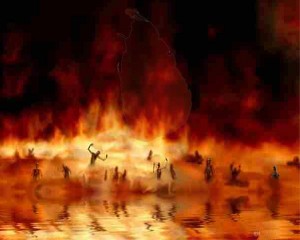 Much of the debate over this in evangelical circles is exegetical. It focuses on the meanings of biblical phrases such as “eternal fire,” “eternal destruction,” “death,” “perish,” “everlasting contempt,” “eternal punishment,” “unquenchable fire,” “second death,” “killing the body, “soul,” “lake of fire,” “the smoke of their torment rises forever,” “blackest darkness [that] has been reserved forever,” “outer darkness where there is weeping and gnashing of teeth”, and so on. Traditionalists take these passages to refer to eternal conscious torment where as annihilationists argue that, in their contexts, they signify permanent destruction of the wicked.
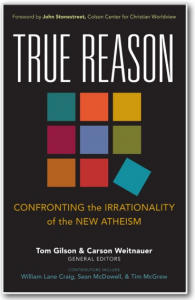 The paperback version of the Kindle book,