
Recently, I have been thinking about Matthew’s birth narrative. In particular, I want to discuss three claims that are sometimes made by critics of the narrative’s historicity.
First, it is claimed that no star could exist that moves or behaves in the way described in Matthew’s Gospel. According to this objection, Matthew depicts a star acting in ways that we now know real stars cannot and do not act.
Second, it is claimed that stars of the sort described by Matthew would not have been interpreted as signs of kingship. Instead, such phenomena are said to have been universally regarded as negative omens.
Finally, it is claimed that the account of the massacre of the children is incompatible with what we know of Herod’s reign.
Let us begin with the first issue. Matney observes.
[I]t has long been recognised that Matthew 2:9 presents a particular challenge: the ‘going before’ and ‘stopping’ behaviour does not seem to
conform to the motion of any known natural celestial object. Typical astronomical objects– stars, planets, comets – appear to rise in the east and set in the west, due to the diurnal rotation of the Earth. Such objects do not normally pause at a particular southerly azimuth for several hours, nor would they typically ‘stop’ overhead for any length of time.[1]

Matney cites Adair who writes ” the key problem is that the description of the movements of the star is outside what is physically possible for any observable astronomical object”
Matthew describes two features of the star’s behaviour. First, in verse 9, the star is said to have “stopped” over the place where Jesus was born. Second, the same verse says that the star “went ahead of them”.
Let us examine each of these claims in turn.
The NASB translates the relevant phrase as “until it stopped over the place where the child was”. The literal Greek, however, reads “until it stood over”.
What does this phrase mean? When reading the Bible—or any ancient text produced in a culture very different from our own—it is important to ask how such language was actually used by contemporaries. When we do so, a striking pattern emerges.
Ancient Usage of “Stood Over”
In 12 BC the Roman statesman and general Marcus Agrippa died. The Roman historian Cassius Dio wrote the following about his death:
The death of Agrippa, far from being merely a private loss to his own household, was at any rate such a public loss to all the Romans that portents occurred on this occasion in such numbers as are wont to happen to them before the greatest calamities. Owls kept flitting about the city, and lightning struck the house on the Alban Mount where the consuls lodge during the sacred rites. The star called the comet hung for several days over the city.[2]
A very similar description appears in Josephus’s Jewish War, where he describes events preceding the Jewish–Roman war of AD 66:
Thus there was a star resembling a sword, which stood over the city, and a comet.[3]
Notice how closely this language parallels Matthew’s. Both Dio and Josephus refer to a comet, though they also use the term “star”. This is not contradictory. Greek and Roman authors frequently used the word star refer to comets. Pliny for example states “There are also stars that suddenly come to birth in the heaven itself …The Greeks call them ‘comets,”[4] Seneca called them “hairy stairs”[5]. Numerous references to ceasers comet in 44 AD, refer to it with the unmodified term ἀστήρ (astēr) or various Latin synonyms (e.g., sidus, astrum).[6]
What is important however is this: In both cases, the authors describe the star or comet as “standing” or “hanging” over a city—Rome or Jerusalem. The language Matthew uses to describe a star “standing over” a location is the same language used by contemporary and near-contemporary authors to describe comets. Moreover, this language appears to be uniquely associated with comets. As Colin Humphreys notes, “phrases such as ‘stood over’ and ‘hung over’ appear to be uniquely applied in ancient literature to describe a comet, and I can find no record of such phrases being used to describe any other astronomical object.”[7]
Further details reinforce this interpretation. Josephus explains that the star “stood” over the city “like a sword”. Similar imagery appears in Marcellinus, who describes a comet “hanging like a column”. Comets have tails that point away from the sun, and although they are always moving, from certain vantage points they can appear to hang or stand over a particular location, pointing down towards it. To an observer on the ground, such a phenomenon would naturally be described as a star standing over a city.
A modern illustration helps make this clear. In July 2020, a widely circulated photograph by Amr Abdulwahab showed Comet NEOWISE above the Pyramid of Khafre at Giza. The image was commonly captioned “Comet NEOWISE in the night sky above the Pyramid of Khafre”, and many reposts used language strikingly similar to that found in Marcellinus, describing the comet as “hanging” over the pyramid.
Are these references to real celestial phenonena?
Comet NEOWISE was, of course, a real astronomical object. But what about the comets described by Cassius Dio and Josephus? Are these merely legendary embellishments, or do they refer to genuine celestial events?
It is widely accepted that both authors are describing real phenomena. In fact, they provide the only surviving Greco-Roman references to appearances of Halley’s Comet. Halley’s Comet was visible in the skies over Rome in 12 BC and over Judea in AD 66. These facts raise an obvious problem for critics who argue that Matthew’s gospel cannot be referring to any real celestial phenomena because it refers to a star that “stands over” a location. Outside of Matthew’s gospel this language is used to refer to a real phenomenon.
How do we know Josephus and Cassius Dio referred to a real comet? Halley’s Comet does not follow a perfectly regular orbit. Gravitational and non-gravitational forces slightly alter its path and period over time. While astronomers can model these effects accurately for recent appearances, the accumulated uncertainties make it impossible to extrapolate its orbit reliably prior to about AD 800 using modern data alone. To go further back, astronomers require fixed anchor points—historical observations of known dates.
These anchor points come from ancient records. Several ancient cultures recorded astronomical phenomena, but the most important records come from China, particularly during the Han Dynasty (206 BC–AD 220). The Han maintained state-sponsored observatories staffed by trained officials whose role was to monitor the heavens for omens and portents. As a result, they kept systematic records of celestial events, including comets. These records typically note the date of first appearance, position in the sky, direction of motion, tail shape, duration of visibility, and associated interpretations.
These records have proven to be remarkably reliable. Earlier scholarship in the mid-twentieth century suggested that such records might have been politically manipulated, but modern reassessments have largely rejected this view. David Pankenier, for example, compared 127 solar eclipse records from Han sources with NASA’s Five Millennium Catalogue of Solar Eclipses and found them to be highly accurate, with only rare errors attributable to copying mistakes rather than fabrication[8]. When cross-checked against Babylonian and Greco-Roman sources, the Chinese records consistently prove to be the most reliable ancient astronomical data we possess. [9]Using these records, astronomers have been able to reconstruct the path of Halley’s Comet prior to the eighth century and identify its appearances in 12 BC and AD 66.
At a common-sense level, this methodology is straightforward. Suppose I claim that it rained last Saturday. How would you check this? You would consult reliable meteorological records for that time and place. If those records confirm rainfall, you would reasonably conclude that my statement was true. The same logic applies here. If an ancient author reports a comet at a particular time, we consult reliable ancient records. In this case, the Chinese records confirm the appearance of such comets.
Application: The 5 BC Comet
What is less widely known is that these same Chinese records also report a significant comet around the time traditionally associated with the birth of Jesus. The Han Shu records the following:
In the second year of Jianping of Emperor Ai, during the second lunar month, a broom-star appeared in Qiān Niú and remained visible for more than seventy days. It is said: “The broom star serves to eliminate the old and establish the new. Qiān Niú is the place whence the sun, moon, and five planets arise, the origin of calendrical reckoning, and the starting point of the three standards. The long duration of the comet’s appearance indicates the greatness of the event to come.[10]
A “broom star” is the Chinese term for a comet—a star with a tail like a broom. The second lunar month of the second year of Jianping corresponds to approximately 4 March–6 April 5 BC in the Gregorian calendar. During this period, a comet was visible for over seventy days, even though the monsoon season.
The Chinese astrologers interpreted this event as signalling the replacement of the old with the new—the beginning of a new epoch—and regarded the comet’s long duration as indicating an event of great significance.
The date is noteworthy. Historians generally place Jesus’ birth within the final years of Herod the Great’s reign. Matthew and Luke both situate Jesus’ birth during Herod’s rule[11], and Luke states that Jesus was about thirty years old when he was baptised by John the Baptist in the fifteenth year of Tiberius Caesar.[12] This date corresponds to around AD 27–28[13]. Since Herod died in 4 BC, Jesus’ birth is usually dated to around 6–4 BC. The comet recorded in the Han Shu falls squarely within this period.
How could the star “lead” the Magi to Bethlehem?
What, then, of the claim that the star “led” the Magi to Bethlehem? This is often misunderstood. Many assume the text implies that the Magi followed the star like a kind of celestial GPS. That is not what Matthew says. In Matthew 2, the Magi arrive in Jerusalem after their journey and say that they had seen the star earlier—either “in the east” or “at its rising”. This implies a past observation, prior to their travel. They do not know where to go and must ask Herod where the king is to be born. The star does not guide them directly to Bethlehem.
After they leave Jerusalem, Matthew writes: “And the star they had seen when it rose went ahead of them until it stood over the place where the child was.” This must be read carefully. The Greek tense indicates that, when they set off south towards Bethlehem, they noticed that the star—already in motion—was now ahead of them and standing over Bethlehem.
The same verb translated “went ahead” appears elsewhere in Matthew with a similar sense. For example:
- Matthew 14:22: “He compelled the disciples to get into the boat and to go ahead of him to the other side…”
- Matthew 21:31: “The tax collectors and the prostitutes go ahead of you into the kingdom of God.”
- Matthew 28:7: “He is going ahead of you into Galilee; there you will see him.”
In each case, the phrase does not mean “guiding” in the sense of leading someone step by step to a destination. Rather, it means going ahead in the sense of getting to the destination first. In Matthew 2, the verb’s direct object is “them”; Matthew is describing the star’s position relative to the Magi, not some extraordinary behaviour against the fixed background of stars.
This is entirely consistent with a comet. As Humphreys notes, visible comets typically move through the stellar background at about one to two degrees per day. If the Magi first saw a comet in the east and then undertook a journey of one to two months to Jerusalem, it would not be surprising for the comet to appear in the southern sky from their new location. Humphreys explains:
It is suggested that the Magi originally saw the comet in the east in the morning sky. They travelled to Jerusalem, a journey of one to two months, during which time the comet moved through about 90 degrees from east to south, consistent with typical cometary motion. From Jerusalem, Herod’s advisers directed them to Bethlehem, six miles to the south. Setting off the next morning, they saw the comet ahead of them in the southern sky. Hence it appeared that the comet “went ahead of” them on the final stage of their journey.[14]
In conclusion, I have defended three claims.
First, the language Matthew uses to describe the star closely matches the language used by contemporaries and near-contemporaries to describe comets.
Second, the same ancient records that allow us to confirm that writers such as Josephus and Cassius Dio were describing real comets also indicate that a prominent comet was visible around the time of Jesus’ birth.
Third, if the star was a comet, its reported movements are entirely consistent with Matthew’s description.
[1] Matney, Mark. “The Star That Stopped: The Star of Bethlehem & the Comet of 5 BCE.” Journal of the British Astronomical Association 135, no. 6 (December 3, 2025):390. https://doi.org/10.64150/193njt
[2] Cassius Dio, Roman History 45.17.
[3] Josephus, Jewish War 6.289.
[4] Pliny the Elder, Natural History II.22.
[5] Seneca, Natural Questions VII.17.
[6] Ramsey J. T. & Licht A. L., The Comet of 44 B.C. and Caesar’s Funeral Games, Scholars Press, Atlanta, GA, 1997, pp. 155–177
[7] Humphreys, Colin J. 1992. “The Star of Bethlehem, A Comet in 5 BC and the Date of Christ’s Birth.” Tyndale Bulletin 43, no. 1 (May): 36. https://doi.org/10.53751/001c.30475 [tyndalebulletin.org]
[8] Pankenier, David W. “On the Reliability of Han Dynasty Solar Eclipse Records.” Journal of Astronomical History and Heritage 15, no. 3 (2012): 200–212.– Available as a PDF from Lehigh University: “On the Reliability of Han Dynasty Solar Eclipse Records”.
[9] Xu, Z., Pankenier, D. W. & Jiang, Y. (2000): East-Asian Archaeoastronomy.
[10] Ban Gu 班固. Han shu 漢書 (Book of Han), vol. 26, Tianwen zhi 天文志. In Hanshu zhudi, edited by Kang Xiangcheng 康祥成 and Xu Ke 徐克, 917–23. Beijing: Zhonghua Shuju, 1962.
[11] Matt 2:1, Luke 1:5, 26
[12] Luke 3:1,23
[13] Luke uses inclusive counting, whereby part of a year counts as a whole year. The exact date depends on whether he counts from Augustus and Tiberius’s co regency in 11/12 AD or his ascension in 14 AD. The phrase “about 30 years old” means Luke is saying Jesus was approximately this age, it means he was in his early thirties or late twenties.
[14]Humphreys, Colin J. 1992. “The Star of Bethlehem, A Comet in 5 BC and the Date of Christ’s Birth.” Tyndale Bulletin 43, no. 1 (May): 36. https://doi.org/10.53751/001c.30475 [tyndalebulletin.org]
.
Tags: Apologetics · Bible · Matthew's Gospel · Star of BethlehemNo Comments

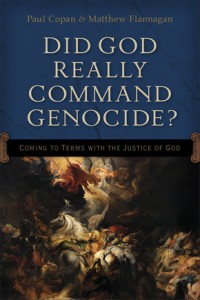 A common objection to belief in the God of the Bible is that a good, kind, and loving deity would never command the wholesale slaughter of nations. In the tradition of his popular Is God a Moral Monster?, Paul Copan teams up with Matthew Flannagan to tackle some of the most confusing and uncomfortable passages of Scripture. Together they help the Christian and nonbeliever alike understand the biblical, theological, philosophical, and ethical implications of Old Testament warfare passages.




0 responses so far ↓
Comments on this entry are closed.