A fallacy related to the one we looked at last week (the Ad Hominem fallacy) is the genetic fallacy. One commits the genetic fallacy if one argues that a proposition is false on the basis of where the idea originated from. Like the ad hominem, this fallacy invokes a kind of psychological transference where one transfers one’s […]
Entries Tagged as 'Fallacy Friday'
Fallacy Friday: The Genetic Fallacy
February 11th, 2011 16 Comments
Tags: Fallacy Friday · Genetic Fallacy
Fallacy Friday: Assessing Arguments
January 28th, 2011 9 Comments
In last week’s post, Fallacy Friday: What is an Argument?, we established that an argument is a set of reasons (or premises) offered in support of a conclusion. We noted that arguments always have two components: premises and conclusions. We also observed that premises sometimes can be implicit or unstated. Of course knowing what an argument […]
Tags: Aristotle · Fallacy Friday
Fallacy Friday: What is an Argument?
January 21st, 2011 45 Comments
When I was doing my PhD at the University of Otago, Madeleine and I would try to save up for a “date night” once a fortnight. Often we would go to the movies. On more than one occasion we would stand in the theatre and look at various options. Madeleine would suggest we see one […]
Tags: Fallacy Friday
Fallacy Fridays
January 21st, 2011 5 Comments
Over the past few years I have occasionally been asked by para-church, church and home-schooling groups to put together a critical thinking or “mini logic” course, with a focus on fallacy spotting, and teach it to their youth. I have done this from time to time and have often found as many adults in attendance as youth; […]
Tags: Fallacy Friday

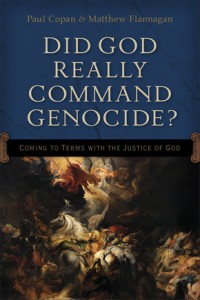 A common objection to belief in the God of the Bible is that a good, kind, and loving deity would never command the wholesale slaughter of nations. In the tradition of his popular Is God a Moral Monster?, Paul Copan teams up with Matthew Flannagan to tackle some of the most confusing and uncomfortable passages of Scripture. Together they help the Christian and nonbeliever alike understand the biblical, theological, philosophical, and ethical implications of Old Testament warfare passages.