
I’ve been thinking recently about the moral issues surrounding immigration. This is partly because it’s an issue I’ve never really studied in depth, and partly because it’s become a massive political football.
Here’s a thought that came to me. As I understand it, the right of a refugee to seek asylum in international law has Christian roots, which in turn draw  on certain passages in the Torah, such as this one:
You shall not hand over to his master a slave who has escaped from his master to you. He shall live with you in your midst, in the place that he chooses in one of your towns where it pleases him; you shall not mistreat him.(Deut 23:15-16)
This law contrasts with common legal practice in the ancient Near East, where people were legally required to return any runaway slaves. Consider, for example, the Laws of Hammurabi (c. 1750 BCE):
LH §16: If a man should harbor a fugitive slave or slave woman of either the palace or of a commoner in his house and not bring him out at the herald’s public proclamation, that householder shall be killed.
Or a fifteenth-century BCE treaty between two Syrian kings:
If a fugitive slave, male or female, of my land flees to your land, you must seize and return him to me; (or), if someone else seizes him and takes him to you, [you must keep him] in your prison, and whenever his owner comes forward, you must hand him over to [him].[1]
Jefferey Tigay explains:
The only thing remotely close to this biblical law in the ancient world is the practice at certain temples of granting asylum to slaves fleeing harsh treatment by their masters. Generally, such asylum was not permanent; it protected the slave until he could come to terms with his master or, as a last resort, was sold to another master. By contrast, the biblical law is absolute and treats the whole land of Israel as a sanctuary offering permanent asylum.[2]
Notice what the Torah passage states: it forbids Israel from deporting someone who has escaped into their nation to escape slavery, and it prohibits restricting their freedom of movement within Israel or limiting their choice of where to live. (Here the “you” is a collective reference to Israel, not simply “your” towns.)
I was familiar with this passage, but I was struck by its possible application to modern immigration.
Let’s begin with some historical examples.
Example 1 (1850). The Fugitive Slave Act required citizens of states where slavery had been criminalized to assist in the capture and return of escaped slaves who had made their way into those states. Abolitionists at the time quoted Deuteronomy 23:15–16 to justify refusing to comply with this law.
So: you live in a free state in 1850. You discover the whereabouts of a runaway slave who is fleeing an abusive master. Do you (a) comply with the Fugitive Slave Act and hand him over to the authorities, or (b) conceal his whereabouts to prevent his capture? I think most of us would agree that (b) is the right thing to do.
Example 2 (1930s). The Nazis persecute Jewish people across Europe. Thousands of Jews flee and seek to emigrate, but protectionist U.S. immigration policies mean many are refused entry. You discover a German Jewish overstayer. Do you (a) inform the authorities so he is deported back to Germany, or (b) help conceal his whereabouts? Intuitively, (b) again seems the morally right course; (a) would be immoral.
Example 3 (contemporary). It is 2025. The Taliban rule Afghanistan. You discover an Afghan overstayer who fled the Taliban; if reported, he will be deported. Do you (a) report him, or (b) conceal him? Or you discover an undocumented Mexican restaurant owner in California who fled cartels, or a Nigerian Christian overstayer who fled persecution? Do you disclose their legal status or do you conceal it? From what I read, many American evangelicals appeal to Romans 13—“obey the government”—to argue that Christians must support the deportation of illegal aliens because the law has been broken in these cases.
So here is my question: how do these 2025 cases differ in principle from examples 1 and 2? In all cases, the person is illegally in the country while fleeing life-threatening danger—slavery, genocide, Taliban rule, cartels. Is there a principled difference between returning a slave to his master and sending someone back to the Taliban or cartels? If those who defied the Fugitive Slave Act were doing the right thing, why must we follow the law here?
[1] Jeffrey H. Tigay, Deuteronomy, JPS Torah Commentary (Philadelphia: The Jewish Publication Society, 1996), 387.
[2] Tigay, Deuteronomy, 215
Tags: immigration · RefugeesNo Comments

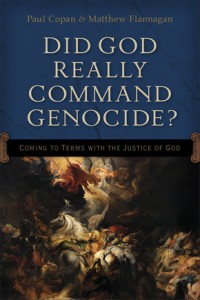 A common objection to belief in the God of the Bible is that a good, kind, and loving deity would never command the wholesale slaughter of nations. In the tradition of his popular Is God a Moral Monster?, Paul Copan teams up with Matthew Flannagan to tackle some of the most confusing and uncomfortable passages of Scripture. Together they help the Christian and nonbeliever alike understand the biblical, theological, philosophical, and ethical implications of Old Testament warfare passages.




0 responses so far ↓
Comments on this entry are closed.