In my last post, What About the Poor? Sustenance Rights Examined, I noted the position of Nicholas Wolterstorff that, “If a rich man knows of someone who is starving and has the power to help that person, and chooses not to, then he violates that person’s rights as surely and reprehensively as if he had […]
Entries Tagged as 'Nicholas Wolterstorff'
What About the Poor? More on Sustenance Rights
November 19th, 2008 9 Comments
Tags: Christian History · Nicholas Wolterstorff · Role of the State · Welfare
What About the Poor? Sustenance Rights Examined
November 18th, 2008 4 Comments
When I began university I had strong socialist leanings. The reason was that I believed, as a Christian, we had a duty to help the poor. Studying at Waikato University, however, brought me face to face with socialist academics and left-wing activists and I discovered a hostile and dangerous social agenda that I could not […]
Tags: Christian History · Nicholas Wolterstorff · Role of the State · Welfare
Religion and Public Life: A Response to Russell Brown and Paul Litterick
August 3rd, 2007 11 Comments
Paul Litterick was recently interviewed by Russell Brown on Public Address. The topic predictably is his criticism of conservative Christian groups whom Russell appears to have no time for. Here I will make to criticisms of this broadcast, first one of Russell Brown and the second of Litterick. Turning first to Russell Brown; Brown mentioned […]
Tags: Christopher Eberle · Nicholas Wolterstorff · Paul Litterick · Philip Quinn · Rationalists · Religion in Public Life

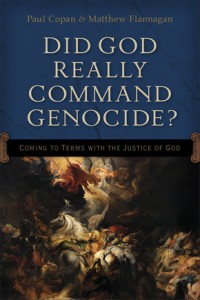 A common objection to belief in the God of the Bible is that a good, kind, and loving deity would never command the wholesale slaughter of nations. In the tradition of his popular Is God a Moral Monster?, Paul Copan teams up with Matthew Flannagan to tackle some of the most confusing and uncomfortable passages of Scripture. Together they help the Christian and nonbeliever alike understand the biblical, theological, philosophical, and ethical implications of Old Testament warfare passages.