Blog

  • Randal Rauser’s Mistake: A Defense of Calvin’s Doctrine of Election

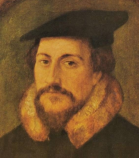
    John CalvinThanks go to Matthew Flannagan for pointing me in the direction of this response to the problem.

    A while back Professor Randal Rauser issued a blog entitled “Calvinism and the Arbitrary Camp Director” in which he criticised the Calvinist understanding of election.

    For those of you who are unaware of the Calvinistic understanding of election, very roughly, it’s the idea is that God elected some for salvation and did not elect others for salvation. Now obviously there’s FAR more to Calvin’s doctrine of election than merely the claim that some are elected and others are not. But that at least, is the centre point of Rauser’s criticism, and more particularly, it’s that element of Calvin’s doctrine that I seek to defend in this article.

    Before we begin, it’s interesting to note that barely three months ago I was a staunch Arminian when it came to soteriology. I reacted against Calvin’s doctrine with the greatest of revulsion. How could it possibly be, I thought, that God could be “good” and yet actively choose some for salvation while leaving others to die?! It made no sense to me! In-fact, I remember going to scripture one Sunday morning actively seeking to find that knock down scriptural blow against the Reformed understanding of election. Interestingly, the first scripture I read was the parable of the wheat and the tares Matthew 13:24-29/13:36-43. While I read it, it struck me that this challenged my Arminian understanding of Salvation. But I didn’t want to believe it, so I left it for a week hoping that there would be some other explanation. But none was forthcoming. Very quickly I found myself speaking in terms that a week earlier I would never have been revolted to hear myself say. I was not yet a practicing Calvinist. I was what you might call “soteriologically agnostic”.

    Now the reason I say this is not because I hope to establish myself as any authority on the matter. To the contrary, Rauser, being a Professor of Historical Theology at Taylor Seminary is far more of an authority on the matter than I can hope to be at this stage of my life. So it’s with much fear and trepidation that I dare post this article contradicting Rauser’s arguments. So why do I give my testimony of how I came to Calvinism? Well I myself am a little unsure. Nevertheless, I suspect that the main reason I give such testimony is that I find it and irony worth sharing that I am writing an article that barely three months ago I would never have even dreamed of writing. If I was going to write anything, it would have been about how Calvinism completely destroys any sensible understanding of God’s justice and love.

    But now let’s get down to business. Precisely what is Rauser’s objection? More than anything else, it appears to be a moral objection. The problem, Rauser urges, is that it makes God’s choice about who save entirely arbitrary. Why, he asks (referring to one of his dialectic opponents apparently named Tom) should God bring glory to him (Tom) and not another say Saddam Hussein? This picture, Rauser asserts, completely undermines the idea that God is loving. In order help us to see this point. Rauser entreats us to consider the following illustrative analogy:

    Randal Rauser“Imagine that there is a camp for troubled youth. The camp director has a rather unorthodox method of dealing with the campers. Some of them are beaten severely with whips in a wholly punitive or retributive (i.e. not restorative) manner while others are chosen by the director to receive care, love and nurture in a way that restores them.

    You are contemplating sending your child to the camp but you want your child to be lovingly restored, not viciously beaten, even if the beatings are just. So you enquire: what is it that makes the director decide to beat the children rather than nurture them? Is it the nature of their crimes? Their race? Gender? What?

    The answer comes back. There is (more…)
  • Madeleine Grounded

    As regular readers will know we have spent a good chunk of this year focussed on planning and fundraising to get to the USA to speak at conferences in South Bend, Indiana and in San Francisco. Yesterday we should have been on a flight heading to the USA but we had to make the tough call to cancel Madeleine’s planned when Madeleine’s non-immigrant visa failed to come through in time.

    Twenty years ago, when Madeleine was 18 and not a Christian, she committedwhat she calls “an act of teenage stupidity” and was convicted of theft and had to do some community service. In New Zealand this conviction is covered by clean slate law but this law does not apply to other countries and the US ask all their visitors seeking visa waivers “have you ever been convicted of a crime of moral turpitude?” Anyone answering “yes” has to apply for a non-immigrant visa. Now Madeleine applied for one of these last time she went to the US some 13 years ago and was granted it in 2 days. This time she phoned up and was told provided she applied about 4 weeks out from her planned date of travel she should be fine – especially as her conviction is now 20 years old and she has never been in trouble since and she has been granted a visa before. She applied with nearly 6 weeks in hand but at the point we had to make the call, her application was still “pending” (and it still is as I write this). In addition, the American Consulate are still holding her passport so they can put her visa in it… With no passport and no visa she could not get on the plane.

    Given that we were going to Indiana because Madeleine was speaking at Notre Dame and now she is not we decided to change my trip so that I will now just go to San Francisco and deliver all my planned talks (I will now give our joint talk to the SBL by myself). I now will not leave New Zealand until Tuesday 15 Nov.

    We have been able to get a lot of refunds thankfully with not too much in the way of penalty fees and we were able to get a new flight for me at the same ticket price so once we know what it will cost for me to go, any left-over donated monies will be held over to next years cluster of EPS and SBL conferences, as at the very least I expect to be travelling to the US to speak at them – Madeleine will come with me if the US Department of State have actually processed her visa application by Nov 2012… (You can check the status of her application by going here and clicking on the link in the right hand column under “CASE STATUS CHECK” and using “control F” and entering: 20112782761 – that is her)

    As you can imagine we are deeply disappointed by this turn of events and we have had a fairly flat few days as a result. I am pleased to be able to share that there is some good news to among the bad, Madeleine was last week offered a job in a law firm working part-time for an employer who understands and is willing to accommodate her pain disability caused by her car accident in 2008. Her trip being cancelled has meant she has been able to start proper this week so that has given her something to focus on.

  • The Nominations for Evangelical Philosophical Society Executive are in…

    Matthew FlannaganVoting for the 2011 Executive Committee of the Evangelical Philosophical Society (EPS) has begun today. I am pleased to announce that this blog’s Matthew Flannagan has been nominated as one of the seven candidates for the three vacant executive committee positions. Matt is the only New Zealander to have been nominated – so proud of him 🙂


    If you are a member of the EPS make sure you check out the full candidate list and vote!

  • Comparing the Old & New Teleological Arguments

    Robin Collins

    The “New Teleological Argument” is a theistic argument which attempts to show that theism is more probable than the postulate of an “atheistic single universe”[i]. There are number of reasons why this argument is termed the “New” teleological argument. Chief among these reasons is that its explanandum i.e. the incredible fine tuning of the laws and constants of physics have only been discovered in the past 20-30 years[ii] [iii]. By contrast, the explanandum of “Old Teleological Arguments” has long since been available to theologians and philosophers of religion. Of course the relatively recent origin of the “New” Teleological argument is not the only feature which distinguishes it from its historical counterpart. Whereas historical versions of design arguments (such as Paley’s famous watchmaker argument) rest on an argument from analogy, contemporary versions of the argument rest on what the philosopher of biology Elliot Sober calls the “Likelihood Principle”[iv] [v]. In other words, rather than relying on an analogy between the explanandum and some obviously contrived entity such as (in Paley’s case) a watch, contemporary versions of the teleological argument argue that the explanandum (the fine tuning of the laws and constants of physics) is more probable given the hypothesis of theism as opposed to the postulate of an atheistic single universe[vi].

    The Conditions of Success
    Throughout the rest of this post, I hope to argue that, on purely philosophical grounds, there is little which will allow us to say which version of the argument (be it contemporary or historical) is more or less plausible. In this respect, it seems only fair that we should assess the strength of David Hume’s critiques, since they are popularly regarded as decisive refutations of teleological arguments.[vii] [viii] It’s important to note also, that while the failure of the Humean critiques would not guarantee the conclusion that the design arguments are equally plausible, it is suggestive thereof. After all, if the joint failure of natural theological and atheological arguments should suggest that it’s impossible to arbitrate (on the evidence) between theism and atheism, then similarly, the failure of stock arguments against either of the design arguments should lead us to think that it’s impossible to arbitrate between them.  In spite of the fact that both contemporary and historical versions of the design argument are equally plausible, I will argue that the contemporary version of the argument has a number of key dialectic advantages which may warrant us in thinking that it is “dialectically speaking”, more successful than its historical counterpart. More precisely, I am saying that the relative success of the new teleological argument is a function of the fact that it does not turn on premises that are as deeply controversial as the commitments required by the historical version.

    The Contemporary Version of the Argument
    The most prolific contemporary defender of the design argument is Robin Collins who, rather than arguing from facts about biology, argues from recent discoveries in physics[ix]. As we noted earlier, this is one of the main reasons why it is termed the “New” teleological argument. Collins frames his rendition of the argument as follows:

    (1)     The existence of fine tuning is not improbable under theism[x]

    (2)     The existence of fine tuning is very improbable under the atheistic single-universe hypothesis[xi]

    Therefore, given the prime principle of confirmation[1] [xii],

    (3)     The existence of fine tuning is evidence for theism over the atheistic single-universe hypothesis[xiii]

    By “fine tuning”, I mean the very precise arrangement of the fundamental laws and constants of physics that must be met in order for our Universe to fall into the very narrow life permitting range.[xiv] [xv] According to contemporary physics, these conditions seem to be arranged in such a way that, were they to vary by even the tiniest amount, life (or more precisely, sentient life) would not be a physical possibility. For example, as P.C.W. Davies points out, a change in “the weak force”[2] by only 1 part in 100100 would make the Universe uninhabitable.[xvi] Similarly, if the cosmological constant[3] were just a fraction faster, matter would spread apart so quickly that even relatively small clumps of matter would have insufficient time to form[xvii].

    The Plausibility of the Premises
    Premise (1) amounts to the claim that if God exists, then it is entirely within His creative capability to create the universe finely tuned as it is. Hence the observation that there is a universe which exhibits teleo-functional properties is not surprising given the postulate of theism. Considering that the traditional conception of God holds that He is an omnipotent being, this is a fairly straightforward premise that we should accept.

    Premise (2) amounts to the claim that if God does not exist and if the single universe hypothesis is true, then the apparent fine tuning of the universe is a very surprising fact. After all, the fundamental laws and constants of physics seem to be arranged in such a way that their placement seems guided. But if God doesn’t exist, it doesn’t seem likely that there would be any intelligent, guiding mind such that it could plausibly account for this apparent fine tuning. Hence premise (2) seems (more…)

  • Contra Mundum: When Scientists Make Bad Ethicists

    One thing I find particularly frustrating is reading commentary on theology and philosophy written by scientists. To be fair, some scientists I have read are informed and do offer astute and insightful comments; commonly, however, one finds a person who is undoubtedly brilliant in their own field, writing with confident gusto, articles that fail to understand the most basic theological and philosophical distinctions.

    Jerry CoyneA good example can be seen in a recent USA Today article by influential biologist Jerry Coyne entitled, As atheists know, you can be good without God. Coyne, an outspoken atheist, is disturbed that many Americans, including some prominent scientists, believe that our instinctive sense of right and wrong is “strong evidence for [God’s] existence.” He ventures into moral philosophy to explain why this is clearly mistaken.
    From the get-go Coyne demonstrates he does not understand the issues.

    It is necessary to accurately understand the position Coyne is criticising before we look at the paucity of his critique. The argument that our instinctive sense of right and wrong “is strong evidence for [God’s] existence” found its most important formulation in a 1979 article by Yale Philosopher Robert Adams. In it, Adams noted that we instinctively grasp that certain actions, like torturing children for fun, are wrong; hence, he reasoned, we are intuitively aware of the existence of moral obligations. According to Adams, the best account of the nature of such obligations is that they are commands issued by a loving and just God. Identifying obligations with God’s commands can explain all the features of moral obligation better than any secular alternative. Consequently, the existence of moral obligations provides evidence for God’s existence.

    It is important to note what Adams did not claim. Central to Adams’ argument, and to pretty much every author who follows him, is a vital distinction; this is the distinction between the claim that moral obligations are, in fact, divine commands and the claim that one cannot recognise what our moral obligations are unless one believes in divine commands or some form of divine revelation. Adams illustrates this distinction with the example of H20 and water.

    Contemporary chemistry tells us that the best account of the nature of water is that water is, in fact, H20 molecules. This, of course, means that water cannot exist unless H20 does. However, it does not mean that people who do not know about or believe in the existence of H20 cannot recognise water when they see it. For centuries people recognised, swam in, sailed on and drank water before they knew anything about modern chemistry.

    This distinction has important implications. The claim that moral obligations are, in fact, commands issued by God does not entail that people must believe that God exists and has issued commands in order to be able to recognise right and wrong. These are separate and logically distinct claims.

    Coyne conflates this distinction from the outset. After noting that some people believe that moral obligations provide strong evidence for God’s existence, he claims that this is an oft-heard argument, “‘Evolution,’ many argue, ‘could never have given us feelings of kindness, altruism and morality…’;” to this he rejoins that, “scientists studying our primate relatives, such as chimpanzees, see evolutionary rudiments of morality: behaviours that look for all the world like altruism, sympathy, moral disapproval, sharing — even notions of fairness.”

    This is confused. Apart from the fact that no one who cites morality as evidence for God actually makes the argument about evolution that Coyne sets out, the claim that moral obligations cannot exist independently of God is not the claim that without God people would not have moral feelings. Feeling that one has an obligation to do something and actually having an obligation to do it are clearly different things. People can feel that they have a certain obligation without it actually being the case that they do.

    Coyne makes a similar mistake when he argues that secular European countries like Sweden and Denmark “are full of well-behaved and well-meaning citizens, not criminals and sociopaths running amok.” This  (more…)

  • Want to see Matthew Flannagan debate John W. Loftus in America?

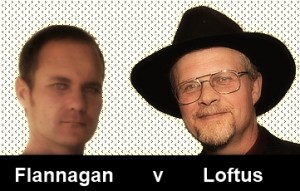
    Dr Matthew Flannagan v John W LoftusAs you all know, Matt and I are going to the US to speak at 4 conferences in November. John W. Loftus is aware of this and in a comment on this blog has suggested a debate between himself and Matt during the 3 days we have spare between conferences – ideally for us 14 Nov. We have had some email discussion with him about this including agreeing that the topic for debate will be something around Loftus’ Outsider Test for Faith, maybe, “Is Christianity True?” or something like that.

    A couple of groups within the Christian Apologetics Alliance have indicated keeness to see it happen, we have even had small pledges of money towards helping it happen, but so far no one has been able to say “yes, we will organise it” and we need that to happen asap or we are just going to run out of time. So, can you organise it can you offer support towards anyone organising it? Do you want to see it happen? (If it happens it will be videoed)

  • Hear Matthew Flannagan speak on Moral Relativism, Get a Feed and Watch the All Blacks take on Argentina this Sunday

    Matt will be speaking on Moral Relativism this Sunday as part of Massey Presbyterian Church’s (“MPC”) night service. His talk will look at what it is, what reasons people have for adopting it and why we should be concerned about its pervasiveness in society. The style of talk is interactive so bring your questions.

    After the service, MPC will screen the quarter final rugby match between the All Blacks and Argentina. Game snacks will be available for purchase; the proceeds will go towards our impending trip to America. Before the service, the MPC cafe will offer cheap meals (like mains around $3, desserts $1). So come along and make a night of it!

    When: Cafe meals from 6.30pm – service starts 7pm, Sunday 9 October
    Where: Massey Presbyterian Church, 510 Don Bucks Rd, Massey, Auckland
    Cost: Free (unless you are purchasing food)

    Facebook has an event page you can use to RSVP and invite others.