Blog

  • Thinking Matters Youth Conference

    This Saturday is the first, of hopefully many, Thinking Matters Youth Conference, the schedule is  below.  I am leading a breakout session on Moral Relativism

    WHEN: Saturday, February 18
    WHERE: Greenlane Christian Centre, 17 Marewa Rd, Greenlane, Auckland
    COST: $10


    Schedule:
    10am Registration
    10.30am Jeff Tallon – Is Science a Threat to Faith?
    11.30am Sean McDowell – Is Faith Blind? (via Skype)
    12.15pm Lunch
    1pm Breakout Sessions 1

    • Stream 1: Is morality relative and does it matter? – Matt Flannagan
    • Stream 2: How can one religion be “right” and the others “wrong”? – Trevor Mander
    • Stream 3: Why doesn’t God do something about the evil in the world? – Ben Carswell
    • Stream 4: Does God get mad when we doubt? – Jason Kumar and Dominic Bnonn Tennant
    1.45pm Breakout Sessions 2 (repeated)
    2.30pm Tim McGrew – Is the Bible Reliable? (via Skype)
    3.30pm Q&A Panel – Jeff Tallon, Ben Carswell, Matt Flannagan, and Trevor Mander
    4.15pm Conference closes
  • Philosophia Christi: Abstract Objects and Divine Command Ethics Down-Under

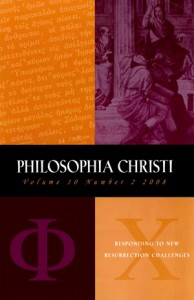
    In December we were told that Matt’s article “Tooley, Plantinga and the Deontological Problem of Evil”  had passed peer review and would be published in Philosophia Christi.  Issue, 13: 2  is  now out and if you look at the contents page you’ll see Matt’s article has now been published.

    The abstract to Matt’s article is as follows:

    Philosophia ChristiThis article criticises the deontological argument from evil proposed by Michael Tooley  in The Knowledge of God. I sketch Tooley’s distinction between deontological and axiological arguments from evil. Tooley rejects the axiological version because it rests  on “controversial ethical claims”, claims that are “likely to be rejected by many theists” and formulates a deontological version in its place. I argue that Alvin Plantinga’s criticism of the moral premises of this argument can be reformulated by appealing to a divine command theory of ethics. So reformulated, I argue that Tooley’s argument relies on controversial moral assumptions that many theists reject. I defend this response against potential criticisms found in the writings of Linda Zagzebski,  Tooley’s debate with William Lane Craig, and Peter Van Inwagen.

    Much of the focus of this issue is the topic of God and Abstract Objects. However, fortuitously, our good friend and fellow Kiwi, Glenn Peoples from Say Hello to My Little Friend,  has also been published in the same issue of Philosophia Christi immediately after Matt. His abstract is below:

    Of the objections to divine command ethics that still circulate in the literature, the epistemological objection is one of the two most common (the other being the objection from abhorrent commands). If morality is based on divine commands, the objection goes, then those who do not believe in God cannot know what is right or wrong. In this paper I explain the way in which this objection has been answered in the past (especially by Philip Quinn and Robert Adams) and I then look at a new attempt by Wes Morriston to resurrect and re-state the epistemological objection.  I explain the way in which this objection succumbs to responses that have already been made in the literature and is not new at all in spite of appearances, and I explain how it misconstrues the social nature of obligation in Robert Adams’ account of divine commands. In giving this explanation I flesh out the potentially difficult notion of a “sign” as an epistemic indicator of moral duty, and I argue that all the epistemological objections to divine command ethics this far fail because they have an underdeveloped concept of a “sign” as a central component of a command.

    Perhaps the theme for this issue should have been God, Abstract Objects and Divine Command ethics Down Under?

  • Is Ethical Naturalism more Plausible than Supernaturalism? A Reply to Walter Sinnott-Armstrong Part I

    This is  first half of the paper I presented to the Naturalisms in Ethics Conference at Auckland University last year.

    In many of his addresses and debates William Lane Craig has defended a Divine Command Theory of moral obligation (“DCT”). In a recent article Walter Sinnott-Armstrong has criticized this contention.[1] Armstrong contends that even if theism is true then a particular form of ethical naturalism is a more plausible account of the nature of moral obligations than a DCT is. This paper critiques Armstrong’s argument.

    Craig’s contention
    Craig’s contention is that if theism is true then we can plausibly explain the nature of moral obligation by identifying obligations with God’s commands analogous to the way “we explain the nature of water by identifying it with H2O, or explain the nature of heat by identifying it with molecular motion.”[2] By “God” Craig means a necessarily existent, all-powerful, all-knowing, loving and just, immaterial person who created the universe.

    This emphasis, both on God as a loving and just being and identifying moral obligations with God’s commands suggests that Craig defends a version of the modified DCT defended by Robert Adams,[3] William Alston[4] and C Stephen Evans[5]. Both Adams and Evans have argued, like Craig, that if God exists then his commands “best fill the role assigned to wrongness by the concept”.[6] Much of Craig’s arguments can be seen as an appropriation and popularisation of Adams.[7]

    Armstrong’s Argument from Harm
    Walter Sinnott-ArmstrongArmstrong contends that such a position is “incredible”[8], he states:

    There is a much more plausible foundation for morality. It seems obvious to me, and to everyone who does not start with peculiarly religious assumptions, that what makes rape morally wrong is the extreme harm that rape causes to rape victims.[9]

    We do not need a “new supernatural level” for morality because a natural property, the property of harming others without an adequate reason, fulfils the role assigned to wrongness by the concept better than divine commands do. Armstrong provides two arguments for this conclusion.

    (a) The harm account makes moral obligations more objective than a DCT does;

    (b) The harm account is more economical than a DCT.

    Armstrong contends that his argument refutes, not just Craig, but any theistic account of ethics, “Other theists might try to give better arguments for a religious view of morality. I don’t see how they could avoid all the problems in Craig’s account without leaving traditional Christianity far behind.”[10]

    I will address arguments (a) and (b) below. However, it is worth noting that, as stated, Armstrong’s conclusion here misses the point. He contends that everyone who does not start with peculiarly religious assumptions will see that the harm-based account is more plausible than a DCT. But Craig’s contention is that if God exists then a DCT is a plausible account of the nature of moral obligations. Neither Craig nor Adams contend that a DCT is the most plausible theory in the absence of religious assumptions. They contend that a DCT is the more “attractive theory, given those [theistic] beliefs, than any other meta-ethical theory is, given non-theistic (more…)

  • Alvin Plantinga Calling for an Argument

    NoahWe moved house recently but before we got the telephone services disconnected at our old house we rescued this answer-phone message left by our then 9 year old son Noah for Matt – note the attempted American accent:

    Alvin Calling

    (Noah had no idea how we worked out it wasn’t really Alvin Plantinga.)

  • Back from San Francisco: A Belated Report

    MandM has been quite of late, this is because Madeleine and I have been very busy.  With moving house in the midst of Christmas and New Years and Madeleine working part-time in a law firm and so on, we’ve had little time to blog. We are now set up, to some extent, and so this post will be a belated comment on my recent trip to San Francisco.

    In November I flew to San Francisco where I attended I attended the  Meeting of the Evangelical Theological Society (ETS), The Annual Meeting of the Evangelical Philosophical Society (EPS), The Evangelical Philosophical Society Apologetics Conference and The Annual Meeting of the Society for Biblical Literature (SBL) and American academy of religion.(AAR). While I would love to give detailed commentary on each session, to do so would require several blog posts of inordinate length, instead I will simply summarise what went down.

    I arrived in San Francisco at around 4pm  on the 15th. I presented my first paper at 8:30am the next morning. My paper was a critique of Walter Sinnott Armstrong’s arguments against divine command theory meta-ethics. Armstrong contends that the nature of moral obligation is best explained by identifying moral obligations with the natural property of harming others without justification, and, focusing largely on Craig’s work, argues this is superior to divine command ethics. I argued: (a) his argument fails to note the conditional nature of Craig’s (his main target’s) contention that if theism is true moral obligations are best explained as divinecommands (b) Armstrong’s does not provide a better account of moral objectivity (c) Armstrong’s account is not more economical than a divine command theory. (d) Even if it were an economical account, it does not explain various features of obligation such as (i) the social nature of moral obligations (ii) the fact that moral obligations constitute a decisive reason for acting and (iii) the specific moral content of obligations; as well as a divine command theory. All in around 30 minutes!!! The paper was very well received, with several people asking me to forward them a copy. I plan to get it published later this year.

    The rest of the morning was filled with me hearing various papers on moral theory and philosophy of religion all of which were interesting and stimulating. These panellists all shared similar perspectives yet were astutely critical of each other’s arguments. Particularly interesting was the dialogue between Baggett and Craig. Some of the issues here were technical and deserve further discussion so I plan to blog on this dialogue in more detail in the future. But in sum: Craig has defended a counterfactual: if God did not exist then moral obligations would not exist. Baggett  argued for various reasons that this is too strong; if God, the creator and sustainer of the universe, did not exist, the universe would not exist. To make sense, Craig’s claim needs to envisage a compossible world, which is like the actual world in all respects except that God does not exist, if it’s like the world in all other respects however, then it has all the features of the world God has created – and hence the resources for something like moral obligations to exist. Instead, Baggett contended, one should argue that a world with God provides a better explanation of the nature and existence of moral obligations than a world without God does. This means the theist does not have to argue, with Craig, that there is no adequate secular account of the existence of moral obligations, only that a divine command theory is more plausible than such accounts. Both Craig and Baggett made telling points which I will have to elaborate on some other time. highlight of Wednesday was the afternoon session. A panel discussion of David Baggett and Jerry Wall’s new book “Good God: The Theistic Foundations of Morality”. This book is the latest defence of divine command theory ethics, recently published by Oxford University Press. Baggett and Walls sketched briefly the content of the book and Paul Copan and William Lane Craig offered critical commentary, to which Baggett and Walls responded.

    Thursday started with an excellent critique of evolutionary (more…)

  • More Mistakes: A Rejoinder to Randal Rauser

    For those who aren’t aware, there has been something of a “debate”, but what I’d prefer to refer to as an “in house discussion” between Randal Rauser (Professor of Historical Theology at Taylor Seminary) and myself.

    The discussion so far can be found here:

    My initial article was Randal Rauser’s Mistake: A Defense of Calvin’s Doctrine of Election

    Rauser’s response: Calvinism and the Arbitrary Camp Director Revisited: A Response to Andrew
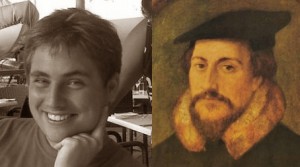
    Andrew and CalvinBefore I begin, I should point out that I have been on the Kapiti coast for the last week at a TSCF (Tertiary Student Christian Fellowship, a cousin of Inter-Varsity) retreat where I was without internet. Hence it’s only in the last day that I’ve learned that Professor Rauser has kindly taken the time to respond to my initial article. So I apologize for my delayed response.

    I would also like to point out that while my intention was to provoke Rauser’s response, it was not to be rude, and I apologize if that’s the impression he has received. I have a great deal of respect for Rauser, particularly given (as I pointed out in my last article) that he is a Professor of Historical Theology with an obvious background in analytic philosophy, while I am a mere undergrad with far more ambition than actual ability. The last thing that I want is for this discussion to devolve into the kind of vitriol that plagues almost all other web based discussions of the philosophy of religion and/or theology. I say this, largely because I fear (from the tone of his response) that he has received the impression of ill intent on my part.

    Secondly, I appreciate that Rauser took the time to respond to my article, and I appreciate that he also took the time to counter my personal testimony with that of his own.
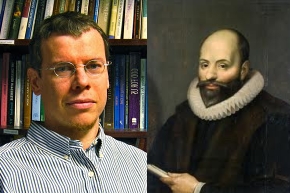
    Randal Rauser and ArminiusBut now to specifics: How does Rauser respond to my claim that the arbitrariness objection (at least if it is to be an objection) begs the question against Calvin’s doctrine of election? On the face of it, he doesn’t seem to challenge my point that God may not be acting unjustly if we are undeserving of salvation. To the contrary, Rauser seems to admit for the possibility that the tortures may be justly deserved. But if that’s the case, then, as I tried to point out in my first post, there’s no real injustice or immoral state of affairs that obtains if God so desires to instantiate those punishments. Paradoxically though, Rauser refers to my theology as “brutal” and “morally incoherent”. Both of these terms, emotionally provocative as they are, seem to suggest that there is something nasty, horrible, evil (whatever negative adjective your heart desires) about a God that selects some for salvation while selecting others for damnation. But if, as Rauser seems to allow, the tortures are justly deserved, then none of those adjectives can rightly be said to stick. After all, if the tortures are justly deserved, and God decides to carry out those tortures, then God can only be said to be doing what the demands of morality and/or justice require. So wherein does the moral incoherence obtain?

    But according to Rauser, I would still be missing the point. After all, he (Rauser) says, the Camp Director Analogy was not intended to show that God, given Calvinism, is “unjust”, but rather that He cannot be seen as “maximally loving”. I see no real reason to deny Rauser the liberty to make this distinction, but its relevance is, at best, unclear.

    Thankfully, Rauser does seem to hint at one possible way in which we could interpret this as an objection. He seems to engage in something of a pair-wise comparison between two possible scenarios that are supposed to be relevantly similar to the Arminian and Calvinist conceptions of election respectively.

    • Scenario 1: The director arbitrarily selects some children for beatings and others for loving rehabilitation.
    • Scenario 2: The director selects all children for loving rehabilitation.

    According to Rauser, were God to bring about scenario 2, we would state that He is more loving were he to bring about scenario 1. There are three things that I have to say to this (more…)
  • Another Day, Another Publication

    Matt is having a good day.

    Presently he is in San Francisco where this morning he gave the first of his talks, “Can Traditional Theism Provide an Adequate Foundation for Morality? A Reply to Walter Sinnott-Armstrong’s Critique of William Lane Craig” to the Annual Meeting of the Evangelical Philosophical Society. By all accounts it was well received with Matt already being in receipt of several requests from scholars in his field for copies of the paper.

    This afternoon he attended a panel discussion  featuring William Lane Craig, Paul Copan, David Bagget and Jerry Walls on divine command theory and the moral argument. Regular readers will know how much he would have enjoyed that!

    Tonight an email came through from the Westminster Theological Journal, a rather prestigious journal, informing him that his article “Feticide, the Masoretic Text and the Septuagint” has been accepted for publication.

    No prizes for guessing that I am extra proud of him today 🙂