 If you tuned in to Radio Rhema at 11:00am (NZ time) on 26 April 2012 you would have heard this blog’s Matthew Flannagan discussing Euthanasia, on “The Panel” on Pat Brittenden morning.
You can listen online here.
If you tuned in to Radio Rhema at 11:00am (NZ time) on 26 April 2012 you would have heard this blog’s Matthew Flannagan discussing Euthanasia, on “The Panel” on Pat Brittenden morning.
You can listen online here.
 Those who have followed my recent discussions of Walter Sinnott-Armstrong’s writings on God and Morality. Might be interested in this review of Armstrong’s book “Morality without God” by Mark Murphy in Notre Dame Philosophical Reviews. Mark is a lecturer in moral philosophy at Georgetown University. He is is one of the leading critics of divine command ethics writing today.
 Interestingly, there is some overlap in his comments and mine, particularly the issues regarding “social obligations” and how moral obligations constitute reasons for action.
Enjoy
This is the second part of the paper I presented to the Naturalisms in Ethics Conference at Auckland University last year.
In my previous post, I noted that Robert Adams has argued that if God exists, then divine commands “best fill the role assigned to wrongness by the concept”.[1] He argues that if moral obligations are divine commands this explains the fact, that (i) “wrongness is an objective property of actions,”[2], (ii) it accounts “for the wrongness of a major portion of the types of action that we have believed to be wrong,”[3] (iii) it “plays a causal role … in their coming to be regarded as wrong”,[4] (iv) it explains how moral obligations constitute a “supremely weighty reason” for acting or refraining from an action, and (v) he contends that DCT explains the intuition that moral duties comprise “a law or standard that has a sanctity greater than that of any merely human will or institution”.[5]
Moreover, in my last post, I also argued that, for Armstrong to conclude his arguments call into question any theistic account of ethics, he must argue that his harm account of moral obligation provides a better explanation of all these features. Failing that, if his account doesn’t preserve these features of moral obligation, then he must provide us with a reason to suppose that they are not part of the concept of moral obligation. Or he must provide reasons for revising our concepts.
In his monograph “Morality without God” he attempted to do this. It’s my contention that he has failed in this task.
1. Social Requirements
Let’s begin with (v), In “Morality without God”, Armstrong purports to address this line of argument, he claims that “the best line of argument-because it is the only argument is that moral laws require a lawgiver”[6]. He attributes to popular writer Dinesh D’Souza. He then proceeds to make short work of D’Souza’s argument.
However, this is neither the best, nor the only argument offered in favour of a DCT. In subsequent articles and a monograph, Adam’s  has developed (v) in some detail.[7] Adam’s proposes a “social requirement theory” of obligation whereby “being obligated to do something consists in being required (in a certain way under certain situations) by another person or groups of persons not to do it”[8]. Obligations are a kind of social relationship where one person makes a demand on another, failure to comply results ruptures in the relationship expressed in terms of blame, censure, punishment and alienation, which can be expiated by forgiveness. Adam’s offers a sustained argument that the role of guilt, censure, punishment, social inculcation, moral motivation, moral knowledge and forgiveness plays in our concept of obligation, make a social requirement theory plausible.[9] Nowhere in Armstrong “Morality without God” does Armstrong even (more…)
If you tuned in to Radio Rhema at 11:00am (NZ time) on 10 April 2012 you would have heard this blog’s Matthew Flannagan and Tear Fund’s David Slack discuss topical issues such as talk about the Paid Parental Leave Bill, which proposes extending the leave for parents from 14 weeks to 26 weeks, Easter Trading, among other issues, on “The Panel” on Pat Brittenden morning.
You can listen online here.
If you tuned in to Radio Rhema at 11:00am (NZ time) on 2 April 2012 you would have heard this blog’s Matthew Flannagan and Tear Fund’s Frank Ritchie discuss topical issues, such as talk the politcal polls and how Prime Minister John Key is still leading in them despite recent scandals, on “The Panel” on Pat Brittenden morning.
You can listen online here.
If you tuned in to Radio Rhema at 11:00am (NZ time) on 15 March you would have heard this blog’s Matthew Flannagan and Whale Oil’s Cameron Slater discuss topical issues such as, the All Black name that been suppressed in relation to assult, and the also the Ports of Auckland dispute, on “The Panel” on Pat Brittenden morning.
You can listen online here.
Easter can be annoying. My kids all want chocolate, this year the hot cross buns sold out and Matt brought crumpets home from the supermarket instead. People who don’t normally have any time for Christianity suddenly feel they must go to church, whilst some of my Christian friends refuse to let their children eat chocolate because Easter is a pagan festival. Navigating it does my head in sometimes.
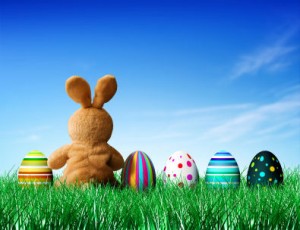
In the past week we’ve had people phone, email, text and raise in conversation that Easter was invented by Constantine, that the bunnies and the buns are pagan and thus consuming them is an offence against God. We’ve heard that the dates are wrong and that Easter dates do not coincide with Passover, that it is a Roman festival, while others say that Easter is tied up with Ishtar. This wasn’t limited to people coming to us; Matt was on the Pat Brittenden Mornings Panel earlier in the week and because of that we heard that talkback radio was full of this too. So, it was very cool that Matt and I were able to have a word with the producers at Radio Rhema after the Panel, and put them in touch with Dr Tim McGrew whose interview as to Whether Easter is Pagan aired on Tuesday – click the link to listen.
Tim is a good friend, a world renowned scholar whose expertise on miracles and particularly the historical accuracy of the resurrection qualifies him as an authority on some of these Easter-is-pagan claims. While he does not touch on all of the above in the interview he debunks a lot of it.
Normally Matt and I try to do a Passover-ish meal – we do lamb, rosemary and red wine – and the kids all get to choose a king size block of chocolate each (they reason they get more chocolate for the money than buying Easter Eggs) and I try to ensure indulgement in a decent hot cross bun. Throughout the weekend we focus on Christ, his death and resurrection. We read relevant passages, we have conversations about the Passover and the fact that Christ is the fulfillment of it, in years gone by when the kids were younger we’ve made Easter story cookies. Basically we enjoy the food, the public holiday and we weave learning opportunities and ways to focus on Christ in as we go so that the thrust of Easter is on him.
We are not worried about taking this approach because Christ conquered all and our focus and heart and intent is on him. Don’t get me wrong, it is important to pause and check that one is not engaging in Paganism but just because something at some point had something to do with Paganism does not mean it is Paganism presently. Tree worship is common among Pagans so must we eschew wood? What about Pythagorus’ theorem? If Easter was just Ishtar worship then we would not be celebrating it; how many of us wanting the spiritual side of Easter are heading to the local Ishtar temple this weekend? As for Constantine inventing Easter, direct evidence for Easter being celebrated by Christians can be identified in the 2nd century, some couple of hundred years prior to Constantine – Wikipedia can tell you that much.