Matt is speaking along with at the upcoming annual ACTIV8 Pro Life Training Day in Christchurch on Saturday 18 April 2015. The conference runs from 9:30am to 5:30pm, the cost for the day is $25 (includes lunch). Register online at: www.activ8nz.org
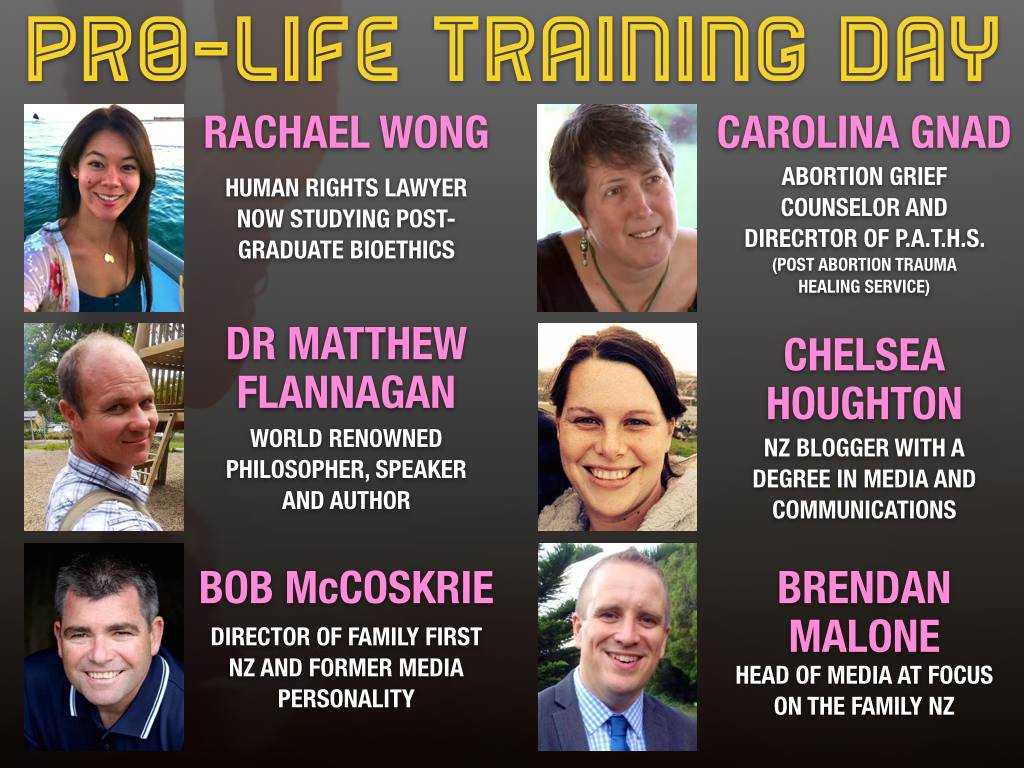
Matt is speaking along with at the upcoming annual ACTIV8 Pro Life Training Day in Christchurch on Saturday 18 April 2015. The conference runs from 9:30am to 5:30pm, the cost for the day is $25 (includes lunch). Register online at: www.activ8nz.org
 Matt has safely arrived in San Diego and the Annual General Meetings of the Evangelical Philosophical and Theological Societies commence in a few hours.
Matt is giving two papers this year, one at each conference: “Mackie’s Answer to the Error Theory: A Reply to Joyce″ at the EPS and “Abortion as Self Defence” at the ETS. As his book, Did God Really Command Genocide? Coming to Terms with the Justice of God, co-authored with Paul Copan, has just been released and is available for sale at the conference, I expect he will be busy promoting that too.
If you are lucky enough to be in San Diego at the conferences please snap a pic of him for me and tag him on Facebook so we back in NZ can see what he is up to 🙂
I want to thank those who generously donated to help get Matt there, we couldn’t have done it without you.
You should not judge a book by its cover, unless you are a secularist… then it is okay.
In a post entitled “Books Like This Should be a Warning Signal to Inerrantists“, published on 26 September 2014, The Secular Outpost’s Jeffery Jay Lowder refers to Paul Copan and this blog’s Matthew Flannagan’s, then forthcoming, book Did God Really Command Genocide? Coming to Terms with the Justice of God.
 After making an acknowledged assumption as to whom authored the publisher’s description, Lowder then moves to confidently asserting that his assumption was correct, and leaps from there to critiquing the then-not-yet-published-or-available to-Lowder-to-actually-read content of the book. Yes folks, it is a live example of judging a book, quite literally, by its cover.
Lowder wrote: [note: that bold, underlined, italics are my emphasis, any other emphasis is original. My comments are in italics]
“So they admit that the relevant passages are among “the most confusing and uncomfortable passages of Scripture,” passages which make even hardened inerrantists like Copan and Flannagan “squeamish.”
This is the bit wrongly attributed to Paul and Matt that I referred to above.
“But, being the faithful believers that they are, Copan and Flannagan will argue that, yes, a “good, kind, and loving deity” would command (and, in fact, has commanded) “the wholesale slaughter of nations.””
Apparently Lowder is a clairvoyant secularist. Either that or he is really good at cover interpretation.
“How will they reconcile God’s goodness, kindness, and love with genocide? The book’s subtitle suggests that they will argue that “justice” is the answer.”
See?
“The fundamental problem with books like this is that they fly in the face of what seems obvious to everyone else who doesn’t already hold the a priori belief that everything the Bible says must be true,”
Ah, so not being a Christian is what gives secularists the ability to boldly state the “obvious” about the content of books they have only had access to the covers of. I thought that maybe I just lacked the confidence to make such bold assertions about the content of books I have not read. (…Well, that, and the fact that, unlike Lowder, I do have access to the manuscript by virtue of my sleeping with one of the authors [whom I am married to] and I know for a fact that this is *not* actually what Paul and Matt argue. Small details, I know.)
“just because the Bible says it.””
That is actually not what inerrantists of Matt and Paul’s ilk believe; this is actually a strawman (small detail, again, I know).
To paraphrase something Nick Trakakis wrote in another context, “Defenses of genocidal behavior by the OT god turn a blind eye to what seem clear and obvious to everyone else — that such behavior makes a mockery out of what any person would consider morally justifiable behavior.””
This would be a good ending if the book actually did defend “genocidal behavior by the OT god.” Again, small detail.
 Advice to Lowder: try, I don’t know, reading it. It got released today so you finally can. Did God Really Command Genocide? is now available from the following book providers:
Well done Matt and Paul. 🙂
Out now!
Get your copy today of Did God Really Command Genocide? Coming to Terms with the Justice of God, by Paul Copan and Matthew Flannagan, published by Baker Books.
Buy from Baker Books
Buy on Amazon in paperback
Buy for your Kindle
Buy from Book Depository
(The New Zealand store launch is not until 31 January 2015 but Book Depository do free international posting.)
 This blog’s Matthew Flannagan has had his paper “Mackie’s Answer to the Error Theory: A Reply to Joyce″ accepted for the National Annual Meeting of the Evangelical Philosophical Society (“EPS”) in San Diego, USA, from 19-21 November 2014. The abstract for Matt’s paper is as follows:
Abstract
Richard Joyce has argued that the “real problem” with divine command theories of ethics is not the euthyphro dilemma, but rather that such theories cannot account for the platitude that moral obligations have inescapable moral authority. In this paper I reply to Joyce’s contention.First, I look at Joyce’s objection in the context of Joyce’s own defence of John Mackie’s error theory. Joyce interprets Mackie as arguing that moral obligations are queer precisely because, if they existed, they would have inescapable authority and no sense can be made of such authority.
Then I note that Mackie himself argued that a divine command theory was an exception to his thesis. Mackie contended that naturalistic theories face this challenge but a divine command theory does not. I argue that Joyce’s own reconstruction of Mackie’s argument confirms this conclusion.
Finally, I examine some objections that Joyce raises to this kind of response. I argue they fail. Mackie and Joyce’s error theory, if sound, is an objection to naturalistic or secular accounts of moral obligations and not to divine command theories.”
This year’s conference theme will be “Ecclesiology”. The Plenary Speaker is Paul Helm of Regent College, Vancouver Canada. The draft copy of the ETS-EPS program is available here.
(Matt has also had a paper accepted for the Evangelical Theological Society’s Annual Meeting, which is also in San Diego around the same time.)
As with previous years, we will need to fundraise to raise the $2,500 NZD shortfall in our budget needed to get him there. Family life on one modest, full-time income with a special needs child, who is unable to go to school, makes it very hard. Almost all of Matt’s philosophical and theological work on this blog is the result of his unpaid commitment to the field. Donations, no matter how modest, are greatly appreciated.
 This blog’s Matthew Flannagan has had his paper “Abortion as Self Defence” accepted for the 66th Annual Meeting of the Evangelical Theological Society (“ETS”) in San Diego, USA, from 19-21 November 2014. The abstract for Matt’s paper is as follows:
Abstract
Eileen McDonagh has proposed an ingenious argument for abortion rights; she concedes, for the sake of argument, that a fetus is a human being but argues that a fetus’ presence inside the womb of a woman who does not consent to pregnancy constitutes unjust aggression. Consequently, the woman has a right to expel and kill the fetus in self-defence.In this paper I will sketch a critique of this line of argument suggested decades ago by Alan Donagan. Donagan argues that, in cases where a woman has not been raped, the woman is has acquired parental obligations to the fetus. Parental obligations are acquired through the act of begetting. If a person brings a child into existence through voluntary sexual intercourse then he or she has a duty to provide the necessities of life for that child. The fetus is, therefore, not an unjust aggressor.
I will defend this argument against two influential objections. First, the objection that a woman who does not consent to getting pregnant cannot have parental obligations to her offspring. Second, the objection that, even if a woman does have parental obligations to her offspring, these obligations do not include a duty to provide bodily life support. I will argue that both objections fail.
This year’s Annual Meeting theme is “Ecclesiology”. Plenary speakers for this year’s meeting are Gregg R. Allison (Professor of Christian Theology, Southern Baptist Theological Seminary), Joseph H. Hellerman (Professor of New Testament Language and Literature, Talbot School of Theology, Biola University) and Miroslav Volf (Henry B. Wright Professor of Systematic Theology, Founding Director of Yale Center for Faith and Culture, Yale Divinity School).
(Matt has also had a paper accepted for the Evangelical Philosophical Society’s Annual Meeting, which is also in San Diego around the same time.)
As with previous years, we will need to fundraise to raise the $2,500 NZD shortfall in our budget needed to get him there. Family life on one modest, full-time income with a special needs child, who is unable to go to school, makes it very hard. Almost all of Matt’s philosophical and theological work on this blog is the result of his unpaid commitment to the field. Donations, no matter how modest, are greatly appreciated.
Coming to a bookstore near you in November 2014: Did God Really Command Genocide? Coming to Terms with the Justice of God by: Paul Copan and Matthew Flannagan
From Baker Publishing Group’s page:
“Reconciling a violent Old Testament God with a loving Jesus
Would a good, kind, and loving deity ever command the wholesale slaughter of nations? We often avoid reading difficult Old Testament passages that make us squeamish and quickly jump to the enemy-loving, forgiving Jesus of the New Testament. And yet, the question remains.
In the tradition of his popular Is God a Moral Monster?, Paul Copan teams up with Matthew Flannagan to tackle some of the most confusing and uncomfortable passages of Scripture. Together they help the Christian and nonbeliever alike understand the biblical, theological, philosophical, and ethical implications of Old Testament warfare passages.”
Some of the endorsements are below, you can read more here:
“The Old Testament describes God as a warrior who directs his people to fight the Canaanites. Divine violence in the Bible is a theme that has aroused the ire of atheists and the discomfort and confusion of many Christians. Copan and Flannagan address the arguments of the atheists who use these texts to undermine belief and confidence in God. Not only are they adept at biblical interpretation and philosophy as they effectively counter this challenge, but they also write in a deeply compelling way that will appeal to both students and laypeople.”
Tremper Longman III, Robert H. Gundry Professor of Biblical Studies, Westmont College, Santa Barbara, California
“In their wide-ranging book, Copan and Flannagan go beyond standard treatments of Old Testament warfare; they incorporate biblical, theological, philosophical, ethical, legal, and historical perspectives on a much-debated but often misunderstood topic. This volume makes important strides forward in laying out a case for the coherence of divine command theory in connection with these Yahweh-war texts.”
William Lane Craig, research professor of philosophy, Talbot School of Theology, La Mirada, California
“As a full-scale follow-up to the excellent popular treatment of the topic in Is God a Moral Monster?,this book provides the most thorough and comprehensive treatment of the problem of violence in the Old Testament that I have encountered. The authors tackle the aggressive charges of the new atheists, as well as other equally sceptical but less strident critics of ‘the God of the Old Testament.’ And they do so with a blend of careful biblical exegesis and incisive moral argumentation. The book reaches deep, but remains readable, and the summaries at the end of every chapter are a great help in following the case as it is steadily built up. All of us who, in teaching or preaching the Old Testament, are constantly bombarded with ‘But what about the Canaanites?’ will be very grateful for these rich resources for a well-informed, gracious, and biblically faithful reply.”
Christopher J. H. Wright, International Ministries Director, Langham Partnership, author of Old Testament Ethics for the People of God and The God I Don’t Understand
Pre-order your copy now on Amazon, Book Depository or Mighty Ape (or wherever you normally get your books).