Author: Madeleine

  • Finally! The Words I Have Waited 17 Years to See

    I just logged into nDeva, the University of Auckland’s student records intranet and I just now read the words I have been waiting to read since my first day at Waikato Law School back on 1 March 1993:Welcome to Graduation!

    You are eligible to graduate LLB

    After everything I went through to get here, as I shared some of in my post In Pursuit of an LLB, I am just so happy.

    RELATED POSTS:
    Back to Law School

    Update on Madeleine’s Car Accident and Recovery
    In Pursuit of an LLB – Some News!
    Power Cuts and Deadlines
    Putting Down my Pen

  • Bradley v Flannagan Debate @ Auckland Uni “Is God the Source of Morality?”

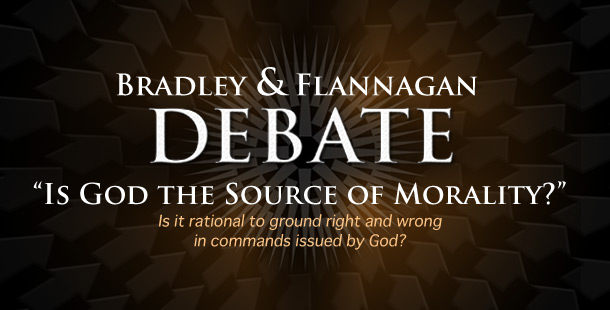
    Raymond Bradley and Matthew Flannagan will debate the topic “Is God the Source of Morality? Is it rational to ground right and wrong in commands issued by God?”

    The debate will be held at the University of Auckland on Monday 2 August from 7-9pm in “The Centennial” 260 – 098 OGGB (the bottom level of the Business School) on 12 Grafton Rd, Auckland City.

    Raymond Bradley v Matthew Flannagan "Is God the Source of Morality"

    If you enjoyed the 2008 debate at Auckland University between William Lane Craig and Bill Cooke, you should enjoy this debate.

    Raymond BradleyBradley is an Emeritus Professor of Philosophy with areas of specialty in Philosophical Logic, Metaphysics, Logical Atomism; he has previously debated William Lane Craig, Edward Blaiklock and many other Christian scholars and describes himself as an older generation “new atheist”.

    Matthew FlannaganFlannagan is an Auckland based Philosopher and Theologian with areas of specialty in Philosophy of Religion, Ethics and Theology; he has previously debated Bill Cooke, Zoe During and, of course, writes for this blog.

    The format of the debate will be as follows:

    Dr Bradley: Opening Comments [20 min]
    Dr Flannagan: Opening Comments [20 min]
    Dr Bradley: Reply to Dr Flannagan [10 min]
    Dr Flannagan: Reply to Dr Bradley[10 min]
    Dr Bradley: Closing Comments [7 min]
    Dr Flannagan: Closing Comments [7 min]
    Questions from the floor: [30 min]

    The moderator for the debate will be John Bishop.

    Bradley will be introduced by Robert Nola.

    Flannagan will be introduced by Chris Tucker.

    Both Bradley and Flannagan are experienced and engaging public speakers who are practiced at pitching their topics to suit their audiences. So, invite all your friends, and block out the evening of Monday 2 August from 7-9 pm now and make sure you get to the debate early to locate parking and grab a good seat.

    This debate is brought to you by the Evangelical Union and the Reason and Science Society as part of the University of Auckland’s Jesus week/Atheist week, with support from Thinking Matters.

    The event will be videoed and will be published on this blog. Entry is free and any and all are welcome.

    There is even a Facebook page you can rsvp on and use to invite your friends.

  • Inter-Continental Developments: Matt to Speak in the US

    When Matt wrote his blog series Joshua and the Genocide of the Canaanites Part I and Part II he had no idea just how far clicking the ‘publish’ button would end up taking him. It turns out that it will be taking him quite far;  half-way around the world from Auckland, New Zealand to Atlanta, Georgia in the United States to be precise.

    What’s in Georgia? Well it is this years location for the annual conferences and meetings of the  Evangelical Theological Society (ETS), the Evangelical Philosophical Society (EPS) and the Society of Biblical Literature (SBL). Each organisation’s events dove-tail the others so that they all run between 17-23 November 2010 in pretty much the same location.

    Anyway, in addition to the  Canaanite blog series being the catalyst to Matt’s receiving invitations to co-author chapters in edited books with Philosophers of Religion and Old Testament Ethicists  working at the top of the international field on the subject of Old Testament Ethics (see the upcoming publication list on Matt’s profile page) Matt will also be speaking on this topic in Atlanta.

    At the EPS Apologetics Conference, Matt will speak on “God and the Genocide of the Canaanites” (full details here). The following day he will join Palm Beach Atlantic University Professor of Philosophy  and Ethics and EPS President Paul Copan, Denver Seminary Professor of Old Testament and Semitic Languages Richard Hess and Taylor University Associate Professor of Historical Theology Randal Rauser at the SBL Annual Meeting for a panel discussion entitled “Navigating Old Testament Ethics” (full details here). He’ll also be attending bits of the ETS conference too.

    This is an incredible opportunity for Matt. Not only does he get to go somewhere where most of the Philosophers and Theologians at the top of his field will all be gathered in one place and meet them all but he gets to present his work to them and speak alongside them. The potential for Matt to obtain more research and speaking opportunities coupled with the fact that attending the EPS is seen in the evangelical academic world as one of the best ways to obtain employment makes this an opportunity that we are determined for Matt to take up.

    The problem is cost. Almost every other speaker in attendance has institutional backing. Financially this translates to their respective academic departments funding most of their attendance. Matt does not have institutional backing. EPS President Paul Copan, who personally invited Matt to take up these speaking opportunities, is aware of this and has generously offered to help Matt out with accommodation and to and fro conference travel. This brings the total cost down considerably but we are still chasing a total of $2,481.55 NZD ($1746.52USD) to get Matt there.

    From simply talking to friends about this opportunity we are aware that people who are able to would like to help Matt get to these conferences so we have decided to take a step of faith by accepting the speaking offers and purchasing the tickets. Given our employment woes and battle with ACC over my injury compensation being wrongfully discontinued, this has made things rather tight but we have faith we will get through.

    If you would like to help, our support page has various donation options. We would also greatly appreciate the word being spread, so if you are a blogger or you have website, please consider linking to this page.

  • SBL Annual Meeting: Navigating Old Testament Ethics

    Matt has been invited to participate in a panel discussion at the annual Society of Biblical Literature (SBL) Annual Meeting in Atlanta, Georgia, which runs 20-23 November 2010. He will join leading Christian academics Paul Copan, Richard Hess and Randal Rauser in a segment entitled “Navigating Old Testament Ethics.” Matt’s contribution to the panel discussion will be on Divine Commands and Old Testament Ethics.

    Society of Biblical Literature Annual Meeting

    The SBL Annual Meeting is the largest gathering of biblical scholars in the world. Each meeting:

    • showcases the latest in biblical research,
    • fosters collegial contacts,
    • advances research, and
    • focuses on issues of the profession.

    At this meeting, scholars benefit from sessions on religion, philosophy, ethics, and diverse religious traditions.

    You can register here.

    If you would like to donate to help Matt get to America to speak at the SBL Annual Meeting please visit our support page.

  • EPS Apologetics Conference: God and the Genocide of the Canaanites

    Matt has been invited to speak at the annual Evangelical Philosophical Society (EPS) Apologetics Conference in Atlanta, Georgia, USA which runs 18-20 November 2010. He will be speaking alongside some big names in contemporary Christian philosophy including Alvin Plantinga and William Lane Craig.

    Evangelical Philosophical Society Apologetics Conference

    Experience seasoned teaching by Alvin Plantinga, William Lane Craig, Gary Habermas, Greg Koukl, Randy Newman, Frank Beckwith, Craig Evans, Craig Blomberg, Mike Licona and over twenty other influencers in Christian apologetics as they equip you about the issues facing contemporary Christian witness.

    The full line up of speakers is here.

    You can register here.

    Matt’s talk is entitled “God and the Genocide of the Canaanites,”

    How could a just and loving God command Joshua to genocide the Canaanites as is apparently taught in the Old Testament? Is God really a moral monster as Christianity’s critics use these passages to claim? Matthew will re-examine these passages in light of the context they were written in showing that the skeptics’ case against God relies on a questionable reading of the Old Testament.

    This talk will be based on Matt’s blog series, Joshua and the Genocide of the Canaanites Part I and Part II, his Contra Mundum column, “Did God Command Genocide in the Old Testament?” (forthcoming August 2010) and his chapter, co-authored with Paul Copan, “Ethics of ‘Holy War’ for Christian Morality and Theology” in Old Testament ‘Holy War’ and Christian Morality: Perspectives and Prospects (forthcoming 2011).

    If you would like to donate to help Matt get to America to speak at the EPS Apologetics Conference please visit our support page.

  • Clearing the Air: A Church Leaders Forum on Climate Change

    Matt has been asked to deliver the opening talk at the upcoming Clearing the Air Forum on 16-17 July 2010 at Unitec Institute of Technology, Auckland. The  forum has been organised by New Zealand Christian Network (visionnetwork) and its purpose is to look at the synthesis of science and faith on climate change try to develop a joint communiqué by national church leaders. In addition to Matt, the speakers include:

    • Professor Ralph Sims, Director, Centre for Energy Research, Massey University
    • Dr James Renwick, Principal climate scientist, NIWA
    • Ian Wishart, Editor, Investigate magazine, Author of Air Con: The Seriously Inconvenient Truth About Global Warming
    • Prof Jonathan Boston, Director of the Institute of Policy Studies, Victoria University
    • Barry Brills, President, NZ Climate Science Coalition
    • Dr Andy Reisinger, Senior Research Fellow, NZ Climate Change Research Institute, Victoria University
    • Ken Harrison, Chairman National Church Leaders group, National Superintendant Assemblies of God in New Zealand
    • Archbishop David Moxon, Anglican Church in Aotearoa, New Zealand, and Polynesia
    • Stephen Tollestrup, Executive Director, Tear Fund

    Clearing the AirHere is what it is all about:

    What does the Church have to say to government, society, and itself – if anything – on the topic of climate change? The failure to reach any agreement at the recent Copenhagen conference is regarded as a triumph by some and a tragedy by others.

    This forum – convened by Glyn Carpenter, National Director, NZ Christian Network, visionnetwork, and Associate Professor Jonathan Leaver, Unitec Institute of Technology – will bring together both groups, and look to produce a consensus-based position statement.

    Topics will include (a) epistemology, (b) creation mandate, (c) what position can be reasonably supported by the science, and (d) what can and should we do? The forum is designed primarily for church and public issues leaders, but places are available for students and others to hear a great line up of speakers.

    Matt’s talk is on epistemology and is entitled “Discovering truth in the synthesis of science and Faith.” The idea is that by having Matt talk first he will set the tone as to how we should be approaching and thinking about this synthesis of topics we can then sit back and hear all the speakers speak on their areas of expertise and know how to then grapple with the ideas.

    To see the full programme, click here.

  • Just Nuke BP’s Oil Leak

    Milo Nordyke, one of the masterminds behind US research into peaceful nuclear energy in the 1960s and ’70s and Viktor Mikhailov, a Physicist who served as a Russian Minister of Nuclear Energy, agree on a comparitively cheap solution for BP’s oil leak in the Gulf of Mexico – just nuke it. In what admittedly sounds like the plot to a blockbuster hollywood film, the Special Report: Should BP nuke its leaking well? opens with,

    His face wracked by age and his voice rasping after decades of chain-smoking coarse tobacco, the former long-time Russian Minister of nuclear energy and veteran Soviet physicist Viktor Mikhailov knows just how to fix BP’s oil leak in the Gulf of Mexico.

    “A nuclear explosion over the leak,” he says nonchalantly puffing a cigarette as he sits in a conference room at the Institute of Strategic Stability, where he is a director. “I don’t know what BP is waiting for, they are wasting their time. Only about 10 kilotons of nuclear explosion capacity and the problem is solved.”

    …

    Mikhailov has had a distinguished career in the nuclear field, helping to close a Soviet Union program that used nuclear explosions to seal gas leaks. Ordinarily he’s an opponent of nuclear blasts, but he says an underwater explosion in the Gulf of Mexico would not be harmful and could cost no more than $10 million. That compares with the $2.35 billion BP has paid out in cleanup and compensation costs so far. “This option is worth the money,” he says.

    As gung-ho and ‘Bruce Willis’ as it sounds the idea actually seems to have some merit. In addition to the cost being comparitively cheap (if BP sold the rights to Hollywood they might even cover the cost of the nuke) the article goes on talk about the environmental impact.

    Nordyke too believes the nuclear option should be on the table. After seeing nine U.S. nuclear explosions and standing behind the control board of one, he estimates that a nuclear bomb would have roughly an 80 to 90 percent chance of successfully blocking the oil. According to his estimates, it would have to be an explosion of around 30 kilotons, equivalent to roughly two Hiroshima bombs or three times as big as Mikhailov’s estimate. The explosion would also need to remain at least 3 to 4 miles away from other offshore wells in the area.

    The bomb, says Nordyke, would be dropped in a secondary well approximately 60-70 feet away from the leaking shaft. There it would create a large cavity filled with gas. The gas would melt the surrounding rock, crush it and press it into the leaking well to close it shut.

    Although the BP well is thousands of feet deeper than those closed in the Soviet Union, Nordyke says the extra depth shouldn’t make a difference. He also says that so far below the ground, not much difference exists in onshore or underwater explosions — even though the latter have never been tried.

    Nordyke says fears that radiation could escape after the explosion are unfounded. The hole would be about 8 inches in diameter and, despite the shockwave, the radiation should remain captured. Even in the case of radiation escape, he says, its dispersed effect would be less than that of floating oil patches.

    The article concludes that despite support for some sort of explosive solution even coming from quarters as unlikely as Bill Clinton (well, ok, maybe ‘just blowing it all up’ as a solution is not that unlikely for Clinton) the idea is highly unlikely to be implemented for the obvious reasons that managing the outcry towards the proposed solution would probably be worse than the outcry towards the oil spill. In short, it ‘aint going to happen but let’s cut to Mikhailov for the final scene:

    “Still,” he says, momentarily hard to see through a cloud of smoke from his cigarettes, “I see no other solution for sealing leaks like the one in the Gulf of Mexico.”

    The problem, he goes on, is that “Americans just don’t know enough about nuclear explosions to solve this problem … But they should ask us — we have institutes, we have professionals who can help them solve this. Otherwise BP are just torturing the people and themselves.”

    Hat Tip: Zwinglius Redivivus