As I write this it is just beginning to be the 4th of July in the United States now, though its been 4th July for some time here in New Zealand.
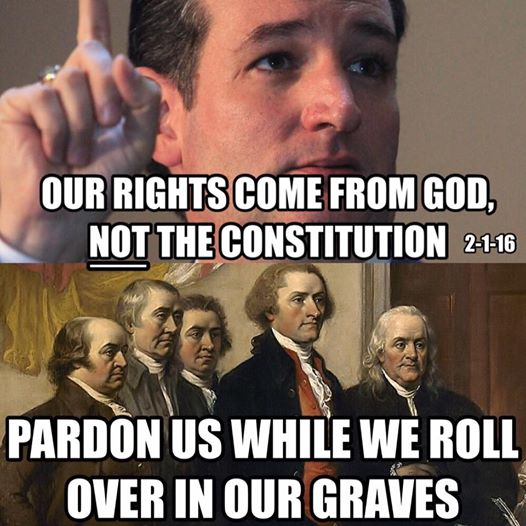
The 4th of July is, of course, Independence Day. Typically in New Zealand, those members of the secular blogosphere, who consider themselves to be classical liberals, have an annual rant on the 4th of July about the Declaration of Independence, praising the philosophy expounded in this document.
 Not PC’s Peter Cresswell, for example, states in Happy July 4th! that “with the exception of just a few words, the words could hardly be bettered today;” the declaration is, “A wonderful, wonderful anthem to freedom that rings down through the years.” He bemoans, “if only the real meaning of those words could be heard and understood.”
A few years ago Kiwiblog’s David Farrar made similar claims, he stated he would often “marvel at those marvelous words, written in the heat of oppression…Marvelous, absolutely marvelous.”
I agree. I would simply point out to my secular, liberal, country-men what the words in this document actually say, and some of the philosophical ideas they expound.
First, the declaration refers to God; it does so four times. Maverick Philosopher has an excellent analysis of the theological content;
In the initial paragraph, we find the phrase “…Laws of Nature and of Nature’s God….” This phrase rules out pantheism: God is distinct from Nature. In the second paragraph, there is the phrase, “…endowed by their Creator with certain unalienable rights….” Putting these two references together, we may infer that the God being referred to is not merely a deistic initiator of the temporally first segment of the physical universe, but a being involved in the creation of the human race. For if God endowed human beings with rights, this endowment had to occur at the time of the creation of human beings, which of course occurred later than the beginning of the physical universe. In traditional jargon, God is a creator continuans rather than a mere creator originans. He is not a mere cosmic starter-upper, but a being who is continuously involved in maintaining the universe in existence.
…
The other two references are in the final paragraph. There we find the phrase, “…Supreme Judge of the World for the Rectitude of our Intentions….” near the beginning of the paragraph, and near the end, “…a firm Reliance on the Protection of divine Providence….” Now if God is the Supreme Judge, then he is more than a mere metaphysical cause responsible for the universe’s beginning to exist; he is also the supreme moral arbiter. And since he endows human beings with rights, as opposed to being merely a judge of rights antecedently possessed, then it seems we may infer that God is the source of moral distinctions (as opposed to a mere judge of them).
The reference to divine providence is further evidence that the conception of God in the Declaration is non-deistic. For if God provides and protects, then God has an ongoing involvement with the world and its inhabitants such as would be ruled out by a deistic view. It should also be obvious that talk of providence (from the Latin, pro-videre) implies divine foreknowledge which implies intelligence and perhaps omniscience on the part of the deity. The God of the Declaration is not a blind metaphysical cause posited to explain why the universe began to exist, but a being with such attributes as moral goodness and intelligence…. So if by ‘deism’ is meant the doctrine that God is a mere metaphysical cause of the universe’s beginning to exist who is thereafter uninvolved in its continuing to exist, then the God of the Declaration is non-deistic.
Second, the declaration claims that belief in a creator is self-evident; that is, it is a properly basic belief, which is rationally acceptable to hold in the absence of any proof.
We hold these truths to be self-evident, that all men are created equal, that they are endowed by their Creator with certain unalienable Rights, that among these are Life, Liberty, and the pursuit of Happiness.
Third, the declaration makes political pronouncements about public policy on the basis of these theological claims and expects these pronouncements to be taken seriously.
Fourth, the declaration says that various rights, such as the right to life and liberty, are unalienable. That is, a person cannot alienate one’s life or freedom as they can legally alienate a piece of property. You can’t take my property if I do not consent to you having it but if I do consent, you can take it; property is alienable, life and liberty are not. The argument of the declaration reflects John Locke’s argument in the Second Treatise of Civil Government;
To understand political power right, and derive it from its original, we must consider, what state all men are naturally in, and that is, a state of perfect freedom to order their actions, and dispose of their possessions and persons, as they think fit, within the bounds of the law of nature, without asking leave, or depending upon the will of any other man.[1]
…
But though this be a state of liberty, yet it is not a state of licence: though man in that state have an uncontroulable liberty to dispose of his person or possessions, yet he has not liberty to destroy himself, or so much as any creature in his possession, but where some nobler use than its bare preservation calls for it. The state of nature has a law of nature to govern it, which obliges every one: and reason, which is that law, teaches all mankind, who will but consult it, that being all equal and independent, no one ought to harm another in his life, health, liberty, or possessions: for men being all the workmanship of one omnipotent, and infinitely wise maker; all the servants of one sovereign master, sent into the world by his order, and about his business; they are his property, whose workmanship they are, made to last during his, not one another’s pleasure[2]
…
This freedom from absolute, arbitrary power, is so necessary to, and closely joined with a man’s preservation, that he cannot part with it, but by what forfeits his preservation and life together: for a man, not having the power of his own life, cannot, by compact, or his own consent, enslave himself to any one, nor put himself under the absolute, arbitrary power of another, to take away his life, when he pleases. No body can give more power than he has himself; and he that cannot take away his own life, cannot give another power over it.[3]
The point here is that because your right to life and liberty are from God, no one can legitimately enslave or kill you, even if you consent to it. This was not a mere incidental addendum idea, it was central to Lockean political philosophy, which maintained (as the declaration does) that the government derives its powers from the consent of the governed. If a person can consent to be killed or enslaved then they can consent to the government enslaving them also to having the arbitrary power to kill them and hence tyranny can be legitimate. The reason tyranny is illegitimate is because, “No body can give more power than he has himself; and he that cannot take away his own life, cannot give another power over it.”
The declaration then makes a metaphysical claim: God exists. It makes an epistemological claim about faith and reason: that belief in God is rational independent of proof. It makes an implicit claim of political philosophy: religion is not a private thing that should not influence public life but rather, theological claims should influence public life. Finally it makes a moral claim; that consenting adults do not have a right to do whatever they like with their own bodies, rather there are “Laws of Nature and of Nature’s God” that bind all human beings, that they are compelled to follow even if all parties consent otherwise. Governments are legitimate to the extent in which they respect these laws.
I agree with PC, it is hard to improve on this philosophy; I have defended it in several places on this blog.
Ironically, however, the militant secular liberals in NZ who parrot the declaration seem committed to attacking these ideas and rejecting them on every point. They argue that belief in God is irrational because it cannot be empirically proven, they claim that the public square should be secular, that religion should be private and not influence public policy and they argue that liberty means consenting adults can do whatever they like with their own bodies and lives. Far from being unalienable, a person’s life and freedom is his property to alienate as that person sees fit.
It is also hard to disagree with PC’s sentiments that the declaration is “A wonderful, wonderful anthem to freedom that rings down through the years. If only the real meaning of those words could be heard and understood.” “Indeed, if only.”
[1] John Locke Second Treatise of Civil Government Section II 4.
[2] Ibid II6.
[3] Ibid IV 23.