Tag: Graham Oppy

  • Thinking Matters Talk: Does Morality Need God? Part Three:


    This year the New Zealand apologetics organization Thinking Matters ran a “Confident Christianity Conference” in Auckland. I was asked to speak at this conference on the topic. Does Morality Need God? Below is a slightly streamlined version of the talk I gave.

    This brings me to my second contention: If God exists, a divine command theory would provide a coherent account of our fundamental assumptions about moral requirements.

    I outlined four assumptions about the kind of requirements morality imposes upon us. These were

    1. Inescapability: moral requirements apply to us irrespective of whether following them contributes to any ends or aims we currently desire.
    2. Impartiality: moral requirements are justified from an impartial perspective.
    3. Authority: agents always have conclusive reasons to do what is morally required and never have sufficiently good reasons for doing what is morally wrong.
    4. Accountability: if something is morally required, we are guilty and liable to blame if we fail to do it and lack an adequate excuse.  

    I will make three points.

    First, If God exists, the assumption that wrongness is identical to the property of being contrary to God’s command would coherently account for all these assumptions. Consider the fact that moral requirements are “inescapable.” If God commands someone to do something, this command is addressed to them, regardless of whether it contributes to any ends or aims they currently desire. So, the imperative in question is inescapable.  Similarly, consider the impartiality of moral requirements. God is an all-powerful, all-knowing, essentially benevolent, and impartial agent. So what God commands is co-extensive with prescriptions that a benevolent, impartial person who was fully informed and reasoning correctly would endorse.  A command is also a paradigmatic example of a prescription that involves a demand for which we hold people accountable through standard practices such as blaming. That is how a command differs from other prescriptions, such as a piece of advice or a suggestion. So, if the property of being morally required is identical to the property of being commanded by God,  we would expect it to be true that we are accountable to moral requirements.

    Second, if God exists, the thesis that wrongness is identical to the property of being contrary to God’s command would vindicate the assumption that it is always in our long-term self-interest to follow impartial demands. A divine command theory entails that moral requirements are what we are accountable to God for doing. Unlike human beings, God’s commands are co-extensive with what is demanded from an impartial point of view, and people can never violate these norms secretly without being detected.  

    Third,  all attempts to refute a divine command theory have failed. It’s widely claimed that divine command theories were refuted by an argument called “The Euthyphro Objection.” This objection is named after a dialogue written by the ancient Greek philosopher Plato in the 4th century BC. Plato’s original argument is somewhat obscure and applied only to polytheistic religions (those religions that believe in many gods). However, the version used by philosophers today is an adaptation of Plato’s argument for use against monotheistic faiths. Critics of divine command theories appeal to three arguments loosely associated with Plato’s dialogue. These are (1) the anything goes objection, (2) the arbitrariness objection, and (3) the vacuity objection. I will address each of these briefly in turn.

    The Anything Goes Objection

    One objection is that a divine command theory makes morality arbitrary because anything at all could be right or wrong. King and Garcia explain the alleged problem in this way:

    [Divine command theory] implies that it is possible for any kind of action, such as rape, not to be wrong. But it seems intuitively impossible for rape not to be wrong. So [Divine command theory] is at odds with our common-sense intuitions about rape.[1]

    This objection assumes it is possible for God to command rape. Divine command theorists contest this assumption. They do not contend that moral requirements depend on the commands of just anyone. They base moral obligations on the commands of God conceived in a particular way. God is an all-powerful, all-knowing, essentially loving, just, immaterial person who created the universe on their conception. Given this, the claim that God could command people to perform a horrendous act like rape holds only if it’s possible for an all-knowing, loving, and impartial person to command rape. This is unlikely. The reason critics use examples like rape is that they view them as actions that no virtuous person could ever knowingly entertain. However, suppose, for the sake of argument, it is possible for a just and loving, omniscient person to command rape. Rape would only be commanded in situations where a just and loving person, aware of all the relevant facts, could endorse it– and under these circumstances, it’s hard to see how one could take for granted it was morally wrong.

     Arbitrariness

    A pervasive objection is that divine command theories make morality arbitrary because that nothing is right or wrong prior to God’s command; God can have no reasons for issuing one set of commands instead of another. Oppy explains the objection.

    Could it have been, for example, that murder, rape, lying, stealing, and cheating were good because God proclaimed them so? Surely not! But what could explain God’s inability to bring it about that murder, rape, lying, stealing and cheating are good by proclaiming them so, other than its being the case that murder, rape, lying, stealing, and cheating are wrong quite apart from any proclamations that God might make?[2]

    However, this is implausible. Suppose God has character traits such as being essentially loving and impartial. In that case, God can and would have reasons for prohibiting actions like rape, murder, or cheating, quite apart from whether these actions are antecedently wrong. Antecedent to any command on God’s part, these actions won’t have the property of being morally prohibited. But they could still have other properties such as being cruel or harmful or unjust or detrimental to human happiness— or being expressions of hatred, for example. And a loving and impartial God could prohibit these actions because these actions have these non-moral properties.

    Divine command theories do not entail that morality is arbitrary. If anything, the opposite is the case. A divine command theory entails that actions will be wrong in virtue of certain non-moral properties those actions have. Non-moral properties would provide an informed, loving, and impartial person with reasons to prohibit those actions.

     Vacuity Objection

    A third objection is that divine command theories entail that the doctrine of the goodness of God is rendered vacuous. Someone can only be morally perfect if he has duties and acts in accordance with them. But, seeing God does not issue commands to himself, a divine command theory entails that God has no obligations. Consequently, God cannot be God.

    This objection assumes that God’s goodness should be explicated in terms of God faithfully discharging his duties. But there is no reason why we must understand God’s goodness in this way. In Christian creeds like the Westminster Confession, God’s goodness is understood as possessing certain character traits, such as being loving, impartial gracious, merciful, long-suffering, truthful, forgiving, etc. If God’s commanding an action makes it required, God cannot have an obligation to do these things; that does not mean God does not do them. God does not have to have a duty to do something in order to do it.

    To recap: unless we assume that prudential and impartial commands never conflict, we cannot account for our fundamental intuitions about morality. Second, secular accounts of the kind of accountability we have to morality undermine this assumption. Fourth, a divine command theory would, if true, both vindicate this assumption and coherently account for our fundamental assumptions about morality.  Finally, standard objections against a divine command theory fail. The conclusion is this. If we assume God exists, a divine command theory can coherently and defensibly account for these fundamental assumptions in a way a secular theory cannot.


    [1] Nathan L King, “Introduction”, in Is Goodness without God Good Enough: A Debate on Faith, Secularism and Ethics, eds. Robert K Garcia and Nathan L King (Lanham: Rowan & Littlefield Publishers, 2008), 11.

    [2]  Graham. Oppy, Best Argument against God (Hampshire: Palgrave Pivot, 2014), 44.

  • Divine Command Theory and the Euthyphro Dilemma: Part IV

    This is a talk I gave to the Philosophy Club at Glendale Community College in Phoenix, Arizona, this weekend. The talk was followed by a long discussion with some faculty, students at the college, and others who zoomed in.

    In this talk, I introduced and defended a divine command theory of ethics. I divided the talk into three parts. In section I, I set out what modern divine command theories of ethics typically contend. I distinguished this from some common misunderstandings in section II. In Section III, I discussed the Euthyphro dilemma. I argued this objection is not the conclusive rebuttal it is often assumed to be. In my first post, I reproduced sections I and II. My second post began my discussion of the Euthyphro objection in section III. Focusing on the Anything Goes Objection. My third post examined the claim that a divine command theory would, if true, entail that morality is arbitrary. This post concludes this discussion. 

    In my last post, I argued that divine command theories do not entail that morality is arbitrary. If anything, the opposite is the case. A divine command theory entails that actions will be wrong in virtue of those actions’ non-moral properties, properties that would provide an informed, loving and just person with reasons for prohibiting those actions.

    The Vacuity Objection

    Finally, critics press what is known as the vacuity objection. A divine command theory entails that “the doctrine of the goodness of God is rendered meaningless”[1]  Oppy puts the objection forcefully: “It cannot be…that God’s commands or decisions determine what is morally good because God is morally good prior to the giving of those commands or the making of those decisions.”[2]  If God is essentially good, he must be good prior to the issue any commands. However, this means that goodness cannot depend upon the existence of these commands. If it did, goodness would exist prior to itself. 

    Like the previous objection, I think this one is based on an equivalent. In the first section of this talk, I pointed out that the word “good” is ambiguous”. I stated that a divine command theory is an account of moral requirements, not an account of goodness in general. This observation is essential here. When divine command theorists say God’s commands determine what is good, they mean only that the existence of moral obligations or moral requirements depends upon God. By contrast, when a divine command theorist says God is good, he means by this that God has certain character traits: God is loving, just, impartial, faithful, in all possible worlds.  

    But the question of whether someone has certain character traits is distinct from whether they have moral requirements to behave in a certain way. 

    Consider a nihilist who denies the existence of objective moral requirements. This nihilist could, if he wanted, choose to live in accord with the norms of justice and could decide to be a faithful, loving and impartial person. What he could not do is claim that there exists any moral obligation to live this way.[3] 

    This distinction removes the sting from Oppy’s objection. God’s commands determine the existence and content of moral requirements. This does not mean his commands determine whether people can have certain character traits. Consequently, God can have these character traits prior to giving any commands.

    Even if, antecedent to commanding, God has no moral duties, it does not follow that he can’t have certain character traits. Traits such as being truthful, benevolent, loving, gracious, merciful. Nor does it mean he is not opposed to actions such as murder, rape, torturing people for fun, and so on. If God has no duties, he is not under any obligation to love others or tell the truth, but that does not mean he cannot love others or be truthful. God does not have to have a duty to do something to do it.

     Conclusion

    The “anything goes,” “arbitrariness,” and “vacuity” objections, therefore, all fail. This is significant because these are the three reasons commonly given for rejecting Divine command theories. Almost everyone who dismisses the claim that morality is dependent upon God cites these three objections as decisive. Seeing that these objections all fail, in the absence of further argument, one cannot proclaim with any confidence that a divine command theory is a flawed theory.


    [1] James Rachels, Elements of Moral Philosophy (New York: Mcgraw-hill Education, 2003), 50.

    [2]Graham Oppy, “Morality Does Not Depend Upon God,” in Problems in Philosophy: An Introduction to the Major Debates on Knowledge, Reality, Values, and Government, ed. Steve Cowan (Bloomsbury Publishing House, Forthcoming 2018).

    [3] For this point, see John L. Mackie, Ethics: Inventing Right and Wrong (Harmondsworth: Penguin Books, 1981), 26-27.  


  • Divine Command Theory and the Euthyphro Dilemma: Part III

    This is a talk I gave to the Philosophy Club at Glendale Community College in Phoenix, Arizona, this weekend. The talk was followed by a long discussion with some faculty, students at the college, and others who zoomed in.

    In this talk, I introduced and defended a divine command theory of ethics. I divided the talk into three parts. In section I, I set out what modern divine command theories of ethics typically contend. I distinguished this from some common misunderstandings in section II. In Section III, I discussed the Euthyphro dilemma. I will suggest this objection is not the conclusive rebuttal it is often assumed to be. In my first post, I reproduced sections I and II. My second post began my discussion of the Euthyphro objection in section III. This post continues that discussion. 

    In my last post, I argued that a divine command theory does not entail the content of morality is arbitrary, in the sense that anything at all could be right or wrong. It entails that an action can only be permissible, only in situations where it is possible for a fully informed, rational, loving and just person to command it knowingly. Far from being absurd, this implication is entirely plausible. 

    Some have objected that divine command theory makes morality arbitrary in a different sense. It means there is no reason why one action is right or wrong rather than another. Russ Shafer-Landau presses the following dilemma: “Either there are, or there are not, excellent reasons that support God’s prohibitions. If there are no such reasons, then God’s choice is arbitrary, i.e. insufficiently well supported by reason and argument.” [1] Alternatively:

    If God is, in fact, issuing commands based on excellent reasons, then it is those excellent reasons and not the fact of God’s having commanded various actions, that make those actions right. The excellent reasons that support the requirements of charity and kindness are what make it right to be charitable and kind.[2]

    We can summarise this argument as follows, take a paradigmatically immoral action such as rape.

    (P1) Either (a) God has a reason for prohibiting rape, or (b) God has no reason for prohibiting rape. 

    (P2) If God has no reason for prohibiting rape, then God’s commands are arbitrary. 

    (P3) If God has a reason for prohibiting rape, then that reason is what makes rape morally wrong. 

    (P4) If something distinct from God’s commands is what makes rape morally wrong, then the divine command theory is false.  

    (C1) Either morality is arbitrary, or the divine command theory is false 

    This argument is based on a subtle equivocation. (P3) and (P4) refer to what “makes” something morally right. But the word “makes” is ambiguous. 

    In this context, Stephen Sullivan has argued that the word “make” can be used in two different senses.[3] The first sense refers to what Sullivan calls a constitutive explanation: On a hot February day, I pour a glass of water to drink it and quench my thirst. There is a legitimate sense in which I can say that what makes me pour a glass of water is the fact that I am pouring a glass of H20. When I speak like this, I use the word “makes” to refer to a relationship of identity. I am explaining one thing (the pouring of the water) but citing the existence of another thing that I take to be identical with it.

    The second sense involves what Sullivan calls a motivational explanation, such as when I state that what makes me pour a glass of water is the fact that I am thirsty. Motivational explanations do not explain an action by referring to something taken to be identical with it. Instead, they attempt to tell us why an agent acted the way they did by giving us the reasons and motivations the agent acted upon. 

    Let’s assume that Landau is using the word “makes” in the “motivational” sense. The inference is:

    (P1) Either (a) God has reasons for prohibiting rape, or (b) God doesn’t have reasons for prohibiting rape. 

    (P2) If God doesn’t have reasons for prohibiting rape, then God’s commands are arbitrary. 

    (P3)’ If God has reasons for prohibiting rape, then those reasons motivationally explain why rape is morally wrong.  

    (P4)’ If something distinct from God’s commands motivationally explain why rape is morally wrong, then a divine command theory is false.  

    (C1) Either morality is arbitrary, or the divine command theory is false. 

    On this interpretation of the argument (P3)’ is plausible. Suppose God has reasons for issuing the commands he does, and the property of being wrong is identical with the property of being contrary to God’s commands. In that case, these reasons do provide a motivational explanation as to why rape is wrong. However, (P4′) is false. The fact that God’s prohibition does not motivationally explain the wrongness of rape is wrong does not entail that the prohibition is not identical to the moral wrongness of rape. Divine command theories contend that wrongness is identical with the property of being contrary to God’s commands. So it only in the constitutive sense of the word “makes” that they deny anything other than God’s commands “make” actions wrong. 

    Consequently, For Shafer-Landau’s argument to have a bite, he must use the word “makes” to refer to a constitutional explanation. So interpreted, the argument is:

    (P1) Either: (a) God has reasons for prohibiting rape, or (b) God doesn’t have reasons for prohibiting rape. 

    (P2) If God doesn’t have reasons for prohibiting rape, then God’s commands are arbitrary. 

    (P3)” If God has reasons for prohibiting rape, then those reasons are identical with the property of moral wrongness.   

    (P4)” If something distinct from God’s commands is identical with the property of moral wrongness, then a divine command theory is false.  

    (C1) Either morality is arbitrary, or the divine command theory is false. 

    On this interpretation (P4)” is plausible, if something distinct from God’s prohibition is identical with wrongness. God’s prohibition cannot be identical with wrongness.

    However, now (P3)” turns out to be implausible. Why should the fact that God has reasons for issuing a command mean that those reasons are identical with the property of being morally wrong? The Landau seems to assume the following inference: If A is identical to B, and someone has reasons r for bringing about B, then A is identical with r.  However, this inference is invalid. An analogy will show this; A Batchelor is identical to an unmarried man, John has reasons for being unmarried, he dislikes women. Does it follow that the property of being a Bachelor is identical with the property of disliking women?[4]

    Landau’s argument, therefore, is unsound. Graham Oppy proposes a more direct argument for the conclusion that a divine command theory makes morality arbitrary:

    Could it have been, for example, that murder, rape, lying, stealing and cheating were good because God proclaimed them so? Surely not! But what could explain God’s inability to bring it about, that murder, rape, lying, stealing and cheating are good by proclaiming them so, other than its being the case that murder, rape, lying, stealing and cheating are wrong quite apart from any proclamations that God might make?[5]

    However, this is implausible. Suppose God has character traits such as being essentially loving and just. In that case, God can and would have reasons for prohibiting actions like rape, murder, or cheating, quite apart from whether these actions are antecedently wrong. Antecedent to any command on God’s part, these actions won’t have the property of being morally prohibited. But they could still have other properties such as being cruel or harmful or unjust or detrimental to human happiness— or being expressions of hatred, for example. And a loving and just God could prohibit these actions because these actions have these non-moral properties.

    Consequently, divine command theories do not entail that morality is arbitrary. If anything, the opposite is the case. A divine command theory entails that actions will be wrong in virtue of certain non-moral properties those actions have. Non-moral properties that would provide an informed, loving and just person with reasons for prohibiting those actions.


    [1] Russ Shafer-Landau, “Introduction to Part IV,” in Ethical Theory: An Anthology, ed. Russ Shafer-Landau (Malden MA: Blackwell Publishing, 2007), 237.

    [2]Ibid., 238.

    [3] Stephen Sullivan, “Arbitrariness, Divine Commands, and Morality,” International Journal of Philosophy of Religion 33:1 (1993): 33-45.

    [4] These points are made cogently by Stephen Sullivan, “Arbitrariness, Divine Commands, and Morality,” 37-39. See also Matthew Flannagan’s, “Is Ethical Naturalism More Plausible than Supernaturalism: A Reply to Walter Sinnott-Armstrong,” Philo 15:1 (2012): 19-37.

    [5]  Graham. Oppy, Best Argument against God (Hampshire: Palgrave Pivot, 2014), 44.
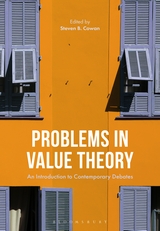
  • Problems in Value Theory An Introduction to Contemporary Debates: My Chapter with Graham Oppy is finally published

    Yesterday, I was informed that the book Problems in Value Theory An Introduction to Contemporary Debates has finally been published. The book is now available both on amazon on Bloomsbury’s website. Chapter 3 of this book “Does Morality Depend on God?” is co-authored by myself and Graham Oppy (Monash University). Both Graham and I each wrote an article (around 5000 words) spelling out our respective answers to the question, and then wrote a shorter piece (1500 words) where we responded to the others original essay. 

    Problems in Value Theory is edited by Steve Cowan (Lincoln Memorial University). The table of contents is as follows:

      Introduction, Steven B. Cowan

      Part I: Problems in Ethics and Aesthetics

     Introduction to Part I, Steven B. Cowan

      1. Is Morality Relative?

     Morality Is Relative, Michael Ruse

     Morality Is Objective, Francis J. Beckwith

     Responses:

     Beckwith’s Response to Ruse

     Ruse’s Response to Beckwith

      2. What Makes Actions Right or Wrong?

     Consequences Make Actions Right, Alastair Norcross

     Respect for Persons Makes Actions Right, Mark Linville

     Responses:

     Linville’s Response to Norcross

     Norcross’s Response to Linville

      3. Does Morality Depend on God?

     Morality Depends on God, Matthew Flannagan

     Morality Does Not Depend on God, Graham Oppy

     Responses:

     Oppy’s Response to Flannagan

     Flannagan’s Response to Oppy

      4. Is Beauty in the Eye of the Beholder?

     Beauty is Relative, James Mock

     Beauty is Objective, Carol S. Gould

     Responses:

     Gould’s Response to Mock

     Mock’s Response to Gould

      5. What Is the Meaning of Life?

     The Meaning of Life Is Found in God, Douglas Groothuis

     The Meaning of Life Can Be Found without God, Christine Vitrano

     Responses:

     Vitrano’s Response to Groothuis

     Groothuis” s Response to Vitrano

      Essay Suggestions

     For Further Reading

      Part II: Problems in Political Philosophy

     Introduction to Part II, Steven B. Cowan

      6. Do We Need Government?

     We Do Not Need Government, Roderick T. Long

     We Need Some Government, Alex Tuckness

     Responses:

     Tuckness’s Response to Long

     Long’s Response to Tuckness

      7. Should Wealth Be Redistributed?

     Wealth Should Be Redistributed, Jon Mandle

     Wealth Should Not Be Redistributed, Jan Narveson

     Responses:

     Narveson’s Response to Mandle

     Mandle’s Response to Narveson

     8. When May the Government Wage War?

     The Government Should Never Wage War, Andrew Alexandra

     The Government May Sometimes Wage War, Nathan L. Cartagena

     Responses:

     Cartagena’s Response to Alexandra

     Alexandra’s Response to Cartagena

      Essay Suggestions

     For Further Reading

     Index

     The blurb from Bloomberry is as follows:

    Problems in Value Theory takes a pro and con approach to central topics in aesthetics, ethics and political theory.

     Each chapter begins with a question: What Makes Actions Right or Wrong? Does Morality Depend on God? Do We Need Government? Contemporary philosophers with opposing viewpoints are then paired together to argue their position and raise problems with conflicting standpoints. Alongside an up-to-date introduction to a core philosophical stance, each contributor provides a critical response to their opponent and clear explanation of their view.

     Discussion questions are included at the end of each chapter to guide further discussion.

     With chapters ranging from why the government should never wage war to what is art and does morality depend on God, this introduction covers questions lying at the heart of debates about what does and does not have value.

    Get your copy now, read it, and let me know what you think both here and on Amazon. I am sure there is much more both Graham and I could say on this topic. Graham Oppy is one the best Philosophers of Religion in the world, and it was a real privilege being part of this project with him.  

  • Contemporary Philosophy of Religion and NCEA Religious Studies: Part Four

    This is a talk I gave to the New Zealand Association of Philosophy Teachers annual conference at St Cutherberts College in September this year. Several people have asked me to make this talk available.

    I have broken my talk up into four parts. Part One introduces what philosophy of religion. In part two I will outline two movements within analytic philosophy during the early to mid-century which I think resulted in religious beliefs not being taken very seriously within philosophy and philosophy of religion taking a fairly minor role. Part three will look at some responses to these movements offered in the late 20th century and how they changed the philosophical landscape. Part four will look at the question of “how to do philosophy of religion” comparing the methods used by two different atheist’s J L Mackie and Graham Oppy, and how this relates the National Certificate of Educational Achievement Standards. This post will contain part four.


    How to do Philosophy of Religion: A tale of Two Religious Skeptics

    I think the demise of verifications and the questioning of evidentialism then changed the landscape of philosophy of religion dramatically.  A good way of highlighting the change is to compare the work of two philosophers who probably have made the most rigorous cases for atheism in the last fifty years.

    The first is J L Mackie’s work “The Miracle of Theism” published in 1982. Mackie’s work was for many years the definitive defence of atheism in Philosophy; I quoted Mackie above, let’s look again:

    If it is agreed that the central assertions of theism are literally meaningful, it must also be admitted thatJohn_Leslie_Mackie they are not directly verified or directly verifiable. It follows that any rational consideration of whether they are true or not will involve arguments . . . [i]t [whether or not God exists] must be examined either by deductive or inductive reasoning or if that yields no decision, by arguments to the best explanation; for in such a context nothing else can have any coherent bearing on the issue. (Mackie, Miracle of Theism, 4-6;)

    The second, atheist I want to look at is Graham Oppy; Oppy is a philosopher at Monash University, his book Arguing about God, is rightly hailed as the best contemporary attack on the theistic arguments and he is, in my view, the leading defender of philosophical atheism writing today.  Here is what Oppy says in an article “What Derivations can do” published in 2015.

    Philosophy of religion should not be about the standard array of ‘arguments for and against the existence of God’. Indeed, philosophy of God should not be about the standard array of ‘arguments for and against the existence of God’. In so far as philosophy of religion – or philosophy of God – is concerned with the clash between theistic and atheistic world-views, the proper way to proceed is: (1) to develop best theistic Oppyand atheistic theories; (2) to assess the liability of these best theories to internal defeat; and (3) to make an assessment of the comparative theoretical virtues of these best theories, paying attention to simplicity, fit with data, explanatory scope, predictive accuracy, and the like (  Oppy “What Derivations Cannot Do” Religious Studies (2015) 51, 328

    The contrast between these two writers is illustrative.

    Mackie focuses on the fact that the claim that God exists isn’t verifiable. He acknowledges the collapse of verificationism: despite not being directly verifiable the central assertions of theism are meaningful. However, he does think this lack of verifiability places a burden of proof on the Theist. The Theist is required to produce arguments for Gods existence. Deductive, abductive, inductive, arguments presumably from premises which ultimately are verifiable in this way.  Oppy, by contrast, doesn’t focus on whether the claim “God exists” is verifiable. His focus is on this belief, embedded in broader philosophical theories, verification, when it occurs, is applied to theories.

    An even clearer contrast is over evidentialism.  Mackie affirms evidentialism. He contends that “any rational consideration” of the question of God’s existence depends on the Theist providing “deductive, abductive, inductive arguments for Gods existence. “Nothing else can have any coherent bearing on the issue. Oppy however explicitly repudiates this he states Philosophy of religion should not be about the standard array of ‘arguments for and against the existence of God.”

    Instead, Oppy suggests that the important question is what happens when people utilise theological assumptions in philosophy. Theists and atheists will reason from their prospective presuppositions and construct theories which attempt to answer important philosophical questions. Questions such as “why is there something rather than nothing?” “why are there and what are laws of nature”? “what are moral obligations” and so forth? Philosophy of religion is about how defensible these theories are. Can they be defended against objections, do they provide coherent answers to these questions, and how do the answers they give compare with each other.

    Contemporary Philosophy of Religion and NCEA Achievement Standards.
    You’ll probably guess my sympathies lie with Oppy, and it’s at this point that I think it’s interesting to look at the NCEA standards for Religious Studies

    One barrier to doing Philosophy in secondary schools is the fact there are no nationally recognised qualifications for the subject. There is an absence of any standards for philosophy under NCEA. Many people in this organisation have been lobbying for the government to introduce philosophy as a NCEA subject and I support this cause.

    However, I want to suggest that if one looks at the standards which already exist for NCEA religious studies. There is already in the curricula plenty of scope for doing contemporary Philosophy of religion. In fact, if you move away from an excessive focus on the arguments for and against Gods existence and ask about religious and secular theories, NCEA asks and requires students to engage in contemporary philosophy of religion. The most obvious is the final achievement standard for level 3 NCEA:

    Analyse the key beliefs of a religious tradition and a secular worldview in relation to ultimate questions

    This sounds very much like the method Oppy refers too. Here students are asked to look at secular and religious worldviews and the theories they offer in response to critical philosophical questions. They are told to analyse these views: to discern their key premises and assumptions. When one looks, however, at the Merit and Excellence criteria for this standard it asks students to do work out the implications of these different answers, and to evaluate them, that sounds very much like Contemporary Philosophy of Religion.

    Similarly, in level Three, NCEA asks students to analyse a religious tradition(s) in Aotearoa New Zealand.  And analyse the response of a religious tradition to an ethical issue. Here, again, students are asked to analyse, to work out the assumptions and presumptions, assess the implications significance and evaluate the case for and against particular theories about right and wrong this is all contemporary philosophy of religion.

    Of course, there are challenges to doing philosophy of religion under NCEA. NCEA classifies Religious Studies as a subset of the social sciences, and some moderators tend to interpret the words analyse or implications in more sociological senses. But, if we understand what it actually is to analysis a religious tradition or its response to an ethical issue or how it answers an ultimate question, then we are doing philosophy.

    And I think this applies not just to level three religious studies where the standards require analysis. Consider the level two standard.  “Explain the key beliefs within two religious traditions in relation to a significant religious question.” This uses the word “explain” however the standard defines a significant religious question. As questions regarding ” life after death, the nature of God, the existence of suffering, good and evil, the nature of the human being.” To get an achieved they have to compare how traditions answer these questions. But For merit and excellence, they are asked to ask questions about the significance and what are the implications of these views. This is asking students to engage in philosophical reflection: its asking, if these answers were true what follows, what difference would it make why is it important and so on.

    Even the more descriptive level 1 standards have this, level 1, for example, asks students to “Describe key beliefs of a religious tradition” this sounds purely descriptive however to gain a merit and excellence students are asked to think through the significance of these beliefs, to look at links between the beliefs and to ask questions about their implications. Done well, this has the potential to foster a lot of philosophical reflection on the beliefs in question.

    Conclusion

    So in conclusion, Philosophy of religion involves “the philosophical examination of the central themes and concepts involved in religious traditions”. This has been done by assuming a default position of religious scepticism and examining the arguments for and against religious beliefs or asking if religious beliefs are verifiable and meaningful and the temptation is for this to be the modus operandi in philosophy courses in secondary school.

    I am suggesting a different approach. Today Philosophy of religion is much broader; it involves looking at the answers religions have offered to some of the most profound philosophical answers, developing these as charitably and defensibly as possible and seeing if they can stand against objections. Finally, it involves asking whether religious views of the world answer these questions in a better and more plausible way than secular views do. Interestingly, as worded, this is the sort of questions  NCEA  Religious Studies achievement standards ask of students.

    This means there is plenty of scope for doing Philosophy of religion as part of Religious Studies programs. It is my hope that those of us who want to see philosophy taken seriously in the secondary sector can, where appropriate, use the current NCEA   standards to develop religious studies programs, which ask students to take these questions seriously. To get them to understand clearly various religious perspectives on various issues, to wrestle with them, significance and implications, to compare them to alternative religious or secular theories, and to critically consider the answers given.

    I think this is an important part of a general education. Today’s students grow up in a philosophically pluralistic society, moreover, at a certain point in anyone’s life they will be confronted with different answers to very pressing existential questions, questions which are unavoidable, people will want to know who they are and how they should live. Avoiding these questions or allowing people to be uninformed and ignorant of how others answer them isn’t education. To allow people to be informed about different question’s and to think through carefully and honestly what these answers are, there significance and implications, and to critically evaluate them is in my view what Philosophy at the secondary level should be all about. So, I suggest that Philosophy programs at secondary school start to take seriously religious studies and religious studies take seriously philosophy of religion.