Watching the news the other night, I heard how some UN body had declared that the use of tasers constituted torture. (At least that is how it was reported). Predictably the Green party cited this as a for rejecting the use of Tasers.The implicit argument here seems to go something like this. [1] The use of Tasers constitutes torture [2] Torture is always unjust, therefore [3] the use of Tasers is unjust. Formally this argument is valid. If [1] and [2] are true [3] follows. Most people I suspect will take issue with [1] and I think there could well be problems with this claim. I think however a more interesting issue arises here. Is [2] actually true, is torture always unjust or are there circumstances in which it is justified and, assuming Tasers are torture devices, are they an instance of such a circumstance.
Is torture always unjust? A common argument for justifiable torture goes something like this: A terrorist cell has planted several bombs in malls around the countries; they will be detonated some time in the next 24 hours. One member of the cell who knows where these bombs are has been captured. Would it be acceptable to torture the terrorist to gain this information, or should one instead let thousands die? Cases like this are sometimes called “ticking time bomb” cases. Many people find, that their moral sense or intuitions lead to conclude that torture is justified in ticking time bomb cases. The popularity of shows like 24 attest to this.
Act Utilitarianism provides a prima facie rationale for this judgment. According to Act Utilitarianism, an action is right if and only if the consequences of performing it result in more net happiness than any alternative. In this instance, torturing the terrorist will make him suffer. However, failure to torture him will result in thousands of deaths and thus will lead to even greater suffering. Hence, the former action; that of torturing the terrorist is justified.
Until fairly recently I did not find this analysis convincing, while I see the force of the ticking time bomb case. The act utilitarian assessment seems to me to be wrong. This is because one can construct equally plausible cases where one should not engage in violence against another person, even if doing so results in an increase in net happiness. Consider the following two cases, taken from the literature. Judith Jarvis Thomson [i]. Thomson points out that if a doctor painlessly kills a group of healthy patients and harvests their organs, an even greater number of people can be saved via organ donation. It is in fact conceivable that forcing people to under go various medical procedures such as kidney and or bone marrow transplants would result in numerous people being saved from fatal illnesses. Despite these facts, however, neither killing people nor enforcing compulsory transplants are permissible practices. Although such procedures may promote the happiness of others and in some cases be life saving, they do so by unjust means, killing and assaulting innocent human beings.
Don Marquis suggests a second case. The infamous the Willowbrook experiments which involved experimenting upon mentally retarded children in order to ascertain information for fighting diseases such as Hepatitis or the Nazi experimenting upon concentration camp inmates to learn how to combat hypothermia. Regarding these experiments Don Marquis notes that
The Tuskegee, Willowbrook and Nazi studies were wrong, not because they were bad and useless science, but because the human subjects in them were treated inhumanely…There is now a consensus, both in society and in academic bioethics that this is wrong even when the research will clearly benefit the common good. In short conformity with a respect for human subjects principle is a necessary condition of morally permissible research whatever its benefits.[ii]
I contend that Marquis is correct in these sentiments. What made such experiments wrong was not that they failed to bring about the significant results they aimed at, but rather that the means they did so were unjust, and involved disrespecting and degrading human beings. Hence even if important advancements in fighting hypothermia or hepatitis have been achieved, the experiments should still be condemned.
A few years ago however, I came across a different analysis of the ticking time bomb case that makes sense of its initial plausibility without leading to the conclusion that violence is justified whenever more, or a large number, of people are made happy by its commission.
In his monograph The Theory of Morality Alan Donagan responds to ticking time bomb cases, by noting, correctly, that violence is not unjust if used against an unjust aggressor. Suppose a person is attacking an innocent third party and is threatening to kill them or do them irreparable injury, suppose further that the only way to stop him is by use of violence, either by physically hitting him and inflicting probable pain and injury upon him. In such a situation, both civil and divine law recognise that the use of violence is justified. It’s this moral insight that is behind the legal right to kill or use force in self defence.
Donagan goes on to note that the case I sketched above seems to fit this paradigm of justified use of violence. The terrorist, is complicit in the planting of bombs which are about to go off, hence he is in the process of committing a heinous act of violent aggression against hundreds of innocent people, hence if the only way to prevent this attack from killing these people is to use violence against him, it is justified. This however, seems to leave open a case for justified torture. If one has reasonable grounds for thinking that the terrorist is complicit in such an attack and if one knows that the only way to gain the information necessary to thwart this attack is to torture the terrorist, then one is justified in using violence proportionate to the gravity of the attack, against the terrorist, to extract this information.
Interestingly Donagan steps back from concluding that torture should be permitted in such cases. He notes, perhaps plausibly, that in real life situations its dubious one will really know that a given person is in fact a terrorist. Nor is it likely in most situations that one will know that torture is the only way to prevent an attack hence he concludes. A rule allowing torture in such cases would probably cause much mischief. He concludes “In the last century and a half, torture has come to be prohibited in all civilised countries: and rightly, because it has been found practically impossible , while allowing it at all, to confine it to those very few cases where it would be morally permissible”
This may be a compelling reason for banning torture as an interrogation technique. But it seems clear to me that the context in which the use of Tasers are being proposed is quite different. No one is suggesting Tasers be used as an interrogation device to extract information from suspects. Instead, Tasers are used by the proposed as a defensive weapon, to defend either the police man himself or a member of the public from imminent attack. And it seems false to suggest that the law cannot make distinctions between violence used in justifiable defence of the innocent and that which is not. For centuries both common law and statute law have been drawing just this distinction and applying it in the courts. Section 48 of the crimes act for example allows this defense to assault. “Every one is justified in using, in the defence of himself or another, such force as, in the circumstances as he believes them to be, it is reasonable to use.” So it seems then that (i) one can justifiably inflict pain injury and even death on a person in defense of ones self or others and (ii) the law can make this distinction. Hence it’s hard to see why, torture, which is wrong presumably because it inflicts pain and injury on people, can always be unjustified in the context being proposed. Hence even if one grants that the Tasers are a form of torture it does not follow its always wrong to use them.
There is of course a way around this conclusion, an apologist for the greens could argue that (i) and (ii) are false and we should abolish section 48 of the crimes act. I think this is absurd, but stranger things have come from the Green party. Consider, Sue Bradfords tireless campaign to abolish section 59 of the crimes act which allowed parents to use “reasonable force” to correct bad behavior of children. I distinctly remember Sue arguing that this defense should be abolished because. (a) its unacceptable to draw distinctions between reasonable and unreasonable violence (b) all forms of violence are wrong. (c) All people have a right to be protected from violence and (d) what’s reasonable to one person is not reasonable to another (e) under section 59 some people who were guilty of assault were acquitted because they persuaded a jury that their force was reasonable. Now, as I pointed out Bradford herself, don’t each of these arguments apply with equal force to section 48 of the crimes act? In a sense then the Greens have already made the argument that people should not be allowed to defend themselves by implication which, perhaps, puts this whole Taser debate in an interesting context.
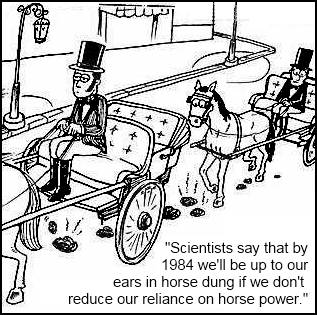 One of the most destructive carnards concreted into the mind of greenism and environmentalism is the proposition that natural resources are fixed, finite, and limited. Once gone, they are gone forever. Therefore, conservation of said resources is a moral imperative.