Tag: Homosexual Conduct

  • John Corvino on Liberals and Being Judgemental

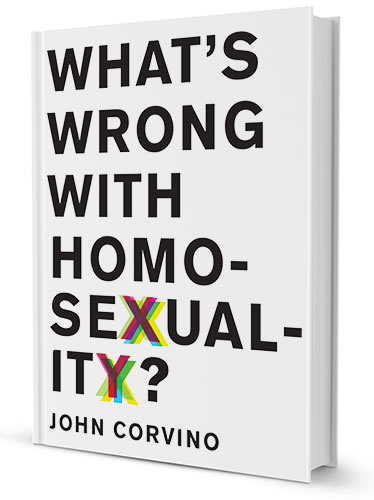
    0199856311bRecently I have been reading John Corvino’s book, “What’s wrong with Homosexuality?” Corvino describes himself as a religious sceptic and is one of the leading defenders of the moral permissibly of homosexual conduct, and also an articulate defender of what is commonly called “gay rights”. In terms of the conclusions we each have, Corvino and I are on very different pages. Yet despite our significant differences, I was pleasantly surprised at how much of his book I agreed with, particularly, his attempt to bring a degree of clear thought to the issue as opposed to the emotionalistic sloganising and rhetorical bullying that so often accompanies this issue.

    I want to share with my readers this gem, which comes from the first chapter:

    “Some people claim that morality is a “private matter” and that, in any case, people’s rights shouldn’t hinge on others’ moral opinions. I think this view is badly mistaken. Morality is about how we treat one another, and thus it is quintessentially a matter for public concern. It’s about the ideals we hold up for ourselves and others. It’s about the kind of society we want to be: what we will embrace, what we will tolerate, and what we will forbid. And while it’s true that a free society grants a good deal of personal latitude here, avoiding legal force except where transgressions infringe upon others’ liberty, it doesn’t follow that morality is irrelevant to the law. People’s moral views strongly influence how they vote, and thus, ultimately, what laws get passed. There’s a philosophical connection as well. Laws depend on moral foundations, broadly speaking, for their legitimacy, and the commitment to “liberty and justice for all” is a moral commitment. So it irks me when my fellow liberals insist that “we ought not judge one another.” I understand where they’re coming from: Moralistic finger-wagging is tiresome, not to mention counterproductive, and nobody likes a know-it-all. One might also point to Biblical support for the directive, though presumably in that context it means that humans have no business making “Final Judgments,” not that we can’t make judgments at all. But as a general rule, the claim that we ought not judge one another is misguided—logically, rhetorically, and morally.  It’s misguided logically because it’s self-refuting. (If we ought not judge one another, then why are you telling me what to do?) It’s misguided rhetorically because it makes liberals seem as if they have conceded “moral values” to the other side, leaving them in the  untenable position of being “opposed” to moral values. And it’s misguided morally, because people have a moral responsibility not only to behave well themselves but also to promote standards of right conduct. The moral tone of society is everyone’s responsibility, liberals included.  This is not to say that we ought to become moral busybodies. Humility is a moral virtue, as is kindness, and those who wield morality as a weapon are at least as confused as those who insist that it’s a “private matter.” But we shouldn’t confuse the rejection of bad moralizing with the rejection of moralizing altogether. Morality is too important for that.”

    Excluding the phrase “my fellow liberals”, I could not agree more with  Corvino’s sentiments.

  • Religious Freedom and Non-Discrimination

    Currently I am working on a post on the issue of non-discrimination rights and the morality of discrimination. In the mean-time  I thought I would highlight the thoughtful commentary from James-Michael Smith in this video.

  • Easy Dupes: Amina Abdallah Arraf al Omari “Gay Girl in Damascus”

    Free Amina Abdallah Arraf al Omari Narratives are powerful.  They control what we identify as significant data or facts, how we empirically apprehend the data, what interpretations and shades of significance we place upon the evidence, and the conclusions drawn.  Absolute objectivity is impossible.  Only relative neutrality and disinterestedness are possible.  The cut of our jib determines the winds we catch and the sailing progress we make. True objectivity consists only in this: full disclosure of the jib’s cut whilst our sailing exploits narrative unfolds.

    Post-modernism has challenged our culture to face up to the inevitable and intrinsic cant in everyone’s understanding.  That is why it is despised by those still claiming absolute objectivity, operating just by the facts, only the facts.  Every so often we see the pervasive power of narrative on ridiculous display.  It can lead to an easy gullibility and childish credulity.

    “Gay Girl in Damascus” had been lionised by the Commentariate–which, as it happens, relentlessly denies the cut of its own sailing rig–both to itself and its audience.  Therefore it is an easy mark.  The Commentariate is deeply invested in the narrative of secular human rights.  All human beings on the planet basically think the same way about demand rights and civil rights; so much so that if external repressions were to be removed, the people would rise up to claim and enjoy their rights–and the demand rights of others.  To put it crassly, were authoritarian regimes to be removed, a hundred blooms of western-style secular democracy would inevitably and naturally spring forth.

    “Gay Girl” purported to be a lesbian blogger in Syria.  The narrative of the Commentariate has for a long time failed to “see” the evidence of Islamic repression against women.  Certainly it exists–but it is not intrinsic to Islam itself or to the native heart of Islamic people.  It is therefore not really real.  Remove the oppressive regimes and hey-presto, Islam will suddenly look and act like a secular Western culture, complete with nude beaches soaking up loooove and tolerance.  “Gay Girl” became a cause celebre because she described her experience of the natural, easy tolerance of homosexuality in Syria: the oppression against homosexuals was a foreign imposition originating from an oppressive regime.  She also was an enthusiastic supporter of the oppressed Palestinian story, and an astringent foe of Israel.  Once again, she fell neatly into the predispositions of credulity in the Commentariate.

    “Gay Girl” was Amina Abdallah Arraf al Omari, a Syrian-American woman living in Damascus.  According to Jonah Goldberg,

    People desperately wanted to believe in this “hero”: a saucy, sage, left-wing member of the LGBT community who likes to wear the hijab, can’t stand Israel or George W. Bush, and who parrots every cliché about the romantic authenticity of the Arab people and their poetic yearning for democracy, peace, and love. . . .  Amina’s assertions succeeded with little effort. For instance, (more…)

  • Middleton Grange, Free Exercise and the Gay Rights Movement UPDATED

    Over at GayNZ.com’s Proclamations of the Red Queen blog, Craig Young is in a celebratory  mood. Middleton Grange, a Reformed Evangelical Christian school has been forced by law to pay reparations and have their management undergo “human rights education” because they dismissed a netball coach on the grounds that he openly engaged in homosexual conduct.

    Middleton Grange is a school based in Christchurch. The school’s aim’s, as stated on its website, show that its first aim as a educational facility is to “Help pupils know and understand God and His ways and respond to Him in obedience, love and service.” The website further states,

    The school rests on a Reformed and Evangelical interpretation of Scripture which informs all aspects of governance and management. The Christian Schools’ Trust is responsible for safeguarding the Special Character of the school.

    Now it should be no surprise to any educated person that a reformed evangelical interpretation of scripture usually includes, among other things, the contention that sex between people of the same sex violates God’s commands. Nor should it be a surprise that, given the school’s stated purpose is to inculcate these beliefs, it will not hire or retain people whose example or teaching contradicts this purpose.

    The only question that really needs to be asked then is whether it should be legal for religious groups like this to set up such schools and teach these things and engage in these sorts of hiring practices. Should reformed evangelical Christianity be a tolerated religion? The alternative is, of course, to ban such schools, force parents to send their children to schools that will teach that their parents religious beliefs are false  – essentially not allow adults to propagate these values to their children. This is known as religious persecution.

    In fact by ruling that the school must hire/retain staff whose actions are inconsistent with the schools purpose and then requiring the staff to undergo “human rights education.” the Human Rights Commission (HRC) goes one step further. It states that not only must such schools not exist but it maintains that the adults running them must undergo compulsory re-education into the secular liberal way of thinking. Am I the only one who finds this sort of thing a tad draconian?

    Mr Young, however, seems to think otherwise, he states,

    Frankly, I’m surprised that this sort of collision between lesbian and gay teachers and backward fundamentalist enclaves has taken so long to materialise. I suspect that it’s because we shun such neurotic and hermetically sealed enclaves unless there is good reason to do otherwise

    Apparently the biggest problem in all this is that this sort of religious persecution and re-education has not happened sooner. As to why such schools should be persecuted, Young gives three reasons.

    First because it is a “malignant Christchurch fundamentalist” school. In other words, Young considers this school to expound fundamentalism and he considers such a religion to be “malignant.” This really is not the issue, the issue is whether the state should persecute such religious groups and subject the people within them to compulsory re-education. There are many religious perspectives I disagree with, some I find highly offensive yet this does not mean that the state should intervene in this way.

    Young’s second reason is,

    Founded in 1964, it was host to Graham Capill, Christian Heritage Party leader. His dad Don was Vice Principal until the eighties. I was a one-time inmate there. It served as a nexus for the abortive campaign against homosexual law reform in the mid-eighties.

    There are three reasons here (a) Young attended the school and did not like it, (b) a political leader Young is known to immensely dislike and who was convicted for sexual molestation once attended the school and this man’s father was once Principal; and, (c) the school promoted political views at odds with the secular liberal mainstream on issues like abortion and homosexuality.

    It is hard to see how any of these reasons justify the HRC’s actions. Is Young saying any school he does not like should be legally punished? Is Craig suggesting that if an old boy of a school is convicted of a crime years after leaving that the whole school should be held responsible? Does Young support a return to collective and vicarious punishments perhaps?

    The last reason Young gave is perhaps the most telling; schools should be subject to legal sanction if their politics are disagreeable. Again, am I the only one who finds it odd that this sort of crap is proposed by one of the voices for “tolerance” and “respect for diversity”?

    Craig then gives the usual red herrings; he states “Should it end there? Well, no. If Middleton Grange refuses to employ lesbian and gay teachers, then what about issues like LGBT suicide prevention? Or homophobic bullying?” While I agree that bullying of any human being is wrong (it being assault) and suicide of any person is tragic, the reasoning here lacks cogency. Suppose a fundamentalist Christian was severely bullied at school, the kids picked on him because they considered him to be an intolerant bigot or suppose that his refusal to have pre-marital sex or drink alcohol made him a social outcast? I take it that Young would support fundamentalist teachers coming into this school and teaching a fundamentalist interpretation of the bible to their students so as to re-educate those bullying him? Perhaps the HRC should force the management of any secular school that does not do this to attend church…

    The only remotely sensible comment Craig makes is a rhetorical question, “Should fundamentalist private schools be penalised by withheld operational funding if they refuse to obey mainstream New Zealand anti-discrimination laws?” Indeed that is the core question. Should private religious schools be allowed to teach and freely exercise their religion? Some segments of the gay rights movement and their supporters need to be honest and just outright admit that they support religious persecution instead of talking about “tolerance” and “the celebration of diversity” – values they clearly do not believe in.

    UPDATED BY MADELEINE

    In the comments below Joel, a blogger from the US, writes:

    There is no liberty in New Zealand, I take it, nor equality.

    And what about the human rights violated against the Christian school?

    I have chosen to respond this here as originally Matt and I had toyed with looking at this in this post anyway and so I don’t want it getting lost in the comments, which I anticipate will be prolific in number (just a hunch).

    New Zealand does not have an entrenched constitution, its Bill of Rights is a simple statute which is ultimately subordinate to any other statute it clashes with, see section 4:

    4.  Other enactments not affected
    No court shall, in relation to any enactment (whether passed or made before or after the commencement of this Bill of Rights),—

    (a) Hold any provision of the enactment to be impliedly repealed or revoked, or to be in any way invalid or ineffective; or

    (b) Decline to apply any provision of the enactment—

    by reason only that the provision is inconsistent with any provision of this Bill of Rights.

    Although, to be fair, for any clash the clashing rule, law or policy must be read in the way most conducive to it being consistent with the Bill of Rights, see section 6:

    6. Interpretation consistent with Bill of Rights to be preferred
    Wherever an enactment can be given a meaning that is consistent with the rights and freedoms contained in this Bill of Rights, that meaning shall be preferred to any other meaning.

    If a consistent reading cannot be achieved then the courts will either deem a policy inconsistent with the Bill of Rights or deem it a justified limitation,

    5. Justified limitations
    Subject to section 4 of this Bill of Rights, the rights and freedoms contained in this Bill of Rights may be subject only to such reasonable limits prescribed by law as can be demonstrably justified in a free and democratic society.

    The reality is that due to the fact the courts cannot strike statutes down or refuse to apply them and that there are no penalties for Bill of Rights breaches either beyond the stigma of being in breach of it, which only works if society values the right in question, if it is an unpopular group or cause being violated who cares right?

    So that is the context freedom of religion sits in in New Zealand, which is covered in the section on democratic and civil rights:

    13. Freedom of thought, conscience, and religion
    Everyone has the right to freedom of thought, conscience, religion, and belief, including the right to adopt and to hold opinions without interference.

    14. Freedom of expression
    Everyone has the right to freedom of expression, including the freedom to seek, receive, and impart information and opinions of any kind in any form.

    15. Manifestation of religion and belief
    Every person has the right to manifest that person’s religion or belief in worship, observance, practice, or teaching, either individually or in community with others, and either in public or in private.

    Now at a glance at these sections our US friends must be wondering how the tale Matt told above and the story in the newspaper article he linked to could happen; it appears that New Zealand requires the state to allow its citizens and private organisations the right to form any belief they like, impart it and act on it.

    The reason you are momentarily lulled into this false sense of reality is because you have not factored in the Human Rights Act. Remember earlier when I said the Bill of Rights is subject to other laws? Let’s take a look at section 22, I have highlighted the key bits to take note of in italics:

    22. Employment
    (1) Where an applicant for employment or an employee is qualified for work of any description, it shall be unlawful for an employer, or any person acting or purporting to act on behalf of an employer,—

    (a) To refuse or omit to employ the applicant on work of that description which is available; or

    (b) To offer or afford the applicant or the employee less favourable terms of employment, conditions of work, superannuation or other fringe benefits, and opportunities for training, promotion, and transfer than are made available to applicants or employees of the same or substantially similar capabilities employed in the same or substantially similar circumstances on work of that description; or

    (c) To terminate the employment of the employee, or subject the employee to any detriment, in circumstances in which the employment of other employees employed on work of that description would not be terminated, or in which other employees employed on work of that description would not be subjected to such detriment; or

    (d) To retire the employee, or to require or cause the employee to retire or resign,—

    by reason of any of the prohibited grounds of discrimination.

    Let’s take a look at the “prohibited grounds of discrimination” shall we? The definitions section states “prohibited ground of discrimination has the meaning given to it by section 21″. Section 21 is long so I have only included the relevant bits for our purposes,

    21 Prohibited grounds of discrimination

    (1) For the purposes of this Act, the prohibited grounds of discrimination are—

    (m) Sexual orientation, which means a heterosexual, homosexual, lesbian, or bisexual orientation.

    So there you have it, freedom of thought, conscience, religion, expression and the manifestation of those beliefs are trumped by the Human Rights Act (and the Education Act which permits private schools to educate and manage themselves along the lines of the special character of the school).

    Joel is right, New Zealand’s commitment to liberty and equality is lacking as is respect for freedom of religion.
  • Chai Feldblum: “We Should not Tolerate Private Beliefs”

    In “Diatribe: To All Da Haters” (originally entitled “Queers and Destiny: Who Hates Who”) an article published a few years ago in Critic (the student magazine of Otago University) I wrote the following:

    … If teaching that homosexual conduct is wrong is akin to racism or propagation of apartheid, then the aforementioned religious organisations are the moral equivalent of the Ku Klux Klan. Those who propagate such arguments need to reflect on the implications of what they affirm. Imagine a society where the local synagogue or Mosque is treated as though it were the local Klan headquarters. Or where Muslim students are perceived and treated the way we currently relate to white supremacists. It is not difficult to see that the widespread dissemination and acceptance of this argument would lead to an atmosphere of pervasive religious intolerance – such intolerance is the very antithesis to what many of those protesters ostensibly claim to stand for.

    The solution to intolerance is tolerance. Tolerance of those ideas you may fervently disagree with and recognition of another’s right to freely hold and express them. Tolerance requires one to respond to disagreement with rational persuasion, not vilification. This cuts both ways.

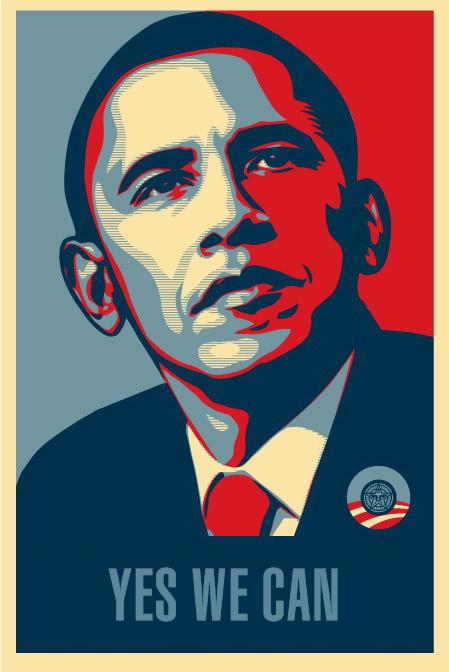
    I was widely vilified and ridiculed for my comments and denounced as hate filled and bigoted. It is interesting to compare what I said with the comments of Chai Feldblum, the Georgetown University law professor nominated by Obama to serve on the Equal Employment Opportunity Commission.

    Just as wYes we can!e do not tolerate private racial beliefs that adversely affect African-Americans in the commercial arena, even if such beliefs are based on religious views, we should similarly not tolerate private beliefs about sexual orientation and gender identity that adversely affect LGBT [lesbian, gay, bisexual, and transgender] people,” the Georgetown law professor argued…

    For those who believe that a homosexual or bisexual orientation is not morally neutral, and that an individual who acts on his or her homosexual orientation is acting in a sinful or harmful manner (to himself or herself and to others), it is problematic when the government passes a law that gives such individuals equal access to all societal institutions.

    Of course those religions that believe homosexual conduct is sinful include Roman Catholicism, Eastern Orthodoxy, evangelical Protestantism, many neo-orthodox Protestants, Islam, Orthodox Jews, Mormons, Jehovah’s Witness’s, Seventh Day Adventists and so on. So presumably, if we are to take Feldblum at her word, none of these groups should be tolerated in Obama’s society and all should be denied equal access to societal institutions.

  • Why am I a Bigot?

    I am a Theologian with a strong background in Philosophy; apart from Philosophical Theology, my particular area of interest is Ethics. Given this, I often post my thoughts and reflections on moral issues of various persuasions on this blog. I have discussed the morality of warfare, whether it is sometimes permissible to lie, the morality of torture, capital punishment, the nature of our obligations to the poor.

    On occasions, I discuss issues related to abortion and homosexual conduct something which, I think, is unavoidable if one is a theologian writing from a relatively conservative evangelical perspective. I believe that homosexual conduct is contrary to divine law and I believe that feticide is homicide. The latter claim is not just a casual opinion; I spent some years writing a PhD thesis on the topic and over the last couple of years I have had articles published in this area.

    Now a pervasive response to my position on these issues is that appeals to divine law to condemn practises like feticide or homosexual conduct are really an expression of bigotry. One would think that it would be fairly obvious to people that you don’t refute a position by calling the person who holds it a bigot and it is tempting to dismiss this response as simply a confused ad hominem; the problem is that people do not appear to find this obvious. In my experience, many people even educated people, recoil from considering any argument against feticide or homosexual conduct or listening to theological concerns on these matters because they perceive such positions to be bigoted.

    It’s worth fisking this objection a bit. A good place to start is to ask what does this charge amount to? When someone claims that another is a bigot, what is meant by this? The Pocket Oxford English Dictionary defines a bigot as someone who is obstinate in his or her beliefs and is intolerant of others. Presumably, the objector claims that one who appeals to the law of God to condemn feticide or homosexual conduct (or some other practise celebrated by contemporary liberal secularists) displays or expresses these features – they are both obstinate and intolerant. The accusation clarified, an obvious question arises, why hold this claim?

    Obstinance
    Turning to the issue of obstinance, why must a person who holds these beliefs do so in an obstinate manner? Could they not have come to these beliefs as a result of careful reflection? Alternatively, could they hold to them because they are not convinced the counter arguments are sound? What is needed here is some argument to preclude such options and none is forthcoming.

    I suspect that what lingers behind this accusation is the belief that theologically-based opposition to abortion is obviously mistaken and the case against it so compelling that no rational, informed person could think otherwise. If so, then this is not so much an argument against such appeals but an assumption that those who make them are mistaken on other grounds. The objector should come clean about what these other grounds are and put forward the compelling, unassailable arguments that everyone else should apparently already know about.

    Let me add further that as a person who studies ethics and aspires to be a professional theological-ethicist, nothing is more frustrating than being told by a journalist or a tax lawyer that it’s an obvious fact that a certain theological ethical stance is mistaken. Further, if I think otherwise I must be misinformed and ignorant of the subject, a subject they often have done little or no study on. Perhaps this is one area where a little humility is needed.

    Intolerance
    Turning to the issue of intolerance, let me here just say that, the concern about intolerance implicit in this objection is mistaken. Even if the proponents of more conservative positions were intolerant, this would only constitute an objection to their behaviour if it were first assumed that people have a duty to refrain from intolerance and this assumption is problematic.

    In many contexts intolerance is appropriate and contrary to popular slogans, a virtue. Imagine a society that tolerated rape, child molestation or infant sacrifice? Moreover if unqualified, the assertion that people have a duty to be tolerant entails that one should tolerate intolerance, is deeply paradoxical.

    For this charge to have any substance, the objector needs to specify what sorts of action he or she thinks one should tolerate and which ones are such that intolerance is inappropriate. He or she needs to justify this distinction and then provide reasons for thinking that appeals to divine law in a subject like feticide fall into the latter category yet no argument of this sort has been forthcoming.

    Here us the rub; if feticide is an action on a par with infanticide then intolerance towards it is justified. In asserting that it is not, the objector implicitly assumes that feticide is not homicide without offering argument. Similarly if homosexual conduct is a serious form of sexual immorality, such as incest, bestiality, polygamy or adultery, then intolerance against it is not necessarily wrong. Our society, for example, has laws against incest and bestiality and few contend for their repeal (though the chipping away has begun). Once again, the objector here, in making their charge, assumes that homosexual conduct is not seriously immoral.

    Now it is possible that these assumptions are correct but it is also possible they are not.
    Anyone who appeals to divine law to condemn practises like feticide or homosexual conduct is denying these assumptions. You don’t provide a cogent objection to a position by assuming it is false at the outset and then using this assumption to prove that it is. What is needed is an actual argument for the assumption in the first place. Until some actual argument is forthcoming that demonstrates the falsity of what has been defended, objections based on the notion of tolerance merely beg the question and have no impact on the thesis being advanced.

    I think there is a kind of irony here; often when someone accuses Theologians of bigotry they themselves are simply obstinately assuming that their position is true and their assumption leads them to castigate and refuse to tolerate the opinions or person who expresses dissent to the secular liberal orthodoxy. Here, as elsewhere, the accusation of bigotry is a form of Orwellian double-speak.

  • Homosexuality and the Right-Wing Socialists

    Lately I have been thinking I must write a post about the sacred cow of homosexuality and how it can turn the most ardent liberal into a lefty. I am not the only person to have noticed this phenomena.

    As Matt once commented, “Christians should be very concerned with people who will sell out their commitment to liberty before they would side with a Christian [or a moral viewpoint typically ascribed to a Christian]. Such people cannot be relied upon to defend my rights at all.”

    Matt was alluding to the so called principled liberals whose principles dissipate the minute they encounter someone who shares most of their views but whose moral code differs from the narrow point of view they define their liberality by.

    If you ask them to defend their views and offer a critique they cannot. I doubt they know why they hold their views they just know they are supposed to so they just repeat their mantra.

    Their blind adherence to the “correct” moral views are not based on principle or reason, if you point out a flaw in an argument for one of their sacred cows they intolerantly froth and deem you to not be a member of the club. They will jump on the “correct” side regardless of whether the arguments used are sound.

    This bigoted intolerance from the right is not completely reserved for Christians; anyone secular daring to voice a flaw in an argument advanced by the sacred cows of the-state-must-endorse-gays-movement is also slammed as illiberal.

    Look at all the fuss and bother over David Garrett’s comments on paedophilia [note the comments were NOT on homosexuality, learn the difference between an analogy and an identity claim]. In Real Bigotry Versus Mere Opinion Blair Mulholland notes:

    Today’s Herald has two separate stories dealing, in a roundabout way, with the issue of homosexuality.

    In one, we have an elected official actively condoning violence because some of his constituents regard having their town labeled a “gay capital” as an insult.

    In the other, we have a barrister, who was not an elected official at the time, pointing out that, in his view, both homosexuality and paedophilia are unchangeable psychological phenomena.

    Guess which elected official has had their head called for?

    Seriously, this is bullsh*t. The blogosphere, and I am looking at you too David Farrar, needs to get their priorities straight… so to speak. A small town Mayor says it’s allright to give Jeremy Wells the bash for a comedy piece he did ten years ago and we shrug our shoulders. A new MP makes a crude observation about human behaviour and the crowd demands crucifixion.

    It’s not acceptable.

    Consider Lucyna’s argument in Finding Socialists in the Darndest Places, she cites Lindsay Mitchell‘s argument that one spots a socialist by their walk, not their talk or the ribbons they wave.

    Want proof of how support for homosexuality turns liberals into lefties?

    Compare Blair Mulholland, who says he is “more attuned with the Libertarianz” than ACT’s, endorsement for Wellington Central with Cactus Kate’s, one of the last, self-proclaimed, bastions of complete right-wing bias, hero worshipper of ACT’s Rodney Hide.

    Blair’s endorsement:

    Stephen Franks was worth about ten regular National MPs when he was last in parliament, so if you put him in their caucus he will kick some arse. My wholehearted endorsement for the National candidate here.

    Cactus Kate’s are here, here and here:

    Grant, You are the only Labour candidate I am endorsing at this election

    and:

    With great humour I see all the National Party candidates are now MP’s and yet none of the Labour candidates made it through. Oh dear. Crying a river. With
    such a vicious swing Nationwide to National that result was a fait accompli.

    Well done Sam, Aaron, Simon and Nikki. I hope all your dreams come true. And Grant Robertson who managed despite this massive swing to Toryism, to upset
    Stephen Franks in Wellington Central. Brought a wee glow to the cheeks.

    For the benefit of our overseas readers, Grant Robertson was the Labour (left-wing) candidate and Stephen Franks was the National (right-wing) candidate in the Wellington Central electorate in the recent NZ election.

    Robertson is a unionist and state services flunky from way back; a hard-core left wing activist. As an example of what I mean, when he was National President of NZUSA he organised an activist training conference and invited and sponsored a speaker who advocated vigilante assaults on the private property of those they disagreed with.

    Franks is a former ACT Party MP (more right-wing than National), is a Classical Liberal, has years of experience as a lawyer working in NZ’s top law firms, is considered across the political spectrum as being one of the sharpest, most competent and most ethical MP’s in recent times. Franks is secular and, from conversations I have had with him, does not share my view that homosexual conduct is immoral or that abortion, far from being liberal, is homicide.

    So, I ask you, why would the uber-right wing Cactus Kate be pleased to see Robertson trump Franks? I asked her that and as yet she has not answered. As she moderates her comments, she has seen my questions, so I must assume the silence is deliberate.

    I speculate, with good reason, that the answer is Robertson is gay and that to the socialist-liberal being gay forgives every other flaw; especially when Franks, during the NZ debate to have the state endorse gay relationships through the passage of the Civil Unions Act, made some critical observations on some of the reasons advanced by the defenders of the Bill.

    This of course renders Franks a homophobic hate-filled conservative (liberals by definition are pro-everything gay, no matter how inconsistent it renders them and will turn and blacklist their own in heartbeat at the first sign of a betrayal) and elevates the statist Robertson to the position of the better candidate. [I am reminded here of Matt’s blog: Bigotry as Tolerance: Homophobia as Orwellian Double Speak.]

    Right-wing socialists loudly claim to be principled yet to avoid being associated with a perceived affront to their moral values they would sell their freedom on the basis of knee-jerk ignorance, straw-men and stereotypes.

    So now I turn to Glenn’s latest offering where he suggests that the state has no role to play in endorsing any relationships. Something liberals have always claimed on every other, non-homosexual, issue. This is a concept I endorse accross the board. Marriage existed for centuries without the help of the state. State endorsed marriage is a fairly recent phenomena.

    Extract from: Homosexuality and Socialism?

    It might seem like a very odd connection until you consider… well, actually no matter what you consider it still seems like an odd connection, but in the recent song and dance about Proposition 8 in California, that very odd connect has been reinforced yet again. I’m sure that there are plenty of homosexual people who don’t choose to identify as socialist, so don’t take me to be saying that they all do. But when it comes to the public scrap about marriage, for some of them the red comes to the surface quicker than you can drop a hat.

    As evidenced here, here, here, here and in many many other places, some outspoken homosexuals actually believe the following slogan:

    Marriage is a civil right.

    Now let me very clear what’s being said here. They’re not saying that they have the right to live together as a couple. They already have that right in California, and it was not under threat. They mean legal marriage, and I don’t mean a relationship that is legally permitted (again, they already have this, which is why Keith Olbermann is lying in the second link above when he says that all homosexuals in California who opposed proposition 8 want is the ability to be “a little less alone in the world” by having a relationship”), I mean a relationship that is created by law. What they are actually saying is this:

    I have a basic right for the government to create a type of legal relationship and to confer upon my relationship the status of being one of those relationships.

    Excuse me? There exists no such civil right, for anyone – homosexual, heterosexual…. or otherwise! What kind of nannyish rubbish is this? The government does currently create such a relationship and confer upon many heterosexual relationships the status of being one of those relationships (and it refuses to do so for others – e.g. close relatives, relationships with more than two people etc, which is why Representative Anthony D. Weiner is lying in the third link above when he says “We are not going to rest at night until every citizen in every state in this country can say, ‘This is the person I love,’ and take their hand in marriage”). It’s like thinking that the right to bear arms means that you have the right to arms, that is, the government has the duty to buy you a gun!

    If I stood up in public and said that my wife and I had a civil right to a free house from the government, what would you say? And how crazy do you think I would look if I went further and said that if the government did not provide one then it was somehow displaying hatred or contempt for me or for my relationship?

    I’m a conservative Christian, and I take very seriously the teaching of the Bible. So if you tell me that I have no choice and I must accept the fact that all marriages must be state-endorsed, then obviously I’m going to think in terms of my traditional understanding of marriage, since I don’t want the government creating and then endorsing things that are immoral. We’re going to clash and war over that. But here’s a radical thought: If you want to get married then get married, and let’s not let the government have a part of it at all!

    But what about incest, polygamy etc? Well firstly, people in the USA are already legally permitted to have sexual relations with multiple people and commit adultery. If you think that’s so horrific, then support a law banning it. And incest is already illegal, so the question of incestuous marriage isn’t an issue. The act is banned. Let’s just say that anyone can get married, as long as they don’t commit any acts that are themselves illegal (like incest or marrying a minor or any other illegal sexual practices). Enter into whatever property contracts you like, regardless of sexuality.

    Issues of sexual practices are determined on their own (e.g. the notorious “anti-sodomy law” issue in Texas). But the suggestion that you have a civil right for the government to come into your bedroom and give you a nice certificate and pat your relationship on the back (so to speak)…. Please don’t do that to my language. “Rights” are important things, and you’re dragging that word through the mud when you use it like that.

    (This is to say nothing of the misleading claim that currently, different individuals have different rights based on their sexuality. They don’t. No individual is excluded from getting married in California based on gender, race, or sexual orientation. That’s why emotive comparisons to interracial marriage being banned just have no substance.)