This is a talk I gave to the Philosophy Club at Glendale Community College in Phoenix, Arizona, this weekend. The talk was followed by a long discussion with some faculty, students at the college, and others who zoomed in. In this talk, I introduced and defended a divine command theory of ethics. I divided the talk into three […]
Entries Tagged as 'James Rachels'
Divine Command Theory and the Euthyphro Dilemma: Part IV
May 20th, 2021 Comments Off on Divine Command Theory and the Euthyphro Dilemma: Part IV
Tags: Divine Command Theory · Euthyphro Dilemma · Graham Oppy · James Rachels
Contemporary Philosophy of Religion and NCEA Religious Studies: Part one
October 17th, 2017 Comments Off on Contemporary Philosophy of Religion and NCEA Religious Studies: Part one
This is a talk I gave to the New Zealand Association of Philosophy Teachers annual conference at St Cutherberts College in September this year. Several people have asked me to make this talk available. I have broken my talk up into four parts. Part One introduces what philosophy of religion. In part two I will […]
Tags: Anselm · Augustine · Bentham · David Hume · James Rachels · Jeremy Bentham · John Locke · Philosophy of Religion · Utilitarianism · William Paley
The Euthyphro Objection Part II: Arbitrariness
October 31st, 2007 4 Comments
In his work Practical Ethics Singer proposes a version of the Euthyphro dilemma to criticise a divine command theory of ethics, Some theists say that ethics cannot do without religion because the very meaning of “good” is nothing other than “what God approves”. Plato refuted a similar view more than two thousand years ago by […]
Tags: Divine Command Theory · Ethics · Euthyphro Dilemma · God and Morality · James Rachels · Mane Hajdin · Peter Singer · Philosophy of Religion · Roy Perrett

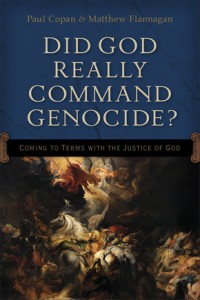 A common objection to belief in the God of the Bible is that a good, kind, and loving deity would never command the wholesale slaughter of nations. In the tradition of his popular Is God a Moral Monster?, Paul Copan teams up with Matthew Flannagan to tackle some of the most confusing and uncomfortable passages of Scripture. Together they help the Christian and nonbeliever alike understand the biblical, theological, philosophical, and ethical implications of Old Testament warfare passages.