The book The Naturalness of Belief: New Essays on Theism’s Rationality recently arrived from the publishers and is available on Amazon. Matt contributed a chapter to this book entitled “Divine Commands and the Euthyphro Dilemma: Some Naturalistic Misperceptions” The Naturalness of Belief is edited by Paul Copan (Palm Beach Atlantic) and Charles Taliaferro (St Olaf College) and published by Lexington Books.
The table of contents is as follows:
Introduction
Part I: The Unnaturalness of Naturalism?
1. Naturalism and Naturalness: A Naturalist’s Perspective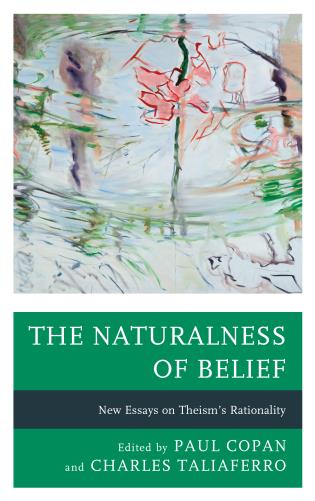
—Graham Oppy
Part II: Foundational Considerations
2. Is Naturalism Natural?
—Charles Taliaferro
3. The Contraction and Expansion of Naturalism and the Theistic Challenge
—Charles Taliaferro
4. Taking Philosophical Naturalism Seriously
—R. Scott Smith
Part III: Theistic Belief, Science, and Naturalism
5. In What Sense Might Religion Be Natural?
—Justin Barrett and Aku Visala
6. Science, Methodological Naturalism, and Question-Begging
—Robert Larmer
Part IV: Axiology and Naturalism
7. Alienating Humanity: How Evolutionary Ethics Undermines Human Rights
—Angus Menuge
8. Divine Commands, Duties, and Euthyphro: Theism and Naturalist Misunderstandings
—Matthew Flannagan
9. Beauty: A Troubling Reality for the Scientific Naturalist
—R. Douglas Geivett and James Spiegel
Part V: Naturalism and Existential Considerations
10. Existential Arguments for Theistic Belief
—Clifford Williams
11. Psychological Factors Contributing to Atheism: Bad Father Relationships and Just Bad Relationships as in Autistic Spectrum Disorders
—Paul C. Vitz
12. The Cultural Implications of Theism versus Naturalism
—Paul Copan and Jeremiah J. Johnston
Part VI: Naturalism, Freedom, and Immortality
13. Theism, Robust Naturalism, and Robust Libertarian Free Will
—J.P. Moreland
14. Naturalism, Theism, and Afterlife Beliefs
—Jonathan Loose
The blurb from Amazon is as follows.
Despite its name, “naturalism” as a world-view turns out to be rather unnatural in its strict and more consistent form of materialism and determinism. This is why a number of naturalists opt for a broadened version that includes objective moral values, intrinsic human dignity, consciousness, beauty, personal agency, and the like. But in doing so, broad naturalism begins to look more like theism. As many strict naturalists recognize, broad naturalism must borrow from the metaphysical resources of a theistic world-view, in which such features are very natural, commonsensical, and quite “at home” in a theistic framework.
The Naturalness of Belief begins with a naturalistic philosopher’s own perspective of naturalism and naturalness. The remaining chapters take a multifaceted approach in showing theism’s naturalness and greater explanatory power. They examine not only rational reasons for theism’s ability to account for consciousness, intentionality, beauty, human dignity, free will, rationality, and knowledge; they also look at commonsensical, existential, psychological, and cultural reasons—in addition to the insights of the cognitive science of religion.
Get your copy now, read it, and let us know what you think both here and on Amazon.


 “In many of his addresses and debates, William Lane Craig has defended a Divine Command Theory of moral obligation (DCT). In a recent article and subsequent monograph, Walter Sinnott-Armstrong has criticized Craig’s position. Armstrong contended that a DCT is subject to several devastating objections and further contended that even if theism is true a particular form of ethical naturalism is a more plausible account of the nature of moral obligations than a DCT is. This paper critiques Armstrong’s argument. I will argue Armstrong’s objections do not refute a DCT and the ethical naturalism he defends is not more plausible than Craig’s ethical supernaturalism.”