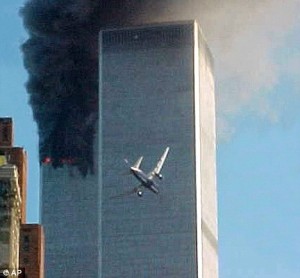
 On 11 September 2001 Islamic terrorists flew two planes into the World Trade Centre killing thousands of innocent people. Ostensibly they did this because they believed God commanded them to do so. This event has invigorated a fear latent in the Western psyche since the 17th century when wars of religion tore Europe apart, the fear of religious fanaticism, of people willing to murder hundreds in the name of God. These fears were centre-stage recently at a Conference held by the Centre for Philosophy of Religion at the University of Notre Dame. Sceptics presenting at the conference argued passionately that the God of the bible issues commands which are at odds with contemporary modern understandings of morality. Adultery is punished with death; on some occasions, God is portrayed as commanding the killing of non-combatants in “holy wars” against the local Canaanite population.
There is a lot that can be said about these concerns and in a short column I cannot say everything. In many instances I think the sceptics fail to appreciate the context and genre of the passages they cite. They fail to appreciate, for example, that Ancient Near Eastern conquest accounts employ highly figurative rhetoric, which hyperbolically describe victories in terms of total annihilation of the enemy. They fail to appreciate that Ancient Near Eastern legal texts, as noted by Raymond Westbrook, “reflect the scribal compilers’ concern for perfect symmetry and delicious irony rather than the pragmatic experience of the law courts.” Or that, as JJ Finkelstein points out, they “were not meant to be complied with literally” but to “serve an admonitory function” and so probably do not command execution for the crimes mentioned. Sceptics can fail to grasp that claiming the bible is God’s word does not mean it did not come to us mediated through the writings of human beings who wrote in a particular time and place using the language, rhetoric and literary conventions of their time and so and frequently they fail to appreciate the bible is a Canon and that passages need to be read in their broader context i.e. taking into account the whole bible. A full articulation of these points, however, would take more space than I can here muster.
Instead I will address another feature of this issue which concerns the general method in play here. In each case the sceptic takes a purported divine command and compares it to a moral belief that he takes to be correct. The conclusion he draws is that the purported command is inauthentic. This is of course a possibility; there is, however, another possibility that on at least some occasions, moral statements these sceptics are relying on are mistaken.
This feature of the dialectic became clear to me after a public debate I had on these issues in August. A sceptic wrote to me claiming that (more…)