I teach NCEA Religious Studies, at level three, one standard is to “Analyse the response of a religious tradition to a contemporary ethical issue”. Officially students have to describe the response a religious tradition has made to a moral issue. Our school like a lot of schools looks at Christian responses to abortion. Because I […]
Entries from February 16th, 2019
FETICIDE IN CHRISTIAN MORAL THOUGHT Part two : Feticide in Patristic Thought
February 16th, 2019 Comments Off on FETICIDE IN CHRISTIAN MORAL THOUGHT Part two : Feticide in Patristic Thought
Tags: Abortion · Christian History · NCEA · Tertullian
The Naturalness of Belief: New Essays in Theism’s Rationality.
February 10th, 2019 Comments Off on The Naturalness of Belief: New Essays in Theism’s Rationality.
The book The Naturalness of Belief: New Essays on Theism’s Rationality recently arrived from the publishers and is available on Amazon. Matt contributed a chapter to this book entitled “Divine Commands and the Euthyphro Dilemma: Some Naturalistic Misperceptions” The Naturalness of Belief is edited by Paul Copan (Palm Beach Atlantic) and Charles Taliaferro (St Olaf […]
Tags: Books · Divine Command Theory · Euthyphro Dilemma · Naturalism · Publications · The Naturalness of Belief
FETICIDE IN CHRISTIAN MORAL THOUGHT PART ONE: Alexandrian Judaism
February 8th, 2019 1 Comment
Some readers of MandM will know that for the last three years I have taught Theology and Philosophy at a Catholic high-school. I teach five to six classes a day, year 9 to year 13 subjects such introduction to scripture, church history, NCEA religious studies, Cambridge world religions and Divinity. My goal has always been […]

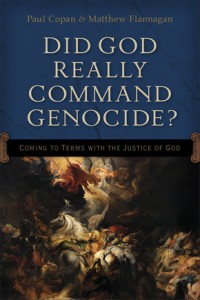 A common objection to belief in the God of the Bible is that a good, kind, and loving deity would never command the wholesale slaughter of nations. In the tradition of his popular Is God a Moral Monster?, Paul Copan teams up with Matthew Flannagan to tackle some of the most confusing and uncomfortable passages of Scripture. Together they help the Christian and nonbeliever alike understand the biblical, theological, philosophical, and ethical implications of Old Testament warfare passages.