I teach NCEA Religious Studies, at level three, one standard is to “Analyse the response of a religious tradition to a contemporary ethical issue”. Officially students have to describe the response a religious tradition has made to a moral issue. Our school like a lot of schools looks at Christian responses to abortion. Because I did my PhD thesis on this very subject in the last year I have been going through my dissertation and simplifying, summarising and rewriting it into short sections I can use with my classes. Because there is some interest in this, I have decided to post some of these on MandM. I welcome any feedback or comments.
In our last lesson, we examined how Alexandrian Jews responded to feticide at the time that Christian churches first started coming into existence. While Christianity and Judaism differ in many important ways, the evidence suggests that on the question of feticide and abortion early Christian communities adopted the same position that Alexandrian Jews already held.
To show this, we will look first at the Patristic period. The word Patristic is used by scholars of early Christianity to refer to Christian theologians who lived between 90AD to 475 AD. When one examines the writings of the Patristics on the question of abortion, we find over and over the same two ideas: first, that killing a formed embryo or a fetus violates the fifth commandment; secondly, an appeal to the Septuagint and the formed/unformed distinction.
I. Feticide as a Violation of the Fifth Commandment.
An important document for the study of early Christianity is The Didache. The word Didache mean’s “the teaching”. 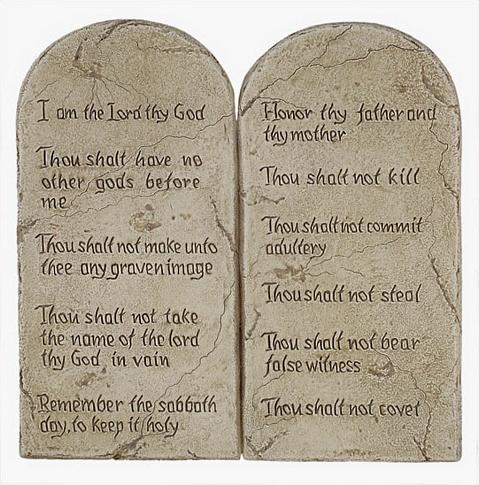 The Didache contrasts two ways of living, “the way of life” and the “way of death”. The “Didache” was a training manual for converts to Christianity which summarises for a new convert the basic teachings of the Apostles. It is adapted from on manuals used by Jewish communities and used for instructing pagan converts to Judaism. This fact suggests the Didache is a very early Christian writing. Early Christianity was Jewish, the first Christian’s being a sect of Judaism, as time went on, however, the church broke from Judaism, and more and more non-Jewish people became Christians. Further evidence of an early date for the Didache is the primitive leadership structure of the church. The latter hierarchal structure of church leadership you find in the second century AD isn’t present instead – the Didache mentions a leadership structure of itinerant prophets and even mentions apostles. This suggests as are suggestive of a mid-first Century date for the document.[1] This would place the document within the same generation as the apostles. At the latest, the passage is dated Early-Second Century, less than a generation after the death of the apostles.
There is a line in the Didache which says “you shall not murder a child by abortion nor kill that which is born”. This line occurs in a section which explains to the readers what the ten commandments require of Christians, and the prohibition on abortion occurs alongside various other commandments such as the fifth commandments prohibition of murder and the commandment against adultery. The Didache shows us that very early on, within at least a generation of the Apostle’s early Christian communities viewed the killing of a fetus as a form of homicide. It was considered to violate the fifth of the ten commandments.
This community that produced the Didache were not alone in this. The position laid down in the Didache appears to have been widely accepted. Every theologian from the Patristic period who wrote on the question comes to the same conclusion. Here are some examples:
- Athenagoras (133–190AD) called abortion murder and compared it to infanticide.[2]
- Tertullian (155 – c. 240) calls it “speedier man-killing”[3]And states the Law of Moses condemns it.
- Minucius Felix (150 and 270AD) see abortion it as “parricidium”[4]A Roman legal term for homicide.[5]
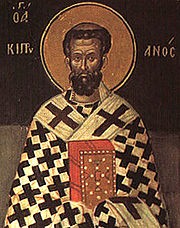 Cyprian (200 –258 AD) calls it murder and views violations of this command as more serious than violating the laws against idol worship.[6]
- Hippolytus (170 – 235 AD) describes abortion as murder and, like adultery, as against God’s commands.[7]
- The author of the Apocalypse of Paul (end of 4th century) describes feticide as “destroying the image of God” and as “contrary to God’s commandments”. [8]
- Augustine (354 430 AD) says that Gods law declares killing a formed fetus as murder[9] and that abortion at any stage is a cruelty akin to infanticide.[10]
- Jerome (347-420) declares feticide to be murder.[11]
- Basil (330-379) classifies it as homicide alongside killing one’s spouse and killing a person in a highway robbery.[12]
- Ambrose (340 – 397) views it as “taking away life before birth”.[13]
- Chrysostom (349 407 AD) states that abortion is “murder before birth” that abortionists turn a woman’s womb into a “chamber for murder” and in doing so “fight against His [God’s] laws”.[14]
We mentioned Philo of Alexandria in the last section and mentioned how he appealed to Jewish teaching on abortion to reject the Greek and Roman practise of infanticide. Like Philo, numerous, Early-Christian writers appealed to this teaching to offer arguments against infanticide.
In the first few centuries after Christ, Christianity was viewed with suspicion and Christians were often falsely accused of all sorts of horrible things. One accusation was that Christians engaged in infant sacrifice. Athenagoras, for example, responded to this accusation by saying Christians couldn’t support killing infants because; “we say that those women who use drugs to bring on abortion commit murder, and will have to give an account to God for the abortion”.[15] If killing a fetus was murder then infanticide must be as well. Christians “are in all things always alike and the same, submitting ourselves to reason, and not ruling over it”.[16] Tertullian responded to the same accusation by noting that for Christians, infanticide is “murder” because Christians “may not destroy even the fetus in the womb”.42 Minucius Felix responded by turning the tables arguing that it was, in fact, the pagans who practised infanticide of which because killing a fetus was merely to “commit a parricide before they bring forth”.[17]
II. Formed/Unformed Distinction and the Septuagint
In addition to seeing feticide as a violation of the fifth commandment, numerous, early Christians followed Philo in basing this conclusion upon the Septuagint and the formed/unformed distinction found in Greek Philosophy. Here are some examples:
 Tertullian (155 – c. 240) stated “The embryo, therefore, becomes a human being in the womb from the moment that its form is completed. The law of Moses, indeed, punishes with due penalties the man who shall cause abortion.”[18]
- Jerome (347-420) wrote, “The seed gradually takes shape in the uterus, and it [abortion] does not count as killing until the individual elements have acquired their external appearance and their limbs”.[19]
- Lactantius (250 – 325) argued that a fetus is formed on the 40th day and it is this stage when it is ensouled and a full human being.[20]
- Gregory of Nyssa (335–395) wrote “ [J]ust as it would not be possible to style the unformed embryo a human being, but only a potential one, assuming that it is completed so as to come forth to human birth, while as long as it is in this unformed state, it is something other than a human being.”[21]
- Cyril of Alexandria: (376 – 444) cites the Septuagint and argues a fetus becomes human at 40 days when it acquires form.[22]
- Ambrosiaster (366 and 384) argues that a human soul is infused into a fetus when the conceptus is formed, and hence abortion of a formed fetus is homicide [23].
By the end of the Patristic period, two church councils adopted policies on dealing with the killing of a fetus. The councils of Elvira and Ancyra, held in 305 A.D. and 314 A.D. respectively. The Council of Elvira declared that a woman had an abortion to cover up an affair could not be re-admitted to full communion for the rest of her life. The reason the council gives for this is that the woman has committed a double sin; she has not just committed adultery she has made this worse this by committing homicide as well.[24] This practice reflected the very harsh discipline that existed in the Early Church where serious sins committed after baptism were not forgiven. This harsh discipline was relaxed by the council of Ancyra only a few years later. Those who attended Ancyra referred to the earlier practice (reflected in Elvira) and ruled “more humanely” and required only 10 years penance before one could be received back into the fold.[25]
It seems safe to say that, throughout the patristic period, almost every Christian theologian who addressed the question of feticide did so by articulating two basic premises [1] that God has commanded people to refrain from killing a human being, and [2] that a fetus, or a formed embryo, is a human being.
However, we should be careful about interpreting these statements to mean that the early church condemned abortion absolutely in every single possible situation. There some evidence that Christain’s also permitted abortion in those rare circumstances where a woman’s life was in danger. The only Christian writer to address this situation was Tertullian. Tertullian refers to a situation where a child gets “twisted” in the womb and cannot be delivered alive without killing the mother. He describes the process of killing it with strong negative language as “a criminal deed” “infanticide” “robber in the dark” and “cruelty” however he also describes it as a “necessary crime” and “necessary cruelty” While Tertullian isn’t clear, many scholars think Tertullian here assumes that when continuing the pregnancy will kill the mother abortion is a necessary evil.
We can summarise the early churches position then as follows:
Premise: [1] Killing a human being without justification violates the law of God.
Premise: [2] A formed embryo (i.e. a fetus) is a human being.
Premise: [3] In the case of feticide (at least in the majority of cases) insufficient or no justification is forthcoming.
[1] John Robinson, Redating the New Testament, (Philadelphia, PA: Westminster, 1976), 324-27.
[2] Athenagoras, A Plea for the Christians, 35.
[3] Tertullian, Apology, 9.8.
[4] Minucius Felix, Octavius, 30.
[5] John Noonan, Contraception: A History of its Treatment by the Catholic Theologians, (Cambridge, MA:
The Bellknap Press of Harvard University, 1965), 91. Noonan notes that ‘parricidium’ was the specific Latin term for the unlawful killing of a close relative such as a parent or brother.
[6] Cyprian, Letters, 48.
[7] Hippolytus, Refutation of all Heresies, 9.7.
[8] Apocalypse of Paul 40.
[9] Augustine, Commentary on the Heptateuch, 2. 80.
[10] Augustine, On Marriage and Concupiscence, 1.17.
[11] Jerome, Letters, 22.13 and 121.4.
[12] Basil, Letter CLXXXVIII, 8.
[13] Ambrose, Hexameron, 5.18.58.
[14] Chrysostom, Homily 24 on Romans.
[15] Athenagoras, A Plea for the Christians, 35.
[16] Ibid. 42 Tertullian, Apology, 9.8.
[17] Minucius Felix, Octavius, 30.
[18] Tertullian, Treatise on the Soul, Ch VII.
[19] Jerome, Letters, 121.4.
[20] Lactantius, De Opifico Dei, 12, 17.
[21] Gregory of Nyssa, On the Holy Spirit Against Macedonius
[22] Cyril of Alexandria, De Adoratione in Spirtu et Veritate, 8.
[23] Ambrosiaster, QQ Veteris et Novi Testamenti, 23.
[24] John Connery, Abortion: The Development of the Roman Catholic Position (Chicago: Loyola University Press, 1977), 47-48
[25] Ibid., 48-49.