
In his book Morality Without God, Walter Sinnott-Armstrong argues that a secular account of the nature of moral properties—namely, that wrongness is constituted by the property of harming others—is preferable to a theistic account, in which wrongness is identified with the property of being contrary to God’s commands
Chapter 6 is entitled “Why be moral?” In this chapter, Sinnott-Armstrong attempts to rebut the idea that secular meta-ethical theories—such as the one he proposes—cannot provide an adequate answer to this question.
Sinnott-Armstrong begins his discussion by citing an argument that purports to show that secular accounts of morality cannot answer the question: why be moral? He summarises the argument as follows:
“Harming others is sometimes in some people’s best interest, even considering probable costs. In those cases, some theists say that only a divine threat of Hell provides a reason to be moral. Since atheists and
agnostics do not believe in God, they do not believe in divine retribution for sins, so they have to admit that sometimes some people could get away with immorality and then they have no self-interested reason to be moral. Does that mean that these people have no reason at all to be moral?”[1]
He responds to this argument as follows:
No. That conclusion would follow only if every reason had to be self-interested, selfish, or egoistic. There is no basis for that assumption. Many reasons are not based on self-interest. That should be common ground between theists and atheists… The fact that an act prevents harm to another person can be a reason for me to do that act. The fact that an act causes harm to another person can be a reason for me not to do that act. These facts are reasons, even if the other people are strangers. Crucially, these reasons are not self-interesting. They are facts about the interests of other people, not me. These unselfish reasons can answer the question, “Why be moral?”[2]
There are some infelicities in the way this argument is described and set up. Sinnott-Armstrong’s version of the argument relies solely on the appeal to fear of Hell and divine retribution. He doesn’t, for example, couch the argument in terms of hope of eternal life. Moreover, in the paragraphs leading up to this one, he gives a sarcastic, literalistic reading of the Book of Revelation on the topic of Hell. These all rhetorically prime negative reactions in the reader; they also border on crude caricature.
However, in this post and in future ones, I will focus on what I take to be the main thrust of Sinnott-Armstrong’s response to this argument. Sinnott-Armstrong makes three points. First, he argues that this argument is only sound if one assumes that “every reason” is “self-interested.” Second, he argues that this assumption is false. It should be granted by both theists and non-theists that there are “unselfish reasons” based on the fact that an action will “harm” (or benefit) other people. Third, he contends these unselfish reasons can answer the question of why they are moral.
Does the argument assume that all reasons are selfish?
Let’s look at the first point: does this argument assume that all reasons are selfish? That depends on how one interprets the phrase “reasons to be moral” and the rhetorical question “Why be moral?”
When we talk of “reasons” to act, we can mean one of two things. Sometimes the word “reason” functions as a mass noun, referring to what we have decisive reasons to do—what we have reasons to do all things considered, when we consider everything that counts in favour of an action and against it. Alternatively, the word “reason” can function as a count noun, referring to what we have a pro tanto reason to do—what we have reason to do all else being equal. Here we ask whether there is anything that by itself counts in favour of the action.[3]
An illustrative example: It is a rainy day, and I have to walk fifteen minutes outside to the bus. The fact I will get wet if I don’t take an umbrella is a pro tanto reason to take an umbrella. The fact that carrying an umbrella is cumbersome is a pro tanto reason against it. When I consider all the relevant factors—the burden of carrying the umbrella and the prospect of getting wet—I conclude that I have decisive, all-things-considered reasons to carry it.[4]
Sinnott-Armstrong’s interlocutor asks: if we are not accountable to God for our actions, and harming someone promotes our long-term self-interest, what reason do we have to refrain from doing harm? He could mean two things:
(a) He could be asking whether, in the given circumstances, we have a pro tanto reason to refrain from harm; or
(b) He could be asking whether, in those circumstances, we have decisive reasons not to harm.
If he means (a), then Sinnott-Armstrong’s criticism seems on point. The interlocutor is assuming that all reasons are selfish. He is saying that if it is not in our self-interest to avoid harming others, then there is no consideration of any sort at all against harming them. This follows only if all reasons are selfish.
I suspect that this is how Sinnott-Armstrong interprets the argument in question. The problem is that this is a very idiosyncratic understanding of the question “Why be moral?” Normally, in philosophical discussions, this is not what is meant by the question.[5]
Consider what Sinnott-Armstrong himself writes in his Stanford Encyclopedia of Philosophy article on moral skepticism. He writes about a form of skepticism known as “practical skepticism,” which asks the question:
“Why be moral?” This question is used to raise many different issues. Almost everyone admits that there is sometimes some kind of reason to be moral. However, many philosophers deny various universal claims, including the claims that there is always some reason to be moral, that there is always a distinctively moral reason to be moral, and/or that there is always enough reason to make it irrational not to be moral or at least not irrational to be moral…
Practical moral skeptics usually deny that there is always enough reason for moral action.[6]
In a supplementary paper, he explains:
What such practical moral skeptics deny is that I always have reason to do what is morally required… Practical moral skeptics do not deny that there is sometimes reason not to do what is morally wrong. After all, some wrongdoers are caught and punished. However, practical moral skeptics can still deny that there is always reason to do what is morally required or to avoid what is morally wrong.
How much reason? Some practical moral skeptics claim that sometimes there is no reason at all to do what is morally required. If all reasons are self-interested, this means that sometimes doing what is morally required does not serve the agent’s interest in any way. That extreme position would be refuted if doing what is morally wrong always creates even a slight risk of some negative repercussion. A more plausible and common version of practical moral skepticism denies, instead, that there is always an adequate (or non-overridden) reason to do what is morally required. To establish this position, practical moral skeptics need only one case where there is overriding reason not to do what is morally required. (emphasis mine)[7]
So, according to Sinnott-Armstrong himself, if we interpret the rhetorical question “Why be moral?” charitably—in a way that reflects how the question is commonly used—it is not a denial that agents lack any pro tanto reasons to do what they are required to do. Instead, the interlocutor is challenging the idea that agents always have decisive reasons to refrain from harm when doing so is contrary to their self-interest.
Suppose we interpret Sinnott-Armstrong’s interlocutor in terms of (b). In that case, he is arguing as follows: if there are cases where harming another is in our self-interest, then we will not always have all-things-considered reasons to refrain from harm. This argument does not assume that all reasons are selfish. Even if there are unselfish reasons based on the fact an action harms others, these reasons will not always be stronger or weightier than the selfish reasons we have to the contrary. One can accept that we have a pro tanto reason to do an action and also admit that when one considers everything that is relevant—for and against—the total balance of reasons does not support it.
We can conclude our discussion as follows: Sinnott-Armstrong’s claim—that his interlocutor’s argument rests on a false assumption, namely that all reasons are selfish—is true if one interprets the question “Why be moral?” in an idiosyncratic and uncharitable way, contrary to how the question is typically used. However, if the question is interpreted charitably, in line with its usual philosophical usage, then Sinnott-Armstrong’s claim is false.
[1] Walter Sinnott-Armstrong, Morality Without God (Oxford: Oxford University Press, 2009). 114
[2] Walter Sinnott-Armstrong, Morality Without God 117
[3] See Stephen Darwall, “What Are Moral Reasons?” The Amherst Lecture in Philosophy 12 (2017): 2. Available at https://www.law.nyu.edu/sites/default/files/What%20Are%20moral%20reasons.pdf accessed 28 August 2025
[4] See Stephen Darwall, “What Are Moral Reasons?” 2-3
[5] This point is made by Mark Murphy’s review, Morality Without God, available at https://ndpr.nd.edu/reviews/morality-s-without-god-s/ accessed 28 August 2025
[6] Walter Sinnott Armstrong, Moral Skepticism, available at https://plato.stanford.edu/entries/skepticism-moral/index.html accessed 28 August 2025
[7] Walter Sinnott Armstrong, Practical Moral Skepticism, available at https://plato.stanford.edu/entries/skepticism-moral/supplement.html accessed 28 August 2025
Tags: Dualism of Practical Reason · God and Morality · Walter Sinnott-Armstrong · Why be Moral?No Comments

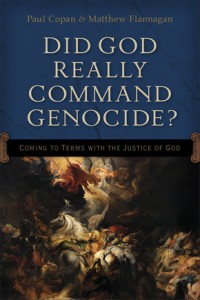 A common objection to belief in the God of the Bible is that a good, kind, and loving deity would never command the wholesale slaughter of nations. In the tradition of his popular Is God a Moral Monster?, Paul Copan teams up with Matthew Flannagan to tackle some of the most confusing and uncomfortable passages of Scripture. Together they help the Christian and nonbeliever alike understand the biblical, theological, philosophical, and ethical implications of Old Testament warfare passages.

0 responses so far ↓
Comments on this entry are closed.