In a previous post, I observed that Walter Sinnott-Armstrong concedes that secular accounts of moral obligation cannot vindicate the thesis that agents always have decisive (all-things-considered) reasons to avoid wrongdoing. To mitigate this problem, he argues: Is this limitation a problem for secular accounts of morality? I doubt that, too. If we demand this extreme […]
Entries Tagged as 'Why be Moral?'
Sinnott-Armstrong on God, Secularism and “reasons” to be moral. Part Three: Can Religious theories answer the question, “Why be moral?”
September 13th, 2025 1 Comment
Tags: Divine Command Theory · Dualism of Practical Reason · God and Morality · Walter Sinnott-Armstrong · Why be Moral?
Sinnott-Armstrong on God, Secularism and “reasons” to be moral. Part two: Do unselfish reasons answer the question, “Why be moral?”
September 8th, 2025 Comments Off on Sinnott-Armstrong on God, Secularism and “reasons” to be moral. Part two: Do unselfish reasons answer the question, “Why be moral?”
*** Walter Sinnott-Armstrong discusses the following objection: “Harming others is sometimes in some people’s best interest, even considering probable costs. In those cases, some theists say that only a divine threat of Hell provides a reason to be moral. Since atheists and agnostics do not believe in God, they do not believe in divine retribution […]
Tags: Dualism of Practical Reason · Hell · Mark Murphy · Walter Sinnott-Armstrong · Why be Moral?
Sinnott-Armstrong on God, Secularism and “reasons” to be moral. Part One:
September 3rd, 2025 Comments Off on Sinnott-Armstrong on God, Secularism and “reasons” to be moral. Part One:
In his book Morality Without God, Walter Sinnott-Armstrong argues that a secular account of the nature of moral properties—namely, that wrongness is constituted by the property of harming others—is preferable to a theistic account, in which wrongness is identified with the property of being contrary to God’s commands Chapter 6 is entitled “Why be moral?” In […]
Tags: Dualism of Practical Reason · God and Morality · Walter Sinnott-Armstrong · Why be Moral?
Does the Dualism of Practical Reason assume Egoism?
July 30th, 2021 Comments Off on Does the Dualism of Practical Reason assume Egoism?
Recently, I have been examining the question, “If there is no God, why be good?” As I interpret it, this expresses an argument about the “dualism of practical reason” made by Henry Sidgwick and John Gay. This argument had three steps. First, unless we assume that it is always in our long-term self-interest to follow […]
Tags: David Brink · Divine Command Theory · Dualism of Practical Reason · Henry Sidgwick · John Gay · Stephen Layman · Walter Sinnott-Armstrong · Why be Moral?
What is the Question?: John Gay’s “Dissertation Concerning the Fundamental Principle of Virtue or Morality”
April 3rd, 2021 Comments Off on What is the Question?: John Gay’s “Dissertation Concerning the Fundamental Principle of Virtue or Morality”
In recent posts I have been looking at the rhetorical question: “if there is no God, why be good?” In my last post, I suggested one way to understand this question was in terms of Henry Sidgwick’s famous argument regarding the “dualism of practical reason. As I interpreted Sidgwick, his argument had three steps. First, […]
Tags: Divine Command Theory · God and Morality · Henry Sidgwick · John Gay · Utilitarianism · Why be Moral?
What is the Question?: Henry Sidgwick’s Dualism of Practical Reason
March 26th, 2021 Comments Off on What is the Question?: Henry Sidgwick’s Dualism of Practical Reason
In a previous post, I criticised Richard Dawkins’s discussion of the question: if there is no God, why be good? One criticism I raised was that Dawkins seemed to misunderstand the challenge this rhetorical question presents. This raises the question as to how we should understand this rhetorical question. What exactly is the problem being […]
Tags: Divine Command Theory · Dualism of Practical Reason · God and Morality · Henry Sidgwick · Utilitarianism · Why be Moral?
Dawkin’s dilemma: How not to answer the question “Why Be Moral?”
January 21st, 2021 Comments Off on Dawkin’s dilemma: How not to answer the question “Why Be Moral?”
In his bestselling book, the God Delusion, Richard Dawkin’s responds to the question: “If there is no God, Why be good?” Posed like that, the question sounds positively ignoble. When a religious person puts it to me in this way (and many of them do), my immediate temptation is to issue the following challenge: ‘Do you really mean […]
Tags: God and Morality · Henry Sidgwick · Richard Dawkins · The God Delusion · Thomas Reid · Why be Moral?

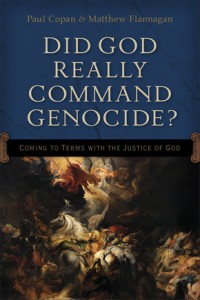 A common objection to belief in the God of the Bible is that a good, kind, and loving deity would never command the wholesale slaughter of nations. In the tradition of his popular Is God a Moral Monster?, Paul Copan teams up with Matthew Flannagan to tackle some of the most confusing and uncomfortable passages of Scripture. Together they help the Christian and nonbeliever alike understand the biblical, theological, philosophical, and ethical implications of Old Testament warfare passages.