<!– wp:tadv/classic-paragraph –> <p>My paper, “<a href="https://www.pdcnet.org/pdc/bvdb.nsf/purchase26?openform&fp=pc&id=pc_2025_0027_0001_0093_0117">Can a Divine Command Theory Vindicate the Objectivity of Morality?</a>” was published in Philosophia Christi, vol 21. No 1 2025. A copy is <a href="http://Can_a_Divine_Command_Theory_Vindicate_the_Objectivity_of_Morality" data-wplink-url-error="true">now available</a> online at my <a href="https://independent.academia.edu/MatthewFlannagan">academia.edu page</a>. The abstract is below.<a href="http://www.mandm.org.nz/wp-content/uploads/2026/05/PhilosophiaChristi.png"><img class="alignright size-full wp-image-12870" src="http://www.mandm.org.nz/wp-content/uploads/2026/05/PhilosophiaChristi.png" alt="" width="184" height="273" /></a></p> <blockquote> <p><strong>Abstract:</strong><br />Defenders […]
Entries Tagged as 'David Brink'
New publication Online: “Can a Divine Command Theory Vindicate the Objectivity of Morality?”
May 17th, 2026 No Comments
Tags: David Brink · Divine Command Theory · Elizabeth Tropman · Michael Huemer · Objectivism
New publication: “Can a Divine Command Theory Vindicate the Objectivity of Morality?”
August 26th, 2025 Comments Off on New publication: “Can a Divine Command Theory Vindicate the Objectivity of Morality?”
My paper, “Can a Divine Command Theory Vindicate the Objectivity of Morality?” has been published in the latest issue of Philosophia Christi. Abstract:Defenders of divine command metaethics (DCM) often argue that one of its key advantages is its ability to vindicate the objectivity of moral judgments. Critics, however, contend that DCM is a subjectivist theory […]
Tags: David Brink · Divine Command Theory · Elizabeth Tropman · Michael Huemer · Objectivism
Can a Divine Command Theory Ground the Objectivity of Morality? Michael Huemer on Observer Independence: Part One
September 12th, 2021 Comments Off on Can a Divine Command Theory Ground the Objectivity of Morality? Michael Huemer on Observer Independence: Part One
In a previous post I criticized David Brink’s argument that a divine command theory cannot vindicate the objectivity of morality. Brink argued: [1] Our commitment to morality presupposes that moral requirements are objective [2] Moral requirements are objective just in case facts about what is right or wrong obtain independently of the moral beliefs or […]
Tags: David Brink · Divine Command Theory · Elizabeth Tropman · Michael Huemer · Objectivism · William Lane Craig
Can a Divine command theory account for the objectivity of moral requirements? Brink and Appraiser Independence.
August 24th, 2021 Comments Off on Can a Divine command theory account for the objectivity of moral requirements? Brink and Appraiser Independence.
David Brink has objected to a divine command theory of ethics by contending such theories cannot vindicate the objectivity of ethics. Brink begins by defending a particular conception of the objectivity of ethics and then argues that a divine command theory fails to meet that conception. Brink writes: Our commitment to the objectivity of ethics […]
Tags: Chris Meyers · David Brink · Objectivism
Does the Dualism of Practical Reason assume Egoism?
July 30th, 2021 Comments Off on Does the Dualism of Practical Reason assume Egoism?
Recently, I have been examining the question, “If there is no God, why be good?” As I interpret it, this expresses an argument about the “dualism of practical reason” made by Henry Sidgwick and John Gay. This argument had three steps. First, unless we assume that it is always in our long-term self-interest to follow […]
Tags: David Brink · Divine Command Theory · Dualism of Practical Reason · Henry Sidgwick · John Gay · Stephen Layman · Walter Sinnott-Armstrong · Why be Moral?
Sunday Study: Inerrancy and Biblical Authority
January 18th, 2010 46 Comments
Recently Glenn Peoples and Dominic Bnonn Tennant had an interesting exchange over the issue of biblical inerrancy, the doctrine, that the bible contains no errors. In his post, Errantly Assuming Inerrancy in History, Peoples makes this interesting comment, While there has always been a clear expression of the view that what Scripture teaches is correct, […]
Tags: David Brink · Dominic Bnonn Tennant · Glenn Peoples · Inerrancy · Michael Tooley · Sunday Study
An Eye for an Eye and Turning the Other Cheek
March 3rd, 2009 11 Comments
In The Autonomy of Ethics David Brink complains that “tradition and scripture may speak but in conflicting ways”;[1] in a endnote he cites a single example, Inconsistency is at stake, for example, when we juxtapose the Old Testament doctrine of an “eye for an eye” (Exodus 21:23, 24; Leviticus 24:19, 20; and Deuteronomy 19:21) and […]
Tags: David Brink · David Daube · eye for an eye · Lex Talionis · turn the other cheek

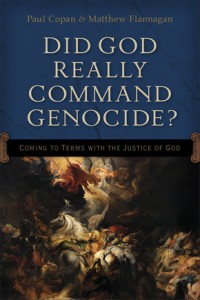 A common objection to belief in the God of the Bible is that a good, kind, and loving deity would never command the wholesale slaughter of nations. In the tradition of his popular Is God a Moral Monster?, Paul Copan teams up with Matthew Flannagan to tackle some of the most confusing and uncomfortable passages of Scripture. Together they help the Christian and nonbeliever alike understand the biblical, theological, philosophical, and ethical implications of Old Testament warfare passages.