<!– wp:tadv/classic-paragraph –> <p>My paper, “<a href="https://www.pdcnet.org/pdc/bvdb.nsf/purchase26?openform&fp=pc&id=pc_2025_0027_0001_0093_0117">Can a Divine Command Theory Vindicate the Objectivity of Morality?</a>” was published in Philosophia Christi, vol 21. No 1 2025. A copy is <a href="http://Can_a_Divine_Command_Theory_Vindicate_the_Objectivity_of_Morality" data-wplink-url-error="true">now available</a> online at my <a href="https://independent.academia.edu/MatthewFlannagan">academia.edu page</a>. The abstract is below.<a href="http://www.mandm.org.nz/wp-content/uploads/2026/05/PhilosophiaChristi.png"><img class="alignright size-full wp-image-12870" src="http://www.mandm.org.nz/wp-content/uploads/2026/05/PhilosophiaChristi.png" alt="" width="184" height="273" /></a></p> <blockquote> <p><strong>Abstract:</strong><br />Defenders […]
Entries Tagged as 'Objectivism'
New publication Online: “Can a Divine Command Theory Vindicate the Objectivity of Morality?”
May 17th, 2026 No Comments
Tags: David Brink · Divine Command Theory · Elizabeth Tropman · Michael Huemer · Objectivism
New publication: “Can a Divine Command Theory Vindicate the Objectivity of Morality?”
August 26th, 2025 Comments Off on New publication: “Can a Divine Command Theory Vindicate the Objectivity of Morality?”
My paper, “Can a Divine Command Theory Vindicate the Objectivity of Morality?” has been published in the latest issue of Philosophia Christi. Abstract:Defenders of divine command metaethics (DCM) often argue that one of its key advantages is its ability to vindicate the objectivity of moral judgments. Critics, however, contend that DCM is a subjectivist theory […]
Tags: David Brink · Divine Command Theory · Elizabeth Tropman · Michael Huemer · Objectivism
Can a Divine Command Theory Vindicate the Objectivity of Morality: Huemer on Observer Independence, part two
September 12th, 2021 Comments Off on Can a Divine Command Theory Vindicate the Objectivity of Morality: Huemer on Observer Independence, part two
In my last post, I discussed Michael Huemer’s argument that a divine command theory cannot vindicate the objectivity of moral requirements. As I interpret him, the argument is: [1] Our commitment to morality presupposes that moral requirements are objective. [2] Moral requirements are objective just in case there obtain facts about what is right and […]
Tags: Alvin Plantinga · Divine Command Theory · John Foster · Michael Huemer · Objectivism · Robert Adams
Can a Divine Command Theory Ground the Objectivity of Morality? Michael Huemer on Observer Independence: Part One
September 12th, 2021 Comments Off on Can a Divine Command Theory Ground the Objectivity of Morality? Michael Huemer on Observer Independence: Part One
In a previous post I criticized David Brink’s argument that a divine command theory cannot vindicate the objectivity of morality. Brink argued: [1] Our commitment to morality presupposes that moral requirements are objective [2] Moral requirements are objective just in case facts about what is right or wrong obtain independently of the moral beliefs or […]
Tags: David Brink · Divine Command Theory · Elizabeth Tropman · Michael Huemer · Objectivism · William Lane Craig
Can a Divine command theory account for the objectivity of moral requirements? Elizabeth Tropman, Russ Shafer-Landau, and “Stance Independence”.
September 1st, 2021 Comments Off on Can a Divine command theory account for the objectivity of moral requirements? Elizabeth Tropman, Russ Shafer-Landau, and “Stance Independence”.
In my last post, I criticised David Brink’s argument that a divine command theory cannot vindicate the objectivity of morality. A different version of the objection comes from Elizabeth Tropman. Tropman begins by giving several reasons for thinking that moral realism is an attractive moral theory. She then argues that a divine command theory fails […]
Tags: Divine Command Theory · Elizabeth Tropman · Moral Realism · Objectivism · Russ Shafer Landau
Can a Divine command theory account for the objectivity of moral requirements? Brink and Appraiser Independence.
August 24th, 2021 Comments Off on Can a Divine command theory account for the objectivity of moral requirements? Brink and Appraiser Independence.
David Brink has objected to a divine command theory of ethics by contending such theories cannot vindicate the objectivity of ethics. Brink begins by defending a particular conception of the objectivity of ethics and then argues that a divine command theory fails to meet that conception. Brink writes: Our commitment to the objectivity of ethics […]
Tags: Chris Meyers · David Brink · Objectivism
I’m so Objective about how You’re so Subjective
May 25th, 2011 19 Comments
One general objection to theistic arguments for God is that no such argument could be based on the subjective experience of one’s own cognitive processes, and that therefore it suggests delusions of grandeur to think that one can get from such a basis to God necessarily existing. But to deny that a sound argument could […]
Tags: Atheism · Faith and Reason · Objectivism · Subjectivism · Theism

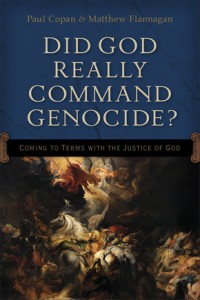 A common objection to belief in the God of the Bible is that a good, kind, and loving deity would never command the wholesale slaughter of nations. In the tradition of his popular Is God a Moral Monster?, Paul Copan teams up with Matthew Flannagan to tackle some of the most confusing and uncomfortable passages of Scripture. Together they help the Christian and nonbeliever alike understand the biblical, theological, philosophical, and ethical implications of Old Testament warfare passages.