Tag: Michael Huemer

  • New publication Online: “Can a Divine Command Theory Vindicate the Objectivity of Morality?”

    My paper, “Can a Divine Command Theory Vindicate the Objectivity of Morality?” was published in Philosophia Christi, vol 21. No 1 2025. A copy is now available  online at my academia.edu page. The abstract is below.

    Abstract:
    Defenders of divine command metaethics (DCM) often argue that one of its key advantages is its ability to vindicate the objectivity of moral judgments. Critics, however, contend that DCM is a subjectivist theory and therefore inherits the difficulties such theories face in accounting for the apparently objectivist features of moral thought. In this paper, I examine and critique three prominent versions of this objection: David Brink’s appeal to appraiser independence, Elizabeth Tropman’s appeal to stance independence, and Michael Huemer’s concept of observer independence. I argue that none of these criticisms succeeds.

  • Michael Huemer on Wokeness

    Political Philosopher Michael Huemer weighs in on the question: what is wokeness?

    I have been known to describe the essence of wokism as “reverse bigotry”. In the past, various forms of bigotry were common: prejudice against blacks, against women, against gays, against transgender people, and more. Wokism proposes, rather than to eliminate bigotry, to reverse the direction of traditional bigotry: replace anti-black racism with anti-white (or pro-black) racism; replace anti-female sexism with anti-male sexism; etc.

    Now you might think this an unfair description of the views listed in section 1. For instance, just because someone thinks that America is systemically racist against blacks, doesn’t mean that they support racism against whites, does it?

    Two things to note:

    One, the people who say that are basically blaming white people for the problems suffered by blacks as a group. They are saying that racism (which is, on their view, one of the greatest evils of the world) on the part of white people is responsible for black disadvantage. Sometimes they say the racism is “systemic”, which means that there need not be any actual racists, but many of them say that the racism is ongoing in the hearts of white people today. Anyway, even the systemic racism was caused by evil white people in the past.

    For a thought experiment, ask yourself what you would think about a person who explained most of the evils of the modern world as the product of wrongful behavior or evil character on the part of the Jews, either now or in the past. There are actually people like this. We call them “anti-Semites”, and they are obviously racists. If you replace “Jews” with “whites”, then you just have a different form of racism.

    The full article is available here at Huemer’s blog Fake Nous.

  • New publication: “Can a Divine Command Theory Vindicate the Objectivity of Morality?”


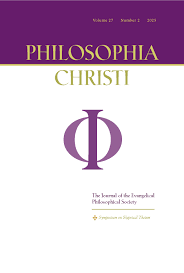
    My paper, “Can a Divine Command Theory Vindicate the Objectivity of Morality?” has been published in the latest issue of Philosophia Christi.

    Abstract:
    Defenders of divine command metaethics (DCM) often argue that one of its key advantages is its ability to vindicate the objectivity of moral judgments. Critics, however, contend that DCM is a subjectivist theory and therefore inherits the difficulties such theories face in accounting for the apparently objectivist features of moral thought. In this paper, I examine and critique three prominent versions of this objection: David Brink’s appeal to appraiser independence, Elizabeth Tropman’s appeal to stance independence, and Michael Huemer’s concept of observer independence. I argue that none of these criticisms succeeds.

  • Can a Divine Command Theory Vindicate the Objectivity of Morality: Huemer on Observer Independence, part two

    In my last post, I discussed Michael Huemer’s argument that a divine command theory cannot vindicate the objectivity of moral requirements. As I interpret him, the  argument is:

    [1] Our commitment to morality presupposes that moral requirements are objective.

    [2] Moral requirements are objective just in case there obtain facts about what is right and wrong that do not constitutionally depend upon the attitude of observers towards the objects of evaluation.

    [3] If divine command metaethics is true, facts about right and wrong constitutively depend upon the attitudes of an observer towards the objects of evaluation.

    I think [3] and [1] are questionable.

    Let us begin with [3]. For [3] to be accurate, a divine command theory must entail that facts about right and wrong constitutively depend upon the attitudes of an observer. It is not enough that these facts depend upon God’s attitudes in some way or other. These attitudes must constitute moral facts in part or whole.

    Why think that [3] is true? Presumably, the inference goes like this:  If a divine command theory is true, then facts about right and wrong are identical with facts about what actions have been commanded by God. However, facts about what actions have been commanded and prohibited by God are constituted by facts about God’s attitudes. So, a divine command theory entails that facts about observers attitudes constitute deontic facts.

    However, it is not evident that facts about what actions have been commanded and prohibited by God are constituted by facts about God’s attitudes. In the literature, it is common to distinguish divine command theories from divine will or attitude theories.[1] Divine will theories contend that God’s attitudes towards certain actions constitute deontological facts. By contrast, a divine command theory contends deontological facts are identical with facts about what actions have been commanded by God.  Attitudes and commands are not the same things. Robert Adam’s stresses that “moral obligation is understood in terms of what God requires of us”. But, “requiring is something we do in relationship to each other it essentially involves communicative acts”. It is not logically equivalent to having a positive or negative attitude towards that action.

    The difference between commanding and merely willing is significant. Divine command theorists like Adam’s defend a divine command theory because they believe “the will of a legislature imposes no obligations without being commanded”. To illustrate this, Adam’s provides some examples, where what a person desires or wills and what the command comes apart.

     “Religiously, obedience to God is in large part a matter of respect for God; and interhuman examples suggest that respect would follow commands in preference to unexpressed desires. The wait staff in a restaurant show me benevolence, perhaps, but scant respect, if they bring me what they think I want instead of what I actually ordered.” [2]

    So, when a divine command theorist claims deontological facts are identical with facts about what actions God commanded, it doesnt follow that God’s attitudes constitute these facts. To get that conclusion, we need to assume that commands are constituted by attitudes. Seeing someone can command X without a pro attitude towards it, and someone can have a pro attitude towards x without commanding this is not obvious.

    This brings us to [1], Suppose divine command theories do entail moral facts constitutively depend upon an observer’s (i.e. God’s) attitudes. This is only problematic if our commitment to morality presupposes that moral facts are objective in this sense of the word.  If we define an objective fact as a fact that does not constitutively, as opposed to causally, depend on an observer’s attitudes. It does not seem to me that [1] is true.

    Objectivist metaethical theories’ plausibility consists of their accounting for and vindicating certain presuppositions of our moral thought and practice.  Our moral thought and practice assume that beings like you and I can make mistaken judgements. We have limited information, are prone to biases, and make errors of fact and reason. We reason about morality to discern which evaluations our human compatriots are correct and which are not. We use reasons to support and verify some judgments and criticize others showing they are mistaken.  We defend some of the evaluations of our society against criticisms.[3] We reject others as oppressive, immoral and in need of reform. We think our society made moral progress by rejecting slavery and racial segregation. We believe the Nazi’s evaluation of racism was mistaken, and Martin Luther King Juniors was closer to the truth.  We think some moral reformers who criticized widely endorse policies were correct. They have given us a better understanding of what is right and wrong. We believe certain actions, like the rape and murder of a small child, are wrong even if I or my society endorsed them.

    In Ethical Intuitionism, Huemer himself emphasises several of these assumptions. He notes (i) the judgements of Neo Nazi’s and Nazi society were mistaken.  (ii) That we engage in real disagreement with our compatriots, but individually and collectively contradicting what they say and offering reasons for and against their judgements. (iii) That individuals and societies are not infallible moral judges and (iv) that human judgements can be based on arbitrary reasons.[4]

    These assumptions presuppose moral facts obtain independently of the evaluation of human appraisers: appraisers like you and I who are subject to these cognitive deficiencies. Who are fallible, make mistakes, can be prejudiced and arbitrary, and ignorant of relevant facts.  They do not presuppose that this independence is only constitutive. They do not assume this independence applies to all possible appraisers. Even an infallible omniscient, impartial appraiser upon whose will everything else depends for its existence.

    Two examples will illustrate this.  Take a crude relativist theory: where actions are morally required if and only if, and because, my social group approves of them. This theory is a paradigmatic example of a subjectivist theory. All most everyone rejects it because it contradicts the objectivist presuppositions of moral thought.  Yet, according to Huemer’s view, whether this theory vindicates the objectivity of morality depends solely on whether societies approval causes or constitutes moral facts.

    Suppose there are two versions of this theory. (a) One claims the property of being morally required is identical to the property of being socially approved.  (b), Another claims my society can directly and immediately bring it about that I am required to do something by approving of it. Neither of these theories will vindicate the objectivists presuppositions of our moral thought. Both will entail that correct evaluation are co-extensive with the attitudes of my society. So, both will have implications that contradict the relevant presuppositions mentioned above. Nevertheless, in Huemer’s view, (b) entails that moral facts are objective and (a) does not.  Consequently,  a theory can vindicate the objectivity of morality, in Huemer’s sense of the word, yet fail to vindicate any objectivist presuppositions of our moral thought and practice.

    A second example, consider a form of naturalistic moral realism whereby moral facts are facts about the causal properties of certain actions. Rightness just is the property an action has when it tends to increase or enhance our happiness. Wrongness just is the property an action has when it tends to diminish our happiness. This is a paradigmatic objectivist theory. It makes wrongness depend on facts about causal physical properties of actions. It vindicates the objectivist presuppositions of our moral thought and practice. The judgements human appraisers make about causal properties can fail to correspond to causal reality.   Yet on Huemer’s view, whether this theory vindicates the objectivity of morality depends solely on what its advocates believe about the ontology of laws of nature.

    Suppose John and Mary jointly develop and defend a theory of this sort. Although they agree on the ontology of moral facts, John and Mary have different views on the ontology of laws of nature. Mary is an atheist who accepts David Armstrong’s thesis that laws of nature are a form of natural necessity[5]. By contrast, John is a Theist who accepts the view of early modern scientists that laws of nature are just the laws by which God governs the natural world. He accepts Alvin Plantinga’s[6] and John Foster’s[7] defence of the thesis that Laws of nature are divine decrees. 

    John and Mary advocate the same meta-ethical theory. But, Huemer’s definition entails that Mary’s theory vindicates the objectivity of morality and John’s theory does not. Their thesis is that certain causal properties of actions constitute the wrongness of actions. John believes that causal laws are constituted by God’s willing certain regularities occur. So, John is committed to claiming that wrongness constitutively depends on God’s will.  Mary has no such commitments.

    However, this difference between Mary and John makes no difference whatsoever for how well their joint theory vindicates the objectivist assumptions of our moral discourse. Consequently, a theory can fail to vindicate the objectivity of morality in Huemer’s sense and yet vindicate all the objectivist features of our moral discourse.

    If I am correct about this, the kind of objectivity presupposed by our moral commitments has nothing to do with whether moral facts are “constitutional” independent of any observer or appraiser.


    [1] Examples of divine will theories include those of; Matthew Carey Jordan (2012),“Divine Attitudes, Divine Commands, and the Modal Status of Moral Truths,” Religious Studies 48: 45–60; Mark Murphy (1998), “Divine Command, Divine Will, and Moral Obligation,” Faith and Philosophy 15: 3–27; Christian Miller (2009), “Divine Desire Theory and Obligation,” in Yujin Nagasawa and Erik Wielenberg (eds.), New Waves in Philosophy of Religion (Basingstoke: Palgrave Macmillan); and Linda Trinkaus Zagzebski (2004), Divine Motivation Theory (Cambridge: Cambridge University Press).

    [2] Robert Adams, Finite and Infinite Goods: A Framework for Ethics, (Oxford: Oxford University Press, 1999) 260

    [3] Think of the perennial moral debate between conservatives and progressives, which is over what social norms to preserve and defend and what to reform.

    [4] Michael Huemer, Ethical Intuitionism, (Houndmills, Basingstoke, Hampshire, England: Palgrave Macmillan, 2006) 49-53.

    [5] David Armstrong, What is a Law of Nature? (Cambridge: Cambridge University Press, 1987)

    [6] Alvin Plantinga, “Law, Cause, and Occasionalism” Reason and Faith: Themes from Richard Swinburne, (Eds.) Michael Bergmann and Jeffrey E. Brower (Oxford: Oxford University Press, 2016) 126-143.

    [7] John Foster, The Divine Lawmaker: Lectures on Induction, Laws of Nature, and the Existence of God, (Oxford: Oxford University Press, 2004) 
  • Can a Divine Command Theory Ground the Objectivity of Morality? Michael Huemer on Observer Independence: Part One

    In a previous post  I criticized David Brink’s argument that a divine command theory cannot vindicate the objectivity of morality. Brink argued:

    [1] Our commitment to morality presupposes that moral requirements are objective

    [2] Moral requirements are objective just in case facts about what is right or wrong obtain independently of the moral beliefs or attitudes of appraisers.

    [3] If divine command metaethics is true, facts about right and wrong depend on the attitude of an appraiser.

    In response, I noted two possible interpretations of appraiser independence: (a) a weaker sense, where moral facts obtain independently of the attitudes of any actual human appraisers.  Alternatively, (b) a stronger sense, where moral facts obtain independently of the attitudes of any appraiser whatsoever. I pressed a dilemma:  If we adopt the weaker understanding of appraiser independence, premise [3] is clearly false. By contrast, if we adopt the stronger interpretation, premise [3] is true, but. [1] is unmotivated. The presuppositions of moral do not commit us to this stronger conception of appraisal independence. We can account for the presuppositions of our moral practice equally well on the weaker interpretation. In a later post, I offered similar criticisms of an analogous argument by Elizabeth Tropman.

    Michael Huemer anticipates this line of criticism. “[The divine command theorist] might say that morality is objective as long as it does not depend upon human observers; it can still depend upon non-human observers.” He responds:

    I try not to spend too much time on semantic debates, so I will just say I think this would be an artificial way of drawing boundaries. Physical facts-the paradigm of objectivity- are not constitutively dependent on any observers whatsoever, they can exist by themselves. If one says that physical facts need some special observer, then one is conceding they are not objective facts in the robust sense that other observers are.[1]

    Huemer refers to paradigmatic cases of objective and subjective facts.  Physical facts are paradigms of objective facts: “If there is a cat on the table, then that is true regardless of whether anyone believes it, or wants it to be true, and so on. The cat can be there with no one at all being aware of it.”[2]. By contrast, “funniness” is a paradigm of a subjective fact. “Whether a joke is funny depends on whether it would tend to amuse. People. Facts about, our reaction to the joke constitute its funniness”.[3] Huemer thinks his unrestricted sense of appraiser independence[4] uses the word “objective” in the same sense as it is used in paradigmatic cases. The restricted sense does not.

    Prima facie, this is mistaken. If there is a cat on the table, that will be true whether or not any actual or hypothetical human being “believes it, or wants it to be true”. But that is not true if the observer in question is God.  After all, God creates and sustains all physical objects in being moment by moment according to his will. If God did not will the cat and table exist, neither would be there. Consequently, physical objects are not objective according to an unrestricted understanding of appraiser independence.

    William Lane Craig raises this point in his response to Huemer.

    [O]n theism physical facts are no more dependent on God’s attitudes than are moral facts-indeed being contingent, they are less so-for they depend upon God’s will to create the physical objects and preserve them in being. Observer-dependence, then, ought not to have reference to God, lest the distinction between “objective” and “subjective” collapse. Subjectivism is Huemer’s Pickwickian sense is no longer objectionable.[5]

    Craig mentions a problem for any attempt to define objective facts as facts that obtain independently of all appraisers whatsoever. Because God is the creator and sustained of every contingent being in existence, This definition threatens to collapse the distinction between objective and subjective facts. Facts about anything distinct from God will be subjective facts. By this definition, moral facts will be subjective. However, so will the fundamental laws of physics, the fact that the world is round and numerous paradigmatic examples of objective facts. The word “subjective” will be used in an idiosyncratic way.

    However, I think Huemer  may be able to avoid this implication. At one point, he defines objective morality in a way similar to Brink:” “there is “objective morality” provided that there are truths about what is good or bad, right or wrong, which obtain, independently of the attitude of observers toward the objects of evaluation”. When he argues that a divine command theory entails subjectivism, he is more precise:

    “It [divine command meta-ethics] …is not an objectivist theory. If true it makes morality subjective, not objective. That is because [It] holds that morality constitutively depends on the attitudes of an observer. The observer in this case is a very interesting one-God- but an observer none the less”.[6]

    Here Huemer, says an objective fact is a fact that fact does not constitutively” depend on the attitude of observers towards it. Huemer distinguishes between causal and constitutive independence. The funniness of a joke is a subjective fact, not because the joke causes us to be amused. Instead, our reacting with amusement constitutes its funniness. Funniness just is the tendency to amuse. Consequently, objective facts can depend on the attitude of observers, provided the dependence is causal and not constitutive.[7]

    By emphasising constitutive instead of causal independence, Huemer may be able define objectivity as strong appraiser independence without collapsing the distinction between subjective and objective facts. Suppose the cat is on the table. This fact causally depends upon God’s attitudes, God’s willing that the cat exists it to exist. However, the cat is not reducible or constituted by God’s willing. The cat remains a distinct thing.  Hence it can be objective, despite its existence depending on God’s attitudes.


    I said “may be”. This response may work with physical objects like cats and tables. It is less clear with another paradigmatic example of an objective fact—the fundamental laws of physics.  According to Peter Harrison, the idea of laws of nature was a theological concept developed by early modern scientists such as Descartes, Boyle, Newton, and various others.[1] Whereas Aristotle had explained regularities in nature in terms of intrinsic dispositional properties of natural objects, their nature or substantial form, these early modern thinkers understood regularities as imposed upon nature by God.  Laws of nature were laws God laid down which govern the physical world. Some contemporary philosophers, notably Alvin Plantinga[2] and John Foster[3], have defended this account of laws.

    The details of their position do not concern us here. The issue is this. Imagine Descartes and others were correct, and laws of nature are just laws God laid down that govern nature. It would follow from Heumer’s definition that the laws of physics were “subjective facts” because they are constituted by the will of an observer: God. However, it is hard to see anything of substance that follows from this. This conclusion does not suggest that “we” made up the laws of physics. It does not suggest “they are not real”, or they are “social constructs”, or are useful “fictions”. It does not mean that they depend on us for their existence, so that if we ceased to exist, so would they. It does not follow they are not true really true, or that we cannot be mistaken about them, and so on. Everything that leads us to see the laws as hard objective facts would be untouched. By contrast, if we held that laws of physics were laws “we” made up and based on our decisions, that would radically undermine scientific realism.

    I will return to this point later; for now, let us assume Huemer can avoid collapsing the distinction between objective and subjective in this way. His argument would be as follows:

    [1] Our commitment to morality presupposes that moral requirements are objective. 

    [2] Moral requirements are objective just in case there obtain facts about what is right and wrong that do not constitutionally depend upon the attitude of observers towards the objects of evaluation.

    [3] If divine command metaethics is true, facts about right and wrong constitutively depend upon the attitudes of an observer towards the objects of evaluation.

    I think there are two difficulties with this argument. If limit the kind of appraiser independence moral facts must display to “constitutional independence”. Then [3] and [1] are questionable. In my next post, I will spell out why I think this is the case in more detail.


    [1] Michael Huemer “Groundless Morals”, A Debate on A Debate on God and Morality What is the Best Account of Objective Moral Values and Duties? Eds. Erik Wielenberg, William Land Craig and Adam Johnson (New York: Routledge, 2021) 150-151. Kindle

    [2] Huemer, “Groundless Morals” 149

    [3] Ibid, 150

    [4] Huemer uses the word “observer independence” instead of “appraiser independence”, his reference to an observer’s attitudes towards “the object of evaluation”; however, suggests he is thinking of an appraiser. I will use both appraiser independence and observer independence interchangeably to describe Huemer’s view.

    [5] William Lane Craig, “William Lane Craig’s Final Remarks”, A Debate on A Debate on God and Morality What is the Best Account of Objective Moral Values and Duties? Eds. Erik Wielenberg, William Land Craig and Adam Johnson (New York: Routledge, 2021) 196, Kindle

    [6] Huemer, “Groundless Morals”, 150

    [7] See chapter 1 of Michael Huemer, Ethical Intuitionism (Houndmills, Basingstoke, Hampshire, England: Palgrave Macmillan, 2006) for the elaboration of this point.

    [8] Peter Harrison “The Development of the Concept of a Law of Nature” Creation: Law and Probability ed Fraser Watts (Ashgate, 2008) 13-36

    [9] Alvin Plantinga, “Law, Cause, and Occasionalism” Reason and Faith: Themes from Richard Swinburne, (Eds.) Michael Bergmann and Jeffrey E. Brower (Oxford: Oxford University Press, 2016) 126-143.

    [10] John Foster, The Divine Lawmaker: Lectures on Induction, Laws of Nature, and the Existence of God, (Oxford: Oxford University Press, 2004)