In a previous post, I observed that Walter Sinnott-Armstrong concedes that secular accounts of moral obligation cannot vindicate the thesis that agents always have decisive (all-things-considered) reasons to avoid wrongdoing. To mitigate this problem, he argues: Is this limitation a problem for secular accounts of morality? I doubt that, too. If we demand this extreme […]
Entries Tagged as 'Walter Sinnott-Armstrong'
Sinnott-Armstrong on God, Secularism and “reasons” to be moral. Part Three: Can Religious theories answer the question, “Why be moral?”
September 13th, 2025 1 Comment
Tags: Divine Command Theory · Dualism of Practical Reason · God and Morality · Walter Sinnott-Armstrong · Why be Moral?
Sinnott-Armstrong on God, Secularism and “reasons” to be moral. Part two: Do unselfish reasons answer the question, “Why be moral?”
September 8th, 2025 Comments Off on Sinnott-Armstrong on God, Secularism and “reasons” to be moral. Part two: Do unselfish reasons answer the question, “Why be moral?”
*** Walter Sinnott-Armstrong discusses the following objection: “Harming others is sometimes in some people’s best interest, even considering probable costs. In those cases, some theists say that only a divine threat of Hell provides a reason to be moral. Since atheists and agnostics do not believe in God, they do not believe in divine retribution […]
Tags: Dualism of Practical Reason · Hell · Mark Murphy · Walter Sinnott-Armstrong · Why be Moral?
Sinnott-Armstrong on God, Secularism and “reasons” to be moral. Part One:
September 3rd, 2025 Comments Off on Sinnott-Armstrong on God, Secularism and “reasons” to be moral. Part One:
In his book Morality Without God, Walter Sinnott-Armstrong argues that a secular account of the nature of moral properties—namely, that wrongness is constituted by the property of harming others—is preferable to a theistic account, in which wrongness is identified with the property of being contrary to God’s commands Chapter 6 is entitled “Why be moral?” In […]
Tags: Dualism of Practical Reason · God and Morality · Walter Sinnott-Armstrong · Why be Moral?
Thinking Matters Talk: Does Morality Need God? Part Two:
August 29th, 2022 Comments Off on Thinking Matters Talk: Does Morality Need God? Part Two:
This year the New Zealand apologetics organization Thinking Matters ran a “Confident Christianity Conference” in Auckland. I was asked to speak at this conference on the topic. Does Morality Need God? Below is a slightly streamlined version of the talk I gave. I outlined four assumptions about the kind of requirements morality imposes upon us. These […]
Tags: Bruce Russell · Dualism of Practical Reason · Henry Sidgwick · Stephen Layman · Walter Sinnott-Armstrong
Does the Dualism of Practical Reason assume Egoism?
July 30th, 2021 Comments Off on Does the Dualism of Practical Reason assume Egoism?
Recently, I have been examining the question, “If there is no God, why be good?” As I interpret it, this expresses an argument about the “dualism of practical reason” made by Henry Sidgwick and John Gay. This argument had three steps. First, unless we assume that it is always in our long-term self-interest to follow […]
Tags: David Brink · Divine Command Theory · Dualism of Practical Reason · Henry Sidgwick · John Gay · Stephen Layman · Walter Sinnott-Armstrong · Why be Moral?
Published in Sophia “Why the Horrendous deeds objection is still a bad argument”
February 12th, 2021 3 Comments
My paper, “Why the Horrendous deeds objection is still a bad argument” has now been published by Sophia here. The abstract is as follows: A common objection to divine command meta-ethics (‘DCM’) is the horrendous deeds objection. Critics object that if DCM is true, anything at all could be right, no matter how abhorrent or […]
Tags: Brad Hooker · Divine Command Theory · Erik Wielenberg · Euthyphro Dilemma · God and Morality · Jason Thibodeau · Louise Anthony · Walter Sinnott-Armstrong · Wes Morriston
Divine Command Theory and The Masked Man Fallacy
October 8th, 2017 10 Comments
In almost every talk I give on divine command theory someone in the audience inevitably will interpret me as saying that atheists can’t believe in moral requirements and will cite the fact unbelievers can know what’s right and wrong as a reason to reject the theory. This happens even when I have spent some time […]
Tags: Divine Command Theory · Epistemology · Paul Kurtz · Richard Carrier · Walter Sinnott-Armstrong · William Lane Crai

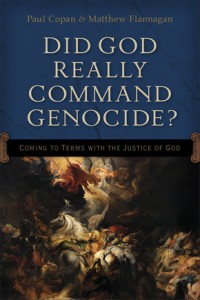 A common objection to belief in the God of the Bible is that a good, kind, and loving deity would never command the wholesale slaughter of nations. In the tradition of his popular Is God a Moral Monster?, Paul Copan teams up with Matthew Flannagan to tackle some of the most confusing and uncomfortable passages of Scripture. Together they help the Christian and nonbeliever alike understand the biblical, theological, philosophical, and ethical implications of Old Testament warfare passages.