My paper, “Why the Horrendous deeds objection is still a bad argument” has now been published by Sophia here. The abstract is as follows: A common objection to divine command meta-ethics (‘DCM’) is the horrendous deeds objection. Critics object that if DCM is true, anything at all could be right, no matter how abhorrent or […]
Entries Tagged as 'Louise Anthony'
Published in Sophia “Why the Horrendous deeds objection is still a bad argument”
February 12th, 2021 3 Comments
Tags: Brad Hooker · Divine Command Theory · Erik Wielenberg · Euthyphro Dilemma · God and Morality · Jason Thibodeau · Louise Anthony · Walter Sinnott-Armstrong · Wes Morriston
Sunday Study: Abraham and Isaac – Did God Command the Killing of an Innocent?
July 26th, 2009 17 Comments
Perhaps the most infamous passage in the Hebrew scriptures occurs in Genesis 22:2, Then God said, “Take your son, your only son, Isaac, whom you love, and go to the region of Moriah. Sacrifice him there as a burnt offering on one of the mountains I will tell you about.” Of course, as anyone who […]
Tags: Abraham · Abram · Ethics · Genesis · Isaac · John Hare · Kant · Kenneth Kitchen · Killing Innocents · Louise Anthony · Old Testament Ethics · Philip Quinn · Robert Adams · Selection · Stephen Evans · Sunday Study
On a Common Equivocation
January 12th, 2009 6 Comments
Recently I did a post on relativism and in earlier posts I have defended a divine command theory of ethics against various objections. In the comments section Mark V raised an interesting and thoughtful response. I hope Mark does not mind if I pick up on his points because the themes he raises are well […]
Tags: Divine Command Theory · Ethics · God and Morality · James Cornman · Keith Lehrer · Louise Anthony · Mark V · Patrick Nowell Smith · Philosophy of Religion · Walter Sinnott-Armstrong · William Lane Craig

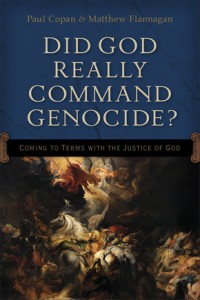 A common objection to belief in the God of the Bible is that a good, kind, and loving deity would never command the wholesale slaughter of nations. In the tradition of his popular Is God a Moral Monster?, Paul Copan teams up with Matthew Flannagan to tackle some of the most confusing and uncomfortable passages of Scripture. Together they help the Christian and nonbeliever alike understand the biblical, theological, philosophical, and ethical implications of Old Testament warfare passages.