My paper, “Why the Horrendous deeds objection is still a bad argument” has now been published by Sophia here. The abstract is as follows: A common objection to divine command meta-ethics (‘DCM’) is the horrendous deeds objection. Critics object that if DCM is true, anything at all could be right, no matter how abhorrent or […]
Entries Tagged as 'Wes Morriston'
Published in Sophia “Why the Horrendous deeds objection is still a bad argument”
February 12th, 2021 3 Comments
Tags: Brad Hooker · Divine Command Theory · Erik Wielenberg · Euthyphro Dilemma · God and Morality · Jason Thibodeau · Louise Anthony · Walter Sinnott-Armstrong · Wes Morriston
The Psychopath Objection to Divine Command Theory: Presentation
December 15th, 2020 Comments Off on The Psychopath Objection to Divine Command Theory: Presentation
www.youtube.com/watch?v=xHhmuqBW6Dw”>dialogue
Last year, I presented a talk entitled “The Psychopath Objection to Divine Command Theory: Another Reply to Erik Wielenberg” to the New Zealand Association of Philosophers conference in Auckland. This was a follow up to interaction I have had with the work of Erik Wielenberg. In 2017 I wrote a critical response to Wielenberg’s book Robust […]
Tags: Divine Command Theory · Erik Wielenberg · Psychopath Objection · Wes Morriston · William Lane Craig
Divine Command Theory: answering classic and contemporary objections
February 3rd, 2020 Comments Off on Divine Command Theory: answering classic and contemporary objections
Last week Jordan Hampton from Crash Course Apologetics interviewed me about chapters 12-13 of my book Did God Really Command Genocide. In this is the section of the book, I discuss divine command metaethics and critique some of the most important objections raised against divine command theories. The interview is nearly two and a half hours long. We […]
Tags: Arbitrariness Objection · Divine Command Theory · Erik Wielenberg · God and Morality · Michael Tooley · Russ Shafer Landau · Sam Harris · Wes Morriston
The Psychopath Objection to Divine Command Theory: Another Response to Erik Wielenberg (Part two)
September 11th, 2019 Comments Off on The Psychopath Objection to Divine Command Theory: Another Response to Erik Wielenberg (Part two)
In my last post, I expounded the Psychopath objection to divine command meta-ethics (DCM) that has recently been defended by Erik Wielenberg. To recap. Wielenberg suggests that my response to his earlier “reasonable unbeliever’s objection” relies on the following principle: R) God commands person S to do act A only if S is capable of […]
Tags: C Stephen Evans · Divine Command Theory · Erik Wielenberg · God and Morality · Wes Morriston
Erik Wielenberg and the Autonomy Thesis: part one Wielenberg’s criticism of Divine command meta-ethics
March 11th, 2017 2 Comments
The autonomy thesis contends that there can be moral requirements to φ regardless of whether God commands, desires, or wills that people φ. In his monograph, Robust Ethics: The Metaphysics and Epistemology of Godless Normative Realism,[1] Erik Wielenberg offers arguably one of the most sophisticated defences of the autonomy thesis to date. Wielenberg argues that: […]
Tags: Divine Command Theory · Erik Wielenberg · God and Morality · Wes Morriston
Debate Review: Sam Harris and William Lane Craig on Ethical Naturalism Part II
April 18th, 2011 41 Comments
In Part I of my review of the debate between Sam Harris and William Lane Craig on the moot “Is the Foundation of Morality Natural or Supernatural? I discussed Craig’s defence of the contention that: 1. If God exists then we have a plausible account of (a) the nature of moral goodness and (b) the nature of […]
Tags: Debates · Ethical Naturalism · God and Morality · Is the Foundation of Morality Natural or Supernatural? · Notre Dame · Robert Adams · Sam Harris · Wes Morriston · William Lane Craig
Friday Fallacy: Equivocation
April 16th, 2011 14 Comments
In my post on Assessing Arguments I noted that a valid argument is one where it is impossible for the premises to be true and the conclusion false. I gave the following example: Premise: All men are under 10 feet tall; Premise: John is a man; Conclusion: John is under 10 feet tall. This argument […]
Tags: Equivocation Fallacy · Fallacy Friday · Luke Muehlhauser · Walter Sinnott-Armstrong · Wes Morriston · William Wainwright

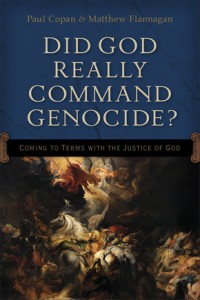 A common objection to belief in the God of the Bible is that a good, kind, and loving deity would never command the wholesale slaughter of nations. In the tradition of his popular Is God a Moral Monster?, Paul Copan teams up with Matthew Flannagan to tackle some of the most confusing and uncomfortable passages of Scripture. Together they help the Christian and nonbeliever alike understand the biblical, theological, philosophical, and ethical implications of Old Testament warfare passages.