Last week Jordan Hampton from Crash Course Apologetics interviewed me about chapters 12-13 of my book Did God Really Command Genocide. In this is the section of the book, I discuss divine command metaethics and critique some of the most important objections raised against divine command theories. The interview is nearly two and a half hours long. We go over every objection I respond to in the book. Enjoy
Tag: Michael Tooley
-
Divine Command Theory: answering classic and contemporary objections
-
IS A FETUS A HUMAN BEING? Part one: Viability
This is one of a series of posts based on a class I teach for level 3 NCEA Religious Studies.
In the last few posts we saw that most of the Christian religious tradition sketched the following argument against feticide;
Premise [1] Killing a human being without justification violates the law of God.
Premise [2] A formed conceptus (i.e. a fetus) is a human being.
Premise [3] In the case of feticide (at least in the majority of cases) insufficient or no justification is forthcoming.
In this next series of posts, we will look at [2], the claim that a fetus, is a human being.
Viability
A very common position put forward today is that a foetus doesn’t become a human being until the point of viability.
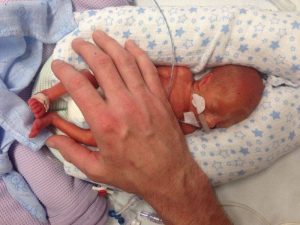 Viability refers to the point in pre-natal development where a foetus can live outside the mother’s womb. The idea is that fetus is not a human being until it is capable of surviving independently of another individual, before this period, it does not have an independent existence from its mother.
Philosopher Susan Sherwin expresses this idea when she states that a fetus “is wholly dependent on her [the mother’s] unique contribution to its maintenance, while a newborn is physically separate, though still in need of a lot of care”[1]. Current medical technology means that viability occurs around 22-24 weeks after conception. At this point in time an infant that is born prematurely survive and be placed in an incubator.
Objections to viability
Obviously, the claim that a fetus is not a human being until viability is controversial. Several important objections have been raised to this position. We will look at the main ones below.
A. The problem of differing technology
 The Philosopher Peter Singer contends that just because a fetus cannot survive independently of its mother that does not mean it is not a human being. This is because whether a fetus is viable or not depends more on the medical technology of a particular culture than any feature of the fetus itself. A fetus that is not viable in a more impoverished country like Chad is viable in a city like Los Angeles. If viability is necessary for something to be a human, then a woman pregnant with a viable fetus in Los Angeles who flies from Los Angeles to Chad carries a human being when she leaves, but this human being ceases to exist when she arrives in India and yet becomes human again when she returns.
2. The problem of conjoined twins
The Philosopher Michael Tooley offers a different criticism of people who claim that viability is the point where a human comes into existence. Tooley argues this claim
 has the strange implications that conjoined (Siamese) twins are not humans either[2]. Consider conjoined twins Bob and Scott. If Bob is a human being, then since Scott cannot live independently of Bob, Scott must not be a human person. However, it is difficult to see what property Bob has that Scott lacks which would justify considering one a human and the other not. It appears then that one would be forced to conclude that they both are, and are not, human. However, both Bob and Scott are humans and killing one or both of them would be homicide despite this entailing that they are both human beings even though one cannot live independently of the other.
C. Does Dependence end at Birth
Above we quoted the philosopher Susan Sherwin, Sherwin argued that the difference between a fetus and a newborn infant is that a fetus is dependent on the mothers care and cannot live independently of her. Some Philosophers have argued this is false, they claim that when you reflect on the facts carefully, it is clear that dependence doesn’t end at birth. Philosopher David Oderberg is an example:
A born baby is also totally dependent on its mother, only instead of being fed and sheltered by the mother’s automatic internal processes, it is fed and sheltered by the mother’s consciously controlled external, behaviour. How can that make a difference to whether or not a foetus is a human being?[3]
Peter Singer points out that a new-born is entirely dependent on its mother if it happens to be born in an isolated area where there are no other lactating women or the means of bottle-feeding. An elderly woman may be entirely dependent on her children looking after her. A hiker who breaks her leg a week’s walk from a road will die if her companions do not bring help. Yet in these situations. Yet the hiker, the elderly women or the baby are still t human beings. He concludes it is not plausible to suggest that the dependence of the non-viable fetus upon its mother makes it non-human.
[1] Susan Sherwin, “Abortion a Feminist Perspective,” in Ethical Issues in Modern Medicine, 5th ed., ed.
Bonnie Steinbock & John D. Arras (Mountain View CA: Mayfield Publishing Co, 1999), 364.
[2] Michael Tooley, “Abortion and Infanticide” Philosophy and Public Affairs, Vol. 2, No. 1 (Autumn, 1972), 51
[3] David Oderberg, Applied Ethics: A Non-Consequentialist Approach (Oxford: Blackwell Publishers Co, 2000), 5.
-
Francesca Minerva and Matthew Flannagan on “After-birth abortion: why should the baby live?” on Radio
Francesca Minerva and Alberto Giubilini‘s article “After-birth abortion: why should the baby live?” published in the Journal of Law, Ethics and Medicine is creating waves the world over. In a few hours, on the morning of Thursday 1 March, around 10:00am New Zealand time, Dr Minerva will be interviewed on this article on Radio Rhema’s Pat Brittenden Mornings. Shortly after Dr Matthew Flannagan, of this blog, arguably New Zealand’s most eminent Abortion Ethicist, will be interviewed in response.
The Abstract of “After-birth abortion: why should the baby live?” is as follows:
 Abortion is largely accepted even for reasons that do not have anything to do with the fetus’ health. By showing that (1) both fetuses and newborns do not have the same moral status as actual persons, (2) the fact that both are potential persons is morally irrelevant and (3) adoption is not always in the best interest of actual people, the authors argue that what we call ‘after-birth abortion’ (killing a newborn) should be permissible in all the cases where abortion is, including cases where the newborn is not disabled.
Matt’s articles on abortion rebutting most of the arguments used in “After-birth abortion” (they are very similar to arguments offered by Michael Tooley and Peter Singer) can be found by using the tags below – particularly see his:
Boonin and Sentience Criteria: A Critique Part I
Boonin and Sentience Criteria: A Critique Part II
(published in Ethics and Medicine: An International Journal of Bioethics vol 25, issue 2, 2009, 95-106)
Sentience Part 1
Sentience Part 2UPDATE:
Dr Francesca Minerva’s interview on her and Alberto Giubilini’s article “After-birth abortion: why should the baby live?” is now available to download it as an MP3.Dr Matthew Flannagan’s interview on Francesca Minerva and Alberto Giubilini’s article “After-birth abortion: why should the baby live?” is now available to download it as an MP3.
FURTHER UPDATE
In response to Dr Minerva’s comments in her interview where she states that parents of disabled children do not read academic articles and later, academics who are capable of understanding the debate would not be offended by the position she was arguing for:I am an academic, I am married to Matt who is also an academic.
Matt and I are the parents of four children, two of whom have disabilities, one whose diagnosis is Severe Autistic Spectrum Disorder. The severity of this diagnosis cannot be overstated. Our son cannot go to school, cannot be cared for by most people; and when his condition is not managed, regularly does actions that endanger himself and others that are the source of considerable stress – he gets into rages where he cannot value or appreciate the risks he is taking to his own life. We shape our lives around managing his care. It is hard. His condition causes significant impact to our financial, social and professional endeavours as well as our stress levels; just on Saturday he caused four Police Patrol cars and their respective officers to leave active duty to deal with him.
So we present a conundrum to Dr Minerva’s claims. We are academics, we are both capable of following and understanding the argument and contributing to it in a non-emotive way – in fact, both of us have contributed to this particular debate in this way. Further, we often read academic articles – most recently we have each read hers; we author them too. Contemporaneously, we are also parents of disabled children, one fairly seriously disabled child. So are we offended by her argument? Yes. The suggestion that our son, because he is a burden, could understandably and justifiably be killed provided he is of a biological state where he does not value or appreciate his life – or that had we known what we were in for we could just had killed him at birth, is offensive. An implication of this argument is that he is not as valuable as other human beings and I reject that.
As Matt pointed out in his interview, when your reasoning brings you to a conclusion of that magnitude you need to check your premises, not bite the bullet and shoot the baby.
Oh and by the way, abortion means termination of pregnancy it cannot, by definition, apply post-pregnancy. It is up there with talking about post-death homicide.
HERALD UPDATE:
The New Zealand Herald has run an article on the subject featuring Matt (only they wrongly imply he is on faculty at Auckland University): “Killing newborns: Paper stirs debate, death threats” -
A Godless Public Square: Do ‘Private’ Christian Beliefs Have a Place in Public Life? Part I Matthew Flannagan – Theology
 A few weeks ago, as part of Jesus Week at the University of Auckland, Thinking Matters and Evangelical Union hosted an event entitled A Godless Public Square: Do ‘Private’ Christian Beliefs Have a Place in Public Life? This event was a conversation between Theology, Philosophy and Law and featured Matthew Flannagan – Analytic Theologian, Glenn Peoples – Philosopher and Madeleine Flannagan – Legal Scholar. The video is still being edited and will be available soon but for now, this 3-part series comprises the written speeches of each speaker.
Matthew Flannagan – Analytic Theology
Recently, many Christian ethicists have defended the central place of God’s commands in Theological ethics. In this talk I want to discuss one important objection to appeals to God’s commands; this is the claim that, while it is perfectly appropriate for believers to appeal to purported divine commands when regulating their private conduct or the conduct of voluntary religious communities who believe in such commands, it is morally wrong to appeal to theological beliefs of this sort in any discussion of social ethics. When doing Ethics as a public enterprise i.e. engaging in debates over social policy or offering criticism of cultural and social practices, Christian Ethicists are morally bound to only appeal to secular considerations. I will argue that this position, though widely accepted inside and outside of the church, is mistaken.
The Objection
So what is the problem with appealing to divine commands in social ethics? Christian theological convictions ought to impact the whole of life both in the private and public spheres; this is what is meant by the idea of an “undivided life”, where Jesus is Lord of all aspects of our lives.Yet this consequence of Christian faith conflicts with a pervasive contemporary attitude: the view that that religion is fundamentally a private matter. It is accepted that a Christian is free to utilise theological convictions when they make decisions about their own life but in a pluralistic society it is increasingly deemed inappropriate to bring such convictions into public discussions about morality, law, politics, economics, education, scholarship and so on. The desire to influence society with Christian ideals or to convert others to the faith is viewed by many as an intolerant desire to impose one’s private views onto others.
It is widely accepted that theological convictions can govern churches and the private lives of believers yet we are told that the public square – government, public policy, the courts, the academy, education, business, arts, media, etc – should be secular only.The problem is nicely summarised by Stephen Carter Christian theological convictions ought to impact the whole of life both in the private and public spheres; this is what is meant by the idea of an “undivided life”, where Jesus is Lord of all aspects of our lives.
Yet this consequence of Christian faith conflicts with a pervasive contemporary attitude: the view that that religion is fundamentally a private matter. It is accepted that a Christian is free to utilise theological convictions when they make decisions about their own life but in a pluralistic society it is increasingly deemed inappropriate to bring such convictions into public discussions about morality, law, politics, economics, education, scholarship and so on. The desire to influence society with Christian ideals or to convert others to the faith is viewed by many as an intolerant desire to impose one’s private views onto others.
It is widely accepted that theological convictions can govern churches and the private lives of believers yet we are told that the public square – government, public policy, the courts, the academy, education, business, arts, media, etc – should be secular only.
This event looks at this issue. The conversation will span Theology, Philosophy and Law led by a panel made up of Christian representatives from each discipline along with you the audience:
“One good way to end a conversation – or start an argument – is to tell a group of well educated professionals that you hold a political position (preferably a controversial one such as being against abortion or pornography) because it is required by your understanding of God’s will. In the unlikely event that anyone hangs around to talk with you about it, chances are that you will be challenged on the ground that you are intent on imposing your religious beliefs on other people. And in contemporary political and legal culture, nothing is worse.”[1]
Carter cites the objection that appealing to God’s commands in public moral debate involves imposing one’s religious beliefs onto other people, and points out that such impositions are morally wrong. Note that the objection is not that such divine commands do not exist or that it is irrational to believe that they do. The objection is a specifically moral one. It is morally wrong to appeal to such beliefs; doing so violates a moral obligation people have to not impose their religious beliefs onto others. Something like this moral objection is widely held, both inside and outside the church. In response to this I will make four points. (more…)
-
Abortion and the Morality of Feticide: Part II
In my last post, Abortion and the Morality of Feticide: Part I, I briefly sketched an argument against feticide,
[1] It is wrong to kill a human being without justification;
[2] A fetus is a human being;
[3] In the case of feticide (at least in the majority of cases) insufficient or no justification is forthcoming.
I argued that defenders of feticide cannot rationally reject this argument unless they reject one of the premises. I argued further that attempts to refute [3] are successful only if one assumes that a fetus is not a human being. It follows then that defenders of abortion laws cannot rationally avoid the question of whether [2] is correct, whether a fetus is a human.
Is the Fetus a Human Being?
 The first thing to note is that the claim that feticide is homicide has considerable prima facie plausibility. Consider this, a hunter is in the woods and notices some rustling in the bushes. Looking through his scope he sees a six-foot high, bi-pedal being with brown hair, blue eyes, wearing a red and black swanndri. He refrains from shooting. Here, the hunter makes the sensible and reasonable judgement that in firing he would risk engaging in homicide. He bases this on what the target looks like. In the absence of reasons for thinking otherwise, he has good grounds for this claim.
This example has application to the status of the fetus; “[there is] a general consensus that the fetus is recognisably human after six weeks, and certainly after eight”[1] This fact, conjoined with the above illustration, entails that, in the absence of good reasons to the contrary, there are good grounds for thinking that feticide is homicide.
The second thing to note is is that good reasons for thinking the fetus does not have human status are not forthcoming. Here I will focus on four common examples: viability, sentience, birth and person-hood.
Viability
A common argument contends that a fetus is not a human because it is not viable. Susan Sherwin argues that feticide differs from killing children because a fetus “is wholly dependent on her [the mother’s] unique contribution to its maintenance, while a newborn is physically separate, though still in need of a lot of care”.[2]There are several problems with this position.
The fact that a fetus cannot survive independently of its mother does not mean it is not a human being. Fetal viability is contingent upon the medical technology of a given culture. A fetus that is not viable in (more…)
-
Abraham, Isaac, Virginity, Rape and Child Killing (Another Old Testament Ethics Post)
Randal Rauser has published a blog post touching on Old Testament ethics called “An update in the wake of Atlanta (plus a bit on rape and child killing)“. His post gives an update on his thoughts following his interaction with Paul Copan, Richard Hess and myself in the Evangelical Philosophical Society’s break-out panel discussion “Is Yahweh a Moral Monster” at the Society for Biblical Literature (“SBL”) in Atlanta in November. While there was considerable overlap between his position and mine, there was one particular issue on which he and I disagreed quite sharply on the night that he alludes to in his post. Let me contextualise this disagreement and then put my response to his comments.
Back in 2009 I wrote “Abraham and Isaac – Did God Command the Killing of an Innocent?” This post addressed a dilemma several philosophers have raised for those Christians who take the patriarchal narratives in Genesis in literal manner. It seems plausible that Christians who do this are committed to an inconsistent triad,
- If God commands an action x then x is morally required;
- It is wrong to kill innocent human beings;
- God commanded Abraham to kill an innocent human being.
These three propositions are inconsistent; 1 and 3 entail the denial of 2.
To respond to this triad, I appropriated a thought experiment provided by John Hare; I wrote:
One example Hare notes, is particularly interesting, “Perhaps (to get more bizarre) God could have willed that we kill each other at the age of 18, at which point God would bring us immediately back to life.” Hare asks us to imagine a world, in which, when people of a certain age are killed they immediately come back to life. He opines, quite plausibly, that if this were to be the case then killing people at this age would not be wrong or at least, not seriously wrong. One of the reasons that killing people is wrong in the world we live in is because people stay dead. If they were only unconscious for a split second and came back to life in full health then arguably killing a person would not be the serious wrong we believe it is.
I suggested that, a careful examination of the text reveals that Abraham’s actions occurred in a context where he knew his son would not stay dead but would come down the mountain with him and live on to adulthood to father children of his own. I argued this fact resolves the dilemma,
Once this is realised, I think it is evident that [1], [2] and [3] are consistent. If one assumes, for the sake of argument, that the Patriarchal Narratives are literally true then it follows that [3] is true only if a certain context is assumed. God commanded Abraham to kill his son in the highly unusual context where Abraham knew that his son would not stay dead but would come down the mountain afterwards and live on to adulthood to father children of his own. Proposition [2] is defensible only in a context where people do not know these sorts of things; the rule to not kill the innocent applies to a world where people do not come back to life after they have been killed. Hence, the story of Abraham and Isaac, if taken literally, does not entail that God commanded something immoral or contradictory.
What I later discovered is that Paul Copan sometimes reads this blog and he, on reading my post, summarised my argument and appropriated it (with acknowledgements) in chapter 5 of his latest book Is God a Moral Monster: Making Sense of the Old Testament God.
 Enter Randal Rauser. In the paper he presented for the SBL panel, Rauser made a remark on the Abraham and Isaac issue. Copan responded by summarising his argument, which was an appropriation of my argument. Rauser responded with an analogy, which he has since (more…)


