Tag: David Oderberg

  • IS A FETUS A HUMAN BEING? Part one: Viability

    This is one of a series of posts based on a class I teach for level 3 NCEA Religious Studies.

    In the last few posts we saw that most of the Christian religious tradition sketched the following argument against feticide;

    Premise [1] Killing a human being without justification violates the law of God.

    Premise [2] A formed conceptus (i.e. a fetus) is a human being.

    Premise [3] In the case of feticide (at least in the majority of cases) insufficient or no justification is forthcoming.

    In this next series of posts, we will look at [2], the claim that a fetus, is a human being.

    Viability

    A very common position put forward today is that a foetus doesn’t become a human being until the point of viability. Viability refers to the point in pre-natal development where a foetus can live outside the mother’s womb. The idea is that fetus is not a human being until it is capable of surviving independently of another individual, before this period, it does not have an independent existence from its mother.

    Philosopher Susan Sherwin expresses this idea when she states that a fetus “is wholly dependent on her [the mother’s] unique contribution to its maintenance, while a newborn is physically separate, though still in need of a lot of care”[1]. Current medical technology means that viability occurs around 22-24 weeks after conception. At this point in time an infant that is born prematurely survive and be placed in an incubator.

    Objections to viability

    Obviously, the claim that a fetus is not a human being until viability is controversial. Several important objections have been raised to this position. We will look at the main ones below.

    A. The problem of differing technology

    The Philosopher Peter Singer contends that just because a fetus cannot survive independently of its mother that does not mean it is not a human being. This is because whether a fetus is viable or not depends more on the medical technology of a particular culture than any feature of the fetus itself. A fetus that is not viable in a more impoverished country like Chad is viable in a city like Los Angeles. If viability is necessary for something to be a human, then a woman pregnant with a viable fetus in Los Angeles who flies from Los Angeles to Chad carries a human being when she leaves, but this human being ceases to exist when she arrives in India and yet becomes human again when she returns.

    2. The problem of conjoined twins

    The Philosopher Michael Tooley offers a different criticism of people who claim that viability is the point where a human comes into existence. Tooley argues this claim has the strange implications that conjoined (Siamese) twins are not humans either[2]. Consider conjoined twins Bob and Scott. If Bob is a human being, then since Scott cannot live independently of Bob, Scott must not be a human person. However, it is difficult to see what property Bob has that Scott lacks which would justify considering one a human and the other not. It appears then that one would be forced to conclude that they both are, and are not, human. However, both Bob and Scott are humans and killing one or both of them would be homicide despite this entailing that they are both human beings even though one cannot live independently of the other.
     C. Does Dependence end at Birth

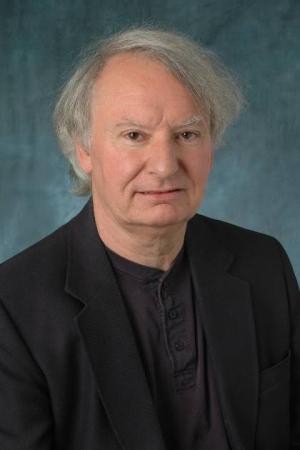
    Above we quoted the philosopher Susan Sherwin, Sherwin argued that the difference between a fetus and a newborn infant is that a fetus is dependent on the mothers care and cannot live independently of her. Some Philosophers have argued this is false, they claim that when you reflect on the facts carefully, it is clear that dependence doesn’t end at birth. Philosopher David Oderberg is an example:

    A born baby is also totally dependent on its mother, only instead of being fed and sheltered by the mother’s automatic internal processes, it is fed and sheltered by the mother’s consciously controlled external, behaviour. How can that make a difference to whether or not a foetus is a human being?[3]

    Peter Singer points out that a new-born is entirely dependent on its mother if it happens to be born in an isolated area where there are no other lactating women or the means of bottle-feeding. An elderly woman may be entirely dependent on her children looking after her. A hiker who breaks her leg a week’s walk from a road will die if her companions do not bring help. Yet in these situations. Yet the hiker, the elderly women or the baby are still t human beings.  He concludes it is not plausible to suggest that the dependence of the non-viable fetus upon its mother makes it non-human.


    [1] Susan Sherwin, “Abortion a Feminist Perspective,” in Ethical Issues in Modern Medicine, 5th ed., ed.

    Bonnie Steinbock & John D. Arras (Mountain View CA: Mayfield Publishing Co, 1999), 364.

    [2] Michael Tooley, “Abortion and Infanticide” Philosophy and Public Affairs, Vol. 2, No. 1 (Autumn, 1972), 51

    [3] David Oderberg, Applied Ethics: A Non-Consequentialist Approach (Oxford: Blackwell Publishers Co, 2000), 5.

     

  • Abortion and the Morality of Feticide: Part II

    In my last post, Abortion and the Morality of Feticide: Part I, I briefly sketched an argument against feticide,

    [1] It is wrong to kill a human being without justification;

    [2] A fetus is a human being;

    [3] In the case of feticide (at least in the majority of cases) insufficient or no justification is forthcoming.

    I argued that defenders of feticide cannot rationally reject this argument unless they reject one of the premises. I argued further that attempts to refute [3] are successful only if one assumes that a fetus is not a human being. It follows then that defenders of abortion laws cannot rationally avoid the question of whether [2] is correct, whether a fetus is a human.

    Is the Fetus a Human Being?

    Big MacThe first thing to note is that the claim that feticide is homicide has considerable prima facie plausibility. Consider this, a hunter is in the woods and notices some rustling in the bushes. Looking through his scope he sees a six-foot high, bi-pedal being with brown hair, blue eyes, wearing a red and black swanndri. He refrains from shooting. Here, the hunter makes the sensible and reasonable judgement that in firing he would risk engaging in homicide. He bases this on what the target looks like. In the absence of reasons for thinking otherwise, he has good grounds for this claim.

    This example has application to the status of the fetus; “[there is] a general consensus that the fetus is recognisably human after six weeks, and certainly after eight”[1] This fact, conjoined with the above illustration, entails that, in the absence of good reasons to the contrary, there are good grounds for thinking that feticide is homicide.

    The second thing to note is is that good reasons for thinking the fetus does not have human status are not forthcoming. Here I will focus on four common examples: viability, sentience, birth and person-hood.

    Viability
    A common argument contends that a fetus is not a human because it is not viable. Susan Sherwin argues that feticide differs from killing children because a fetus “is wholly dependent on her [the mother’s] unique contribution to its maintenance, while a newborn is physically separate, though still in need of a lot of care”.[2]

    There are several problems with this position.

    The fact that a fetus cannot survive independently of its mother does not mean it is not a human being. Fetal viability is contingent upon the medical technology of a given culture. A fetus that is not viable in (more…)

  • Viability

    A common argument claims that a fetus is not a human being until it is capable of surviving independently of another individual. Prior to this period, it does not have an independent existence from its mother; hence killing it is not homicide. This position is common in many legal and ethical arguments about the morality of abortion. Susan Sherwin, for example, notes that a fetus “is wholly dependent on her [the mother’s] unique contribution to its maintenance, while a newborn is physically separate, though still in need of a lot of care” [1].


    Two things can be said about this claim. Firstly, the ability to exist independently of another is not an essential property of human beings. Secondly, the inability to exist independently of another is in fact present in both fetuses and infants and so does not provide a reason for distinguishing between feticide and infanticide.

    Viability is not an essential property of human beings. Fetal viability is contingent upon the medical technology of a given culture. A fetus that is not viable in Chad is viable in Los Angeles. If viability is necessary for something to be a human then a woman pregnant with a viable fetus in Los Angeles who flies from Los Angeles to Chad carries a human being when she leaves but this human being ceases to exist when she arrives in India and yet becomes human again when she returns.

    A similarly-strange implication of the viability criterion is that it implies that Siamese twins are not humans either. Consider Siamese twins Bob and Scott. If Bob is a human being, then since Scott cannot live independently of Bob, Scott must not be a human person. However, it is difficult to see what property Bob has that Scott lacks which would justify considering one a human and the other not. It appears then that one would be forced to conclude that they both are, and are not, human. However, both Bob and Scott are human and killing one or both of them would be homicide despite this entailing that they are both human beings even though one cannot live independently of the other.

    Not only does making viability the demarcer of humanity entail numerous absurdities but the property Sherwin points to to justify its doing so , dependence, is not something that ends at birth.

    Oderberg puts the point well.

    A born baby is also totally dependent on its mother, only instead of being fed and sheltered by the mother’s automatic internal processes, it is fed and sheltered by the mother’s consciously controlled external, behaviour. How can that make a difference to whether or not a foetus is a human being? [2]

    A new-born is totally dependent on its mother if it happens to be born in an isolated area where there are no other lactating women or the means of bottle-feeding. An elderly woman may be totally dependant on her children looking after her. A hiker who breaks her leg a week’s walk from a road will die if her companions do not bring help. Yet in these situations, it remains that it would be homicide for the mother to kill her baby, the children to kill their mother or the hikers their companion. Further, one could not plausibly say that the hiker, the elderly women or the baby are not human beings. Consequently, it is not plausible to suggest that the dependence of the non-viable fetus upon its mother makes it non-human.


    These examples preclude an objection often raised against this type of criticism. Some critics have tried to argue that the position of a new-born infant in terms of dependence is different to non-viable fetuses in that after birth or viability other options are available. The dependence for survival can be handed on to someone else. However, before viability this is not the case. Hence, while infanticide is wrong, abortion prior to viability is not. This feature is absent in the cases of the hiker, the elderly mother and the infant.

    In fact, Sherwin notes;

    It is doubtful, however, that adoptions are possible for every child whose mother cannot care for it. The world abounds with homeless orphans; even in the industrialised West, where there is a waiting list for adoption of healthy (white) babies, suitable homes cannot always be found for troubled adolescents; inner city, AIDS babies, or many of the multiply handicapped children whose parents have tried to care for them but whose marriages broke under the strain.[3]

    Sherwin’s observation entails that some infants (and even older disabled children) are entirely dependent upon their parents and no one else is available to look after them. However, this confession is fatal to her position. Suppose society, as Sherwin argues, is racist and refuses to adopt dark skinned children. Does it follow that killing white children is homicide, whereas killing dark-skinned children is not? Suppose society is sexist or only wishes to adopt babies with blond hair and blue eyes or those that are able-bodied. Would non-Aryan babies, baby girls and those disabled cease to be human? If one’s humanity depends on societal conventions, the position is problematic.


    [1] Susan Sherwin, “Abortion a Feminist Perspective,” in Ethical Issues in Modern Medicine, 5th ed., ed. Bonnie Steinbock & John D. Arras (Mountain View CA: Mayfield Publishing Co, 1999), 364..
    [2] David Oderberg, Applied Ethics: A Non-Consequentialist Approach (Oxford: Blackwell Publishers Co, 2000), 5.
    [3] Sherwin, “Abortion a Feminist Perspective,” 366
    .