Tag: Evangelical Union

  • Advance: Exploring Tough Questions About Christianity

    This blog’s Matthew Flannagan is scheduled to speak alongside Dr Glenn Peoples, Dr Chris Tucker, Sean du Toit and Jacqui Lloyd at this Friday’s one day Auckland conference Advance: Exploring Tough Questions About Christianity.

    Advance: Exploring Tough Questions About Christianity

    From the promotional material:

    Are faith and reason enemies? Should we take Christianity seriously in the world of ideas? Can we even know that Christianity is true? Thinking Matters and Evangelical Union are proud to host Christian philosopher, blogger, and popular speaker Dr Glenn Peoples to explore these questions and examine the evidence.

    Workshops sessions available:

      • Dr Chris Tucker on the ‘problem of evil’
      • Shawn Means on maths, the universe, and God
      • Sean du Toit on who wrote the books of the New Testament
      • Dr Matthew Flannagan on reading difficult Old Testament passages

    The day will conclude with a panel featuring Dr Glenn Peoples, Dr Matthew Flannagan, and Jacqui Lloyd which is open to any question.

    The location is ‘GAPS’ 17A Powell St, Avondale – slightly out of the city (and a 10 min walk from Avondale train station), this rustic location is ideal for seminars and discussion.

    Cost: $15. Lunch is included.

    Register at the Facebook event page here.

  • “Why I am (not) an Atheist” Hear Madeleine speak @ Auckland University on Monday

    The Reason and Science Society and Evangelical Union are getting together on Monday to discuss why they believe what they do about God and related things during RSS’ regular meeting time. Any and all are welcome to come and listen and join in the discussion.

    Three University of Auckland students representing each club (including this blog’s Madeleine Flannagan speaking for Evangelical Union) will speak for 5 mins each, followed by a group discussion on the issues raised.

    What: “Why I am (not) an atheist”
    Format: Panel with Q&A
    When:
     5-7pm, Monday 3 October 2011
    Where: Case Room 2 OGGB (Owen G Glen Building)
    Cost: Free

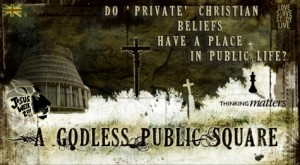
  • A Godless Public Square: Do ‘Private’ Christian Beliefs Have a Place in Public Life? Part I Matthew Flannagan – Theology

    A Godless Public Square: Do ‘Private’ Christian Beliefs Have a Place in Public Life? A few weeks ago, as part of Jesus Week at the University of Auckland, Thinking Matters and Evangelical Union hosted an event entitled A Godless Public Square: Do ‘Private’ Christian Beliefs Have a Place in Public Life? This event was a conversation between Theology, Philosophy and Law and featured Matthew Flannagan – Analytic Theologian, Glenn Peoples – Philosopher and Madeleine Flannagan – Legal Scholar. The video is still being edited and will be available soon but for now, this 3-part series comprises the written speeches of each speaker.

    Matthew Flannagan – Analytic Theology

    Recently, many Christian ethicists have defended the central place of God’s commands in Theological ethics. In this talk I want to discuss one important objection to appeals to God’s commands; this is the claim that, while it is perfectly appropriate for believers to appeal to purported divine commands when regulating their private conduct or the conduct of voluntary religious communities who believe in such commands, it is morally wrong to appeal to theological beliefs of this sort in any discussion of social ethics. When doing Ethics as a public enterprise i.e. engaging in debates over social policy or offering criticism of cultural and social practices, Christian Ethicists are morally bound to only appeal to secular considerations. I will argue that this position, though widely accepted inside and outside of the church, is mistaken.

    The Objection
    So what is the problem with appealing to divine commands in social ethics? Christian theological convictions ought to impact the whole of life both in the private and public spheres; this is what is meant by the idea of an “undivided life”, where Jesus is Lord of all aspects of our lives.

    Yet this consequence of Christian faith conflicts with a pervasive contemporary attitude: the view that that religion is fundamentally a private matter. It is accepted that a Christian is free to utilise theological convictions when they make decisions about their own life but in a pluralistic society it is increasingly deemed inappropriate to bring such convictions into public discussions about morality, law, politics, economics, education, scholarship and so on. The desire to influence society with Christian ideals or to convert others to the faith is viewed by many as an intolerant desire to impose one’s private views onto others.

    It is widely accepted that theological convictions can govern churches and the private lives of believers yet we are told that the public square – government, public policy, the courts, the academy, education, business, arts, media, etc – should be secular only.The problem is nicely summarised by Stephen Carter Christian theological convictions ought to impact the whole of life both in the private and public spheres; this is what is meant by the idea of an “undivided life”, where Jesus is Lord of all aspects of our lives.

    Yet this consequence of Christian faith conflicts with a pervasive contemporary attitude: the view that that religion is fundamentally a private matter. It is accepted that a Christian is free to utilise theological convictions when they make decisions about their own life but in a pluralistic society it is increasingly deemed inappropriate to bring such convictions into public discussions about morality, law, politics, economics, education, scholarship and so on. The desire to influence society with Christian ideals or to convert others to the faith is viewed by many as an intolerant desire to impose one’s private views onto others.

    It is widely accepted that theological convictions can govern churches and the private lives of believers yet we are told that the public square – government, public policy, the courts, the academy, education, business, arts, media, etc – should be secular only.

    This event looks at this issue. The conversation will span Theology, Philosophy and Law led by a panel made up of Christian representatives from each discipline along with you the audience:

    “One good way to end a conversation – or start an argument – is to tell a group of well educated professionals that you hold a political position (preferably a controversial one such as being against abortion or pornography) because it is required by your understanding of God’s will. In the unlikely event that anyone hangs around to talk with you about it, chances are that you will be challenged on the ground that you are intent on imposing your religious beliefs on other people. And in contemporary political and legal culture, nothing is worse.”[1]

    Carter cites the objection that appealing to God’s commands in public moral debate involves imposing one’s religious beliefs onto other people, and points out that such impositions are morally wrong. Note that the objection is not that such divine commands do not exist or that it is irrational to believe that they do. The objection is a specifically moral one. It is morally wrong to appeal to such beliefs; doing so violates a moral obligation people have to not impose their religious beliefs onto others. Something like this moral objection is widely held, both inside and outside the church. In response to this I will make four points. (more…)

  • This Wednesday @ Auckland Uni: A Godless Public Square – Do ‘Private’ Christian Beliefs Have a Place in Public Life?

    A common slogan in western liberal societies is that religion is a private matter; it has no place in public discussions of law, economics, public policy, education, social ethics, culture and so on. This “separationist” view is often attributed to US Founding Father, Thomas Jefferson “Wall of Separation Letter” and has become the orthodox view in liberal thought receiving important advocacy by philosophers such as John Rawls.

    This idea is often enforced in the courts with public displays or manifestations of religion being challenged on freedom of religion grounds. This has recently been seen in European countries; recent laws and cases have seen bans on religious emblems being worn in schools, employment situations and in public generally. The UK courts recently ruled that Christians could not foster children out of fear their private beliefs about homosexual conduct might be taught to the children.

    In the US, a confusing, and often contradictory, array of cases on everything from public displays of the ten commandments, home-schooling, school vouchers and so on has rendered the position in the position more and more hostile towards religion being exercised in public and the law has become more and more difficult to comply with because of increasing lack of clarity as to how it works.

    Increasingly in the West we are seeing the idea of religion being something private being accepted by Christian believers who feel that while they personally believe something it is inappropriate for them to apply or utilise these beliefs when thinking about or going about issues that may affect others.

    An increasing body of theological, philosophical and legal scholarship has called this orthodox view into question. These scholars have argued that the orthodox view is unjust, contradictory and arbitrary. It is unjust in that it places moral and social restraints on religious advocacy that are not imposed on non-religious views. It is arbitrary and contradictory in that the reasons typically offered for this view, if sound, seem to apply with equal force to any controversial view whether religious or secular and, in fact, to many doctrines central to liberal thought itself. Moreover, it suggests that even if religious beliefs are true and relevant to public issues, believers are to conduct themselves in public in a manner which ignores these beliefs or treats them as if they are not true if they cannot be justified from a secular viewpoint; in private they are free to believe what they want.

    Critics of orthodoxy contend this separation of faith and self in public is unrealistic at a psychological level and that it fails to understand how religions function in the lives of believers who believe their religion to be true and not merely just a personal private preference.

    New Zealand jurisprudence has not seen the litigation on this subject that the United States and Europe has so it is largely untested. The practice of being influenced by international precedent from the commonwealth and US jurisdictions coupled with our secular society which contains strong factions in favour of the liberal view – secular humanist groups, some politicians, scholars, media, bloggers – suggests that it will fall the way of the rest of the western world unless a robust counter-view is developed and advanced in the New Zealand across disciplines.

    Further to the issue of justice, the tendency to view religious beliefs as a merely private preference that is isolated from one’s public actions, decisions and choices is pervasive in the New Zealand evangelical church and it leads to a view of religion that ignores questions of truth and focuses instead on private benefit and piety of religious belief.

    For these reasons it is important this conversation be had across disciplines; particularly the three disciplines of theology, philosophy and law need to understand and hear each other so we can work together on this problem.

    With this backdrop in mind, Thinking Matters and Evangelical Union bring you, as part of Jesus Week, the following event:

    Godless Public Square

    A Godless Public Square:

    Do ‘Private’ Christian Beliefs Have a Place in Public Life?

    A Jesus Week Dialogue between Theology, Philosophy and Law

    7pm Wednesday 3 August
    Lib B28 (Library Basement, 5 Alfred St) University of Auckland

    Organised by: Thinking Matters and Evangelical Union
    Format: Panel Discussion followed by Q&A
    Moderated by: Patt Brittenden
    Speakers: listed in the order they will speak in: (more…)

  • A Godless Public Square: Do ‘Private’ Christian Beliefs Have a Place in Public Life? @ Auckland Uni

    Mon 1- Friday 5 August marks Jesus Week. A number of events will be held on the University of Auckland campus of which we are part of including this one brought to you by the Evangelical Union and Thinking Matters:

    Godless Public Square

    A Godless Public Square:

    Do ‘Private’ Christian Beliefs Have a Place in Public Life?

    A Jesus Week Panel Discussion
    7-9pm Wednesday 3 August
    Lib B28 (Library Basement) University of Auckland

    Christian theological convictions ought to impact the whole of life both in the private and public spheres; this is what the idea of an “undivided life” means, Jesus is Lord of all aspects of our lives.

    Yet this consequence of Christian faith conflicts with a pervasive contemporary attitude: the view that that religion is fundamentally a private matter. It is accepted that a Christian is free to utilise theological convictions when they make decisions about their own life but in a pluralistic society it is increasingly deemed inappropriate to bring such convictions into public discussions about morality, law, politics, economics, education, scholarship and so on. The desire to influence society with Christian ideals or to convert others to the faith is viewed by many as an intolerant desire to impose one’s private views onto others.

    It is widely accepted that theological convictions can govern churches and the private lives of believers yet we are told that the public square – government, public policy, the courts, the academy, education, business, arts, media, etc – should be secular only.

    This event looks at this issue. The conversation will span Theology, Philosophy and Law led by a panel made up of Christian representatives from each discipline along with you the audience.

    Up for discussion are issues like:

    – Is it wrong for Christians to impose their ‘private’ religious beliefs onto others?
    – Is secularism the neutral perspective it is claimed to be?
    – Are public expressions of religion regulated by law?

    Bring your own questions and ask them at the Q & A session.

    This is a free event open to the public, which will be lay friendly – a university degree is not necessary in order for you to attend!

    Panel:

    Moderator:

    RSVP on Facebook here (or just turn up with your friends)

  • Dr Glenn Peoples on Science and Morality, Sam Harris & the Claims of the New Atheism @ Auckland Uni

    Christian philosopher and blogger Dr Glenn Peoples is coming to Auckland to give a public talk entitled “Science and Morality: Is there a Naturalistic Basis of Moral Truth?” This talk will examine the claims of the new atheism, particularly the work of Sam Harris. Dr Peoples will ask, can the natural world tell us what is right and wrong, without need for God? Can moral facts be grounded scientifically? He will argue that the attempt to ground morality outside of God ultimately fails. An opportunity for questions and answers will follow the talk.

    Science and Morality

    The talk will be held at the University of Auckland on Monday 6 September from 7-9pm in LIB 15 (in the main campus library basement at 5 Alfred St, Auckland City). Admission is free and is open to anyone. We do advise that you arrive early to locate parking and to obtain a good seat.

    If you enjoyed the panel discussions and the debate we organised earlier this year on Auckland’s campus, you should enjoy this event.

    Dr Glenn Peoples is a graduate in theology (BD) from the Bible College of New Zealand and has a masters degree (MTHeol) and a doctorate in philosophy from the University of Otago. For over ten years he has been writing and speaking, both in New Zealand and abroad, on intellectual issues that Christians face, including the place of faith in the public square, justice and human rights and the reasons for Christian belief. He lives in Dunedin with his wife Ruth and their four children and he blogs at “Say Hello to my Little Friend: The Beretta Blog and Podcast“

    This event is brought to you by Thinking Matters, in association with Evangelical Union. Here is the event’s Facebook Page.

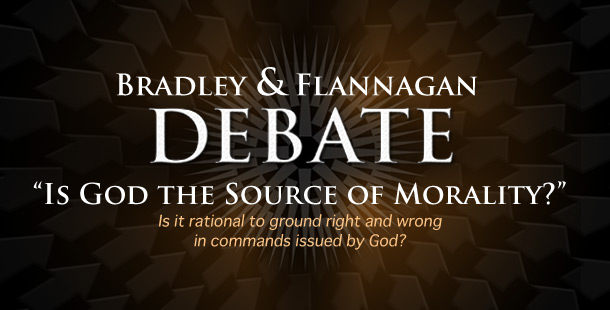
  • Bradley v Flannagan Debate @ Auckland Uni “Is God the Source of Morality?”

    Raymond Bradley and Matthew Flannagan will debate the topic “Is God the Source of Morality? Is it rational to ground right and wrong in commands issued by God?”

    The debate will be held at the University of Auckland on Monday 2 August from 7-9pm in “The Centennial” 260 – 098 OGGB (the bottom level of the Business School) on 12 Grafton Rd, Auckland City.

    Raymond Bradley v Matthew Flannagan "Is God the Source of Morality"

    If you enjoyed the 2008 debate at Auckland University between William Lane Craig and Bill Cooke, you should enjoy this debate.

    Raymond BradleyBradley is an Emeritus Professor of Philosophy with areas of specialty in Philosophical Logic, Metaphysics, Logical Atomism; he has previously debated William Lane Craig, Edward Blaiklock and many other Christian scholars and describes himself as an older generation “new atheist”.

    Matthew FlannaganFlannagan is an Auckland based Philosopher and Theologian with areas of specialty in Philosophy of Religion, Ethics and Theology; he has previously debated Bill Cooke, Zoe During and, of course, writes for this blog.

    The format of the debate will be as follows:

    Dr Bradley: Opening Comments [20 min]
    Dr Flannagan: Opening Comments [20 min]
    Dr Bradley: Reply to Dr Flannagan [10 min]
    Dr Flannagan: Reply to Dr Bradley[10 min]
    Dr Bradley: Closing Comments [7 min]
    Dr Flannagan: Closing Comments [7 min]
    Questions from the floor: [30 min]

    The moderator for the debate will be John Bishop.

    Bradley will be introduced by Robert Nola.

    Flannagan will be introduced by Chris Tucker.

    Both Bradley and Flannagan are experienced and engaging public speakers who are practiced at pitching their topics to suit their audiences. So, invite all your friends, and block out the evening of Monday 2 August from 7-9 pm now and make sure you get to the debate early to locate parking and grab a good seat.

    This debate is brought to you by the Evangelical Union and the Reason and Science Society as part of the University of Auckland’s Jesus week/Atheist week, with support from Thinking Matters.

    The event will be videoed and will be published on this blog. Entry is free and any and all are welcome.

    There is even a Facebook page you can rsvp on and use to invite your friends.