Late last year I, wrote a criticism of Jerry Coyne’s piece in USA today. Entitled, As atheists know, you can be good without God. My critique attracted some attention. Getting commentary from Mary Ann Spikes, Jason Thibodeau, Jeffery Lay Lowder, and Brian Zamulinski. Since the USA today article Coyne has written a follow up article where he purports to address the kinds of criticisms I made in this post. This article is entitled Maybe my Philosophy isn’t so Unsophisticated After All. However, far from exonerating his poor reasoning, Coyne’s response simply further demonstrates my point.
 In this article Coyne focuses almost exclusively on criticisms I and others have made to his use of the arbitrariness objection. This is significant, for this criticism was just one of several criticisms of Coyne’s article that I raised . Consequently, even if Coyne’s rejoinder is sound it addresses only one of my objections. The rest remain untouched.
As it is, his response is poor. He begins by noting the response to the arbitrariness objection proposed by William Lane Craig. According to Coyne, Craig’s response is “whatever God orders is good and morally obligatory simply by virtue of the fact that He is God.” He cites this as a quotation but fails to provide a source. His response to this is to refer to alleged atrocities taught in the Old Testament and claim Craig’s response is “too stupid to address”
Three things are evident, First, this is not Craig’s response to the arbitrariness objection; in his book Philosophical Foundations of a Christian Worldview, Craig argues that Our moral duties are constituted by the commands of a just and loving God” (emphasis original) and that
this fact also supplies the key to the arbitrariness objection. For our duties are determined by the commands, not merely of a supreme potentate, but of a just and loving God. God is essentially compassionate, fair, kind, impartial, and so forth, and His commandments are reflections of His own character. Thus, they are not arbitrary, and we need not trouble ourselves about counterfactuals with impossible antecedents like “If God were to command child abuse . . . .[1]
So, Craig, in fact, maintains it’s impossible for God to command actions which are cruel, unjust and so on. He does not, claim such actions can become good merely by God commanding them and Coyne appears to insinuate.
Second, I actually addressed the Old Testament atrocity argument in my original article . However, Coyne simply repeats his argument.
Third, calling someone “stupid” is not a rational rebuttal of their position; it commits a fallacy that logicians call the ad hominem fallacy, where one attacks the arguer instead of rebutting his argument. The distinction between attacking a person and refuting their argument is an elementary one in logic; it’s hard to believe Coyne is unaware of it.
If Coyne thinks misrepresenting people, insulting them and then repeating an argument which has been addressed counts as competent philosophical or theological analysis he is gravely mistaken.
After setting this tone, Coyne turns specifically to my criticisms. After suggesting that responding to on MandM is “a mugs game” he directs the reader to an article by Jason Thibodeau who Coyne calls a “real” philosopher” and cites two paragraphs which he claims “decisively” refute me.
Now it doesn’t need saying that simply finding an article that agrees with you and maintaining the author of that article is a “real scholar” is not really a response to anything. Neither is simply asserting that someone has offered a refutation itself a refutation.
But what’s interesting is Coyne’s selective citation. After noting my point, that a loving and just person would not command the kinds of actions he mentions, Thibodeau states
There are a few problems with this response. The most important (and the one that I think that Coyne had in mind) is that if we are to understand the reply to mean that a moral God would not issue immoral commands… the response implies that there is a standard of morality that is independent of God against which he and his commands can be judged. But if morality is independent of God, then the DCT [divine command theory] is false.
Coyne suggests this response “shows pretty definitively that” my argument fails and it “sets the record straight” for all thinking Christian’s
In fact this response is mistaken. The fact that a loving and just being does not command certain actions does not entail that there is a moral standard independent of that being requiring them to not command those things. This is because it is possible for a person to be loving and just with being obligated to be loving and just. Suppose, for the sake of argument, morality was an illusion and in reality no one really was required to love their children. Would it follow that all parents would cease to love them, or that they could not exercise love? Not at all, I can be loving without being under an obligation to be loving. So this objection fails.
Interestingly however, Thibodeau actually points this out in the very next line of the article which Coyne snips from his quotation. Thibodeau writes:
In any event, as Flannagan indicated, the debate does not end here because the divine command theorist may concede the point but still insist that all he needs is that God is all-loving, and he will get the same consequence (or at least one that is close enough); namely that God will not issue commands that require us to cause horrible pain and suffering (or do anything that we all agree would be horrendous). If developed in the appropriate direction, this reply can lead to a fully developed response to the arbitrariness objection.
So, the “real philosopher” Coyne cites actually says this argument is unsuccessful, for reasons I had already indicated in my criticisms. Coyne’s response therefore appears to be as follows (a) find an article that agrees with his conclusions (b) assert the author (apparently unlike me) is a real philosopher (c) quote an argument the author actually says fails to address my point (d) Snip the context so your readers don’t know this (e) assert boldly that his comment refutes me. Far from showing that my criticisms of Coyne are mistaken these kinds of tactics suggest I was on the mark. Of course readers of Coyne’s work online or in USA today won’t have the original articles Coyne cites from and so will take his assertions on faith. This is effective propaganda but little else.
After these dubious manoeuvres, Coyne then asserts that the rest of Thibodeau’s article makes devastating points against me but does not cite or summarise these arguments.
In fact Thibodeau’s makes two arguments both of which fail.
Thibodeau’s, first argument appeals to God’s omnipotence, which he defines as the ability to do whatever is logically possible. If omnipotence is defined this way, then God could command the torture of children.
Now whether omnipotence should be defined in this way is in fact a matter of dispute. However, suppose we grant Thibodeau’s definition; the argument still fails. Adams’ position is that that moral obligations are constituted by the commands of a loving and just God. Even if God, being omnipotent could command the torture of children, he could not do so and continue to be loving and just. This is because it’s not logically possible for a loving and just being to command things like this. So this argument does nothing to show that a loving and just God could command torturing children and hence does not refute Adams’ position.
Thibodeau’s second argument is similarly mistaken. Thibodeau argues that it’s possible that there exists an all-powerful creator that enjoys watching sentient beings suffer, he labels this being Azura. He then notes that Azura could command the torture of children.
Now assuming that it is possible that Azura exists (which I doubt), this argument is beside the point. The fact that an evil being who is all powerful could command the torture of children, does not entail that a loving and just God could. So Adam’s contention that moral obligations are best accounted for by the commands of a loving and just God remains un-refuted.
Both arguments fail because they misconstrue the position that Adams and those who follow him defend. These people contend that the nature of moral obligations is best explained by the commands of a loving and just God. Pointing out that they are not explained by a God who lacks these attributes does not address this contention. It ignores it.
Interestingly, in some commentary on Coyne’s exchange with myself arguments philosopher and ethicist Brian Zamulinski notes that he had pointed this out to Coyne months before he wrote the USA today article. Zamulinski writes
Robert Merrihew Adams contended that morality is constituted by the commands of an essentially loving God. The Euthyphro dilemma collapses because an essentially loving God could not command just anything. In his USA Today article, Coyne rehearses the Euthyphro dilemma but does not mention the Adams reformulation. This is odd. I had an e-mail correspondence with Coyne some months earlier in which I pointed out the Adams reformulation. Coyne should have taken time to rebut the reformulation. He did not.
Coyne’s final riposte is to ask a question, how do you know a loving God exists? And this whole issue is “moot unless you can show that there’s a God to issue moral commands”. This however is to reason in a circle, in his USA today article Coyne was criticising the argument that morality was “strong evidence for [God’s] existence.” People like Adams argue it is because the best account of the nature of moral obligations is that moral obligations are commands issued by a loving and just God. To contend Adams is wrong because no one has offered an argument for a loving God’s existence is to assume the very issue under dispute. One could just as easily argue Coyne’s argument is flawed on the grounds that his arguments are flawed.
Nothing in Coyne’s follow up leads me to revisit my initial conclusion. Misrepresenting people’s views, calling people names, quoting from articles out of context, denigrating others’ scholarly qualifications and confidently asserting a position whilst reasoning in a circle, and ignoring objections, are not the same as actually addressing them. I doubt such sophistry would pass muster in the scientific community when people write on scientific topics, and it does not pass muster when scientists comment on theology or philosophy.
[1]William Lane Craig and J P Moreland Philosophical Foundations of a Christian WorldView (Downers Grove Il:Intervarsity Press academic), 531,
In a recent op-ed piece in the New York Times, the distinguished philosopher of science Michael Ruse raises the question, Is it morally wrong to believe in God? Some skeptics maintain there is something irrational about theism. But is it immoral?
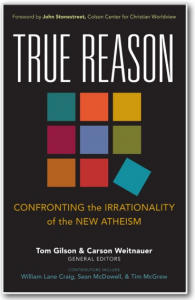 The paperback version of the Kindle book,
 Note that behind this critique is the presupposition that there are moral duties. People have a duty to not engage in wars or acts of terrorism, religious people who promote sexist or homophobic practices are wrong for doing so. I think this is nonsense as it assumes there is such a thing as a moral duty, it assumes things religious people do can be wrong. This is false and here is why:
 “While New Atheists like Richard Dawkins, Sam Harris, and others proclaim loudly their rationality, clear thinking, and incontrovertible scientific arguments, others are beginning to wonder how genuinely rational they are. Have they proved anything? Have they argued convincingly? Have they pinpointed any real challenges to the credibility of Christian faith?