On Monday 2 August at the University of Auckland Emeritus Professor of Philosophy Dr Raymond Bradley and Dr Matthew Flannagan (of this blog) debated the topic “Is God the Source of Morality? Is it rational to ground right and wrong in commands issued by God?” Philosopher Dr Glenn Peoples watched the debate via live Skype feed and has reviewed it as follows.
Dr Glenn Peoples Reviews the Debate
Published with permission
Few subjects in philosophy are more interesting to me than the meta-ethical question of moral makes any moral claims true. My particular area of interest is the question of whether or not moral facts can be grounded in a purely naturalistic view of reality. The topic of this debate therefore grabbed my interest as soon as it was announced – and this was in no small part due to the fact that one of the debate participants was my good friend Matthew Flannagan, who blogs at MandM. What follows is my summary and review of that debate. As someone with no duty whatsoever to not take a side in the debate, I’ll comment on the arguments as they unfold throughout the debate rather like one commentating a live boxing match. And now the opening bell rings.
Opening Statement: Dr Raymond Bradley
Ray began his opening statement announcing that he did not want to praise God, but to bury him. God is not worthy of praise, the audience was told, but only a straight-jacket and a grave. God is the self-confessed author of the world’s problems, and as such, Ray says, he has taken it upon himself to play the role of the prosecutor.
God, Ray, charges, can be indicted on four counts. A) Firstly, God is guilty of crimes against humanity, using disaster and disease to wipe out countless millions. The Bible presents God as responsible for plagues, famines and flood. B) Secondly, God is guilty of war crimes, commanding the slaughter of “hundreds of thousands” of people in the Old Testament. C) Thirdly, God has licensed “moral mayhem and murder,” requiring the execution of homosexuals, adulterers, blasphemers and hosts of other people. D) Lastly and worst of all, God is guilty of eternally torturing people in the flames of hell, all on account of them not holding the correct religious beliefs.
In light of this horrible threat of torture, Ray asks, is it any wonder that Christians have done such horrendous things to people over the centuries, burning heretics and killing babies in an effort to prevent them from going to hell? Who takes this moral primitivism seriously? The Taliban for one, says Ray. So too do Christian fundamentalists, like many in the Southern Baptist convention, who argue openly for a theocracy, calling for the deaths of tens of millions of their fellow citizens. And it’s not just extreme conservatives who are in this mess, Ray says. Even relatively liberal Anglicanism is still in a quandary about whether or not homosexuals are abominations who should be “killed in this world and tortured in the next.” But could it be, we are asked, that those who went on Crusades for God were not actually hearing God’s voice, but merely their own? Ray has no time for biblical claims that “God is love,” in light of what the Bible says about God’s actions. The golden rule of reciprocity is likewise too full of exceptions to be correct, and in any case, God intends to torture most of us. No moral reciprocity there!
Okay, this is the first occasion for a time out. The topic of this debate (the topic that both speakers agreed to in advance) was announced as whether or not God is the source of morality – whether or not it’s rational to ground right and wrong in the commands of God. But as Ray’s opening statement unfolded, I began to wonder if he actually had anything at all to say about that topic. We’ve learned how Ray understands various parts of the Bible, and we’ve learned that he takes exception to them, but biblical hermeneutics and Ray’s moral sentiments – while interesting in some contexts – aren’t really what people were expecting to hear about (or at least, at a debate with a topic like this one these certainly aren’t the things that I was expecting to hear about). What if, for example, all of the above were totally true (although we’ll come to that when Matt responds)? Whatever that would establish, there’s no obvious reason to suppose that this establishes that whatever the moral facts really are, they do not have their origin in God.
But then, Ray presents an argument. He explains that his argument is as follows: Christians accept a set of five propositions, but in fact the set is inconsistent, and as such they find themselves in a “logical straight-jacket.” Those five claims are:
1. What God proposes for our belief (including beliefs about what we ought to do) is what we ought to believe or do.
2. In his holy scripture, God proposes for our belief that he has caused, committed, condoned or laid down commands for us to obey every one of the four types of crimes of types A, B, C and D.
3. It is morally wrong to cause, commit, condone or command any of the crimes of types A, B, C, D.
4. God is omnipotent, omniscient and morally perfect.
5. A morally perfect being would not do anything that is morally wrong.
I’ve seen this kind of argument from Ray before. In fact some time ago I commented on it at my blog. Ray says that theists are committed to all five, and the result is a contradiction. Which of these can they afford to give up? They cannot give up 1) without giving up the thesis of this debate: That our moral duty is grounded in God’s will. They cannot give up 2) without giving up the authority of the Bible. They would have to say that either God didn’t know how to say what he meant, or else he did know, but didn’t actually mean what he said. They cannot give up 3) without becoming moral monsters. They cannot give up 4) without giving up the traditional theistic portrait of God altogether, and to give up 5) is to give up a truism: That a perfectly moral person is perfectly moral in all that he does.
Which of these, asks Ray, will Matt deny?
As Ray closed his talk, I was left feeling just a little cheated. I know what the debate over moral foundations is like. I research, write, blog, speak and publish on the issue. I’ve become familiar with the issues it delves into and the territory it needs to cover. In particular, the literature on divine command ethics (the specific ethical theory identified in the subject that both parties had agreed to debate) contains well known arguments on key features of the theory. But Ray didn’t appear to say a word about any of this. Indeed, as the debate unfolded it began to look like he was not familiar with the literature in the least – or at least if he was, he did not consider the more familiar philosophical territory to be at all relevant. Instead, we had a string of claims about the God of the Bible being a really nasty guy. Now, I can understand when the likes of Christopher Hitchens or Richard Dawkins haplessly wander into the domain of philosophy of religion and end up tub thumping about how God is a villain instead of actually doing any philosophy. But the whole reason that Ray was an ideal candidate for this debate was that he is a qualified philosopher. Where was the philosophical interaction with the claim that God is the source of morality?
Opening Statement: Dr Matthew Flannagan
Matt gave his opening talk next, and I think more or less everybody in attendance (and presumably Ray as well) would have noticed that the approach taken was markedly different from that of Ray. It may seem rather elementary, but first Matt explained what the subject of the debate was (namely, whether or not it is defensible to view God as the source of morality, and whether or not right and wrong could be grounded in God’s commands), he took a stance on the subject of the debate (namely an affirmative stance on both counts), and then he began to defend that stance. That, in short, was how his opening presentation differed from Ray’s.
Matt holds to a divine command theory of ethics, the view that moral rightness and wrongness are determined by the commands of God. There are a range of familiar objections to this view, and Matt turned to a few of those first. It is said that if morality is the result of God’s commands, then horrific things like torturing people for fun could become right just because God commanded them. But this is to suppose that God can command just anything, says Matt, and in fact the traditional concept of God, even as announced by Ray, involves God being “morally perfect,” and a morally perfect being would not commit such acts. For my part, I’m never quite happy when divine command theorists appeal to God’s moral perfection here, because if morality has as its source the commands of God, then God isn’t moral, meaning that it can’t be his moral perfection that constrains his commands (this is why it is, I think, better to think of God’s goodness preventing him from such issuing such commands). However, I think Matt next explains that this is not quite what he means to say as follows:
Some object to the above defence of divine command ethics. If we take the above line of reasoning, then just how meaningful is it to say that God is good? Surely the claim just boils down to saying that God obeys his own commands. But there is, says Matt, a grain of truth to this. We can talk about divine goodness without construing it in terms of moral perfection in the sense of doing one’s duty (this is what I was referring to earlier). Many theologians and philosophers construe God’s goodness in terms of his character: truthful, loving, merciful and so on. It may well be that God doesn’t have a duty to be loving or truthful, but that hardly shows that he isn’t loving or truthful.
With that, Matt moved on to Ray’s argument. Prior to the debate, Ray and Matt had “traded notes,” so that they would each know what the other was going to say, and be able to respond to that position in the debate. Matt replies to the “logical straight-jacket” argument summed up in five points as follows: First, even if all of Ray’s complaints about the biblical teaching were well founded, the argument wouldn’t even begin to address the subject of the debate, namely whether or not a divine command theory of ethics is tenable. There’s nothing about a divine command theory, for example, that commits somebody to inerrancy. A person might believe that moral duties are caused by divine commands, but known through all sorts of means like conscience and not necessarily from the Old Testament (they might, in theory, even gain that knowledge for other holy books). So Ray’s argument just doesn’t address the subject of the debate.
Secondly, says Matt, premise three of Ray’s argument is ambiguous. It could mean that it’s morally wrong for us (i.e. human beings) to engage in or will acts like A B C or D, or it could mean that it’s wrong for God to engage in them, as well as wrong for us. Ray claims that denying 3) amounts to becoming like Genghis Kahn or Hitler, but this is only so if we deny that it’s wrong for humans to do those things. We might say that it’s wrong for humans do do A B C or D, but still deny 3) because we think that it’s not wrong for God to do those things. What’s more, Ray, says Matt, is using circular reasoning here by just assuming that God has duties not to do A B C or D. But if God is the source of morality then he cannot have such duties, and this is the very subject in dispute. Ray is therefore assuming the very thing he needed to prove.
Matt’s third response is to address premise 2) in Ray’s argument, and here, if I may say so, is where the debate got rather sidetracked – not because Matt responded to Ray’s arguments at this point (it’s fairly inevitable that one wishes to respond to the other debater’s points), but because, as a whole, arguments about this premise came to dominate the entire discussion that followed. Here Matt argues that actually God did not do or command the things that many people allege that the Bible depicts him as doing or commanding. I summarise considerably here:
When it comes to the conquest and supposed genocide in the Old Testament, critics often note the harsh sounding instructions to wipe out everything that breathes in the Canaanite communities, but then fail to notice that the same books of the Bible later talk about the Canaanites still living where they lived before. There’s a widely recognised phenomenon in Ancient Near Eastern writing of extreme hyperbole, much like we use today when we talk about “annihilating” the opposition in a sporting match. The language refers to utter defeat, rather than the actual killing of every living creature. As an aside of my own, this line of argument is not new among fairly conservative Christians. In fact, even before there was any such thing as the “New Atheist” movement, Martin Luther in the 16th century discussed the fact that there are obvious exaggerations for rhetorical effect in Old Testament battle accounts.
Next, Matt argues that in fact while the death sentence is mentioned for fifteen offences in the Old Testament, it was usually anticipated that actual execution would not take place, but some sort of payment would suffice instead, the death penalty being mentioned only to underscore just how serious the offending was. In fact, for murder the Torah pointed out that a ransom (a payment in lieu of execution) was impossible and that execution must take place, which implies that in other cases a ransom was considered quits acceptable. The legal reference to execution was thus a hyperbole or a worst case scenario in most cases.
Lastly, Matt commented on Ray’s claim that God will torture people forever just for holding the wrong beliefs. Firstly, says Matt, the texts that speak about hell or eternal punishment actually do not, in context, speak of literal endless torment at all. The Book of Revelation is apocalyptic literature, full of symbolic language from the Old Testament, language that originally referred to destruction of wicked empires. Similarly, language of weeping and gnashing of teeth or unquenchable fire, in the Old Testament context from which they are borrowed, refers to destruction and not endless suffering. What is more, the texts in question indicate that people will be punished for their actions, and not just for holding false beliefs.
Attempting to drag the debate kicking and screaming back onto the intended subject, Matt sums up by recapping: Ray, even if right, hasn’t offered an argument against God being the source of morality. Some of the premises of his key argument either equivocate or involve circular reasoning, and his interpretation of Scripture can be faulted for failing to take important features like genre and context into account.
End of round one. I think the impression created at this point was fairly unmistakable. Ray has presumed, it appeared, that he could simply embarrass God (or in God’s absence, those who believe in God) by seeking to make the biblical God look like a monster, while not turning to the philosophical issue in question: the source of morality. By presenting such a shocking picture, he seems to have supposed, people wouldn’t care about whether or not it’s acceptable to construe morality in terms of obedience to divine commands. Don’t think about that, just look at how awful the Old Testament is! By contrast, Matt singled out and offered defence of a stance on the subject in question. The problem is that he didn’t do it a lot – and the reason for that is that in responding to Ray’s argument, he was forced to talk about issues other than the subject of the debate. For what it’s worth, I also think the specific angle taken on defending a stance on the debate topic came across to many as a little on the technical side. The subject of the debate was introduced in Matt’s talk was a defence of his position against the possibility of horrendous commands and the claim that divine command ethics results in a vacuous view of ethics. The trouble is, given the nature of Ray’s approach, these objections never even arose, and as a result it seemed a little technical and out of place. I would have been inclined to start with a more general thesis about the relationship between God and morality, and then – without anticipating rebuttals that might not even follow, offer some fairly general arguments for that thesis. However, it proved to be the first and last interaction with the more philosophical aspects of the subject in the debate.
Rebuttals
Next came the rebuttal round where each speaker made use of a right of reply. Ray went first.
Rebuttal: Raymond Bradley
Ray’s first objection was to the suggestion that God does not have moral duties. Nobody, he said, is above the law. I cannot be the only one present who found this to be completely gratuitous. The entire debate was supposed to be about whether or not God’s commands are the source of morality. If they are, then it follows that God has no moral duties. How can Ray appeal to this belief in order to rebut the affirmative position? Why, I thought at the time, do his logical senses not scream out at him “stop! You’re using the most circular argument in the world!” Commenting further on the claim that God doesn’t have moral duties, Ray next claims that this is moral relativism, an abandonment of moral objectivity: These are rules that apply to some people (i.e. all humans) and not to God. Moral objectivity requires that all moral rules apply to all persons no matter who they are. Again, I blinked, thinking – as a philosopher (a former head of a philosophy department, no less), how could he think that this is so? Moral objectivity has never meant that everyone has the same duties (for example, I have an objective moral obligation to provide for my children, but it doesn’t follow that Ray has that obligation to provide for my children). All it means is that it’s a fact that those people have the duties they have, regardless of what anyone else thinks about it. I could only imagine that his fellow philosophers in the audience were wincing as they listened.
Ray followed this up by saying that it’s no good defining God as good. We can define anything any way we like, that doesn’t make those definitions true. But of course defining things a certain way does not indicate that those things exist or that they are correctly defined that way, and nor had anyone suggested otherwise. Matt’s point had been a very different one, namely that if God is good in the way that theologians have portrayed him, then divine command ethics is not subject to the objection that God might just command horrific things, which would then become morally right.
Philosophically speaking, the rebuttals that Ray offered were not just poor, they were bewilderingly poor. Next came the rebuttals aimed at Matt’s biblical arguments (which had originally been responses to Ray’s own biblical arguments).
Yes, Ray says, it may be that the same books of the Bible that speak of the annihilation of the Canaanites also later speaks of them living in the land. However, this doesn’t justify the claim that the reference to complete destruction is a hyperbole. Instead, we should read both parts absolutely literally, and therefore see that what we have is a contradiction. But (in my view), one might have thought that had the contradiction been this obvious the author might have noticed, but Ray assures us that in fact this is how we should read the text. What does he say about the evidence from Ancient Near Easter literature indicating that such hyperbole was common and therefore unsurprising? Interestingly, he says nothing at all.
Staying with the Old Testament, Ray replies to Matt’s comments about the death sentence being substituted with a lesser penalty like a monetary fine. Ray’s challenge is: If those cases permitted something other than execution, then what would Matt propose? A “lesser execution”? As a listener I was somewhat confused by this challenge, given that Matt’s argument was that the lesser penalty was not execution but a fine. I assumed that Ray might simply have misheard Matt on the issue. But Ray has a question here for Matt: Which penalties should be carried out, and how do we know what they refer to?
But apart from the conquest and the death penalty, Ray added, there are other examples of atrocities in the Old Testament that Matt had not commented on. What, for example, of the biblical flood? Will Matt say that this too is merely a metaphor or a hyperbole?
Can it just be explained away?
Rebuttal: Matthew Flannagan:
Matt’s first rebuttal was to note that Ray rejects part of Matt’s argument because, Ray says, God must have moral duties, and cannot be thought to have none. But the debate is about whether or not God is the source of moral duties, so Ray has to be begging the question (i.e. using circular reasoning) to argue this way. He cannot just assume the thing that he is meant to be trying to prove.
Matt next commented on the claim that if God isn’t subject to moral duties but we are, then we must embrace moral relativism. But, he says, this is only true if we think that objective facts are independent of what everybody thinks. But Matt construes objective facts as being true independent of what human beings think. They aren’t true independent of what God thinks, and therefore he is not committed to relativism. Now, this is not the way I would have gone with the argument. I don’t know how persuasive it is to say that something can be objectively true and yet still false from God’s point of view (e.g. the fact that “it’s wrong to steal”). For my part, I think the way to respond to Ray would be to say that this view is not relativism because it doesn’t present facts as only holding for some people but not others. Divine command ethics is the thesis that our duties are determined by what God commands us to do. So if God commands Moses to climb Mt Sinai, then in fact he had the duty to do so. This is not moral relativism just because the command does not require everybody to climb Mt Sinai. It became an objective fact, when the command was issued, that Moses was morally required to climb Mt Sinai, and this was a fact independently of what anyone though of that fact, even God. It just happens that since God believes only true things, God is never mistaken about moral duties. It is therefore perfectly compatible with moral objectivism to say that while we have some moral duties, God has none. We need not sacrifice the thought that objective facts are true independently of what anyone (even God) thinks. Now, I happen to suspect that Matt agrees with this, but it’s a very different response from the one he offered here, and I don’t agree with the response that was offered. I felt it was only fair to point this out so that people realise that I’m perfectly prepared to state where I think people on “my side” get it wrong, it just happens that Matt did so very little, and Ray, I think, did little else.
What then of Ray’s challenge about the capital offences in the Old Testament? Ray had challenged Matt to explain how we know which ones had to be carried out and which did not. How can we tell? Matt’s reply was simple: Read it, and pay attention to what you find in the context. You don’t have to guess.
Ray had complained at the suggestion that we find hyperbole and metaphor in the Old Testament. But does this fact really make the Bible so hard to understand? Ray’s own comments have been littered with such things, including his favourite metaphor of putting God into a straight jacket. And yet, in spite of Ray’s frequent use of such figures of speech, he expects that we will have no trouble understanding his point. Likewise, the mere fact that the Bible uses metaphor should not imply that it can’t be understood.
Lastly, Matt commented on Ray’s last comment about the biblical flood. Ray had challenge Matt to say that that wasn’t literal. “So Ray’s is a creationist!” Matt quipped, to the amusement of many present. Matt explained that while it might be convenient to portray all Christians as simple literalists, in fact many evangelicals do not think of the flood story as literal history.
Closing Statements
Now the time came for each speaker to sum up their position.
Closing Statement: Raymond Bradley
In summing up his position, Ray did not mention the issue of whether or not God is the source of morality. It was a bewildering phenomenon. He had discarded that issue altogether, and now summed up by referring to a string of barely connected issues as follows:
It’s all very well, Ray says, to say that that biblical texts aren’t to be read literally. But can you give a sensible non literal explanation of those texts? How can you non-literally understand references to stoning people to death? Of course, some people take the whole Bible metaphorically. But the problem is that God is supposed to be all-knowing, and as such he should know that people are going to interpret him literally, as many have.
But now, let’s get away from accusations of taking the biblical passages out of context. Let’s just leave those behind, Ray says (how convenient!), and instead talk about the (brand new) issue of exclusivity. The Bible says (in the book of Acts) that there is “no other name” through which people can be saved (namely, the name of Jesus), further implying that God really does reject people because of their beliefs. Christian apologist William Lane Craig defends this biblical claim at length in an article on the subject. And yet in spite of this, Christians themselves are divided into thirty-eight thousand different denominations, and over the centuries the existence of these different groups has led to “bloodshed and mayhem.” Sure, why not. Instead of talking about whether or not Ray’s arguments have been based on misunderstandings, let’s instead talk about the fact that there are heaps of different Christian sects who have conflicted with each other. It’s just staggering that this kind of thing seems to Ray to be so important and relevant that it should dominate the closing, instead of summing up how he has argued that God is not the source of morality. The fact is, Ray has done no such thing. It’s not that he tried but failed to do so. He simply never broached the subject in the first place!
Next, Ray asks whether or not God actually killed a world of people in the flood. “Did that event occur”? There are millions of Christians who believe that the Universe was created 6000-10,000 years ago. Millions believe in Noah’s flood occurring about 2300 years ago. And with that observation, Ray’s summing up came to a close, in front of what must surely have been a sea of utterly confused faces.
Closing Statements: Matthew Flannagan
The final summing up belong to Matt. He started by noting that he had already given an account of what biblical passages referring to execution might mean if they are hyperbolic (where he spoke about the possibility of a ransom).
Secondly, it’s no good for Ray to continue complaining about metaphors when, as Matt has already noted, Ray’s own presentations make use of metaphors.
Thirdly, Matt commented on the new point raised in Ray’s closing statement (bearing in mind that raising new points in a closing statement is not typically permitted in a moderated debate, precisely because it leaves no opportunity for a response). In fact, contrary to Ray’s claim, William Lane Craig did not dodge the potential problem of exclusivity. Matt notes, drawing on the very article that Ray referred to, that to be saved in someone’s name does not mean to be saved by having explicit beliefs about that person, it means to be saved on the authority of that person, and in fact Craig’s article claimed that some could indeed be saved without such explicit beliefs, so Ray has simply misrepresented him.
As for there being many different Christian perspectives, while this may be true, Matt notes that there are also many different secular perspectives, but this hardly shows that any secular outlook must be false. Also, while it may be true that Christian sects over the years have done awful things (Ray referred to the Crusades), it’s also true that plenty of Christians were opposed to those things, which suggests that the examples of Christian thought in action that Ray uses are rather selective.
Lastly, Matt noted that Ray claims to have once been a fundamentalist, but to have left it behind. In reality, he hasn’t. He continues to assume that the most literalistic and conservative interpretation of biblical passages must be the correct ones, and that by attacking those views, he is attacking Christianity as a whole, and that in doing so he thinks that he has somehow managed to undermine the view that God is the source of morality, when in fact he has done no such thing.
Thus ended the debate.
Questions and Answers
I’ve made it fairly clear what I thought of how things went. Ray simply did not come prepared. For a person chosen for the debate specifically because of his background in philosophy, he disappointed by largely ignoring the philosophical issues altogether. When he did wade into the territory of moral philosophy (most notably when accusing Matt of moral relativism), he proved, in my view, to be very wide of the mark. But by far the most frustrating aspect of Ray’s presentation was that he simply didn’t want to talk about the debate topic that people had come along to hear about. For him, his argument was that the God of the Bible is horrid, no more, no less.
What about Matt then? To be honest, given Ray’s much longer history of debating on issues of religion, plenty of people (including me) were interested in this debate, more than for any other reason, to see how Matt would handle himself (and his opponent). But here too there was one major frustration: We never really got to see how Matt can defend his stance on God as the source of morality in debate. He was able to open with some reference to that subject, with what I though was possibly a slightly obscure defence for an opening statement. Perhaps he could have done a lot more, but the problem is, obviously your responses to your opponent’s arguments are going to be tailored to the arguments that your opponent uses, and in this debate Ray just didn’t use any arguments that required a philosophical defence of divine command ethics. Just as with a review of a book or a movie, I should probably tell you whether or not I liked the debate, and the reality is, it was something of a fizzer. It was one sided, and one of the speakers simply decided that instead of debating the proposition in question, he was going to talk about something else entirely. It wasn’t what people had come to see.
What the audience thought of the debate can in part be gleamed from the questions and answers. I won’t attempt to reproduce those in full, but there were several general themes:
First was the theme of metaphorical, hyperbolic and literal readings of the Bible. Matt was asked, if the Bible is really all metaphorical, what does it have over other works of literature that are also metaphorical. Later, Bill Cooke from the New Zealand Association of Rationalist Humanists suggested that perhaps Matt was just using appeals to metaphor, context or genre to avoid texts that he doesn’t like. He would never accept, for example, that the Ten Commandments (part of the same book of law that refers to stoning people) was just metaphor or shouldn’t be taken literally, so why they other parts? After all, Jesus said in Matthew 5 that he didn’t come to do away with the law.
The the former question, Matt explained that you shouldn’t just decide to take the whole Bible literally or metaphorically. For any given passage, you have to check the context. Who wrote it? What genre does it appear in? For example, when Ray says that God is in a straight-jacket, because of who said it we know that it’s not literal, since Ray doesn’t actually believe in God. We know of other very similar types of creation story in the ancient world that weren’t meant to belong to the genre of simple history. Likewise when it comes to the Gospels we have plenty of very similar types of writing in ancient Greek biographies that were meant to be read as history.
In regard to Bill Cooke’s question, the response was similar. Firstly, Matt pointed out that he had given reasons in each case for taking a specific text as a hyperbole or metaphor. Those same rules apply for these texts that Cooke mentioned as well. The Ten Commandments are presented like other pieces of writing from that period in history as the prologue to a book of law, so examining the genre guides the way that we treat the passage. As for Jesus’ words about the law, Matt said that he was speaking to a Jewish audience and not a Gentile one, so his words only applied in that context. In the book of Acts (in chapter 15), the issue of the Gentile relationship to the law was spelled out. As a listener with a keen interest in the particular issue of the applicability and role of Old Testament law in a New Testament context I really would like more to have been said than just this. I think that left as brief as this a rather misleading impression could have been given that in the Christian faith we see moral obligation as depending on whether or not one is a Jew or Gentile (which I know is not what Matt thinks). In fact, Acts 15 has applicability to all people, be they Jewish or Gentile, but realistically, a question and answer session just doesn’t allow for a lot of depth.
The second comment from the audience was, in my view, the best, as it summed up what most people must surely have been thinking. It went roughly like this: “You’ve been talking about whether or not God is moral, but not about whether or not God is the source of morality.” The comment was met with applause from most in attendance. This was exactly what had been wrong with the debate. It had gotten bogged down on one issue: Ray thinks the God of the Bible is nasty and immoral. Never mind the subject of the debate, this was what the discussion ended up focussing on.
Ray replied by saying that he did argue that God wasn’t the source of morality, but he didn’t refer to any of those arguments, which I frankly think is because there hadn’t been any such arguments. However, he now added that a moral code is just empty unless it gives primacy to empathy and compassion, and there’s an evolutionary account of how those things came about. Matt replied by saying that he had tried to talk about God as the source of morality, but in order to reply to Ray’s other arguments he had to deviate from that subject (a comment that drew a sound from the audience that appeared to mean something like “oooh, burn”). What’s more, he added, an evolutionary account might tell us how we came to hold moral beliefs, but that’s not an account of what makes those beliefs true, so whether it’s true or not, it doesn’t tell us about the source of morality.
This last point was also related to another question put to Matt (the questioners seemed, overall to favour Matt – perhaps an attempt to stump the new guy). The question was: Sure there is a variety of secular viewpoints, but given the large number of Christian sects, doesn’t morality come, not from God, but from our own interpretation of various texts? But this question, as Matt noted, made a similar assumption to the previous one: that if people get their moral beliefs in a number of different ways (i.e. by reading different texts and interpreting them various ways), this is an account of where morality actually has its basis. But this confuses metaphysics (i.e. questions of fact about what’s real) with epistemology (i.e. questions of how we find out what’s real). What’s more, in spite of the fact that there’s a diversity of Christian viewpoints as well as secular viewpoints, there is probably more disagreement among secular outlooks. Could the secular philosophers get together and come up with, say, ecumenical creeds like Christians have?
Ray’s comments on this question were a little stunning, and I think they basically revealed his approach to the Bible to involve exactly the kind of fundamentalism that Matt attributed to him during the debate. He said here that the real question is whether or not God is the author of morality (a fact he forgot for most of the debate). Well, God would be the author of morality if he actually told us, in the Bible, what was moral and what wasn’t. The Bible is supposed to be inerrant. And yet, if Matt is correct, then people actually have to study it to find out what it means! The need to look at issues of context and genre and so on. But that’s the essence of subjectivity, not objectivity. We shouldn’t have to do that, the Bible should just tell us what’s right and wrong.
As far as arguments go, this was surely the bottom of the intellectual barrel for the night. How could Ray not see that this destroys every ethical theory. It destroys utilitarianism, because figuring out which course of action maximises utility isn’t always clear or obvious, and often involves careful thought. It destroys virtue ethics, since figuring out what a maximally virtuous person would do is not always obvious, and involves careful thought. It destroys natural law theories, and it destroys, interestingly (given Ray’s earlier comments), evolutionary accounts of ethics. What’s more, Ray is practically demanding that everyone who is a Christian be a simplistic, dumbed down fundamentalist when it comes to reading the Bible. Ignore subtlety, context, history, literary form, and more or less any interpretative tool that requires anything beyond a lower high school reading age, just accept the most literalistic and careless interpretation you can find. True, if more Christians were actually like this then it might make them easier targets for Ray’s style of tirade against God, but that is hardly a good reason to go down that path! Matt was absolutely right: Ray hasn’t even gotten close to leaving fundamentalism behind.
Several more questions followed. First, an audience member read from Numbers chapter 15, which actually relates the account of a person who was found working on the Sabbath. The Israelites were not sure what to do, so they inquired of God, who told them to stone the man to death, which they then did. The question was put to Matt: How can you say this didn’t literally happen?
Matt’s response was threefold: First, the people had to inquire of God, which suggests that perhaps the law wasn’t crystal clear on the penalty required. Second, and related to this, this sounds like the first such recorded offence, so – as in other law codes – there would be a need to use this offence to really set an example and underscore the seriousness of the offending. Thirdly, it might not have actually taken place. Maybe it was a piece of Midrash, a fictional account written for the purpose of explaining the seriousness of this law. Now, sympathetic though I am to taking clues from other examples of Jewish legal writing, I get the feeling I’m not the only one who might start to think that there are only so many times a new text can be explained in terms of “perhaps it just didn’t happen but it was written as though it did.” I think this would have started to wear thin on some in attendance. In the case of Numbers 15 and the case of a man executed for working on the Sabbath, I don’t even think this defence is required. My own view is that a Midrash of that sort, even though I have no reason to think that this is what we have in Numbers 15, would only be written if the writer really believed that the offence described is such that it would actually warrant the punishment described. Maybe a more persuasive line of response would have been something like: “Well, I never said the death penalty was never applied. All I noted is the fact that we need not suppose that it happened left right and centre as Ray supposes, since we know that a ransom was available in many cases. Obviously it would not be available in direct contradiction to God’s command on a given occasion, which is what is depicted in Numbers 15.” Rather than a serving as defence of biblical accounts, too many attempts to reach for the “it never really happened” card are likely to have the opposite effect form the intended one.
Next, Ray was asked why – if his interpretation of the Bible is the correct one – how come those most noted over the centuries for doing acts of love and kindness have been Christians, but those most notorious for the worst atrocities of all time like Stalin, Mao Tse Tung or Pol Pot were atheists?
Ray first said that Hitler and Stalin had both at some point attended seminary, but then (perhaps realising that this had nothing to do with the question), said that Christians do this because they are selective in reading the Bible. They ignore the bits they don’t like. Christians just “don’t read the Bible.”
Matt here noted that when Christians over the years have done bad things, Ray claims that this is highly significant and supports his argument, but when the good things done by Christians is noted, Ray somehow thinks this doesn’t establish anything. This is clearly a double standard.
The last question (actually, two questions from the same person) was for Ray: Firstly, if morality is based on our sentiment (e.g. empathy), doesn’t that make it subjective and not objective at all? And secondly, if there really is a hell, then wasn’t it actually loving, rather than cruel, for Jesus to preach about it, so that people would avoid it?
Ray said that he would address the second question first, but then proceeded to answer neither the second nor the first question at all (not even badly). Instead, he decided to take this opportunity to say that he didn’t even believe that there had been an historical Jesus of Nazareth at all, just because no non-Christian historian at the time referred to him. Only one ancient non-Christian work spoke of him (a work by Josephus), and that reference is a forgery, added later by Christians.
I have to confess that I have no idea where this reply came from. It certainly had nothing to do with the two questions put to him. In reply, matt noted that Tacitus and Seutonius also refer to Jesus. He also pointed out that the disputed text in Jospehus is not generally regarded as an entirely fabricated reference to Jesus. Instead, it is a genuine reference to Jesus that was tampered with and enlarged by a later writer. Plus, there are two separate references to Jesus in Josephus’ work, and only one of them was the target of alteration. Now, of course, this was not a debate on the historicity of Jesus, but had it been one, a number of other examples could also have been used as I have discussed elsewhere (see my series on whether Jesus ever existed here, here and here.) In short, Ray places himself in a fairly radical minority when he goes as far as to deny the very historical existence of Jesus of Nazareth. Combined with his self confessedly shallow approach to biblical interpretation, this only reinforces my observation that he really ought to have made an effort to get involved in the debate about whether or not God is the source of morality, instead of straying into fields that he shows no evidence of being qualified to comment on. An opportunity for a genuinely riveting debate was, unfortunately, wasted.
If you were at the debate, have listened to the podcast or read the written papers, do you agree with how Glenn called it?
RELATED POSTS:
Video: Bradley v Flannagan “Is God the Source of Morality?
The Podcast: Bradley v Flannagan
Joint Communique: Bradley v Flannagan Debate
Raymond Bradley’s Opening Statement: Bradley v Flannagan Debate
Matthew Flannagan’s Opening Statement: Bradley v Flannagan Debate
Bradley’s Reply to Matt: Bradley v Flannagan Debate
Flannagan’s Reply to Ray: Bradley v Flannagan Debate
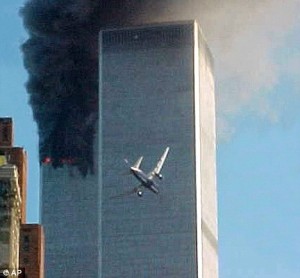 One particularly poignant fact about the events of 9/11 is that the terrorists who carried out the attacks justified their actions by claiming God commanded them to do so. That fact has lead many contemporary commentators to argue that a divine command theory of ethics is indefensible. September 11 is just the most recent example in a series of incidents throughout history such as the Crusades, Inquisition and wars of religion. Divine command ethics is discredited by the fact that people appeal to such commands to justify terrorism.