Tag: Society of Biblical Literature

  • A very belated report on my trip to San Diego

    With trips to the US, Christmas, New Years, the summer break, Madeleine’s work, my preaching and juggling the family and the launch of my book, it has been a while since I blogged. Since the last post was about me going to the US I figured I should start by giving a very belated update on the trip before I get down to more run of the mill blog posts.

    Last time Madeleine blogged it was Wednesday 19 November 2014, the day after I had flown out of Auckland. I arrived in Los Angeles at 10 am on Tuesday 18 November 2014 (love the international date line!) and I finally arrived in San Diego that afternoon where I had an enjoyable dinner with Moore College President Mark Thompson.

    The Evangelical Theological Society (ETS) and Evangelical Philosophical Society (EPS)  meetings began the next day. The first session I attended was a very good paper by Richard Davis and Paul Franks critiquing Wes Morriston’s criticisms of divine command meta-ethics (DCM). This paper was technical so I’ll try to summarise: Morriston objects that if moral requirements are identical with God’s commands, and even if it’s impossible for a perfectly good God to command the random sacrifice of 3 years olds, DCM still entails that if this impossibility were actualised and God were to command the random slaughter of 3 year olds, then such slaughter is wrong.

    This objection involves what is called a counter-possible, which is a hypothetical statement with an impossible antecedent. In this case the antecedent is that a perfectly good person could command the random sacrifice of children. According to the standard semantics for counter in modal logic all counter-possibles are  trivially true. Morriston argues this approach to standard semantics is mistaken; it is plausible that some counter possibles are false and that this counter-possible is one such example.

    Davis and Franks, give an interesting and thoughtful reply to Morriston in their forthcoming article “Counterpossibles and the ‘Terrible’ Divine Command Deity“. They argue: (a) Morristons’ own criteria  for distinguishing true from false counter-possibles entails that the counter-possible, If God commanded random sacrifice then random sacrifice is morally required, is, in fact, true and not false. Second, (b) they argue that DCM does not entail this counter-possible.

    To put their point in a nutshell: they argue that a world where God commands evil is a world where God ceases to be good; and since goodness is an essential property of God this entails that in such a world God would cease to exist. However, given God is the creator and sustainer of all that is distinct from him, a world where God does not exist is a world where nothing exists. Hence, it is false that if God commands evil, evil would be morally required. This was an excellent paper and I enjoyed some stimulating discussion with both of the authors during the Q&A and also at lunch.

    Next up was a paper by Frank Beckwith discussing Judith Jarvis Thomson’s famous article “A defence of abortion”. Thomson famously concedes for the sake of argument that a fetus is a human being and then argues, from analogy, that even if that is the case abortion is still permissible. Beckwith argued that, in fact, Thomson does not grant the personhood of the fetus in the way opponents of abortion understand it, but instead assumes a radically individualistic understanding of persons whereby people are not bound by any obligations to others which they do not willingly consent to, a picture which appears to rule out such things as parental duties to children or children’s duties to parents.

    This was followed by Micheal Rea’s interesting paper on whether God is gendered and the use of masculine and feminine language and imagery in describing God. His argument was that God is not gendered and the fact that most imagery used in scripture to describe God is masculine does not justify conceptualising God is exclusively masculine terms.

    In the break I had some very good fellowship and discussion over pizza with members of the Facebook group, Christian Apologetics Alliance.

    In the afternoon I took part in the ethics session of the ETS. The session kicked off with an interesting paper on how capital punishment is practiced in the US. The author, Ken Magnuson, made several disturbing observations about the fact that wealthy people almost always escape capital murder charges whereas the poor do not. This paper was unclear on what the nature of the core problem was: was it that innocent poor people were executed, or that the guilty escaped justice? While the fact that large numbers of innocent are executed might be a reason for opposing the death penalty, the fact that some guilty people get off does not seem to be. If the problem is that some escape capital punishment who deserve it, then ensuring everyone escapes capital punishment will increase the injustice. What was clear was that there needs to be some reforms to ensure less inequitable outcomes.

    Next was a paper by Evan Lenow where he argued that the philosophical doctrine of self-ownership, as articulated in its progenitor John Locke, does not support abortion rights. In this I thought he was right; Locke’s writing in the first treatise makes Lenow’s case even stronger.

    That afternoon I gave my paper, “Abortion as Self-Defence”. I offered a critique of Elieen Mcdonagh’s contention that even if a fetus is a human being, its presence inside a women who does not wish to be pregnant constitutes an act of unjustified aggression and so a women’s right to self-defence entitles her to kill it. My criticism was based on the fact that, in non rape cases, the fetus’ existence inside the woman is due to voluntary sexual intercourse for which her and her partner are responsible and this action confers parental obligations upon both of them. Given that parents have an obligation to provide the basic necessities of life to their children, the fetus’ appropriation of such necessities cannot be unjust aggression. This paper was well received and there was some excellent discussion about rape cases and therapeutic abortion in the Q&A. (Audio of my talk is available here.)

    Thursday was equally intense. I began the morning hearing a paper by David Wood on Paul Draper’s version of the problem of evil. This was followed by a panel discussion on Scott Smith’s recent book, In Search of Moral Knowledge. The panel consisted of Francis Beckwith, David Baggett and James Dew, all offering critique and commentary on the book and Smith offering a response.
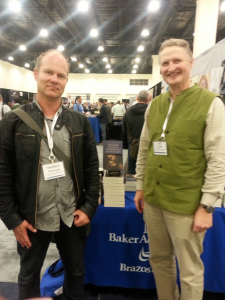
    Matthew Flannagan and Paul CopanOver lunch I met with Paul Copan and a representative from Baker Academic to discuss the launch of Copan’s and my book, Did God Really Command Genocide?: Coming to Terms with the Justice of God, the promotional events we would each be participating in, and also the prospect of further publications in the future. I was then interviewed on camera for US television about the book. (more…)

  • Blogging as a Supplement to Peer Review: My 2011 SBL & ASOR Paper

    At the 2011 annual meeting of the Society of Biblical Literature and the American Academy of Religion in San Francisco I gave a paper in the Blogger and Online Publication session entitled “Blogging as a Supplement to Peer Review“. It occurred to me today that I have never published it on MandM so here it is.

    This paper will not be a normal academic paper. Normally, when I present one of them, I have a specific thesis I try and offer an argument for it and rebut arguments against it. Today however I will present more of a narrative based on some reflections from my own experience as a blogger and scholar and someone who blends the two.

    Peer ReviewI began engaging in “biblical blogging” with great reluctance.  One of my biggest reservations was that blogs are not peer reviewed. Anyone can, and does, write anything at all and get it published on the internet – even, if it’s complete nonsense. One only has to surf the net for a few minutes to see the problem.

    Further, the readership of blogs is not restricted to scholars. Many blogs feature a person writing on a subject with little or no understanding of it who have a following of devoted readers who are equally ignorant, but nevertheless read and comment on the same topic as if they were knowledgeable. My impression was that blogs on theological topics were no less immune to this problem than blogs on other topics.

    So my first reservation was that a blog post really carried no stature; I felt it would be embarrassing to be known as a blogger – I was seeking to be a scholar.

    My second reservation based on my experience with online communication. There are subtle social constraints on face to face communication. If I have to stand up and speak in front of an audience at a conference I will be nervous.  If I say something stupid publically others will laugh at me and I will be embarrassed. If I get really nasty and cross a line someone might get physically threatening and even hit me if I provoke them. There are social consequences to what I say. Online, however, many of these social constraints are muted, one can be completely anonymous or communicate from a fictional personae. People can say things they would never say saying in public without facing the normal social consequences of such comments. This means that online discussions can be counter-productive. Most bloggers will be familiar with the phenomena of “trolls” people who enter into online discussions simply to insult, attack and distract the discussion. I could not see the attraction much less the benefit of engaging in a medium like that.

    I think both these reservations have some merit. However I now believe that, despite them, blogging can serve as a supplement to peer review. It is hard to not believe that given what blogging has done for me but before I get into that, note that I said supplement, my suggestion is that it can supplement not replace peer review.

    Some Challenges of Traditional Peer Review
    In 2006 I graduated with a PhD in Theology. The prospects in the job market were bad in New Zealand – my part of the world – particularly for an unknown fresh graduate. An immediate goal of mine was to establish myself as a credible theological scholar which, of course, meant getting my work known. I resolved that I needed to be published. If I developed a series of publications, others in my field will read my work, and as a result my work will become known. I began by following the usual route of submitting articles to journals for publication and I found it hard going.

    Let me note two challenges I found with this:

    First, almost no one reads your article until it gets published, and this can affect you (more…)

  • Back from San Francisco: A Belated Report

    MandM has been quite of late, this is because Madeleine and I have been very busy.  With moving house in the midst of Christmas and New Years and Madeleine working part-time in a law firm and so on, we’ve had little time to blog. We are now set up, to some extent, and so this post will be a belated comment on my recent trip to San Francisco.

    In November I flew to San Francisco where I attended I attended the  Meeting of the Evangelical Theological Society (ETS), The Annual Meeting of the Evangelical Philosophical Society (EPS), The Evangelical Philosophical Society Apologetics Conference and The Annual Meeting of the Society for Biblical Literature (SBL) and American academy of religion.(AAR). While I would love to give detailed commentary on each session, to do so would require several blog posts of inordinate length, instead I will simply summarise what went down.

    I arrived in San Francisco at around 4pm  on the 15th. I presented my first paper at 8:30am the next morning. My paper was a critique of Walter Sinnott Armstrong’s arguments against divine command theory meta-ethics. Armstrong contends that the nature of moral obligation is best explained by identifying moral obligations with the natural property of harming others without justification, and, focusing largely on Craig’s work, argues this is superior to divine command ethics. I argued: (a) his argument fails to note the conditional nature of Craig’s (his main target’s) contention that if theism is true moral obligations are best explained as divinecommands (b) Armstrong’s does not provide a better account of moral objectivity (c) Armstrong’s account is not more economical than a divine command theory. (d) Even if it were an economical account, it does not explain various features of obligation such as (i) the social nature of moral obligations (ii) the fact that moral obligations constitute a decisive reason for acting and (iii) the specific moral content of obligations; as well as a divine command theory. All in around 30 minutes!!! The paper was very well received, with several people asking me to forward them a copy. I plan to get it published later this year.

    The rest of the morning was filled with me hearing various papers on moral theory and philosophy of religion all of which were interesting and stimulating. These panellists all shared similar perspectives yet were astutely critical of each other’s arguments. Particularly interesting was the dialogue between Baggett and Craig. Some of the issues here were technical and deserve further discussion so I plan to blog on this dialogue in more detail in the future. But in sum: Craig has defended a counterfactual: if God did not exist then moral obligations would not exist. Baggett  argued for various reasons that this is too strong; if God, the creator and sustainer of the universe, did not exist, the universe would not exist. To make sense, Craig’s claim needs to envisage a compossible world, which is like the actual world in all respects except that God does not exist, if it’s like the world in all other respects however, then it has all the features of the world God has created – and hence the resources for something like moral obligations to exist. Instead, Baggett contended, one should argue that a world with God provides a better explanation of the nature and existence of moral obligations than a world without God does. This means the theist does not have to argue, with Craig, that there is no adequate secular account of the existence of moral obligations, only that a divine command theory is more plausible than such accounts. Both Craig and Baggett made telling points which I will have to elaborate on some other time. highlight of Wednesday was the afternoon session. A panel discussion of David Baggett and Jerry Wall’s new book “Good God: The Theistic Foundations of Morality”. This book is the latest defence of divine command theory ethics, recently published by Oxford University Press. Baggett and Walls sketched briefly the content of the book and Paul Copan and William Lane Craig offered critical commentary, to which Baggett and Walls responded.

    Thursday started with an excellent critique of evolutionary (more…)

  • Response to William Lane Craig’s Question 225: “The ‘Slaughter’ of the Canaanites Re-visited” Part II

    Samuel rebukes SaulIn my last post “Response to William Lane Craig’s Question 225: “The ‘Slaughter’ of the Canaanites Re-visited” Part I” I discussed William Lane Craig’s position on the Canaanite Conquest account (in light of the fact that Craig referred to my argument in his question of the week: “Question 225: The “Slaughter” of the Canaanites Re-visited”). I clarified the delineations as to where he agrees and disagrees with the position I presented at the Evangelical Philosophical Society’s session at the Society for Biblical Literature Meeting in Atlanta last year and I established that the point of divergence in our agreement rests on 1 Samuel 15.

    In my Atlanta paper I argued that Nicholas Wolterstorff’s reading of the Canaanite conquest accounts in Joshua can also be applied to the account of Saul exterminating the Amalekites in 1 Sam 15.

    First, the so-called ‘genocide accounts’ in 1 Sam 15 are part of a broader context that includes the rest of Samuel and also other canonical books, such as 2 Samuel and the book of Chronicles. When one reads the whole sequence, one observes that while 1 Samuel 15 describes Saul, at God’s command, exterminating the Amalekites, later passages in Samuel and Chronicles proceed on the assumption this never literally happened.

    The key passage is God’s command to Samuel, “strike [nakah] Amalek [the Amalekites] and utterly destroy [haram] all that he has, and do not spare [hamal] him; but put to death both man and woman, child and infant, ox and sheep, camel and donkey.”[1] The text goes on to explicitly state that the Amalekites were all wiped out:

    “So Saul defeated [nakah] the Amalekites, from Havilah as you go to Shur, which is east of Egypt. He captured Agag the king of the Amalekites alive, and utterly destroyed [haram] all the people with the edge of the sword. But Saul and the people spared [hamal] Agag and the best of the sheep, the oxen, the fatlings, the lambs, and all that was good, and were not willing to destroy them utterly; but everything despised and worthless, that they utterly destroyed.” [2]

    A few verses later (15:33) the text records that Agag, the sole survivor, was executed. So, read literally, this passage states that all the Amalekites were killed and all their livestock were either destroyed or taken as plunder to be sacrificed to God at Gilgal.[3]

    Now the language of “defeated” (or struck), “utterly destroyed”, the reference to “sparing” and to livestock parallels the language of the command in 15:3. Given this, it seems implausible that we should interpret the command in verse 3 as literal but the fulfilment, just 4 verses later, as hyperbolic; the text requires that the command and fulfilment be read in the same sense.

    That said, when one reads this passage as part of as a single narrative a literal reading appears untenable; the proceeding text states quite emphatically that the Amalekites were not, in fact, literally wiped out. In 1 Samuel 27:8-9 David invaded a territory full of Amalekites:

    “Now David and his men went up and raided the Geshurites, the Girzites and the Amalekites. (From ancient times these peoples had lived in the land extending to Shur and Egypt.) Whenever David attacked an area, he did not leave a man or woman alive, but took sheep and cattle, donkeys and camels, and clothes. Then he returned to Achish.”

    Not only does this text affirm that the Amalekites still existed but the reference to Egypt and Shur states that they existed in the very same area that Saul ‘utterly destroyed every single one of them’ in in the previous passages. Moreover, David took sheep and cattle as plunder; again, livestock was another of the things Saul was said to have already eradicated.

    After the text has told us that Saul “utterly destroyed all the people”, including King Agag, and despite the text telling us that when David attacked an area (the very same areas as Saul) he did “not leave a man or woman alive”, three chapters later we read that a sizeable Amalekite army attacked Ziklag![4] David apparently pursued this army and fought a long battle with them and 400 Amalekites fled on horseback!![5] Where are all these Amalekites coming from?

    These are not the only examples. In 2 Samuel 1:8 an Amalekite took credit for killing Saul –but didn’t Saul “utterly destroy all the people”? In 1 Chronicles 4:43 Amalekites were still around in battle-ready numbers during the reign of Hezekiah who reigned after Saul and David.

    Read literally, the narrative affirms both that the Amalekites were and were not totally wiped out. This apparent contradiction in the Samuel narrative is (more…)

  • Response to William Lane Craig’s Question 225: “The ‘Slaughter’ of the Canaanites Re-visited” Part I

    Every week William Lane Craig answers a question on his website; this week’s question of the week is entitled “The “Slaughter” of the Canaanites Re-visited”. The questioner asked what Craig thinks of the Canaanite Conquest account. I got a mention in Craig’s reply:

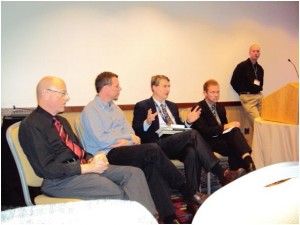
    The EPS Session at the SBL: Richard Hess, Randal Rauser, Paul Copan, me, Michael Rea

    “The topic of God’s command to destroy the Canaanites was the subject of a very interesting exchange at the Evangelical Philosophical Society session last November at the Society of Biblical Literature Convention in Atlanta. Matt Flannagan defended the view put forward by Paul Copan in his Is God a Moral Monster? that such commands represent hyperbole typical of Ancient Near Eastern accounts of military conquests. Obviously, if Paul is right about this, then the whole problem just evaporates. But this answer doesn’t seem to me to do justice to the biblical text, which seems to say that if the Israeli soldiers were to encounter Canaanite women and children, they should kill them (cf. Samuel’s rebuke of Saul in I Sam. 15.10-16).”

    Craig raises an important issue. In God and the Genocide of the Canaanites I, II and III I defended Nicholas Wolterstorff’s take on the Canaanite massacre in “Reading Joshua”.[1] Wolterstorff argued that the book of Joshua is a highly figurative, hagiographic and hyperbolic account of Israel’s early skirmishes and it is not intended to be taken literally in its details. My adaptation of Wolterstorff’s argument consists of three points.

    First, taken as a single narrative, and taken literally, Joshua 1-11 gives a contradictory account of events to that narrated by Judges and also to that narrated by the later chapters of Joshua itself.

    Second, those who put these books into a single narrative would have been well aware of the obvious contradictions mentioned above. These editors were not mindless or stupid, particularly if we hold that God spoke through them.

    Third, while Judges reads more like “down-to-earth”[2] history, a careful reading of Joshua shows it to be full of ritualistic, stylised accounts and formulaic language. I supported this third point with research into Ancient Near Eastern conquest accounts. Studies show such accounts are hyperbolic, hagiographic, figurative and follow a common transmission code. Comparisons between these accounts and the early chapters of Joshua suggest Joshua was written according to the same literary conventions and transmission code. I suggest these three points, taken together, provide compelling reasons for thinking that one should interpret the text as a hyperbolic, hagiographic and figurative account of what occurred; it was not meant to be taken as literally true in all its details.

    Craig’s objection to my position (and that of Paul Copan’s whose position is very close to mine) is a reference to 1 Samuel 15. Craig referred specifically to verses 10-16, where Samuel rebuked Saul “because [Saul] has turned away from [God] and has not carried out [God’s] instructions.”[3] The instructions in question were given in verse 3; God commanded Saul, “Now go and strike [nakah] Amalek [the Amelekites] and utterly destroy [haram] all that he has, and do not spare [hamal] him; but put to death both man and woman, child and infant, ox and sheep, camel and donkey.”[4] Craig suggests this “seems to say that if the Israeli soldiers were to encounter Canaanite women and children, they should kill them”. I think Craig pushes an important objection (more…)

  • Society of Biblical Literature: Blogger and Online Publication

    The Society of Biblical Literature’s program book for their 2011 meeting in San Francisco is now online. The blogger and online publication session for which Matt and I have had a joint paper accepted shows who we are sharing the session with and provides links to brief abstracts for each talk.

    Society of Biblical Literature Annual Meeting

    Blogger and Online Publication
    Robert R. Cargill, University of Iowa, Presiding
    11/19/2011

    4:00 PM to 6:30 PM
    Room: Room TBD – Hotel TBD

    Robert R. Cargill, University of Iowa
    Welcome and Introduction (5 min)

    Alice Bach, Case Western Reserve University
    Can Blogging at 3 AM Be Considered Scholarship? (25 min)

    Madeleine Flannagan, University of Auckland and Matthew Flannagan, Independent Scholar
    Blogging a Short-Cut to Peer Review: How to do it Effectively (25 min)

    Juhana Markus Saukkonen, University of Helsinki
    Sense and Practicality: Building a Historical GIS Online (25 min)

    Richard Price, CEO Academia.edu
    Academia.edu: The Past, Present, and Future of Scholarly Social Networking (25 min)

    The session will conclude with: Q&A discussion with Richard Price. (25 min)

    RELATED POSTS:
    We’re Going to San Francisco!


  • We’re Going to San Francisco!

    San FranciscoLast year I was invited to present at the Annual Evangelical Philosophical Society Apologetics Conference in Atlanta, Georgia. This was a real surprise to me and an honour. Some of the best evangelical Christian scholars in the world presented at this conference; speakers included Alvin Plantinga, William Lane Craig, Paul Copan, Gary Habermas, Mike Licona, Frank Beckwith and numerous others.

    I felt very out of my depth. Meeting Alvin Plantinga whose writings inspired me to take philosophy as a theological enterprise seriously was truly amazing and when Al changed the standard jokes (if you’ve seen a few of his lectures you’ll know what I mean) in both his key note addresses for jokes about New Zealanders it was something else. To have the greatest living philosopher of religion acknowledge the sole kiwi in the audience was something I did not expect.

    “Last year I spoke at only the Apologetics Conference and the Society for Biblical Literature Meeting but this year I will be presenting at all three.”

    Even more humbling was being asked to speak on the Evangelical Philosophical Society’s panel presentation to the Annual Meeting of the Society of Biblical Literature, which was running at the same time. Me, the blogger from MandM, presented alongside Richard Hess one of the best Evangelical Old Testament scholars in the world, Paul Copan, the President of the Evangelical Philosophical Society, an expert on God and Morality, and Randal Rauser, a top Analytic Theologian, who has done some great work getting theologians to take analytic philosophy seriously with Notre Dame’s Michael Rea, an outstanding philosopher of religion and meta-physician as chair. It was truly unreal engaging in a discussion on the relationship between divine command ethics and the Old Testament conquest narratives with these people. I kept wondering when they were going to realise they’d made a mistake inviting me! Even more so when one considers that the audience gathered to hear us and ask questions included people like Eric Seibert, Christopher Wright, Doug Geivett and William Lane Craig – all prestigious scholars who easily should have been presenting instead of me! The experience was extremely rewarding. There were various positive reviews of the panel from the Evangelical Philosophical Society, William Lane Craig, Claude Mariottini and various observers. I learnt a lot and discovered, somewhat to my surprise, that I could intelligently contribute in discussion at this level and that these other scholars were interested in what I had to say.

    Since coming back from Atlanta, my professional employment prospects have improved; while I still do not have full-time work, I am doing work on an increasingly steady flow of short-term projects. I have been asked to (more…)