Tag: Randal Rauser

  • Dialogue with Randal Rauser

    When I was in Baltimore last November I caught up with fellow theologian and blogger Randal Rauser. Randal is professor of Theology at Taylor Seminary in Edmonton Canada.

    Randal and I have had some spirited but cordial exchanges in the past, including a panel discussion at the Society of Biblical Literature in 2010.While we do not always agree I find him to be a very astute critic of my work.

    Randal Rauser and Matthew Flannagan

    Randal asked to interview me in Baltimore on the topic “Matthew Flannagan on God, ethics, and divine commands” so the readers of his blog could get a take on the positions I have staked out. The interview is now available at the link above.

  • Divine Commands and Psychopathic Tendencies

    Sam HarrisThere has been some interesting debate in the blogosphere over Sam Harris’ contention that a divine command theory of ethics manifests “a psychopathic and psychotic moral attitude.”

    Randal Rauser responded to Harris’ contention noting that “if you read through the twenty traits on the Psychopath Checklist you’ll find qualities like callousness, shallow effect, grandiose sense of self-worth, and lack of empathy. But you won’t find adherence to a divine command theory of meta-ethics among them.” Christopher Hallquist rejoins:

    “I almost have a hard time believing Randal is serious here.  When he talks about “adherence to a divine command theory of meta-ethics,” what he means is believing that blowing up a bus full of children is right if that’s what God told you to do. That may not be explicitly listed in the Psychopath Checklist, but neither are things like actually blowing up a bus full of children. And being willing to approve of such an act just because you think God approves certainly sounds like something that would require a shocking degree of callousness and lack of empathy.”

    I plan to address Harris’ original charge in a future post. Here I will limit my comments to Hallquist’s defence of it.  Hallquist suggests that a divine command theory (DCT) is psychopathic for two reasons. First, a DCT entails the following conditional: If God commands you to blow up a bus full of children then you are required to blow up a bus full of children.  Second, accepting the truth of this conditional requires a “shocking degree of callousness and lack of empathy” possessing such callousness and lack of empathy is, a of course, a psychopathic trait.

    Hallquist has considerable confidence in these arguments. So much so he finds it hard to believe Randal’s denial of his conclusion is serious. Note also the rhetorical tactics he uses. The picture of people up blowing up buses full of children brings immediately to pictures of terrorism, sometimes terrorist activities are done for religious motivations, and since 9/11 there has been considerable fear and angst about terrorist acts of this sort. Hence, Hallquist taps deep into people’s fears. Moreover, a long meta-narrative going back to the enlightenment contends religion causes wars, is the source of violence and so on, whether that narrative is historically accurate or not is a matter of considerable dispute. However, prejudices of this sort are widely believed and raw in a post 9/11 environment. The fact a position resonates with people’s fears, emotions and prejudices, however, does not excuse us from asking whether it is true or rationally defensible. In this case I think a little reflection shows it is not. Hallquist’s argument is unsound and, in fact, incoherent. Hallquist’s bravado is therefore strongly misplaced.

    Let us turn to Hallquist’s first premise. A DCT entails the conditional: If God commands you to blow up a bus full of children then you are required to blow up a bus full of children. This conditional is indeed an implication of divine command theories.  Undoubtedly that sounds shocking at first but note two important points which Hallquist skims over:

    First, this is a conditional or hypothetical statement; it states that if God commanded blowing up buses then blowing up buses would be morally obligatory. Nothing about this conditional entails that God actually ever does, or even could, command such a thing, nor does it entail one is ever rationally justified in believing that he does. It simply states that if this situation occurred then the action would be permissible.  It’s a well-known point in logic that a person can affirm that one thing would be true if a certain situation occurred without being committed to claiming it ever occurs. It would be true for example that if I had never been born then I would not be writing this post right now, that does not mean I believe I was never born.

    Second, DCT entails that blowing up buses is morally obligatory only (more…)

  • More Mistakes: A Rejoinder to Randal Rauser

    For those who aren’t aware, there has been something of a “debate”, but what I’d prefer to refer to as an “in house discussion” between Randal Rauser (Professor of Historical Theology at Taylor Seminary) and myself.

    The discussion so far can be found here:

    My initial article was Randal Rauser’s Mistake: A Defense of Calvin’s Doctrine of Election

    Rauser’s response: Calvinism and the Arbitrary Camp Director Revisited: A Response to Andrew

    Andrew and CalvinBefore I begin, I should point out that I have been on the Kapiti coast for the last week at a TSCF (Tertiary Student Christian Fellowship, a cousin of Inter-Varsity) retreat where I was without internet. Hence it’s only in the last day that I’ve learned that Professor Rauser has kindly taken the time to respond to my initial article. So I apologize for my delayed response.

    I would also like to point out that while my intention was to provoke Rauser’s response, it was not to be rude, and I apologize if that’s the impression he has received. I have a great deal of respect for Rauser, particularly given (as I pointed out in my last article) that he is a Professor of Historical Theology with an obvious background in analytic philosophy, while I am a mere undergrad with far more ambition than actual ability. The last thing that I want is for this discussion to devolve into the kind of vitriol that plagues almost all other web based discussions of the philosophy of religion and/or theology. I say this, largely because I fear (from the tone of his response) that he has received the impression of ill intent on my part.

    Secondly, I appreciate that Rauser took the time to respond to my article, and I appreciate that he also took the time to counter my personal testimony with that of his own.
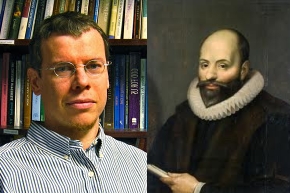
    Randal Rauser and ArminiusBut now to specifics: How does Rauser respond to my claim that the arbitrariness objection (at least if it is to be an objection) begs the question against Calvin’s doctrine of election? On the face of it, he doesn’t seem to challenge my point that God may not be acting unjustly if we are undeserving of salvation. To the contrary, Rauser seems to admit for the possibility that the tortures may be justly deserved. But if that’s the case, then, as I tried to point out in my first post, there’s no real injustice or immoral state of affairs that obtains if God so desires to instantiate those punishments. Paradoxically though, Rauser refers to my theology as “brutal” and “morally incoherent”. Both of these terms, emotionally provocative as they are, seem to suggest that there is something nasty, horrible, evil (whatever negative adjective your heart desires) about a God that selects some for salvation while selecting others for damnation. But if, as Rauser seems to allow, the tortures are justly deserved, then none of those adjectives can rightly be said to stick. After all, if the tortures are justly deserved, and God decides to carry out those tortures, then God can only be said to be doing what the demands of morality and/or justice require. So wherein does the moral incoherence obtain?

    But according to Rauser, I would still be missing the point. After all, he (Rauser) says, the Camp Director Analogy was not intended to show that God, given Calvinism, is “unjust”, but rather that He cannot be seen as “maximally loving”. I see no real reason to deny Rauser the liberty to make this distinction, but its relevance is, at best, unclear.

    Thankfully, Rauser does seem to hint at one possible way in which we could interpret this as an objection. He seems to engage in something of a pair-wise comparison between two possible scenarios that are supposed to be relevantly similar to the Arminian and Calvinist conceptions of election respectively.

    • Scenario 1: The director arbitrarily selects some children for beatings and others for loving rehabilitation.
    • Scenario 2: The director selects all children for loving rehabilitation.

    According to Rauser, were God to bring about scenario 2, we would state that He is more loving were he to bring about scenario 1. There are three things that I have to say to this (more…)


  • Randal Rauser’s Mistake: A Defense of Calvin’s Doctrine of Election

    John CalvinThanks go to Matthew Flannagan for pointing me in the direction of this response to the problem.

    A while back Professor Randal Rauser issued a blog entitled “Calvinism and the Arbitrary Camp Director” in which he criticised the Calvinist understanding of election.

    For those of you who are unaware of the Calvinistic understanding of election, very roughly, it’s the idea is that God elected some for salvation and did not elect others for salvation. Now obviously there’s FAR more to Calvin’s doctrine of election than merely the claim that some are elected and others are not. But that at least, is the centre point of Rauser’s criticism, and more particularly, it’s that element of Calvin’s doctrine that I seek to defend in this article.

    Before we begin, it’s interesting to note that barely three months ago I was a staunch Arminian when it came to soteriology. I reacted against Calvin’s doctrine with the greatest of revulsion. How could it possibly be, I thought, that God could be “good” and yet actively choose some for salvation while leaving others to die?! It made no sense to me! In-fact, I remember going to scripture one Sunday morning actively seeking to find that knock down scriptural blow against the Reformed understanding of election. Interestingly, the first scripture I read was the parable of the wheat and the tares Matthew 13:24-29/13:36-43. While I read it, it struck me that this challenged my Arminian understanding of Salvation. But I didn’t want to believe it, so I left it for a week hoping that there would be some other explanation. But none was forthcoming. Very quickly I found myself speaking in terms that a week earlier I would never have been revolted to hear myself say. I was not yet a practicing Calvinist. I was what you might call “soteriologically agnostic”.

    Now the reason I say this is not because I hope to establish myself as any authority on the matter. To the contrary, Rauser, being a Professor of Historical Theology at Taylor Seminary is far more of an authority on the matter than I can hope to be at this stage of my life. So it’s with much fear and trepidation that I dare post this article contradicting Rauser’s arguments. So why do I give my testimony of how I came to Calvinism? Well I myself am a little unsure. Nevertheless, I suspect that the main reason I give such testimony is that I find it and irony worth sharing that I am writing an article that barely three months ago I would never have even dreamed of writing. If I was going to write anything, it would have been about how Calvinism completely destroys any sensible understanding of God’s justice and love.

    But now let’s get down to business. Precisely what is Rauser’s objection? More than anything else, it appears to be a moral objection. The problem, Rauser urges, is that it makes God’s choice about who save entirely arbitrary. Why, he asks (referring to one of his dialectic opponents apparently named Tom) should God bring glory to him (Tom) and not another say Saddam Hussein? This picture, Rauser asserts, completely undermines the idea that God is loving. In order help us to see this point. Rauser entreats us to consider the following illustrative analogy:

    Randal Rauser“Imagine that there is a camp for troubled youth. The camp director has a rather unorthodox method of dealing with the campers. Some of them are beaten severely with whips in a wholly punitive or retributive (i.e. not restorative) manner while others are chosen by the director to receive care, love and nurture in a way that restores them.

    You are contemplating sending your child to the camp but you want your child to be lovingly restored, not viciously beaten, even if the beatings are just. So you enquire: what is it that makes the director decide to beat the children rather than nurture them? Is it the nature of their crimes? Their race? Gender? What?

    The answer comes back. There is (more…)

  • Abraham, Isaac, Virginity, Rape and Child Killing (Another Old Testament Ethics Post)

    Randal Rauser has published a blog post touching on Old Testament ethics called “An update in the wake of Atlanta (plus a bit on rape and child killing)“. His post gives an update on his thoughts following his interaction with Paul Copan, Richard Hess and myself in the Evangelical Philosophical Society’s break-out panel discussion “Is Yahweh a Moral Monster” at the Society for Biblical Literature (“SBL”) in Atlanta in November. While there was considerable overlap between his position and mine, there was one particular issue on which he and I disagreed quite sharply on the night that he alludes to in his post. Let me contextualise this disagreement and then put my response to his comments.

    Back in 2009 I wrote “Abraham and Isaac – Did God Command the Killing of an Innocent?” This post addressed a dilemma several philosophers have raised for those Christians who take the patriarchal narratives in Genesis in literal manner. It seems plausible that Christians who do this are committed to an inconsistent triad,

    1. If God commands an action x then x is morally required;
    2. It is wrong to kill innocent human beings;
    3. God commanded Abraham to kill an innocent human being.

    These three propositions are inconsistent; 1 and 3 entail the denial of 2.

    To respond to this triad, I appropriated a thought experiment provided by John Hare; I wrote:

    One example Hare notes, is particularly interesting, “Perhaps (to get more bizarre) God could have willed that we kill each other at the age of 18, at which point God would bring us immediately back to life.” Hare asks us to imagine a world, in which, when people of a certain age are killed they immediately come back to life. He opines, quite plausibly, that if this were to be the case then killing people at this age would not be wrong or at least, not seriously wrong. One of the reasons that killing people is wrong in the world we live in is because people stay dead. If they were only unconscious for a split second and came back to life in full health then arguably killing a person would not be the serious wrong we believe it is.

    I suggested that, a careful examination of the text reveals that Abraham’s actions occurred in a context where he knew his son would not stay dead but would come down the mountain with him and live on to adulthood to father children of his own. I argued this fact resolves the dilemma,

    Once this is realised, I think it is evident that [1], [2] and [3] are consistent. If one assumes, for the sake of argument, that the Patriarchal Narratives are literally true then it follows that [3] is true only if a certain context is assumed. God commanded Abraham to kill his son in the highly unusual context where Abraham knew that his son would not stay dead but would come down the mountain afterwards and live on to adulthood to father children of his own. Proposition [2] is defensible only in a context where people do not know these sorts of things; the rule to not kill the innocent applies to a world where people do not come back to life after they have been killed. Hence, the story of Abraham and Isaac, if taken literally, does not entail that God commanded something immoral or contradictory.

    What I later discovered is that Paul Copan sometimes reads this blog and he, on reading my post, summarised my argument and appropriated it (with acknowledgements)  in chapter 5 of his latest book Is God a Moral Monster: Making Sense of the Old Testament God.

    The EPS Session at the SBL: Richard Hess, Randal Rauser, Paul Copan,  Matthew Flannagan, Michael ReaEnter Randal Rauser. In the paper he presented for the SBL panel, Rauser made a remark on the Abraham and Isaac issue. Copan responded by summarising his argument, which was an appropriation of my argument. Rauser responded with an analogy, which he has since (more…)

  • SBL Annual Meeting: Navigating Old Testament Ethics

    Matt has been invited to participate in a panel discussion at the annual Society of Biblical Literature (SBL) Annual Meeting in Atlanta, Georgia, which runs 20-23 November 2010. He will join leading Christian academics Paul Copan, Richard Hess and Randal Rauser in a segment entitled “Navigating Old Testament Ethics.” Matt’s contribution to the panel discussion will be on Divine Commands and Old Testament Ethics.

    Society of Biblical Literature Annual Meeting

    The SBL Annual Meeting is the largest gathering of biblical scholars in the world. Each meeting:

    • showcases the latest in biblical research,
    • fosters collegial contacts,
    • advances research, and
    • focuses on issues of the profession.

    At this meeting, scholars benefit from sessions on religion, philosophy, ethics, and diverse religious traditions.

    You can register here.

    If you would like to donate to help Matt get to America to speak at the SBL Annual Meeting please visit our support page.