Tag: Philosophy of Religion

  • Contemporary Philosophy of Religion and NCEA Religious Studies: Part one

    This is a talk I gave to the New Zealand Association of Philosophy Teachers annual conference at St Cutherberts College in September this year. Several people have asked me to make this talk available.

    I have broken my talk up into four parts. Part One introduces what philosophy of religion. In part two I will outline two movements within analytic philosophy during the early to mid-century which I think resulted in religious beliefs not being taken very seriously within philosophy and philosophy of religion taking a fairly minor role. Part three will look at some responses to these movements offered in the late 20th century and how they changed the philosophical landscape. Part four will look at the question of “how to do philosophy of religion” comparing the methods used by two different atheist’s J L Mackie and Graham Oppy, and how this relates the National Certificate of Educational Achievement Standards. This post will contain part one.

    First, I want to thank the association for asking me to speak, seeing I have been teaching in the secondary sector full time for only a  couple of years so I am not sure I have a lot to share with you and feel very much like I have more to learn from you.

    I have been asked to talk about the contemporary philosophy of religion.  In my talk this morning I will focus on three things. First, I will talk about what philosophy of religion is. Second, I will talk a little bit about its history but focus on recent developments in contemporary analytic philosophy of religion. Finally, I will link some of these things with the current National Certificate of Educational Achievement (NCEA) Standards in Religious Studies. I hope what I say is helpful to you.

    What is Philosophy of Religion
    What is the philosophy of religion? Charles Taliaferro at the Stanford Encyclopedia of Philosophy defines it as “thephilosophy-of-religion philosophical examination of the central themes and concepts involved in religious traditions.” He adds “Philosophy of religion also includes an investigation into the religious significance of historical events (e.g., the Holocaust) and general features of the cosmos (e.g., laws of nature, the emergence of conscious life, widespread testimony of religious significance, and so on)”[1] Chad Meister at The Internet Encyclopedia of Philosophy defines it as “ the philosophical study of the meaning and nature of religion. It includes the analyses of religious concepts, beliefs, terms, arguments, and practices of religious adherents.”[2]

    The History of Philosophy of Religion

    Now, Philosophy of religion has a very long history, going back to the Pre-Socratics. And it was an integral part of medieval philosophy, Augustine, Aquinas, Anselm, Abelard, Scotus, Ockham and so forth worked in the tradition of “faith seeking understanding”. They used philosophy as a conceptual tool to reflect upon, analyse, refine, the religious faith that they held and develop philosophically informed models of core religious doctrines, they also used it to respond to objections and critique rival views and develop arguments for the own for theological models they supported. Some of these reflections proved very fruitful.  The Islamic-Christian dialogue over Aristotle’s understanding of causation and how it related to miracles, and Gods causal activity in the world, for example, is profoundly influential on latter accounts of causation by people like David Hume and the concepts of laws of nature used by early modern scientists.

    Perhaps lesser appreciated is the role of philosophy of religion during the enlightenment.  There is an unfortunate tendency in the history of philosophy not to appreciate the religious context in which important key thinkers of the enlightenment operated. Descartes cogito ergo sum (I think therefore I am), for example, comes from Augustine’s response to sceptics about religious knowledge in the city of God Book 11: 26. Descartes immediately follows this up of course with an appeal to his own version of the ontological argument, proposed famously by Anselm of Canterbury.

    Or consider John Locke, according to Locke’s associate James Tyrell, the impetus for Locke’s “Essay on human understanding” was a conversation  he, Locke and four others had on the topic of “the principles of morality and revealed religion.” Locke’s attempt to develop a comprehensive empiricist understanding of knowledge was an attempt to answer the question of faith and reason, a topic he explicitly addresses in the last section of the book. (Incidentally, it’s a section often skipped in contemporary courses on Locke.)

    Or consider what a widely used textbook refers to as the “revolution in ethics” which occurred in the 18-19th centuries. Which the author, James Rachels, contends is due to Hume, Bentham and Mill. Rachel’s refers to as “A new conception of ethics”… “Morality, he [Bentham] urged is not a matter of pleasing God,  nor is it about following abstract rules, Rather, morality is nothing more than the attempt to bring about as much happiness as possible into the world”.[3]

    Rachel’s is, of course, talking about utilitarianism. However, his characterisation of the history is quite selective. In 1715, some 74 years before Bentham, George Berkley had defended a rule utilitarian conception of ethics[4]Berkeley was a divine command theorist hat moral rightness, and wrongness consists in agreement and disagreement, respectively, with the will of God.  Because  God’s purposes were benevolent a God’s aim was to maximize the happiness of his creatures, so one could assume that whatever rules maximized happiness were those enjoined by God. Berkley used this theoretical account of God and morality to attempt to reconcile his Irish Anglican commitment to passive obedience with loyalty to the Glorious revolution during Jacobite uprisings in Ireland. Berkley’s “theological utilitarianism” was adopted by people like John Gay, Abraham Tucker and compiled by William Paley. Paley’s textbook defending this way of looking at ethics was the standard text at Cambridge and widely influential several years before Bentham published his defence of utilitarianism.

    I could go on; my point is that Philosophy of religion has a long and prestigious history, even during the enlightenment and an important part of educating students about our history and the history of concepts that undergird much of the modern world involves acknowledging these connections rather than ignoring them.

    [1] Charles Taliaferro “Philosophy of Religion”, Stanford Encyclopedia of Philosophy https://plato.stanford.edu/entries/philosophy-religion/

    [2] Chad Meister, “Philosophy of Religion” Internet Encyclopedia of Philosophy http://www.iep.utm.edu/religion/

    [3] James Rachels The Elements of Moral Philosophy, (Random House: New York, 1993) 80

    [4] For explication see Stephen Darwall, “Berkeley’s Moral and Political Philosophy” Kenneth Winkler (ed.), The Cambridge Companion to Berkeley. Cambridge University Press. (2005) see also C. D. Broad, “Berkeley’s Theory of Morals” Revue Internationale de Philosophie, vol. 23-24 (1953):  72-86.


  • Come Let Us Reason: New Essays in Christian Apologetics – Available on Kindle or Pre-Order the Book, Feat. William Lane Craig, Paul Copan, JP Moreland, Gary Habermas, Matthew Flannagan et al.

    The kindle edition of Come Let Us Reason: New Essays in Christian Apologetics, published by B&H Academic, edited by William Lane Craig and Paul Copan and featuring Craig, Copan, JP Moreland, Gary Habermas, Craig Keener, Mary Jo Sharp, this blog’s Matthew Flannagan, and others, with the foreword written by Rick Warren, is now available at the link above on Amazon.

    The book version of Come Let Us Reason: New Essays in Christian Apologetics can be pre-ordered at this link on Amazon.

    Matt’s chapter is “Did God Command Canaanite Genocide?” Here is the editorial review from Amazon:

    Come Let Us Reason: New Essays in Christian ApologeticsCome Let Us Reason is the third book in a series on modern Christian apologetics that began with the popular Passionate Conviction and Contending with Christianity’s Critics. The nineteen essays here raise classical philosophical questions in fresh ways, address contemporary challenges for the church, and will deepen the thinking of the next generation of apologists. Packed with dynamic topical discussions and informed by the latest scholarship, the book’s major sections are:

    • Apologetics, Culture, and the Kingdom of God
    • The God Question
    • The Gospels and the Historical Jesus
    • Ancient Israel and Other Religions
    • Christian Uniqueness and the World’s Religions

    Click to View the Table of Contents of Come Let us Reason

    Contributors include J. P. Moreland (“Four Degrees of Postmodernism”), William Lane Craig (“Objections So Bad That I Couldn’t Have Made Them Up”), Gary R. Habermas (“How to Respond When God Gives You the Silent Treatment”), Craig Keener (“Gospel Truth: The Historical Reliability of the Gospels”), and Paul Copan (“Does the Old Testament Endorse Slavery?”).

    Paul Copan is a professor and the Pledger Family Chair of Philosophy and Ethics at Palm Beach Atlantic University in West Palm Beach, Florida. He holds a Ph.D. in Philosophy from Marquette University.

    William Lane Craig is research professor of Philosophy at Talbot School of Theology in La Mirada, California. His Ph.D. in Philosophy is from the University of Birmingham in the United Kingdom.

    The Come let us Reason series is designed to bring scholarly work to the lay person so, depending on whether you prefer Kindle or book form, order or pre-order your copy now and let us know what you think.

  • Comparing the Old & New Teleological Arguments

    Robin Collins

    The “New Teleological Argument” is a theistic argument which attempts to show that theism is more probable than the postulate of an “atheistic single universe”[i]. There are number of reasons why this argument is termed the “New” teleological argument. Chief among these reasons is that its explanandum i.e. the incredible fine tuning of the laws and constants of physics have only been discovered in the past 20-30 years[ii] [iii]. By contrast, the explanandum of “Old Teleological Arguments” has long since been available to theologians and philosophers of religion. Of course the relatively recent origin of the “New” Teleological argument is not the only feature which distinguishes it from its historical counterpart. Whereas historical versions of design arguments (such as Paley’s famous watchmaker argument) rest on an argument from analogy, contemporary versions of the argument rest on what the philosopher of biology Elliot Sober calls the “Likelihood Principle”[iv] [v]. In other words, rather than relying on an analogy between the explanandum and some obviously contrived entity such as (in Paley’s case) a watch, contemporary versions of the teleological argument argue that the explanandum (the fine tuning of the laws and constants of physics) is more probable given the hypothesis of theism as opposed to the postulate of an atheistic single universe[vi].

    The Conditions of Success
    Throughout the rest of this post, I hope to argue that, on purely philosophical grounds, there is little which will allow us to say which version of the argument (be it contemporary or historical) is more or less plausible. In this respect, it seems only fair that we should assess the strength of David Hume’s critiques, since they are popularly regarded as decisive refutations of teleological arguments.[vii] [viii] It’s important to note also, that while the failure of the Humean critiques would not guarantee the conclusion that the design arguments are equally plausible, it is suggestive thereof. After all, if the joint failure of natural theological and atheological arguments should suggest that it’s impossible to arbitrate (on the evidence) between theism and atheism, then similarly, the failure of stock arguments against either of the design arguments should lead us to think that it’s impossible to arbitrate between them.  In spite of the fact that both contemporary and historical versions of the design argument are equally plausible, I will argue that the contemporary version of the argument has a number of key dialectic advantages which may warrant us in thinking that it is “dialectically speaking”, more successful than its historical counterpart. More precisely, I am saying that the relative success of the new teleological argument is a function of the fact that it does not turn on premises that are as deeply controversial as the commitments required by the historical version.

    The Contemporary Version of the Argument
    The most prolific contemporary defender of the design argument is Robin Collins who, rather than arguing from facts about biology, argues from recent discoveries in physics[ix]. As we noted earlier, this is one of the main reasons why it is termed the “New” teleological argument. Collins frames his rendition of the argument as follows:

    (1)     The existence of fine tuning is not improbable under theism[x]

    (2)     The existence of fine tuning is very improbable under the atheistic single-universe hypothesis[xi]

    Therefore, given the prime principle of confirmation[1] [xii],

    (3)     The existence of fine tuning is evidence for theism over the atheistic single-universe hypothesis[xiii]

    By “fine tuning”, I mean the very precise arrangement of the fundamental laws and constants of physics that must be met in order for our Universe to fall into the very narrow life permitting range.[xiv] [xv] According to contemporary physics, these conditions seem to be arranged in such a way that, were they to vary by even the tiniest amount, life (or more precisely, sentient life) would not be a physical possibility. For example, as P.C.W. Davies points out, a change in “the weak force”[2] by only 1 part in 100100 would make the Universe uninhabitable.[xvi] Similarly, if the cosmological constant[3] were just a fraction faster, matter would spread apart so quickly that even relatively small clumps of matter would have insufficient time to form[xvii].

    The Plausibility of the Premises
    Premise (1) amounts to the claim that if God exists, then it is entirely within His creative capability to create the universe finely tuned as it is. Hence the observation that there is a universe which exhibits teleo-functional properties is not surprising given the postulate of theism. Considering that the traditional conception of God holds that He is an omnipotent being, this is a fairly straightforward premise that we should accept.

    Premise (2) amounts to the claim that if God does not exist and if the single universe hypothesis is true, then the apparent fine tuning of the universe is a very surprising fact. After all, the fundamental laws and constants of physics seem to be arranged in such a way that their placement seems guided. But if God doesn’t exist, it doesn’t seem likely that there would be any intelligent, guiding mind such that it could plausibly account for this apparent fine tuning. Hence premise (2) seems (more…)

  • Hear John Lennox in New Zealand UPDATED

    John LennoxProfessor John Lennox of the University of Oxford will arrive in New Zealand in a fortnight for a brief public speaking tour in the centres of Auckland, Wellington and Christchurch.

    His New Zealand speaking itinerary of public events is below; all public events are free.

    Auckland

    Sunday 27 February

    9:30 – 11:00am Preaching at Howick Baptist Church on the corner of Picton and Wellington Streets, Howick, Auckland. Facebook Event Page.

    1:00 – 3:00pm Science and Religion Q&A at the Salvation Army East City Corps, 37-45 Wellington Street, Howick Auckland. Facebook Event Page.

    7:00 – 9:00pm Preaching at Greenlane Christian Centre, 17 Marewa Rd, Greenlane, Auckland.

    Monday 28 February

    7:00 – 9:00pm “Christ Among the Philosophers” at St Paul’s Church, Symonds St, Auckland. Facebook Event Page.

    Organised by Compass, “Dr Lennox will address questions such as, is faith delusional? Is it reasonable? How can we live faithfully in the public square? How might one engage faithfully as a Christian in the academy?”

    Tuesday 1 March

    12:00 – 1:00pm (this talk will be repeated in the same room from 1:00-2:00pm) “Has Science Buried God?” Public lecture at Auckland University at the Cap and Gown Lounge (Bar), Level 3, Students Union, Auckland University Campus. Facebook Event Page.

    Organised by TSCF: “Science and reason seem to be claiming to have disposed of our need of God. But have they? Prof John Lennox, author of “God’s Undertaker”, engages with the issues in an accessible, thoroughgoing and scientifically sound way. As a world renowned academic mathematician and the only Christian academic that Richard Dawkins has been happy to engage in public debate, John brings illumination, humour and challenge (as well as a cool accent) into this tense and controversial area.”

    7:30 – 9:30pm “So you want to change the world?” Student Meeting TSCF Offices, 441 Queen Street.

    Wellington

    Wednesday 2 March

    7:00 – 9:00pm “Why God Loves Richard Dawkins?” or “God and Stephen Hawking” at St Michael’s, Upland Road, Kelburn, Wellington. Facebook Event Page.

    “Hawking’s book argues that invoking God is not necessary to explain the origins of the universe, and that the big bang is the consequence of the laws of physics alone. Hawking has said, “One can’t prove that God doesn’t exist, but science makes God unnecessary”. Professor Lennox will discuss the flaws in Stephen Hawking’s logic and demonstrate that, far from disproving a creator, Hawking’s argument make the existence of God far more probable.”

    Christchurch

    Sunday 6 March

    9:00 – 10.30am Speaking at Spreydon Baptist Church, Corner Lyttelton & Cobham StreetsSpreydon,Christchurch

    Biography

    God's Undertaker: Has Science Buried God?Dr John Lennox is a Professor of Mathematics at the University of Oxford, a Fellow in Mathematics and the Philosophy of Science and (more…)

  • Moving Beyond CS Lewis?

    CS Lewis still provides a great read and he has been an important figure in my own journey of working out my faith. But I cringe a little when, as repeatedly happens, Christian people hear I’m into philosophy and science and such and they recommend I read the author of the Narnia books.

    CS Lewis left a legacy - not all the answers

    I’ve been reading some of his works for quite a while and they’re great, with plenty of insights into the poverty of a purely secular life – but they’re not the only thing out there if you’re looking for a critically engaged faith. (There’s perhaps a similar deal with Francis Schaeffer, but I struggle to think of other Christian thinkers who people in the pews would tend to know. For the rest of the post, I’ll refer to Lewis, as representative and chief of a possibly larger tribe; I’m open to being convinced anyway.)

    I’m curious about what causes the phenomenon which I clumsily christen “you’re a Christian into thinking? Oh well (it’s a pity you can’t play the guitar); but quick, you better read CS Lewis!” The Church is not noted for being fast and trendy and up to date, but that’s not the whole story. I don’t have any evidence for the claim, but I suspect CS Lewis has been popular for a long time i.e. the Church hasn’t only just discovered him; and more fundamentally, that previous generations, who were more likely to read books and keep up to date with the world of literature, were better acquainted with a few defenders of the faith who were not long-dead at the time.

    I’m not advocating the sin of chronological snobbery and I know that new and shiny stuff often soon enough hits the trash pile, but in my opinion, people really need to know that God is alive in the academy today and He’s worth taking as seriously as He ever was. That’s good news, but news which may be hard to hear above the dance/trance/pop/punk/thrashmetal-indie sounds of popular Christian culture and Christianity-lite ®. I have suggested the Church is slow in some respects, but it’s fast in others – making bad copies of non-religious pop culture arguably being one of our special skills (more…)

  • The Separation of Church and Self: Rethinking Separationism

    Is it just for a pluralistic society to ground its public policy on religious premises? What role should religion play in such a society? Debate over questions like these has figured in theology, philosophy, political science, jurisprudence and popular culture for centuries. In contemporary Western pluralistic society the debate continues. Even for those unfamiliar with its nuances at the higher levels the effect of the standard view, as described by Stephen Carter, is immediately familiar:

    “One good way to end a conversation – or start an argument – is to tell a group of well educated professionals that you hold a political position (preferably a controversial one such as being against abortion or pornography) because it is required by your understanding of God’s will. In the unlikely event that anyone hangs around to talk with you about it, chances are that you will be challenged on the ground that you are intent on imposing your religious beliefs on other people. And in contemporary political and legal culture, nothing is worse.”[1]

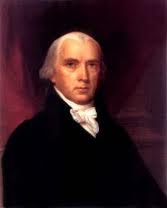
    James Madison

    Carter is referring to the separationist understanding of religion and public life, the idea that in a contemporary pluralistic society significant restraint must be put on the political role of religious reasons. This restraint is negative; when a functionary deliberates over a proposed policy it is not justified for that functionary to decide to support or oppose that policy on grounds derived from religion. A corollary of this is that citizens should not try to influence public policy by appealing to religious reasons. Separationists argue that the public policy of a pluralistic society must be able to be justified by a plausible secular justification in order for it to be just to all. Religious beliefs, while utilised and followed in private, should be kept separate from public policy debates, the administration of public institutions and the deliberation of public functionaries. (more…)

  • Gary Gutting on Richard Dawkins’ Atheism

    The New York Times has an accessible and excellent critique of Richard Dawkins’ argument for the non- existence of God, written by University of Notre Dame Philosopher Gary Gutting entitled, “On Dawkins’s Atheism: A Response.”

    Enjoy.

    RELATED POSTS:
    Fairies Leprechauns, Golden Tea Cups and Spaghetti Monsters
    Richard Dawkins and Open Mindedness