Tag: Law Studies

  • Madeleine Registered

    News that many may have missed while we were in our moving house and not blogging mode is that Madeleine has been admitted to the Register of Lawyers, this means that she may now practice law and work in the areas restricted by law for lawyers. You can even go to the New Zealand Law Society Register of Lawyers and look her up.

    The New Zealand Law Society Register of Lawyers

    I am also rather chuffed to share that after working for her firm, Coast Legal, for a relatively short time she has been offered and has accepted the position of Associate. As I understand it this was based on her performance thus far. She is currently working primarily in family law doing a number of child protection cases where her background in legal philosophy seems to really be an asset as well as the other general areas of family law. She also does a bit of criminal, traffic, estate, home schooling law and civil work and has recently been asked to first chair a High Court matter by another firm who are aware of her arguing skill; she’ll be doing that at the end of the month.

  • Madeleine Admitted to the Bar

    This morning my children and I sat in the Auckland High Court to watch Madeleine be admitted to the Bar. The ceremony had the solemn pomp and formality of Barristers wigs, robes and when Madeleine spoke for the first time in open court as an enrolled Barrister and Solicitor of the High Court of New Zealand she opened with “if it pleases your Honour”.

    I am very proud of Madeleine today she has overcome a lot of obstacles to get to this day.

    When I first met Madeleine 15 years ago she was a single mother struggling to raise two kids whilst working part-time and studying towards a law degree. (She wrote of some of those struggles in In Pursuit of an LLB). After we married she took several years off to raise our children and support me in my theological studies. She returned to law school in 2008 when the company she was working for as a Personal and Legal Assistant bonded her to do complete her law studies part-time.

    Enrolled Barrister and Solicitor of the High Court, Madeleine Flannagan

    A month after her return to law school in 2008 a car accident left Madeleine with a serious neck injury. Back then she was in severe pain, taking mind altering pain medication which only partially controlled the pain while she waited for surgery. With a sitting tolerance of 20 minutes she was unable to attend lectures and unable to sit through exams or do big stints at the computer. She also lost her job as a result of this but she was determined to not lose her chance at attaining entrance to the law profession. She persevered with only 1 or 2 papers at a time. I drove into Auckland University to tape her lectures and take notes for her. She had to learn how to study and write assignments in 20 minute bursts, something she found extremely frustrating as even with lots of breaks she’d end up in awful pain after a few hours. Exams were very difficult for her given her pain limitations but she would not take a semester off. She kept going.

    She completed her LLB mid 2010 (she had started it 17 years earlier in 1993). She completed her Certificate of Professional Legal Studies (the NZ equivalent of the bar exams) at the end f 2010 – she was nearly there – but then she got hit by ACC deciding her injury was “degenerative” which saw her salary compensation cut off and then towards the end of 2010 her former spouse laid a complaint against her character with the Law Society from jail causing her application for a Certificate of Character to be delayed while the complaint was investigated. This put everything on hold for 8 months but in May, after the Law Society asked her ex to provide evidence to support his claims and he failed to do so despite being granted an extension of time, the complaint was dismissed and Madeleine was declared a fit and proper person to practice law in New Zealand. With her Certificate of Character in hand she was clear to apply for admission and this morning Madeleine was admitted to the Bar.

    Congratulations Madeleine, the children and I love you and are all very proud of you; your perseverance is a real inspiration to us all. Enjoy your celebrations tonight.

    Madeleine's Bar Admission

  • The Separation of Church and Self: Rethinking Separationism

    Is it just for a pluralistic society to ground its public policy on religious premises? What role should religion play in such a society? Debate over questions like these has figured in theology, philosophy, political science, jurisprudence and popular culture for centuries. In contemporary Western pluralistic society the debate continues. Even for those unfamiliar with its nuances at the higher levels the effect of the standard view, as described by Stephen Carter, is immediately familiar:

    “One good way to end a conversation – or start an argument – is to tell a group of well educated professionals that you hold a political position (preferably a controversial one such as being against abortion or pornography) because it is required by your understanding of God’s will. In the unlikely event that anyone hangs around to talk with you about it, chances are that you will be challenged on the ground that you are intent on imposing your religious beliefs on other people. And in contemporary political and legal culture, nothing is worse.”[1]

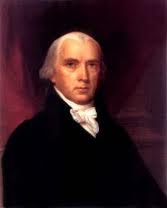
    James Madison

    Carter is referring to the separationist understanding of religion and public life, the idea that in a contemporary pluralistic society significant restraint must be put on the political role of religious reasons. This restraint is negative; when a functionary deliberates over a proposed policy it is not justified for that functionary to decide to support or oppose that policy on grounds derived from religion. A corollary of this is that citizens should not try to influence public policy by appealing to religious reasons. Separationists argue that the public policy of a pluralistic society must be able to be justified by a plausible secular justification in order for it to be just to all. Religious beliefs, while utilised and followed in private, should be kept separate from public policy debates, the administration of public institutions and the deliberation of public functionaries. (more…)

  • Congratulations Madeleine Flannagan LLB

    Today Madeleine graduates with her LLB (Bachelor of Laws). She started this 17 years ago, took time out to have two of our children and started again in 2008. Despite a car accident, injury and constant pain she has persevered and today receives recognition for her achievement.

    Madeleine Flannagan LLB

    I am so proud of my wife, her determination, character and grit in doing this has been an inspiration to me.

    RELATED POSTS:
    In Pursuit of an LLB

  • Finally! The Words I Have Waited 17 Years to See

    I just logged into nDeva, the University of Auckland’s student records intranet and I just now read the words I have been waiting to read since my first day at Waikato Law School back on 1 March 1993:Welcome to Graduation!

    You are eligible to graduate LLB

    After everything I went through to get here, as I shared some of in my post In Pursuit of an LLB, I am just so happy.

    RELATED POSTS:
    Back to Law School

    Update on Madeleine’s Car Accident and Recovery
    In Pursuit of an LLB – Some News!
    Power Cuts and Deadlines
    Putting Down my Pen

  • Putting Down my Pen

    In an exam room somewhere on the campus of the University of Auckland I just put down my pen. (Thanks to the wonders of blog post scheduling I can both blog and write an exam contemporaneously).

    Unlike every other time I have put down my pen at the end of an exam during the long drawn out process that has been my LLB studies this time was special because this time I did not just complete my exam script, I completed my degree!

    I began my law studies on 1 March 1993. I had no idea when I entered that first lecture that it would be 17 years before I saw this moment but here I am. As I shared in my post In Pursuit of an LLB, I have overcome some fairly major obstacles to get here so this moment is very sweet!

    P.S. Yes, now my degree is complete blogging will pick up – this semester’s workload has been very, very full.

  • Can State Appropriation of Minerals in Privately Held Land be Justified? Resources Needed

    I am currently undertaking my second-to-last paper in pursuit of my Bachelor of Law (LLB).  Due to a complicated bunch of factors involving the potential staleness of my papers, if I do not apply to the New Zealand Council of Legal Education for a completion certificate with an LLB and a Professional Legal Studies certificate in hand prior to 31 Dec 2010, combined with limitations of my ability to do much more than one paper at the time due to my neck injury and chronic pain issues and due to the fact that with only two papers to go I need to submit three opinion papers (only one of which can be substituted with voluntary community legal service), I had little choice but to choose a summer school paper that had the option of an opinion credit. This set of circumstances has seen me engaged in the project for which I now hope some of our readers can help me with.

    My paper is Mining and Natural Resource Law (there is not much choice at Summer School). As an opinion topic we were allowed to take our budding legal specialty and apply it to any of the topics on the course outline. I like to take a philosophical rights and freedoms approach to most of what I research and write within the field of law so I have submitted and had approved a topic with a bit of a jurisprudential twist. I intend to analyse the justifications given for the state appropriation of minerals in the sub-soil of privately owned property.

    Most articles I have found on state appropriation so far seem to tacitly assume that if the state has legislated that it owns the minerals in the sub-soil of privately owned land then the state’s action is justified or the author simply does not question this, even if he or she acknowledges that a few private property owners had an issue with this at the time, which is not helpful as I intend to question the justification.

    New Zealand philosophical writings from the perspective of classical liberal/pro-property rights/limited state angles are fairly difficult to find. Further international writings on this subject are not commonly cited in New Zealand so they too are hard to find. If any of our readers can point me to any good sources that might help me in the project or even if you can just leave your thoughts in the comments section (if I use your ideas in the work I promise to attribute them back to you) that would be most helpful.

    The following is the gist of the direction I hope to take.

    Since at least the 16th century, the maxim cujus est solum, ejus est usque ad coelum et ad inferos (Latin for for whoever owns the soil, it is theirs up to heaven and down to hell) meant that at common law, minerals in the sub-soil of land belonged to land owner. Such minerals were assumed to be conveyed along with the land on its change of ownership unless wording in the conveyance instrument specified otherwise. Until fairly recently, the last century or so, the only minerals not subject to this rule were gold and silver. The Case of Mines found “that by the law all mines of gold and silver within the realm, whether they be in the lands of the Queen, or of subjects, belong to the Queen by prerogative”. According to Dr Robyn Anderson,[1]

    The Court of Exchequer found in Case of Mines, that base metals – tin, lead, iron, copper, and non-precious minerals – belonged to the owner of the soil, but that the right to gold, silver, and their ores and admixtures, lay with the Crown. That right was not an incident of ownership of the soil, but rather, an attribute of the monarchy. The Elizabethan assertion of the prerogative reflected the pragmatic needs of the developing English state to control the coinage, and finance an army … [1]

    The argument that back in the 16th century the Monarch needed to be able to protect the realm by using coinage to raise an army (there was no standing army) and weapons to arm it, seems, prima facie, a reasonable justification for the state appropriation of gold and silver. However, in the last century or so many of the base metals and minerals deemed non-precious in the Case of Mines are now included in statutory reservations to the crown. This has reached the point in 2010 where, with few exceptions, the state currently owns almost all minerals in territorial New Zealand and has exclusive right to alienate (or grant a licence to alienate) most of those minerals from even those lands held in private ownership. Further, in many circumstances, land owners cannot even refuse consent for prospective, exploration and mining to occur on their land.

    The New Zealand government owns all naturally occurring petroleum (including both oil and gas), radioactive minerals, and gold and silver in New Zealand. Any individual or company wanting to prospect, explore or mine these substances must obtain a permit under the Crown Minerals Act 1991 and pay the specified fees and royalties [to the state]. The same rules apply to coal and all other metallic and non-metallic minerals and aggregates on Crown-owned land.

    Mining of minerals and aggregates other than petroleum, radioactive minerals and gold and silver on privately owned land requires the consent of the landowner together with resource consents from local authorities granted under provisions of the Resource Management Act. [Emphasis added] [2]

    The current state of mineral rights in New Zealand seems to me, prima facie, to be a violation of ad coelum et ad inferos (the right of land ownership “down to hell” or in sub-soil), so the question I want to ask in my opinion is: what is the basis for the state’s appropriation of sub-soil minerals from the lands of private property owners and is it justified? The New Zealand army is not armed with gold and silver these days, further,  I cannot see any legitimate argument for why the state needs to own petroleum and “Nuclear Free New Zealand” does not have a nuclear weapons program (and are,  just a guess here,  highly unlikely to in the future) so what is with the state ownership of radioactive resources?

    Obviously 3,000 words will not give me a lot of space to develop this topic so I will try to keep the topic to more of a general overview but I need resources and fast both directly on this topic and on property rights generally so if you have any thoughts…


    [1] Robyn Anderson Goldmining: Policy, Legislation, and Administration (Rangahaua Whanui Report, Waitangi Tribunal, Dec 1996) RANGAHAUA Whanui NATIONAL Theme N: GOLDMINING: Policy, Legislation, and Administration (Robyn Anderson ed., 1996) 1.
    [2] Simon Nathan “Mining and underground resources – Mining regulation and education” Te Ara – the Encyclopedia of New Zealand, updated 2-Mar-09.