Tag: John Gay

  • Does the Dualism of Practical Reason assume Egoism?

    Recently, I have been examining the question, “If there is no God, why be good?” As I interpret it, this expresses an argument about the “dualism of practical reason” made by Henry Sidgwick and John Gay. This argument had three steps.

    • First, unless we assume that it is always in our long-term self-interest to follow the demands of impartial altruism, we will not always have decisive reasons to do our duty.
    • Second, secular accounts of sanctions and moral and accountability would, if true, undermine this assumption. They imply that it is not always in our long-term self-interest to follow impartial demands.
    • By contrast, if true, a divine command theory would vindicate this assumption and provide a coherent account of our fundamental intuitions about the authority and content of moral requirements.

    The conclusion is that those divine command theories can coherently answer the question: “why should I always do my duty?” whereas secular ethical theories cannot.

    The first step of this argument was motivated by concerns about “the dualism of practical reasoning”. A contradiction that results from three intuitively plausible premises:

    [1] We always have decisive reasons to do what is morally required.

    [2] An action is morally required if it is required by rules justified from a perspective of impartial altruism.[1]

    [3] If there are cases where what is demanded by impartially justified rules conflicts with our long-term self-interest, we do not always have decisive reasons to do what is required by impartially justified rules.

    These three premises entail that we must either: (a) embrace the thesis that impartial demands and prudential demands never conflict or (b) embrace a contradiction. Affirming both that we do and do not always have decisive reasons to do morality requires.
    Some object that [3] assumes the truth of rational Egoism: the thesis that I have a reason to perform some action if and only if, and because performing that action maximises my self-interest. Walter Sinnott Armstrong, states.

    Harming others is sometimes in some people’s best interest, even considering probable costs. In those cases, some theists say that only a divine threat of Hell provides a reason to be moral. Since atheists and agnostics do not believe in God, they do not believe in divine retribution for sins, so they have to admit that sometimes some people could get away with immorality and then they have no self-interested reason to be moral. Does that mean that these people have no reason at all to be moral? No. That conclusion would follow only if every reason had to be self-interested, selfish, or egoistic. There is no basis for that assumption. Many reasons are not based on self-interest…[2]

    Armstrong provides cases where the fact an act would benefit other people provides us with reasons to do it. He concludes:

    “The fact that an act prevents harm to another person can be a reason for me to do that act. These reasons are not self-interested. They are facts about the interests of other people, not me. These unselfish reasons can answer the question, “Why be moral?”[3]

    I think this dismisses the problem far too quickly. In this post, I will explain why I think this.

    At the outset, one must concede that some important defenders of [3] have appealed rational Egoism. Consider, John Gay; Gay argued that:

    Thus those who either or don’t mention the will of God, making the immediate criterion of virtue to be the good of mankind; must either allow that virtue is not in all cases obligatory (contrary to the idea which all or most men have of it) or they must say that the good of mankind is a sufficient obligation. But how can the good of mankind by any obligation to me, when perhaps, However, its clear in particular cases, such as laying down my life, or the like, it is contrary to my happiness?[4]

    Gay uses the word “obligatory” to refer to what agents have decisive reasons to do. However, he bases his conclusion on an egoist understanding of practical reasons. Earlier, he wrote, “Obligation is the necessity of doing or omitting any action in order to be happy” we are obliged to do or omit an action…” when there is such a relation between an Agent and an action that the agent cannot be happy without doing or omitting that action.”[5]

    On some interpretations, Sidgwick held a similar view. According to David Brink: “Sidgwick wants to represent the dualism of practical reason as a conflict between a utilitarian account of duty and an egoistic or prudential account of rationality.”[6]

    If rational Egoism is true, we have a powerful argument favouring [3]. Suppose we grant rational Egoism and affirm the antecedent of [3] we get.

    [3a] We have a reason to perform some action if and only if, and because performing that action maximises my self-interest.

    [3b] There are cases where what is demanded by impartially justified rules conflicts with our long-term self-interest

    The conclusion that follows is

    [3c] There are cases where we have no reasons to do what is demanded by impartially justified rules.

    So, it is true that many people who have argued for [3] have appealed to Egoism. It is also true that rational Egoism would, if true, provide grounds affirming [3]. However, these facts do not show that [3] assumes rational Egoism. All they show is that some arguments for [3] depend on rational Egoism.

    There are other arguments for [3] which, do not appeal to rational Egoism, which have the same result. Consider, for example, David Brink, whom I mentioned above. Brink is a leading secular meta-ethicist representing a position known as “Cornell realism“: a research project that attempts to vindicate objective moral facts within a scientific-naturalist view of the world. In doing so, Brink appeals to the thesis that all reasons for action are agent-relative: “Reasons for action are dependent on the aims or interests of the agent who has them.”[7] According to this thesis, what an agent has reasons to do, is a function of or derived from his desires and interests. Facts about reasons are simply facts about what humans desire are interested in or aim at under certain conditions.  This thesis is popular in contemporary philosophy. Brink summarises some of the reasons for its popularity:

    Agent-relative assumptions seem to underlie many formal and informal discussions of individual rationality in philosophy, economics, and politics. Moreover, an agent-relative theory provides a reliable link between reasons for action and motivation, we expect one who recognises reasons for action to be motivated to act on them, and an agent seems more likely to be motivated by facts about his own interest or desires than by facts about the interest or desires of others. Also, when we explain an agent’s behaviour as an attempt to satisfy certain desires, given her beliefs, we are said to “rationalise” her behaviour. This suggests that genuinely rational behavior is that which would promote the agent’s desires or at least those desires that she would have if she met certain epistemic conditions.[8]

    This thesis does not entail that all reasons are self-interested. Even if benefiting another does not promote my interests, it can still fulfil my desires or aims. What the thesis rules out is the existence of “impartial reasons”. Reasons to promote the good of others that don’t derive from the interests or aims of the agent in question.[9] Moreover, if the thesis is true, there is a sound argument for something like [3].

    [3a]* An agent has a reason to perform some action if and only if, and because, that performing that achieves ّthe agents aims or promotes the agents’ interests

    [3b]* there are cases where what is demanded by impartially justified rules conflicts with the agents’ aims and is not in the agents’ interest

    Therefore

    [3c] There are cases where we have no reasons to do what is demanded by impartially justified rules. [10]

    Because this thesis entails that we have no reason to comply with morality in cases where doing so is not in our interests and contrary to our aims, other philosophers reject it. They contend there are also impartial reasons: reasons to promote the welfare of others that don’t derive from our interests and aims. However, even if one grants the existence of impartial reasons, worries about the dualism of practical reason still arise. Brink explains:

    [W]e do not need to think of rationality in exclusively prudential terms to raise this worry. The worry can arise even if there are impartial reasons-that is, nonderivative reasons to promote the welfare of others. For as long as there are prudential reasons, a conflict between impartial reason and prudential reason appears possible. Without some reason to treat impartial reasons as superior, the supremacy of other-regarding morality must remain doubtful.[11]

    Suppose impartial rules demand something contrary to our self-interests. If such cases occur, impartial reasons will point in one direction, and our interests and aims will point in another. This situation generates the sceptical question, “Why be Moral?” What reason do I have, in such cases, to follow impartial rules, not my self-interest? One cannot answer this question by pointing out we have impartial reasons to follow such rules. The question, after all, is why I should give impartial reasons precedence? Nor can it be answered by appealing to my interests or aims because the case is one where morality and such things conflict. 

    Stephen Layman provides a vivid example of the problem:

    Ms Poore has lived many years in grinding poverty. She is not starving but has only the bare necessities. She has tried very hard to get ahead by hard work, but nothing has come of her efforts. An opportunity to steal a large sum of money arises. If Ms. Poore steals the money and invests it wisely, she can obtain many desirable things her poverty has denied her: cure for a painful (but nonfatal) medical condition, a well-balanced diet, decent housing, adequate heat in the winter, health insurance, new career opportunities through education, etc. Moreover, if she steals the money, her chances of being caught are very low, and she knows this. She is also aware that the person who owns the money is very wealthy and will not  be greatly harmed by the theft …Ms. Poore faces the choice of stealing the money or living in grinding poverty the rest of her life. In such a case, I think it would be morally wrong for Ms. Poore to steal the money; and yet, assuming there is no God and no life after death, failing to steal the money will likely deny her a large measure of personal fulfilment, i.e. a large measure of what is in her long-term best interests.[12] 

    Layman accepts that Ms Poore has impartial reasons not to steal.[13] However, these reasons conflict with powerful prudential reasons to steal. Plausibly, there are stronger reasons to break in cases like this than complying with impartial rules. Compliance will be “irrational—in the sense that it involves acting on inferior or weaker reasons.”[14] 

    Let’s recap the dialectic: if rational egoism is true, we lack reason to obey impartial rules if doing so is contrary to our self-interest. If all reasons are agent-relative: we will lack reason to obey if doing so is not in our interests nor promotes our aims. By contrast, if there are impartial reasons, if compliance is not in our interest, prudential and impartial reasons will conflict. There is no reason always to treat impartial rules as having precedence in such conflicts. Even if rational egoism is false, a problematic dualism of practical reason looms.


    [1] To avoid wordiness, I will use the phrase “impartially justified rules” to refer to rules which are justified from a perspective of impartial altruism.

    [2] Walter Sinnott Armstrong, Morality Without God (Oxford: Oxford University Press, 2009). 114

    [3] Walter Sinnott Armstrong, Morality Without God 117

    [4] John Gay on Gay, “Dissertation Concerning the Fundamental Principle of Virtue or Morality”, available at https://oll.libertyfund.org/title/wollaston-british-moralists-vol-2#lf1368-02_head_022 accessed 29/7/21

    [5] John Gay, “Dissertation Concerning the Fundamental Principle of Virtue or Morality”, available at https://oll.libertyfund.org/title/wollaston-british-moralists-vol-2#lf1368-02_head_022 accessed 29/7/21

    [6] David Brink, “Sidgwick’s dualism of Practical Reason” Australasian Journal of Philosophy. 66:3, 1998. 303. Brink’s interpretation of Sidgwick is controversial.

    [7] David Brink, “A Puzzle about the Rational Authority of Ethics”, Philosophical Perspectives, Vol. 6, Ethics, (1992) 1

    [8] David Brink, “A Puzzle about the Rational Authority of Ethics”, 2

    [9] David Brink “Kantian Rationalism: Inescapability, Authority and Supremacy” in In Garrett Cullity & Berys Nigel Gaut (eds.), Ethics and Practical Reason. Oxford University Press (1997) 257

    [10] See David Brink, “A Puzzle about the Rational Authority of Morality” and also “Kantian Rationalism: Inescapability, Authority and Supremacy” in In Garrett Cullity & Berys Nigel Gaut (eds.), Ethics and Practical Reason. (Oxford University Press, 1997). 255–291 for the articulation of an agent-relative version of what is essentially the same problem.

    [11] David Brink, “Self-Love and Altruism” Social Philosophy & Policy 14 (1997) 123

    [12] C. Stephen Layman “God and the Moral Order” Faith and Philosophy, 23 (2006): 307

    [13] Layman “God and the Moral Order” 305:

    [14] Stephen Layman Letters to Doubting Thomas: A Case for the Existence of God, (Oxford University Press, 2006) 242


  • What is the Question?: John Gay’s “Dissertation Concerning the Fundamental Principle of Virtue or Morality”

    In recent posts I have been looking at the rhetorical question: “if there is no God, why be good?” In my last post, I suggested one way to understand this question was in terms of Henry Sidgwick’s famous argument regarding the “dualism of practical reason. As I interpreted Sidgwick, his argument had three steps.

    • First, unless we assume that it is always in our long term self-interest to follow the demands of impartial benevolence, we will not always have decisive reasons to do our duty.
    • Second, secular accounts of sanctions and moral and accountability would, if true, undermine this assumption. They imply that it is not always in our long-term self-interest to follow impartial demands.
    • By contrast, a divine command theory, would if true, vindicate this assumption and provide a coherent account of our fundamental intuitions about the authority and content of moral requirements.

    In my view, Sidgwick’s discussion of these issues is not idiosyncratic. While Sidgwick gives brings a particular level of rigour to the question. My reading of the utilitarian tradition, particularly early religious versions of utilitarianism, suggests that the challenge of a “dualism of practical reason” was a well-known problem when Sidgwick wrote. It had been a standard way 18th-century divine command theorists critiqued secular versions of utilitarianism. In, this post I will explore a different thinker who anticipates many of Sidgwick’s arguments by almost a hundred and fifty years: the philosopher/theologian John Gay.

    Who is John Gay?

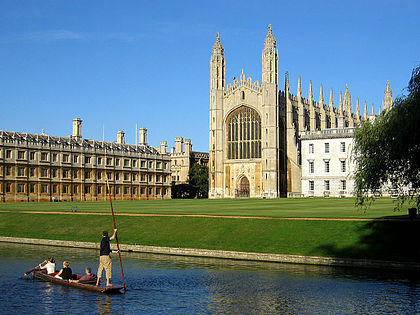
    John Gay was a lecturer in Greek and ecclesiastical history at Cambridge from 1724-1732. Gay is not a figure you often hear about in textbooks on the history of philosophy. We know very little about his life or academic career. Today he is known only by a short essay he published in 1731 entitled “The Dissertation Concerning the Fundamental Principle of Virtue or Morality” (Dissertation).  The Dissertation was, within England,[1]  the first systematic presentation and defence of a utilitarian moral theory. Gay’s work marks the beginning of English utilitarianism. 

    Today utilitarianism is assumed to be a paradigmatically secular ethical theory. Gay’s Dissertation proposed an earlier version of the theory known as Theological utilitarianism. Theological utilitarianism is “a doctrine according to which we have a duty to promote the good of humanity because God, our universally benevolent creator, wants us to do so.”[2] As Gay articulated it, moral requirements are divine commands; hence, “the will of God is the immediate criterion of Virtue.”[3] Because God is impartial and benevolent, his purpose, in commanding, is to promote the happiness of his creatures;” Thus the will of God is the immediate criterion of Virtue, and the happiness of mankind the criterion of the wilt of God; and therefore the happiness of mankind may be said to be the criterion of virtue, but once removed.”[4]

    Gay’s theological Utilitarianism became the common position of Cambridge Theologians for the next century.  Cambridge scholars such as  Thomas Rutherford (1744), John Brown(1751),  Some Jeynes (1757), and Edmund Law (1758) repeated  Gay’s essential theory and arguments. Gay’s work also had an evident influence on William Paley. Paley’s “On the Principles of Moral and Political Philosophy” (1785) became one of the most widely read defences of utilitarianism in the nineteenth century. Paley based The Principles on the lectures he delivered while teaching at Cambridge. The Principles was required text in moral philosophy at Cambridge till the 1830s and they were heavily indebted to Gay.  The Cambridge connection is interesting because Sidgwick was a moral philosophy professor at Cambridge from 1883 until his death in 1900. Sidgwick’s book “Method of Ethics” marked the high point in the tradition of English utilitarianism. Gay’s Dissertation marked the beginning of this tradition. Both were authored at the same institution within 143 years of each other.

    What is noteworthy for our purposes is that all elements and basic argument found in Sidgwick’s “dualism of practical reason” can be found in the Dissertation. 

    Why we have to assume harmony between impartial and prudential requirements?

    Let’s look at the first step in Sidgwick’s argument; the claim that unless we assume that it is always in our long-term self-interest to follow the demands of impartial benevolence, we will not always have decisive reasons to do our duty. In my previous post, I suggested Sidgwick’s reasoning could be seen as an inference from three premises:

    [1] We always have decisive reasons to do what is morally required.

    [2] An action is morally required if it is required by rules justified from a perspective of impartial benevolence.[5]

    [3] If there are cases where what is demanded by impartially justified rules conflicts with our long-term self-interest, we do not always have decisive reasons to do what is required by impartially justified rules.

    Each of these premises was in Gay’s  Dissertation. Gay articulated virtue as follows:

    Virtue is the conformity to a rule of life, directing the actions to all rational creatures with respect to each other’s happiness; to which conformity everyone in all cases is obliged: and every one that does so conform, is or ought to be approved of, esteemed and loved for so doing. What is here expressed, I believe most men put into their idea of virtue. For virtue generally does imply some relation to others: where self is only concerned, a man is called prudent, (not virtuous)[6]

    Here Gay articulated [1]. Gay contended that it is part of the “common conception” that virtue is a rule of life “to which conformity everyone in all cases is obliged”. In the Dissertation, Gay used the word “obliged” and “obligatory”  term synonymously with the idea of decisive reason to act. Gay is saying that we always have decisive reasons to do what is morally required.

    We also clearly see [2]. Gay understood virtue as conformity to certain rules, rules which direct our conduct, and which we use to evaluate and praise or blame people’s actions. These rules have a particular kind of content. They direct us to promote the good, not just of ourselves, but also the good of others. They promote the happiness of all impartially. Gay, therefore, agreed with Sidgwick that our fundamental moral intuitions have a utilitarian basis. Moral requirements are demands justified from a perspective of impartial benevolence. He differs from Sidgwick only in developing this in a rule utilitarian instead of an act utilitarian way.

    Gay, also like Sidgwick, thought this was implicit in our common-sense moral beliefs. That morality consists of rules justified from a perspective of impartial benevolence is “what most men put into their idea of Virtue”. Gay argued that the intuitive deontological rules, defended by other ethicists, such as Samuel Clarke, could be derived from the criteria of happiness to mankind as a more fundamental principle.

    Gay also affirms [3], he writes

    Thus those who either or don’t mention the will of God, making the immediate criterion of virtue to be the good of mankind; must either allow that virtue is not in all cases obligatory (contrary to the idea which all or most men have of it) or they must say that the good of mankind is a sufficient obligation. But how can the good of mankind by any obligation to me, when perhaps in particular cases, such as laying down my life, or the like, it is contrary to my happiness?[7]

    Like Sidgwick, Gay here was concerned with a certain kind of dilemma. The possibility of “particular cases” where rules that enjoin “the good of mankind” are “contrary to my happiness”. For example, cases where I am required to  “lay down my life”. If such cases do occur, then the “good of mankind” can’t be a “sufficient obligation”; we must allow that virtue is “not in all cases obligatory”.  If such cases exist,  we do not always have decisive reasons to do what is required by those rules.

    So, Gay agreed with the first step of Sidgwick’s argument. Unless one assumes that impartial and prudential requirements never clash, there will be a dualism of practical reason. This dualism means we cannot coherently claim we always have decisive reasons to do our duty.

    Why Secular accounts undermine this assumption?

    Gay also argued that secular accounts of sanctions and moral and accountability would, if true, undermine this assumption. The dilemma Gay was concerned about arises when people make “the happiness of mankind” the immediate criteria of virtue, without “mentioning the will of God”. Earlier, Gay discussed four “four different manners in which” an obligation [is induced” These are;

    First, that obligation which ariseth from perceiving the natural consequences of things, i. e. the consequences of things acting according to the fix’d laws of nature, maybe call’d natural. Secondly, that arising from merit or demerit, as producing the esteem and favour of our fellow creatures, or the contrary, is usually styled virtuous. Thirdly, that arising from the authority of the civil magistrate, civil. Fourthly, that from the authority of God, religious.[8]

    I noted that Gay used the word “obligation” to mean something like a practical reason or reason for acting. When we see this, it is evident that Gay was discussing what Sidgwick referred to as sanctions.  He was referring to negative or positive consequences annexed impartially justified rules, which provide us with prudential reasons to comply with them.

    Many of these sanctions overlapped those discussed by Sidgwick. When Gay referred to consequences: “arising from merit or demerit, as producing the esteem and favour of our fellow creatures, ” he referred to what Sidgwick called social sanctions. Consequences “arising from the authority of the civil magistrate” was a reference to Sidgwick’s category of legal sanctions.  The reference to religious sanctions was a reference to what Sidgwick meant by the term. Like Sidgwick, Gay thought that when one brackets religious sanctions and relied on secular sanctions alone. These sanctions are insufficient to ensure a “full and complete obligation” that “will extend to all cases”. If secular sanctions are the only sanctions that exist, then the assumption: that it is always in our interests to follow impartial rules is probably false.

    Why a divine command theory vindicates this assumption?

    Gay also argued that a divine command theory would, if true, vindicate the assumption. We noted above what Gay takes to be our conception of “virtue”.

    Virtue is the conformity to a rule of life, directing the actions of all rational creatures with respect to each other’s happiness; to which conformity every one in all cases is obliged: and every one that does so conform, is or ought to be approved of, esteemed and loved for so doing. What is here expressed, I believe most men put into their idea of virtue. For virtue generally does imply some relation to others: where self is only concerned.[9]

    Here Gay, highlighted three features which he thinks are implicit in our intuitive common-sense understanding of morality.  First, moral requirements are requirements imposed by rules, norms or standards. Second, these requirements have a particular content; they direct us to seek the good of others impartially. Third, we always have decisive reasons to comply with them. Fourth, they have sanctions attached to them; people are subject to praise and blame for how well they conform to such rules.  A divine command theory, if true, accounts for all these features.

    Notably, a divine command theory is true, accounts for [1]

    Now it is evident from the nature of God, viz. his being infinitely happy in himself from all eternity, and from his goodness manifested in his works, that he could have no other design in creating mankind than their happiness; and therefore he wills their happiness; therefore the means of their happiness: therefore that my behaviour, as far as it may be a means of the happiness of mankind, should be such. Here then we are got one step farther, or to a new criterion: not to a new criterion of virtue immediately, but to a criterion of the will of God. For it is an answer to the enquiry, How shall I know what the Will of God in this particular is? Thus the will of God is the immediate criterion of virtue, and the happiness of mankind the criterion of the wilt of God; and therefore the happiness of mankind may be said to be the criterion of virtue, but once removed.[10]

    Gay here cites an argument first proposed by Berkeley.  Because God is impartial, benevolent, and rational, his commands would lay down rules that are justified from an impartial benevolent perspective. Consequently, if moral requirements are divine commands, would expect them to express rules which promoted the happiness of all impartially.  Morality has the content one would expect it to have if a divine command theory is true.

    A divine command theory also accounts for [1],

    [I]t is evident that a full and complete obligation which will extend to all cases, can only be that arising from the authority of God; because God only can in all cases make a man happy or miserable: and therefore, since we are always obliged to that conformity called virtue, it is evident that the immediate rule or criterion of it, is the will of God.[11]

    Suppose moral requirements are divine commands, and commands are demands backed by sanctions. In that case, it is always in one’s long-term self-interest to do what we are morally required to do. Hence, a divine command theory entails [1].  The same line of argument also vindicates the assumption that it is always in our interests to do what is impartially required. If a divine command theory is true, the kind of dilemmas that Gay believed undermine [1] cannot occur.

    When we examine John Gay, we find him offering an argument for a theological version of utilitarianism that anticipates Sidgwick’s argument in almost every respect.

    There is an interesting historical narrative here.  Gay taught at Cambridge from 1724 to 1732. He developed a religious version of utilitarianism; whereby moral requirements are divine commands. Gay argued his theory would if, true, coherently explain why we always have decisive reasons to do our duty. He warned that if the theological component of the theory were removed, there would be a problem: a dualism of practical reason. This problem would mean we cannot coherently explain why we always have reasons to do our duty. Gay’s position was adopted and defended by Cambridge theologians, eventually being part of Cambridge’s standard textbooks till 1830.

    Forty years later, Sidgwick, writing in Cambridge, inherits this tradition. However, it is a secular version of utilitarianism mediated through Jeremy Bentham and John Stuart Mill. Sidgwick ends The Method of Ethics, concluding there is a problematic dualism of practical reason that makes us unable to coherently explain why we always have reasons to do our duty. Sidgwick ended by suggesting that one way to solve this problem coherently is to return to the theological utilitarianism of John Gay.[12]

    Sidgwick then was not formulating a new problem in the Method of Ethics. Instead, he was drawing attention to a problem that divine command theorists had raised for secular utilitarianism from the beginning and highlighted that Bentham and Mill had failed to solve it.


    [1] The first  written exposition of  Utilitarianism is arguably George Berkeley’s  “Passive Obedience”, which was presented in Ireland in 1712

    [2] Matti Häyry “Passive Obedience and Berkeley’s Moral Philosophy” Berkeley Studies 23 (2012) 3

    [3] John Gay, “Dissertation Concerning the Fundamental Principle of Virtue or Morality”, available at https://oll.libertyfund.org/title/wollaston-british-moralists-vol-2#lf1368-02_head_022 accessed 2/4/21

    [4] John Gay, “Dissertation Concerning the Fundamental Principle of Virtue or Morality”, available at https://oll.libertyfund.org/title/wollaston-british-moralists-vol-2#lf1368-02_head_022 accessed 2/4/21

    [5] I have altered premise [2] slightly to reflect Gay’s rule utilitarianism.

    [6] John Gay, “Dissertation Concerning the Fundamental Principle of Virtue or Morality”, available at https://oll.libertyfund.org/title/wollaston-british-moralists-vol-2#lf1368-02_head_022 accessed 2/4/21

    [7] John Gay, “Dissertation Concerning the Fundamental Principle of Virtue or Morality”, available at https://oll.libertyfund.org/title/wollaston-british-moralists-vol-2#lf1368-02_head_022 accessed 2/4/21

    [8] John Gay, “Dissertation Concerning the Fundamental Principle of Virtue or Morality”, available at https://oll.libertyfund.org/title/wollaston-british-moralists-vol-2#lf1368-02_head_022 accessed 2/4/21

    [9] Ibid

    [10] Ibid

    [11] Ibid

    [12] In “Outline of The History of Ethics”, Sidgwick writes:

    “But in fact a simple outline of Paley’s utilitarianism may be found more than a generation earlier in the following passages from Gay’s Dissertation…[Bentham] does not himself use the will of an omnipotent and benevolent being as a means of logically connecting individual and general happiness. He thus undoubtedly simplifies his system, and avoids the disputable inferences from nature and Scripture in which Paley’s position is involved, but this gain is dearly purchased. For the question immediately arises, How then are the sanctions of the moral rules which it will most conduce to the general happiness for men to observe shown to be always adequate in the case of all the individuals whose observance is required?”


  • Divine Command Theory and Utilitarianism forgotten bedfellows? Paley’s Principles of Moral and Political Philosophy (part two)

    In my last post, I explained the position of Theological Utilitarianism as expounded in William Paley’s The Principles of Moral and Political Philosophy. I pointed out The Principles was first published in 1785, four years before Jeremy Bentham published An Introduction to the Principles of Morals and Legislation. In this post, I want to look at the influence Theological Utilitarianism had in the 18th and 19th centuries. Was Paley expounding some novel idiosyncratic position? Or was he simply repeating a fairly mainstream position on the relationship between Gods law and happiness which had been around for decades?

    1. The influence of Theological Utilitarianism in the 18thand 19th centuries

    Theological Utilitarianism sounds novel to contemporary ears. But it wasn’t an innovative position in the late eighteenth century. Paley notes in the preface that he is a “compiler” of earlier writers of moral theory. Schneewind, states that the theory he proposed was in fact “an assemblage of ideas developed by others and is presented to be learned by students rather than debated by colleagues. “[1] Some trace theological utilitarianism back to the divine command theory of John Locke[2]  However, the earliest clear exponent of this position appears to be George Berkeley’s sermons in 1712.[3]

    It is worth looking at Berkeley in some detail.  According to Berkeley, things are “denominated good or evil” as “they are fitted to augment or impair our own Happiness” Good or Evil. On the other hand, “Moral Goodness” consists in a “Conformity to the Laws of God.” Berkley articulates the relationship between moral and non-moral goodness as follows:

    For Laws being Rules directive of our Actions to the end intended by the Legislator, in order to attain the paleyKnowledge of God’s Laws, we ought first to enquire what that end is, which he designs should be carried on by human Actions. God is a Being of Infinite Goodness. it is plain the end he proposes is Good. But God enjoying in himself all possible Perfection, it follows that it is not his own Good, but that of his Creatures. Again, the Moral Actions of Men are entirely terminated within themselves, so as to have no influence on the other orders of Intelligences or reasonable Creatures: The end therefore to be procured by them, can be no other than the good of Men. But as nothing in a natural State can entitle one Man more than another to the favour of God, except only Moral Goodness, which consisting in a Conformity to the Laws of God, doth presuppose the being of such Laws, and Law ever supposing an end, to which it guides our Actions, it follows that Antecedent to the end proposed by God, no distinction can be conceived between Men; that end therefore itself or general design of Providence is not determined or limited by any Respect of Persons: It is not therefore the private Good of this or that Man, Nation or Age, but the general well-being of all Men, of all Nations, of all Ages of the World, which God designs should be procured by the concurring Actions of each individual. Having thus discover’d the great end, to which all Moral Obligations are Subordinate; it remains, that we enquire what Methods are necessary for the obtaining that End.[4]

    When Berkeley says God is  infinitely good, he like Samuel Clarke seems to mean that God  has “an unalterable disposition to do and to communicate good or happiness.”[5] [6] God’s goal in issuing the commands he does is the happiness, impartially considered of all human beings.

    Berkeley proceeds to note two ways that God could promote this happiness. One would be “without the injunction of any certain universal Rules of Morality, to to oblige “every one upon each particular Occasion, to consult the publick Good, and always to do that, which to him shall seem in the present time and circumstances, most to conduce to it.”  The second is  “by enjoining the Observation of some determinate, established Laws, which, if Universally practised, have from the Nature of things an Essential fitness to procure the well-being of Mankind” Berkeley argues that “”there lie several strong Objections.” Berkeley then anticipates the “self-effacing” objection to act utilitarianism arguing that anyone committed to promoting the happiness of others wouldn’t promulgate act utilitarianism as a decision procedure. Public endorsement and acceptance of the rule “do whatever maximises utility” would probably not maximise utility. Consequently, Berkeley concludes that God has followed the second method.

    Stephen Darwall suggests that the best way to interpret Berkeley is to distinguish between his meta-ethical theory and normative theory. His meta-ethical theory attempts “to answer metaphysical questions of what goodness and rightness themselves, respectively, are.” On the other hand, his normative theory “concerns what actions or things are good and right.” Meta-ethically Berkeley is a divine command theorist “moral goodness consists” consists in a “Conformity to the Laws of God”. However, Berkeley’s normative theory was rule-utilitarian, God commands “Laws, which, if Universally practised, have from the Nature of things an Essential fitness to procure the well-being of Mankind”.[7]

    A position very similar to Berkeley is hinted at in Butler’s writings[8] but is expounded more clearly in the writings of, John Gay [9] John Brown, and Abraham Tucker.   It’s clear that Paley clearly draws upon this earlier tradition.  In the preface to The Principles Paley acknowledges that he is attempting to compile and articulate the positions of John Gay, and Abraham Tucker. Book II chapter 1 of The Principles proposes a line of argument that closely resembles the argument of John Gay “Concerning the Fundamental Principle of Virtue or Morality”.

    Similarly, Paley’s emphasis on rules is, as we saw, found in Berkeley’s Passive obedience and performs the same function. Berkeley’s initial advancement of this distinction and advocacy of rule utilitarianism was part of a broader argument to argue against violent resistance to the state during the Jacobite agitation in Ireland. He was concerned that people were advocating the violation of certain negative rules of the law of nature such as: “do not commit adultery”, “do not steal”, “don’t rebel against the government”, whenever they perceived doing so would further the public good. Paley uses the distinction for similar purposes, to respond to the objection that utilitarianism allows people to break with impunity moral rules against theft and murder whenever they perceive it will make people happy.

    In fact, the proximate source for Paley’s stress on rules appears to be Abraham Tucker. Tucker. Wrote

      As we cannot upon every occasion see to the end of our proceedings, he [the moralist] will establish certain rules to serve as landmarks for guiding us on the way.  These rules, when he has leisure and opportunity for mature consideration, he will build on one another, erecting the whole fabric upon the basis of the summum bonum before described.  (Original emphasis)[10]

    Similarly, Paley’s argument that God wills the happiness of his creatures and so the commands God issues must be coextensive with promoting the happiness is ubiquitous in the tradition that preceded him. This argument is s found in Berkeley, Gay, and Brown Louden also documents the same argument occurs in Adam Smith and Joseph Butler [11]

    Finally, Paley’s exposition of this tradition was very influential. The principles became required text at Cambridge university Schneewind points out “utilitarianism first became widely known in England through the work of William Paley.[12] Paley, not Bentham being its most well-known exponent.  Similarly, Smith points out that Paley’s writings were once as well known in American colleges as were the readers and spellers of William McGuffey and Noah Webster in the elementary schools.[13]

    In fact, Paley’s influence is still seen clearly in John Austin’s work on Jurisprudence, in the early and late nineteenth century.  Mill himself appeals to the tradition:

    We not uncommonly hear the doctrine of utility inveighed against as a godless doctrine. If it be necessary to say anything at all against so mere an assumption, we may say that the question depends upon what idea we have formed of the moral character of the Deity. If it be a true belief that God desires, above all things, the happiness of his creatures, and that this was his purpose in their creation, utility is not only not a godless doctrine, but more profoundly religious than any other. If it be meant that utilitarianism does not recognise the revealed will of God as the supreme law of morals, I answer, that a utilitarian who believes in the perfect goodness and wisdom of God, necessarily believes that whatever God has thought fit to reveal on the subject of morals, must fulfil the requirements of utility in a supreme degree. …Whether this opinion is correct or not, it is superfluous here to discuss; since whatever aid religion, either natural or revealed, can afford to ethical investigation, is as open to the utilitarian moralist as to any other. He can use it as the testimony of God to the usefulness or hurtfulness of any given course of action.[14]

    Mill here explicitly rejects the idea that Utilitarianism does not recognize the revealed will as the supreme law of morals, and uses a line of argument very similar to Paley, whose writings Mill was aware of, to argue the contrary.

    Consequently, Utilitarianism then wasn’t a new or novel theory of ethics proposed by secular thinkers such as Hume and Bentham in the late 18th century. Nor did it develop in response to or in opposition to a conception of morality based divine commands or divine laws. Divine command theorists, in fact, had been advocating Theological Utilitarianism for decades before Bentham, and the popularity of utilitarianism in Anglo-American thought had a good deal to do with the popularity of theological utilitarianism.


    [1]J B Schneewind Moral Philosophy from Montaigne to Kant. (Cambridge: Cambridge University Press. 2002) 446.  Paley was, therefore, summarising an already existing, popular, school of thought.

    [2] See for example A. P. Brogan “John Locke and Utilitarianism” Ethics 69: 2 (1959), 79-93.

    [3] See Berkeley’s A Discourse on Passive Obedience (1712) and dialogues I-III of the   Alciphron (1732). Berkeley had included a systematic treatise on moral theory in the draft of A Treatise Concerning the Principles of Human Knowledge (1710), but the manuscript was lost, leaving historians to piece together his theories from his occasional writings.

    [4] Passive obedience: or, the Christian doctrine of not resisting the supreme power, proved and vindicated … In a discourse deliver’d at the College-chapel. By George Berkeley, M.A. Fellow of Trinity-College, Dublin. Available at https://quod.lib.umich.edu/e/ecco/004899015.0001.000/1:3?rgn=div1;view=fulltext

    [5] Clarke, Demonstration, Prop. XII; in Works, vol. II, p. 572.

    [6] Robert Louden notes this conception of God’s goodness was common in the 18th century and similar arguments can be seen in Smith and Butler see Robert Louden “Butler’s Divine Utilitarianism,” History of Philosophy Quarterly, 12:3 (1995):265–280

    [7] See Stephen Darwall “Berkeley’s Moral and Political Philosophy,” in, The Cambridge Companion to Berkeley, Kenneth Winkler, ed. (Cambridge: Cambridge University Press, 2006)

    [8] Robert Louden “Butler’s Divine Utilitarianism,” History of Philosophy Quarterly, 12:3 (1995):265–280

    [9] John Gay “Concerning the Fundamental Principle of Virtue or Morality” in Lewis Amherst Selby-Bigge, British Moralists, being Selections from Writers principally of the Eighteenth Century, vol. 2 [1897] available at http://oll.libertyfund.org/titles/bigge-british-moralists-vol-2 accessed 26 Aug 2016

    [11] Robert Louden “Butler’s Divine Utilitarianism,” History of Philosophy Quarterly, 12:3 (1995):265–280.

     [12] Schneewind, Moral Philosophy from Montaigne to Kant 446.

    [13] Wilson Smith “William Paley’s Theological Utilitarianism in America” The William and Mary Quarterly Third Series, 11:3 (1954) 402–424

    [14] John Stuart Mill “What is Utilitarianism” available at https://ebooks.adelaide.edu.au/m/mill/john_stuart/m645u/chapter2.htm