*** Walter Sinnott-Armstrong discusses the following objection: “Harming others is sometimes in some people’s best interest, even considering probable costs. In those cases, some theists say that only a divine threat of Hell provides a reason to be moral. Since atheists and agnostics do not believe in God, they do not believe in divine retribution […]
Entries Tagged as 'Mark Murphy'
Sinnott-Armstrong on God, Secularism and “reasons” to be moral. Part two: Do unselfish reasons answer the question, “Why be moral?”
September 8th, 2025 Comments Off on Sinnott-Armstrong on God, Secularism and “reasons” to be moral. Part two: Do unselfish reasons answer the question, “Why be moral?”
Tags: Dualism of Practical Reason · Hell · Mark Murphy · Walter Sinnott-Armstrong · Why be Moral?
Erik Wielenberg and the Autonomy thesis: part four Intrinsic goodness
March 31st, 2017 23 Comments
In my last two posts, I argued that Erik Wielenberg fails to show that Godless Normative Robust Realism (GRNR) avoids some of the standard objections to the autonomy thesis. This brings me to Wielenberg’s third claim III, Wielenberg suggests that GRNR is prima facie preferable to various theistic accounts of axiological properties. Several authors have […]
Tags: Erik Wielenberg · God and Morality · Intrinsic Value · Linda Zagzebski · Mark Murphy · Moral Realism · Robert Adams · supervenience · Thomas Carson
Mark Murphy Reviews Walter Sinnott-Armstrong.
April 30th, 2012 3 Comments
Those who have followed my recent discussions of Walter Sinnott-Armstrong’s writings on God and Morality. Might be interested in this review of Armstrong’s book “Morality without God” by Mark Murphy in Notre Dame Philosophical Reviews. Mark is a lecturer in moral philosophy at Georgetown University. He is is one of the leading critics of divine command ethics […]
Tags: Divine Command Theory · God and Morality · Mark Murphy · Walter Sinnott-Armstrong
Ethics: What Does God have to do with it? @ Auckland University
July 11th, 2011 4 Comments
World class Ethicists John Hare (Yale Divinity) and Mark Murphy (Georgetown Philosophy) are in town for the Naturalisms in Ethics Conference and the Meeting of the Australasian Philosophy of Religion Association at the University of Auckland where they will be speaking along with New Zealand’s top Ethicists. We leaped on the opportunity to organise the following […]
Tags: Glenn Pettigrove · John Hare · Mark Murphy · Thinking Matters
Freedom, Science and Christianity: A Response to James Valliant Part II
February 18th, 2010 2 Comments
Recently Peter Cresswell published a guest post by James Valliant, which originally appeared on SOLO. In Freedom, Science and Christianity: A Response to James Valliant Part I, I addressed Valliant’s claims that science and freedom of religion were unanimously opposed by Christians and the success of science and freedom of religion in Europe was solely […]
Tags: Aristotle · Christian History · Dark Ages · Enlightenment · Founding Fathers · James Valliant · Libertarianism · Liberty · Mark Murphy · Nicholas Wolterstorff · Peter Cresswell · Regine Pernoud · Rodney Stark · Science and Religion · SOLO · W.E.H. Lecky
Does Abortion Benefit the Fetus? A Critique of Himma Part 2
December 24th, 2009 7 Comments
In my previous post, Does Abortion Benefit the Fetus? A Critique of Himma Part 1, I discussed Kenneth Einar Himma’s argument that even if a fetus is a human being, laws permitting feticide are compatible with the harm principle.I elaborated an important objection to Himma’s argument, an objection articulated by Mark Murphy, which appeals to […]
Tags: Abortion · Augustine · David Boonin · Eschatology · Feticide · Infanticide · Kenneth Einar Himma · Lalia Williamson · Mark Murphy

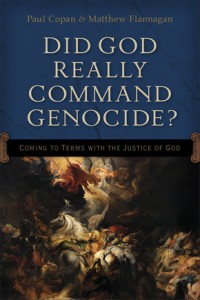 A common objection to belief in the God of the Bible is that a good, kind, and loving deity would never command the wholesale slaughter of nations. In the tradition of his popular Is God a Moral Monster?, Paul Copan teams up with Matthew Flannagan to tackle some of the most confusing and uncomfortable passages of Scripture. Together they help the Christian and nonbeliever alike understand the biblical, theological, philosophical, and ethical implications of Old Testament warfare passages.