In his article, “Why Traditional Theism Cannot Provide an Adequate Foundation for Morality”, Walter Sinnott-Armstrong argued that a “Divine command theory makes morality childish.”[1] In my response to Armstrong, “Is Ethical Naturalism more Plausible than Supernaturalism?”[2] I made two points. First, I addressed a tangential point: that Armstrong’s argument caricatures divine command theory (“DCT”) by tacitly assuming that […]
Entries Tagged as 'Walter Sinnott-Armstrong'
Richard Carrier and the “Infantile” objection to God’s command’s
October 27th, 2015 1 Comment
Tags: Autonomy · Divine Command Theory · God and Morality · Hell · Richard Carrier · Walter Sinnott-Armstrong
Published in Philo: Is Ethical Naturalism more Plausible than Supernaturalism? A Reply to Walter Sinnott-Armstrong
July 11th, 2013 13 Comments
Jeffery Jay Lowder has informed me that my article “Is Ethical Naturalism more Plausible than Supernaturalism? A Reply to Walter Sinnott-Armstrong” was published in the Spring/Summer 2012 issue of Philo. The abstract is below: “In many of his addresses and debates, William Lane Craig has defended a Divine Command Theory of moral obligation (DCT). In a […]
Tags: Divine Command Theory · God and Morality · Publications · Walter Sinnott-Armstrong · William Lane Craig
Mark Murphy Reviews Walter Sinnott-Armstrong.
April 30th, 2012 3 Comments
Those who have followed my recent discussions of Walter Sinnott-Armstrong’s writings on God and Morality. Might be interested in this review of Armstrong’s book “Morality without God” by Mark Murphy in Notre Dame Philosophical Reviews. Mark is a lecturer in moral philosophy at Georgetown University. He is is one of the leading critics of divine command ethics […]
Tags: Divine Command Theory · God and Morality · Mark Murphy · Walter Sinnott-Armstrong
Is Ethical Naturalism More Plausible than Supernaturalism? A Reply to Walter Sinnott-Armstrong: Part II
April 26th, 2012 7 Comments
This is the second part of the paper I presented to the Naturalisms in Ethics Conference at Auckland University last year. In my previous post, I noted that Robert Adams has argued that if God exists, then divine commands “best fill the role assigned to wrongness by the concept”.[1] He argues that if moral obligations are […]
Tags: Divine Command Theory · John Hare · Robert Adams · Stephen Layman · Walter Sinnott-Armstrong · William Lane Craig
Is Ethical Naturalism more Plausible than Supernaturalism? A Reply to Walter Sinnott-Armstrong Part I
February 7th, 2012 9 Comments
This is first half of the paper I presented to the Naturalisms in Ethics Conference at Auckland University last year. In many of his addresses and debates William Lane Craig has defended a Divine Command Theory of moral obligation (“DCT”). In a recent article Walter Sinnott-Armstrong has criticized this contention.[1] Armstrong contends that even if […]
Tags: Divine Command Theory · God and Morality · Robert Adams · Walter Sinnott-Armstrong · William Lane Craig
Back from San Francisco: A Belated Report
February 3rd, 2012 2 Comments
MandM has been quite of late, this is because Madeleine and I have been very busy. With moving house in the midst of Christmas and New Years and Madeleine working part-time in a law firm and so on, we’ve had little time to blog. We are now set up, to some extent, and so this […]
Tags: Biblioblog · David Baggett · Evangelical Philosophical Society · Jerry Walls · Paul Copan · Publication; San Francisco · Society of Biblical Literature · Walter Sinnott-Armstrong · William Lane Craig
Friday Fallacy: Equivocation
April 16th, 2011 14 Comments
In my post on Assessing Arguments I noted that a valid argument is one where it is impossible for the premises to be true and the conclusion false. I gave the following example: Premise: All men are under 10 feet tall; Premise: John is a man; Conclusion: John is under 10 feet tall. This argument […]
Tags: Equivocation Fallacy · Fallacy Friday · Luke Muehlhauser · Walter Sinnott-Armstrong · Wes Morriston · William Wainwright

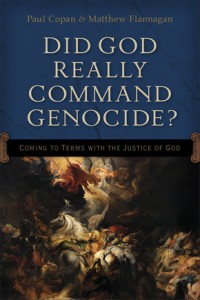 A common objection to belief in the God of the Bible is that a good, kind, and loving deity would never command the wholesale slaughter of nations. In the tradition of his popular Is God a Moral Monster?, Paul Copan teams up with Matthew Flannagan to tackle some of the most confusing and uncomfortable passages of Scripture. Together they help the Christian and nonbeliever alike understand the biblical, theological, philosophical, and ethical implications of Old Testament warfare passages.