In responding to William Lane Craig’s advocacy of a Divine Command Theory (DCT) Walter Sinnott-Armstrong makes the objection that,“The divine command theory makes morality unknowable.” He makes the following argument for this: To see why, consider whether or not it is immoral to eat pork. If the divine command theory is correct, we cannot answer […]
Entries Tagged as 'Walter Sinnott-Armstrong'
Walter Sinnott-Armstrong and the Moral Scepticism Objection to Divine Commands
September 16th, 2010 9 Comments
Tags: Divine Command Theory · God and Morality · James Cornman · Keith Lehrer · Patrick Nowell Smith · Walter Sinnott-Armstrong · William Lane Craig
Sunday Study: Joshua and the Genocide of the Canaanites Part I
January 3rd, 2010 52 Comments
Critics of Christianity often claim that the book of Joshua teaches that God commanded genocide. Raymond Bradley for example states, In chapters 7 through 12, [the book of Joshua] treats us to a chilling chronicle of the 31 kingdoms, and all the cities therein, that fell victim to Joshua’s, and God’s, genocidal policies. Time and […]
Tags: Alvin Plantinga · Brevard Childs · Canaanites · Genocide · Hermeneutics · Joshua · Kenneth Kitchen · Nicholas Wolterstorff · Old Testament Ethics · Raymond Bradley · Sunday Study · Theology · Walter Sinnott-Armstrong
Walter Sinnott-Armstrong and Infantile Religious Morality
September 24th, 2009 71 Comments
In “Why Traditional Theism Cannot Provide an Adequate Foundation for Morality” Walter Sinnott Armstrong criticises William Lane Craig’s contention that theism, if true, provides an adequate foundation for morality. Armstrong contends that Craig’s position is “incredible”[1] and subject to a “cavalcade of devastating objections.”[2] He goes on to conclude that his criticisms do not just […]
Tags: Divine Command Theory · Ethics · God and Morality · Patrick Nowell Smith · Philosophy of Religion · Richard Mouw · Walter Sinnott-Armstrong
Walter Sinnott-Armstrong on God, Morality and Arbitrariness
July 17th, 2009 21 Comments
Is morality independent of religion? One common argument for this position is that denying it makes God’s commands arbitrary. Walter Sinnott-Armstrong argues, Let’s assume that God commanded us not to rape. Did God have any reason to command this? If not, his command was arbitrary, and then it can’t make anything morally wrong. On the […]
Tags: Atheist · Divine Command Theory · God and Morality · Philosophy of Religion · Walter Sinnott-Armstrong · William Wainwright
Sunday Study: Slavery, John Locke and the Bible
June 28th, 2009 100 Comments
It is often affirmed, as an incontestable and obvious truth, that the Bible supports slavery. Walter Sinnott-Armstrong cites Leviticus 25:44 as evidence of this charge in “Why Traditional Theism is not an Adequate Foundation for Morality.”[1] Although Armstrong is not the alone in making this claim, I think the charge is mistaken; the Bible does […]
Tags: John Locke · John Loftus · Old Testament Ethics · Selection · Slavery · Sunday Study · Theology · Walter Sinnott-Armstrong
Walter Sinnott-Armstrong, William Lane Craig and the Argument from Harm Part II
April 20th, 2009 7 Comments
In my last post, I discussed Walter Sinnott-Armstrong’s argument from harm. I concluded by suggesting that his conclusion missed the point and failed to address the conditional, defended by William Lane Craig that, if theism is true then there exists a sound foundation for moral duties. In this post I will argue that the same […]
Tags: Divine Command Theory · Ethics · God and Morality · Walter Sinnott-Armstrong · William Lane Craig
Walter Sinnott-Armstrong, William Lane Craig and the Argument from Harm Part I
April 18th, 2009 1 Comment
This is the first of a two-part series where I examine a recent argument criticising religious ethics by Walter Sinnott-Armstrong. In many of his publications and debates William Lane Craig has defended the contention that if theism is true then there exists a sound foundation for moral duties. In a recent article, Walter Sinnott-Armstrong has […]
Tags: Divine Command Theory · Ethics · God and Morality · Walter Sinnott-Armstrong · William Alston · William Lane Craig

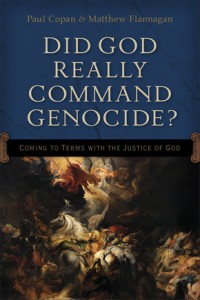 A common objection to belief in the God of the Bible is that a good, kind, and loving deity would never command the wholesale slaughter of nations. In the tradition of his popular Is God a Moral Monster?, Paul Copan teams up with Matthew Flannagan to tackle some of the most confusing and uncomfortable passages of Scripture. Together they help the Christian and nonbeliever alike understand the biblical, theological, philosophical, and ethical implications of Old Testament warfare passages.