
 ***
***
Walter Sinnott-Armstrong discusses the following objection:
“Harming others is sometimes in some people’s best interest, even considering probable costs. In those cases, some theists say that only a divine threat of Hell provides a reason to be moral. Since atheists and agnostics do not believe in God, they do not believe in divine retribution for sins, so they have to admit that sometimes some people could get away with immorality and then they have no self-interested reason to be moral. Does that mean that these people have no reason at all to be moral?”[1]
He responds to this argument as follows:
No. That conclusion would follow only if every reason had to be self-interested, selfish, or egoistic. There is no basis for that assumption. Many reasons are not based on self-interest. That should be common ground between theists and atheists… The fact that an act prevents harm to another person can be a reason for me to do that act. The fact that an act causes harm to another person can be a reason for me not to do that act. These facts are reasons, even if the other people are strangers. Crucially, these reasons are not self-interested. They are facts about the interests of other people, not me. These unselfish reasons can answer the question, “Why be moral?”[2]
Here, Sinnott-Armstrong makes three points. First, the argument in question assumes that “all reasons are selfish.” Second, this assumption is false—“it should be common ground between theists” that there are also “unselfish reasons,” based on the fact that certain acts harm others. Third, these “unselfish reasons” can answer the question: why be moral?
Do non-selfish reasons answer the question: “Why be moral?”
I discussed the first point in a previous post. In this post, I will discuss the third: do the non-selfish reasons he appeals to answer the question “Why be moral?”
In my previous post, I noted that the question “Why be moral?” can be understood in two ways. Armstrong’s interlocutor could be asking:
(a) whether, in the given circumstances, we have a pro tanto reason to refrain from harm; or
(b) whether, in those circumstances, we have decisive reasons not to harm.
I also pointed out that interpreting the question in terms of (a) is idiosyncratic. The way the question is commonly used—and the most plausible understanding of it—is in terms of (b).
Whether an appeal to unselfish reasons answers the question “Why be moral?” depends on how you interpret the question. If we interpret it in terms of (a), then the fact that an action harms another person would answer the question. Sinnott-Armstrong’s hypothesis is that the property of being morally wrong is constituted by the property of harming another person. Suppose the fact that an action harms another person provides a pro tanto reason not to do that action—in that case, we have a pro tanto reason not to do what is wrong.
The problem is that this is an extremely weak and idiosyncratic rendition of the skeptical challenge. As Mark Murphy points out:
It would be helpful if Sinnott-Armstrong had named an opponent here
who thought that this was the real challenge for the nontheistic ethicist. The worry is not characteristically expressed by theistic ethicists in terms of whether there is any reason to do what is morally right in the absence of God; the worry is characteristically expressed in terms of whether there could be overriding, or decisive, reason to do what is all-things-considered morally required.[3]
In my last post, I pointed out that in his writings on moral skepticism, Sinnott-Armstrong himself has noted that the “Why be moral?” question is not normally understood in terms of whether there is “sometimes some kind of reason to be moral.” Instead:
“A more plausible and common version of practical moral skepticism denies, instead, that there is always an adequate (or non-overridden) reason to do what is morally required.”[4]
If we interpret the question in terms of (b), Sinnott-Armstrong’s appeal to the fact that an action “harms” another person does not answer the question “Why be moral?” His interlocutor argues that if a secular meta-ethical theory is true, then certain kinds of practical dilemmas will occur. What is prudentially required will be an act that harms others. We will therefore have self-interested or prudential reasons to do the act, and unselfish reasons not to do it. If such dilemmas occur, we face a question: What reason is there to act unselfishly rather than in one’s self-interest? What reason do we have for always giving precedence to impartial demands in such cases?
Murphy explains:
“The worry is that there are different kinds of reason that can pull in different directions, and it is not obvious that there is any practical error in choosing against a more impartial point of view by going with the more partial point of view.”[5]
If I face a dilemma between two options—doing an act that harms others or doing an act that is contrary to my own interest—pointing out that one option involves harming others doesn’t solve the dilemma. What we need is some reason for always treating the impartially based demands as having precedence. Sinnott-Armstrong provides no such reason. In fact, later in the chapter, he is candid that he cannot give any such reason. He writes:
The fact that an act causes harm to others is a reason not to do that act, and the fact that an act prevents harm to others is a reason to do that act. There is, then, always a reason to be moral on this secular account. And often these reasons are adequate, because they are strong enough to make it rational (or not irrational) to be moral….
Nonetheless, some people still wish for a reason that is strong enough to motivate everyone to be moral and also to make it always irrational to be immoral. I doubt that secular moral theories can establish that strong kind of reason to be moral. For people who really do not care about others, the solution is found in retraining or restraining rather than in theory. (emphasis mine)[6]
Note what is being said here: Armstrong is saying that if the best secular accounts of morality are true, agents do not always have all-things-considered reasons to do what is morally right. Sometimes they will, and sometimes they will not. In these latter cases, people will have adequate—and possibly even conclusive—all-things-considered reasons to violate moral norms. The solution to this is an appeal to naked force. What we need to do is force these people to act in ways that they have sufficient or decisive reasons not to act.
This seems an inadequate answer. Consider the following analogy: critics of monotheistic religions like Christianity, Judaism, or Islam often ask, “What reason do I have to adopt your religion?” This is not a question of belief but of action. Adopting a religion involves living a certain way. Skeptics ask: What reasons do I have to commit to faithfully following what you take to be God’s commands, especially when doing so often goes against my aims or interests?
Imagine a theist responded to this as follows: “You don’t have compelling reasons to do this. In fact, you have good reason not to do this. The balance of reasons does not support such a commitment and may in fact be against it. However, if you don’t convert, I will persecute you.” Would any religious skeptic think their concerns had been answered?
In the same way, I suggest that no one who was not already committed to secular morality would find Sinnott-Armstrong’s response here adequate.
Later, Armstrong offers a different answer:
Is this limitation a problem for secular accounts of morality? I doubt that, too. If we demand this extreme kind of reason to be moral, then we are bound to be disappointed. The solution to our disappointment is to give up this demand, not to imagine a higher power that we want to fulfill an illegitimate demand. Besides, this limit on secular theories would be a problem only if the alternative religious account could provide a better reason to be moral. It can’t. That is what I will show in the next section.[7]
Here, Sinnott-Armstrong’s position appears to be twofold:
First, the fact that a secular theory cannot answer the question “Why be moral?” is only a problem if religious theories can answer that question adequately. If they cannot, then this is a problem for all theories—and hence not a reason to favour one over another.
Second, he claims that a religious theory cannot answer this question either. In fact, he seems to think no theory can. The appropriate response, he suggests, is to give up the demand.
In a future post, I will examine Sinnott-Armstrong’s reasons for these two claims. I will argue that they fail.
[1] Walter Sinnott Armstrong, Morality Without God (Oxford: Oxford University Press, 2009). 114
[2] Walter Sinnott Armstrong, Morality Without God 117
[3] Mark Murphy’s, Morality Without God, available at https://ndpr.nd.edu/reviews/morality-s-without-god-s/ accessed 28 August 2025
[4] Walter Sinnott Armstrong, Practical Moral Skepticism, available at https://plato.stanford.edu/entries/skepticism-moral/supplement.html accessed 28 August 2025
[5] Mark Murphy’s, Morality Without God, available at https://ndpr.nd.edu/reviews/morality-s-without-god-s/ accessed 28 August 2025
[6] Walter Sinnott Armstrong, Morality Without God 117-118
[7] Walter Sinnott Armstrong, Morality Without God 118
Tags: Dualism of Practical Reason · Hell · Mark Murphy · Walter Sinnott-Armstrong · Why be Moral?No Comments

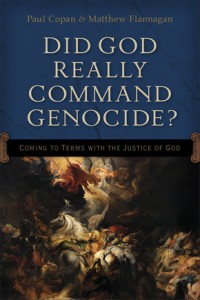 A common objection to belief in the God of the Bible is that a good, kind, and loving deity would never command the wholesale slaughter of nations. In the tradition of his popular Is God a Moral Monster?, Paul Copan teams up with Matthew Flannagan to tackle some of the most confusing and uncomfortable passages of Scripture. Together they help the Christian and nonbeliever alike understand the biblical, theological, philosophical, and ethical implications of Old Testament warfare passages.



0 responses so far ↓
Comments on this entry are closed.