Author: Andrew

  • More Mistakes: A Rejoinder to Randal Rauser

    For those who aren’t aware, there has been something of a “debate”, but what I’d prefer to refer to as an “in house discussion” between Randal Rauser (Professor of Historical Theology at Taylor Seminary) and myself.

    The discussion so far can be found here:

    My initial article was Randal Rauser’s Mistake: A Defense of Calvin’s Doctrine of Election

    Rauser’s response: Calvinism and the Arbitrary Camp Director Revisited: A Response to Andrew

    Andrew and CalvinBefore I begin, I should point out that I have been on the Kapiti coast for the last week at a TSCF (Tertiary Student Christian Fellowship, a cousin of Inter-Varsity) retreat where I was without internet. Hence it’s only in the last day that I’ve learned that Professor Rauser has kindly taken the time to respond to my initial article. So I apologize for my delayed response.

    I would also like to point out that while my intention was to provoke Rauser’s response, it was not to be rude, and I apologize if that’s the impression he has received. I have a great deal of respect for Rauser, particularly given (as I pointed out in my last article) that he is a Professor of Historical Theology with an obvious background in analytic philosophy, while I am a mere undergrad with far more ambition than actual ability. The last thing that I want is for this discussion to devolve into the kind of vitriol that plagues almost all other web based discussions of the philosophy of religion and/or theology. I say this, largely because I fear (from the tone of his response) that he has received the impression of ill intent on my part.

    Secondly, I appreciate that Rauser took the time to respond to my article, and I appreciate that he also took the time to counter my personal testimony with that of his own.
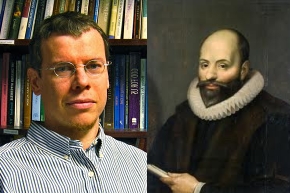
    Randal Rauser and ArminiusBut now to specifics: How does Rauser respond to my claim that the arbitrariness objection (at least if it is to be an objection) begs the question against Calvin’s doctrine of election? On the face of it, he doesn’t seem to challenge my point that God may not be acting unjustly if we are undeserving of salvation. To the contrary, Rauser seems to admit for the possibility that the tortures may be justly deserved. But if that’s the case, then, as I tried to point out in my first post, there’s no real injustice or immoral state of affairs that obtains if God so desires to instantiate those punishments. Paradoxically though, Rauser refers to my theology as “brutal” and “morally incoherent”. Both of these terms, emotionally provocative as they are, seem to suggest that there is something nasty, horrible, evil (whatever negative adjective your heart desires) about a God that selects some for salvation while selecting others for damnation. But if, as Rauser seems to allow, the tortures are justly deserved, then none of those adjectives can rightly be said to stick. After all, if the tortures are justly deserved, and God decides to carry out those tortures, then God can only be said to be doing what the demands of morality and/or justice require. So wherein does the moral incoherence obtain?

    But according to Rauser, I would still be missing the point. After all, he (Rauser) says, the Camp Director Analogy was not intended to show that God, given Calvinism, is “unjust”, but rather that He cannot be seen as “maximally loving”. I see no real reason to deny Rauser the liberty to make this distinction, but its relevance is, at best, unclear.

    Thankfully, Rauser does seem to hint at one possible way in which we could interpret this as an objection. He seems to engage in something of a pair-wise comparison between two possible scenarios that are supposed to be relevantly similar to the Arminian and Calvinist conceptions of election respectively.

    • Scenario 1: The director arbitrarily selects some children for beatings and others for loving rehabilitation.
    • Scenario 2: The director selects all children for loving rehabilitation.

    According to Rauser, were God to bring about scenario 2, we would state that He is more loving were he to bring about scenario 1. There are three things that I have to say to this (more…)

  • Randal Rauser’s Mistake: A Defense of Calvin’s Doctrine of Election

    John CalvinThanks go to Matthew Flannagan for pointing me in the direction of this response to the problem.

    A while back Professor Randal Rauser issued a blog entitled “Calvinism and the Arbitrary Camp Director” in which he criticised the Calvinist understanding of election.

    For those of you who are unaware of the Calvinistic understanding of election, very roughly, it’s the idea is that God elected some for salvation and did not elect others for salvation. Now obviously there’s FAR more to Calvin’s doctrine of election than merely the claim that some are elected and others are not. But that at least, is the centre point of Rauser’s criticism, and more particularly, it’s that element of Calvin’s doctrine that I seek to defend in this article.

    Before we begin, it’s interesting to note that barely three months ago I was a staunch Arminian when it came to soteriology. I reacted against Calvin’s doctrine with the greatest of revulsion. How could it possibly be, I thought, that God could be “good” and yet actively choose some for salvation while leaving others to die?! It made no sense to me! In-fact, I remember going to scripture one Sunday morning actively seeking to find that knock down scriptural blow against the Reformed understanding of election. Interestingly, the first scripture I read was the parable of the wheat and the tares Matthew 13:24-29/13:36-43. While I read it, it struck me that this challenged my Arminian understanding of Salvation. But I didn’t want to believe it, so I left it for a week hoping that there would be some other explanation. But none was forthcoming. Very quickly I found myself speaking in terms that a week earlier I would never have been revolted to hear myself say. I was not yet a practicing Calvinist. I was what you might call “soteriologically agnostic”.

    Now the reason I say this is not because I hope to establish myself as any authority on the matter. To the contrary, Rauser, being a Professor of Historical Theology at Taylor Seminary is far more of an authority on the matter than I can hope to be at this stage of my life. So it’s with much fear and trepidation that I dare post this article contradicting Rauser’s arguments. So why do I give my testimony of how I came to Calvinism? Well I myself am a little unsure. Nevertheless, I suspect that the main reason I give such testimony is that I find it and irony worth sharing that I am writing an article that barely three months ago I would never have even dreamed of writing. If I was going to write anything, it would have been about how Calvinism completely destroys any sensible understanding of God’s justice and love.

    But now let’s get down to business. Precisely what is Rauser’s objection? More than anything else, it appears to be a moral objection. The problem, Rauser urges, is that it makes God’s choice about who save entirely arbitrary. Why, he asks (referring to one of his dialectic opponents apparently named Tom) should God bring glory to him (Tom) and not another say Saddam Hussein? This picture, Rauser asserts, completely undermines the idea that God is loving. In order help us to see this point. Rauser entreats us to consider the following illustrative analogy:

    Randal Rauser“Imagine that there is a camp for troubled youth. The camp director has a rather unorthodox method of dealing with the campers. Some of them are beaten severely with whips in a wholly punitive or retributive (i.e. not restorative) manner while others are chosen by the director to receive care, love and nurture in a way that restores them.

    You are contemplating sending your child to the camp but you want your child to be lovingly restored, not viciously beaten, even if the beatings are just. So you enquire: what is it that makes the director decide to beat the children rather than nurture them? Is it the nature of their crimes? Their race? Gender? What?

    The answer comes back. There is (more…)

  • Comparing the Old & New Teleological Arguments

    Robin Collins

    The “New Teleological Argument” is a theistic argument which attempts to show that theism is more probable than the postulate of an “atheistic single universe”[i]. There are number of reasons why this argument is termed the “New” teleological argument. Chief among these reasons is that its explanandum i.e. the incredible fine tuning of the laws and constants of physics have only been discovered in the past 20-30 years[ii] [iii]. By contrast, the explanandum of “Old Teleological Arguments” has long since been available to theologians and philosophers of religion. Of course the relatively recent origin of the “New” Teleological argument is not the only feature which distinguishes it from its historical counterpart. Whereas historical versions of design arguments (such as Paley’s famous watchmaker argument) rest on an argument from analogy, contemporary versions of the argument rest on what the philosopher of biology Elliot Sober calls the “Likelihood Principle”[iv] [v]. In other words, rather than relying on an analogy between the explanandum and some obviously contrived entity such as (in Paley’s case) a watch, contemporary versions of the teleological argument argue that the explanandum (the fine tuning of the laws and constants of physics) is more probable given the hypothesis of theism as opposed to the postulate of an atheistic single universe[vi].

    The Conditions of Success
    Throughout the rest of this post, I hope to argue that, on purely philosophical grounds, there is little which will allow us to say which version of the argument (be it contemporary or historical) is more or less plausible. In this respect, it seems only fair that we should assess the strength of David Hume’s critiques, since they are popularly regarded as decisive refutations of teleological arguments.[vii] [viii] It’s important to note also, that while the failure of the Humean critiques would not guarantee the conclusion that the design arguments are equally plausible, it is suggestive thereof. After all, if the joint failure of natural theological and atheological arguments should suggest that it’s impossible to arbitrate (on the evidence) between theism and atheism, then similarly, the failure of stock arguments against either of the design arguments should lead us to think that it’s impossible to arbitrate between them.  In spite of the fact that both contemporary and historical versions of the design argument are equally plausible, I will argue that the contemporary version of the argument has a number of key dialectic advantages which may warrant us in thinking that it is “dialectically speaking”, more successful than its historical counterpart. More precisely, I am saying that the relative success of the new teleological argument is a function of the fact that it does not turn on premises that are as deeply controversial as the commitments required by the historical version.

    The Contemporary Version of the Argument
    The most prolific contemporary defender of the design argument is Robin Collins who, rather than arguing from facts about biology, argues from recent discoveries in physics[ix]. As we noted earlier, this is one of the main reasons why it is termed the “New” teleological argument. Collins frames his rendition of the argument as follows:

    (1)     The existence of fine tuning is not improbable under theism[x]

    (2)     The existence of fine tuning is very improbable under the atheistic single-universe hypothesis[xi]

    Therefore, given the prime principle of confirmation[1] [xii],

    (3)     The existence of fine tuning is evidence for theism over the atheistic single-universe hypothesis[xiii]

    By “fine tuning”, I mean the very precise arrangement of the fundamental laws and constants of physics that must be met in order for our Universe to fall into the very narrow life permitting range.[xiv] [xv] According to contemporary physics, these conditions seem to be arranged in such a way that, were they to vary by even the tiniest amount, life (or more precisely, sentient life) would not be a physical possibility. For example, as P.C.W. Davies points out, a change in “the weak force”[2] by only 1 part in 100100 would make the Universe uninhabitable.[xvi] Similarly, if the cosmological constant[3] were just a fraction faster, matter would spread apart so quickly that even relatively small clumps of matter would have insufficient time to form[xvii].

    The Plausibility of the Premises
    Premise (1) amounts to the claim that if God exists, then it is entirely within His creative capability to create the universe finely tuned as it is. Hence the observation that there is a universe which exhibits teleo-functional properties is not surprising given the postulate of theism. Considering that the traditional conception of God holds that He is an omnipotent being, this is a fairly straightforward premise that we should accept.

    Premise (2) amounts to the claim that if God does not exist and if the single universe hypothesis is true, then the apparent fine tuning of the universe is a very surprising fact. After all, the fundamental laws and constants of physics seem to be arranged in such a way that their placement seems guided. But if God doesn’t exist, it doesn’t seem likely that there would be any intelligent, guiding mind such that it could plausibly account for this apparent fine tuning. Hence premise (2) seems (more…)

  • In Defense of Reasonable Disagreement

    At the close of his 1967 book “God and Other Minds”, Alvin Plantinga argues that if theistic belief is to be dismissed as “irrational”, or in some sense “epistemically sub-par” on the basis that it lacks a rationally compelling argument, then likewise we should also reject belief in other minds, since the best argument for the belief in such minds (the analogical argument) is not rationally compelling[i]. What this implies is that if belief in other minds is justified even in spite of the fact that it lacks a rationally compelling argument, then equally so, belief in God may be justified in spite of such an argument[ii]. To hold then, that belief in God is unjustified in the absence of a compelling theistic proof, would be to hold a double standard[iii].

    What elephant?For obvious reasons, few people would dare to dispute the contention that belief in other minds is rational. However, Plantinga’s critics have two options: (1) they might contend that belief in other minds is rational, but only in virtue of a rationally compelling argument. Hence their burden would be to produce a rationally compulsive version of the analogical argument. (2) They could admit that there is no rationally compulsive version of the analogical argument, but argue that there is a relevant difference between theistic belief and belief in other minds, such that the two beliefs are not epistemically equivalent or, as it were, “equiprobable”.

    In this paper, I am not concerned to argue against (1), but suffice to say I think it thoroughly wrong-headed. I am concerned however, to argue against one particular version of (2). Some of Plantinga’s critics have charged that belief in God and belief in other human minds are epistemically unalike in the sense that reasonable people do not disagree about whether or not other minds exist, whereas reasonable clearly disagree about whether or not God exists.

    While he doesn’t explicitly respond to Plantinga or any of the so called “Reformed Epistemologists”, Richard Feldman argues something akin to in his article entitled “Reasonable Religious Disagreements”. Hence it makes sense to analyze his argument in the context of an objection against Reformed Epistemology.

    I do not find his argument convincing. In-fact, as I will go on to argue, un-sharable private evidence in the form of religious experience proves an intractable problem for Feldman’s argument with respect to religious disagreements. That is not to say that there is no epistemic parity between theistic belief and belief in other minds, rather it is simply to say that at least one attempt to establish any such parity is not successful.

    Feldman’s thesis is that reasonable disagreement between epistemic peers who have fully disclosed their evidence is not possible[iv]. That is to say, reasonable disagreement cannot subsist between two parties that are equivalently intelligent, have approximately equal powers of reasoning, are equal with respect to background information and have shared all relevant evidence[v]. When he says that reasonable disagreement cannot subsist between such people, Feldman does not mean to say that both parties should agree. Rather, what he means to say is that both parties should suspend judgement[vi]. In other words, those who are party to the discussion cannot simply “agree to disagree” (at least they can’t do so rationally) . Rather, they must opt for a position that can only be described as “agnostic”. The final preliminary point to clarify is the issue of “reasonability”. By this Feldman means to say is that a belief is “reasonable” just if it has sufficient evidential support. This point is important, because as Feldman points out, if by “reasonability” one simply means that there is no “obvious blunder”, then it’s possible to be “reasonable” and yet base ones beliefs on confusion and misunderstanding etc[vii]. Feldman introduces his thesis by way of the following questions: (more…)

  • The Presumption of Theism

    Modern analytic philosophy of religion, so it seems, is largely dominated by purely theoretical and evidential considerations. That is, the question of whether or not theistic belief is rational is decided purely on the balance of total available public evidence as opposed to existential and pragmatic considerations. The addition of the term “public” to the last sentence is significant in that it exactly specifies the brand of evidence focussed on in academic philosophy of religion. That is, evidence available to all people as opposed to that available only to some. Clearly this generalization of academic philosophy of religion is not universally true (sans Plantinga, Alston, Wolterstorff, Flannagan et al), nevertheless it remains largely true that the prevailing attitude within the philosophical academy is that the rationality of theistic belief is tied, almost exclusively, to the total public evidence a person has.

    Myth of SisyphusHowever, I generally regard this perspective on religious epistemology as flawed. There doesn’t seem much reason to limit the question of whether or not theistic belief is rational to solely evidential considerations. Furthermore, it would employ demonstrably double standards in our reasoning to require that the rationality of theistic belief be determined by reference solely to evidential considerations while other rational beliefs remain immune to such scrutiny. Why, for example, should we subject the rationality of our belief in God to any greater scrutiny than we do to our belief that our cognitive faculties give us true ideas about reality?

    With that in mind, we also need to ask why it is that we should exclude existential/pragmatic considerations from determining whether or not theistic belief is rational. It is this that my article principally concerns itself with, i.e. whether or not existential/pragmatic considerations can confer warrant or justification on our theistic belief. Can the question of “liveability”, by which I refer to our ability to live consistently and happily within that worldview, confer justification on that belief? Framed negatively, the question is “can the “unliveability” (by which I refer to a general inability to live consistently and happily within that worldview) of a worldview count against that system?”

    It seems at least intuitively plausible that, aside from evidentiary considerations, the “liveability” of a possible worldview is a fairly major existential concern we have when deciding upon which to adopt. When I refer to “liveability”, I refer to our ability to live in such a way as to harmonize our worldview with other concerns in life such as happiness. Furthermore, it should seem at least intuitively plausible that where we lack determinate public evidence one way or the other, it is positively irrational to choose that worldview which is ultimately unliveable. For instance, suppose that on one worldview, if we live our lives consistently (that is to its logical consequences) then we can’t be happy. Suppose further, that in order to be happy on that worldview, we must delude ourselves and others. Suppose once again, that on another worldview we wouldn’t need to engage in such grand delusion in order to be happy. Suppose finally, that the total available public evidence between the two is ultimately (more…)