Author: Madeleine

  • Come Let Us Reason: New Essays in Christian Apologetics – Available on Kindle or Pre-Order the Book, Feat. William Lane Craig, Paul Copan, JP Moreland, Gary Habermas, Matthew Flannagan et al.

    The kindle edition of Come Let Us Reason: New Essays in Christian Apologetics, published by B&H Academic, edited by William Lane Craig and Paul Copan and featuring Craig, Copan, JP Moreland, Gary Habermas, Craig Keener, Mary Jo Sharp, this blog’s Matthew Flannagan, and others, with the foreword written by Rick Warren, is now available at the link above on Amazon.

    The book version of Come Let Us Reason: New Essays in Christian Apologetics can be pre-ordered at this link on Amazon.

    Matt’s chapter is “Did God Command Canaanite Genocide?” Here is the editorial review from Amazon:

    Come Let Us Reason: New Essays in Christian ApologeticsCome Let Us Reason is the third book in a series on modern Christian apologetics that began with the popular Passionate Conviction and Contending with Christianity’s Critics. The nineteen essays here raise classical philosophical questions in fresh ways, address contemporary challenges for the church, and will deepen the thinking of the next generation of apologists. Packed with dynamic topical discussions and informed by the latest scholarship, the book’s major sections are:

    • Apologetics, Culture, and the Kingdom of God
    • The God Question
    • The Gospels and the Historical Jesus
    • Ancient Israel and Other Religions
    • Christian Uniqueness and the World’s Religions

    Click to View the Table of Contents of Come Let us Reason

    Contributors include J. P. Moreland (“Four Degrees of Postmodernism”), William Lane Craig (“Objections So Bad That I Couldn’t Have Made Them Up”), Gary R. Habermas (“How to Respond When God Gives You the Silent Treatment”), Craig Keener (“Gospel Truth: The Historical Reliability of the Gospels”), and Paul Copan (“Does the Old Testament Endorse Slavery?”).

    Paul Copan is a professor and the Pledger Family Chair of Philosophy and Ethics at Palm Beach Atlantic University in West Palm Beach, Florida. He holds a Ph.D. in Philosophy from Marquette University.

    William Lane Craig is research professor of Philosophy at Talbot School of Theology in La Mirada, California. His Ph.D. in Philosophy is from the University of Birmingham in the United Kingdom.

    The Come let us Reason series is designed to bring scholarly work to the lay person so, depending on whether you prefer Kindle or book form, order or pre-order your copy now and let us know what you think.

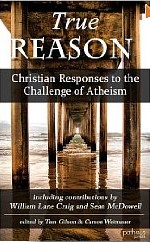
  • True Reason: Christian Responses to the Challenges of Atheism – on Kindle

    The kindle edition of new book featuring responses to the New Atheists, aimed to be readable at the popular level entitled True Reason: Christian Responses to the Challenges of Atheism is now available on Amazon. This blog’s Matthew Flannagan contributed to a chapter in it alongside William Lane Craig, Sean McDowell and others.

    Matt’s chapter is a reprint of his chapter “Did God Command Canaanite Genocide?” in the forthcoming in April B&H Academic book: Come Let Us Reason: New Essays in Christian Apologetics edited by Paul Copan and William Lane Craig.

    Here is the editorial review from Amazon:

    True Reason: Christian Responses to the Challenge of Atheism“While New Atheists like Richard Dawkins, Sam Harris, and others proclaim loudly their rationality, clear thinking, and incontrovertible scientific arguments, others are beginning to wonder how genuinely rational they are. Have they proved anything? Have they argued convincingly? Have they pinpointed any real challenges to the credibility of Christian faith?

    “True Reason,” edited by Tom Gilson and Carson Weitnauer, brings together a compendium of writers–philosophers, apologists, ethicists, theologians, historians–who look carefully at the best arguments atheism has and evaluate their validity, logic, assumptions, and naturalist conclusions.Authors include noted philosopher William Lane Craig and popular apologist Sean McDowell, along with Gilson, Weitnauer, John DePoe, Chuck Edwards, Matthew Flannagan, Peter Grice, Randy Hardman, David Marshall, Glenn Sunshine, David Wood, and Samuel Youngs. Each chapter tackles a different atheist argument and brings reason fully into the discussion.

    Which is more reasonable: atheism or Christianity? Read “True Reason” and think for yourself.”

    Get your copy now, read it, and let us know what you think both here and on Amazon 🙂

  • Francesca Minerva and Matthew Flannagan on “After-birth abortion: why should the baby live?” on Radio

    Francesca Minerva and Alberto Giubilini‘s article “After-birth abortion: why should the baby live?” published in the Journal of Law, Ethics and Medicine is creating waves the world over. In a few hours, on the morning of Thursday 1 March, around 10:00am New Zealand time, Dr Minerva will be interviewed on this article on Radio Rhema’s Pat Brittenden Mornings. Shortly after Dr Matthew Flannagan, of this blog, arguably New Zealand’s most eminent Abortion Ethicist, will be interviewed in response.

    The Abstract of “After-birth abortion: why should the baby live?” is as follows:

    After Birth AbortionAbortion is largely accepted even for reasons that do not have anything to do with the fetus’ health. By showing that (1) both fetuses and newborns do not have the same moral status as actual persons, (2) the fact that both are potential persons is morally irrelevant and (3) adoption is not always in the best interest of actual people, the authors argue that what we call ‘after-birth abortion’ (killing a newborn) should be permissible in all the cases where abortion is, including cases where the newborn is not disabled.

    Matt’s articles on abortion rebutting most of the arguments used in “After-birth abortion” (they are very similar to arguments offered by Michael Tooley and Peter Singer) can be found by using the tags below – particularly see his:

    Boonin and Sentience Criteria: A Critique Part I
    Boonin and Sentience Criteria: A Critique Part II
    (published in Ethics and Medicine: An International Journal of Bioethics vol 25, issue 2, 2009, 95-106)
    Sentience Part 1
    Sentience Part 2 

    UPDATE:
    Dr Francesca Minerva’s interview on her and Alberto Giubilini’s article “After-birth abortion: why should the baby live?” is now available to download it as an MP3.

    Dr Matthew Flannagan’s interview on Francesca Minerva and Alberto Giubilini’s article “After-birth abortion: why should the baby live?” is now available to download it as an MP3.

    FURTHER UPDATE
    In response to Dr Minerva’s comments in her interview where she states that parents of disabled children do not read academic articles and later, academics who are capable of understanding the debate would not be offended by the position she was arguing for:

    I am an academic, I am married to Matt who is also an academic.

    Matt and I are the parents of four children, two of whom have disabilities, one whose diagnosis is Severe Autistic Spectrum Disorder. The severity of this diagnosis cannot be overstated. Our son cannot go to school, cannot be cared for by most people; and when his condition is not managed, regularly does actions that endanger himself and others that are the source of considerable stress – he gets into rages where he cannot value or appreciate the risks he is taking to his own life. We shape our lives around managing his care. It is hard. His condition causes significant impact to our financial, social and professional endeavours as well as our stress levels; just on Saturday he caused four Police Patrol cars and their respective officers to leave active duty to deal with him.

    So we present a conundrum to Dr Minerva’s claims. We are academics, we are both capable of following and understanding the argument and contributing to it in a non-emotive way – in fact, both of us have contributed to this particular debate in this way. Further, we often read academic articles – most recently we have each read hers; we author them too. Contemporaneously, we are also parents of disabled children, one fairly seriously disabled child. So are we offended by her argument? Yes. The suggestion that our son, because he is a burden, could understandably and justifiably be killed provided he is of a biological state where he does not value or appreciate his life – or that had we known what we were in for we could just had killed him at birth, is offensive. An implication of this argument is that he is not as valuable as other human beings and I reject that.

    As Matt pointed out in his interview, when your reasoning brings you to a conclusion of that magnitude you need to check your premises, not bite the bullet and shoot the baby.

    Oh and by the way, abortion means termination of pregnancy it cannot, by definition, apply post-pregnancy. It is up there with talking about post-death homicide.

    HERALD UPDATE:
    The New Zealand Herald has run an article on the subject featuring Matt (only they wrongly imply he is on faculty at Auckland University): “Killing newborns: Paper stirs debate, death threats”

  • Matt on “The Panel” on Pat Brittenden Mornings – with David Slack

    Radio RhemaTune in to Radio Rhema at 11:40am (NZ time) today to hear this blog’s Matthew Flannagan and David Slack discuss topical issues on “The Panel” on Pat Brittenden morning.
    You can download the MP3 here or listen online here.

  • Philosophia Christi: Abstract Objects and Divine Command Ethics Down-Under

    In December we were told that Matt’s article “Tooley, Plantinga and the Deontological Problem of Evil”  had passed peer review and would be published in Philosophia Christi.  Issue, 13: 2  is  now out and if you look at the contents page you’ll see Matt’s article has now been published.

    The abstract to Matt’s article is as follows:

    Philosophia ChristiThis article criticises the deontological argument from evil proposed by Michael Tooley  in The Knowledge of God. I sketch Tooley’s distinction between deontological and axiological arguments from evil. Tooley rejects the axiological version because it rests  on “controversial ethical claims”, claims that are “likely to be rejected by many theists” and formulates a deontological version in its place. I argue that Alvin Plantinga’s criticism of the moral premises of this argument can be reformulated by appealing to a divine command theory of ethics. So reformulated, I argue that Tooley’s argument relies on controversial moral assumptions that many theists reject. I defend this response against potential criticisms found in the writings of Linda Zagzebski,  Tooley’s debate with William Lane Craig, and Peter Van Inwagen.

    Much of the focus of this issue is the topic of God and Abstract Objects. However, fortuitously, our good friend and fellow Kiwi, Glenn Peoples from Say Hello to My Little Friend,  has also been published in the same issue of Philosophia Christi immediately after Matt. His abstract is below:

    Of the objections to divine command ethics that still circulate in the literature, the epistemological objection is one of the two most common (the other being the objection from abhorrent commands). If morality is based on divine commands, the objection goes, then those who do not believe in God cannot know what is right or wrong. In this paper I explain the way in which this objection has been answered in the past (especially by Philip Quinn and Robert Adams) and I then look at a new attempt by Wes Morriston to resurrect and re-state the epistemological objection.  I explain the way in which this objection succumbs to responses that have already been made in the literature and is not new at all in spite of appearances, and I explain how it misconstrues the social nature of obligation in Robert Adams’ account of divine commands. In giving this explanation I flesh out the potentially difficult notion of a “sign” as an epistemic indicator of moral duty, and I argue that all the epistemological objections to divine command ethics this far fail because they have an underdeveloped concept of a “sign” as a central component of a command.

    Perhaps the theme for this issue should have been God, Abstract Objects and Divine Command ethics Down Under?

  • Alvin Plantinga Calling for an Argument

    NoahWe moved house recently but before we got the telephone services disconnected at our old house we rescued this answer-phone message left by our then 9 year old son Noah for Matt – note the attempted American accent:

    Alvin Calling

    (Noah had no idea how we worked out it wasn’t really Alvin Plantinga.)

  • Another Day, Another Publication

    Matt is having a good day.

    Presently he is in San Francisco where this morning he gave the first of his talks, “Can Traditional Theism Provide an Adequate Foundation for Morality? A Reply to Walter Sinnott-Armstrong’s Critique of William Lane Craig” to the Annual Meeting of the Evangelical Philosophical Society. By all accounts it was well received with Matt already being in receipt of several requests from scholars in his field for copies of the paper.

    This afternoon he attended a panel discussion  featuring William Lane Craig, Paul Copan, David Bagget and Jerry Walls on divine command theory and the moral argument. Regular readers will know how much he would have enjoyed that!

    Tonight an email came through from the Westminster Theological Journal, a rather prestigious journal, informing him that his article “Feticide, the Masoretic Text and the Septuagint” has been accepted for publication.

    No prizes for guessing that I am extra proud of him today 🙂